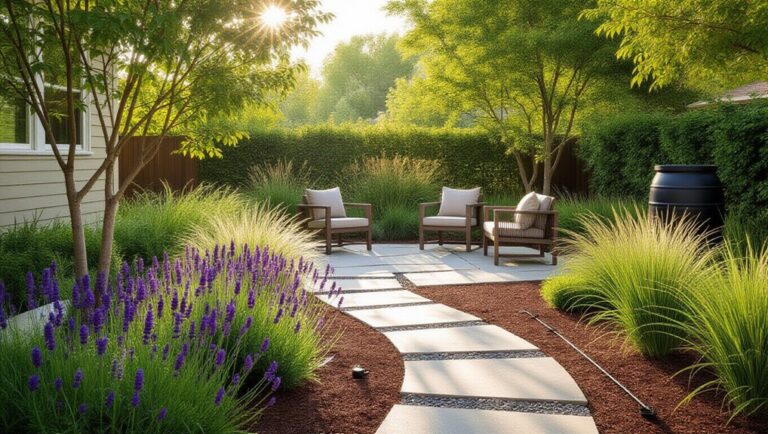
Start by tracking a week of sun and noting shade lines, heat pockets, glare, and water sources (hose bibs, downspouts, low spots). Zone the space by use—entry, dining, lounging, storage—and keep high-use areas near the house. Lay direct 24–36 inch permeable paths on compacted base with geotextile and flush edging to block weeds and soil creep. Keep beds within 2–4 feet reach, plant densely, and run drip zones with filters, regulators, and shutoffs. Next, you’ll tighten materials, planting, and lighting choices.
Key Takeaways
- Map sun, wind, and sightlines, then zone the space for entry, seating, planting, and storage to reduce daily travel.
- Keep paths 24–36 inches wide, direct, and aligned to gates and water sources, using permeable gravel or pavers for low upkeep.
- Define bed edges with steel, brick, or timber curbs set 10–20 mm proud to stop mulch spill and soil creep.
- Choose compact, slow-growing plants and dense groundcovers, planted 6–12 inches apart and topped with gravel mulch to suppress weeds.
- Install drip irrigation with filters, pressure regulators, and zone valves, plus accessible shutoffs and moisture sensors to prevent overwatering.
Sketch a Low-Maintenance Garden Layout (Sun, Water, Storage)
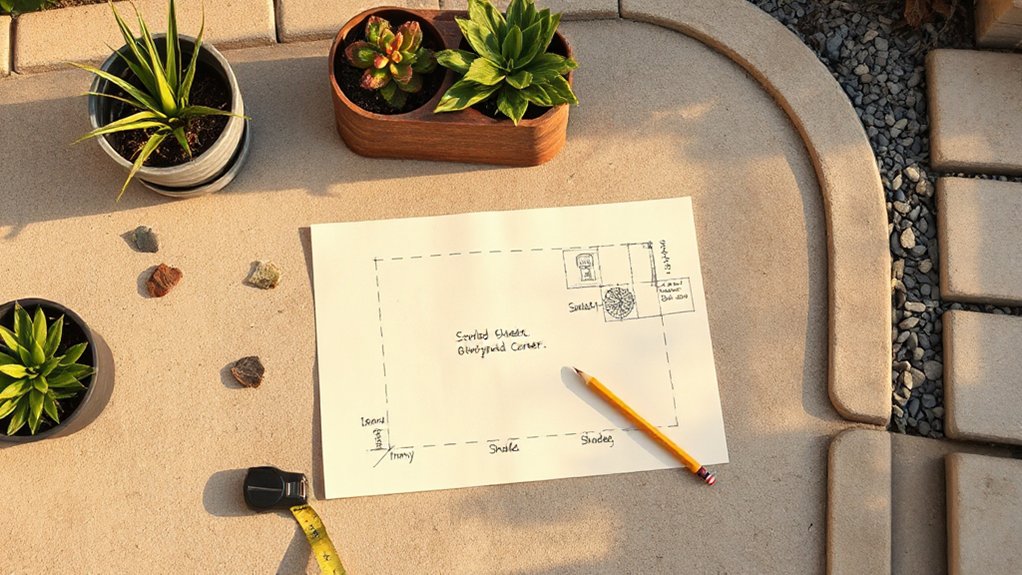
Before you buy plants or haul in mulch, sketch your layout by mapping three site controls: sun, water, and storage. Track sun for a week: note morning shade lines, afternoon heat pockets, and reflective glare from walls. Place higher-demand plants where you already get 6+ hours; reserve shadier edges for tough groundcovers. Next, map water: mark hose bibs, downspouts, and low spots; plan straight hose runs and a drip line path that avoids steps and doors. Finally, assign storage: a dry, close spot for tools, mulch, and a sealed bin that supports pest control by blocking rodents and insects. Keep Garden decor functional—stakes for labels, trellis as privacy, and edging that limits soil spill.
Split Your Small Garden Layout Into Clear Zones
After you’ve sketched sun, water, and storage, you’ll split the small layout into clear zones that match how you actually use the site. You’ll define functional activity areas (seating, tool access, bin/compost), then separate planting beds from hardscape so irrigation, edging, and maintenance stay contained. You’ll connect zones with easy-care pathways sized for your traffic (typically 24–36 in) using stable, weed-suppressing surfaces that drain well and simplify cleanup.
Define Functional Activity Areas
Because a small garden has no spare square footage, you’ll get the lowest-maintenance result by dividing the layout into functional activity areas with clear edges and dedicated circulation. Start by mapping sun, wind, and sightlines from doors and primary windows, then assign zones: entry/arrival, dining, cooking, lounging, storage, and a service strip for bins and hose access. Keep paths direct and wide enough for a wheelbarrow, and align them with existing gates or steps to prevent dead ends. Place high-use zones closest to the house to reduce travel and watering oversight. Use Garden decor sparingly as fixed wayfinding at zone thresholds. For Pest control, keep compost and refuse downwind and away from seating, with smooth, cleanable surfaces nearby.
Separate Planting And Hardscape
Although a small garden can’t afford ambiguous edges, you can cut maintenance sharply by separating planting beds from hardscape into distinct, readable zones with a consistent boundary detail. Set Planting zones by aligning bed lines with walls, fences, and door thresholds, so geometry matches how you move and look.
Choose one edge system and repeat it: steel edging pinned flush to grade, a soldier course of brick, or a continuous timber curb on compacted subbase. Keep the top of edge 10–20 mm proud to hold mulch and stop soil creep onto Hardscape materials. Grade planting slightly higher than adjacent surfaces, then specify a 150–300 mm gravel strip at interfaces for splash control and drainage. Leave no “in-between” strips that invite weeds.
Create Easy-Care Pathways
When you design pathways as the garden’s primary circulation, you immediately split a small site into clear zones that you can maintain without constant trimming and edging. Set a clear main route from gate to door, then add short spurs to seating, bins, or taps so you don’t cut across planting beds. Size paths 900–1200 mm wide, and keep curves broad to reduce fiddly borders.
Choose compacted gravel, permeable pavers, or resin-bound aggregate over bark to prevent ruts and weeds. Install steel or brick edging flush with grade so you can run a mower wheel along it. Pitch surfaces 1–2% to drains or rain gardens that double as Wildlife habitat, and anchor corners with durable Garden art.
Replace High-Maintenance Lawn With Hardscape or Gravel
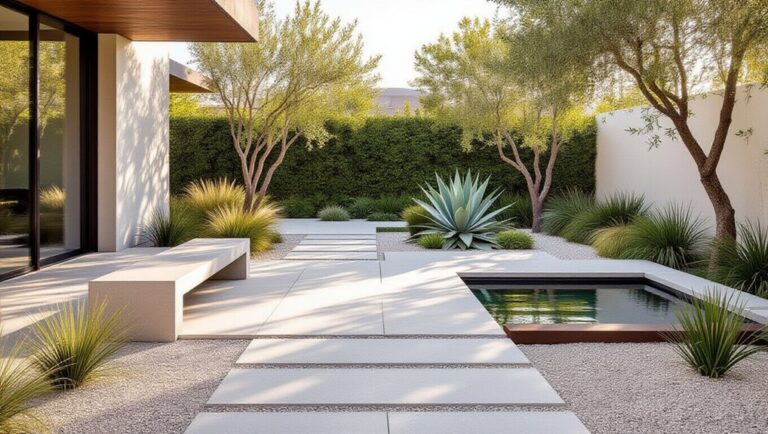
If your lawn demands weekly mowing, edging, irrigation, and fertilizer to stay presentable, replace all or part of it with hardscape or a gravel field that matches how you actually use the space. Start by mapping sun, drainage, and foot traffic, then convert the highest-wear zones first. For hardscape, install permeable pavers or set flagstone on a compacted, graded base with 1–2% slope to move runoff away from structures. For gravel, excavate 4–6 inches, add geotextile to separate soil, then place angular 3/8-inch gravel and compact in lifts; steel edging prevents migration. These Lawn alternatives cut water use and reduce weeds when you top-dress annually. Choose color and aggregate size that complements nearby materials to preserve garden aesthetics overall.
Choose Raised Beds and Drip-Friendly Planters
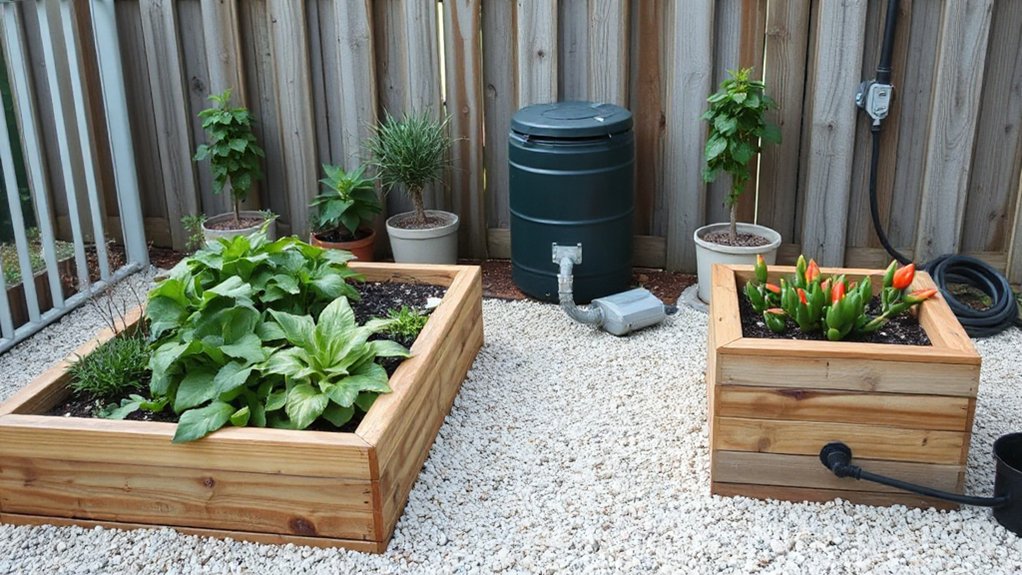
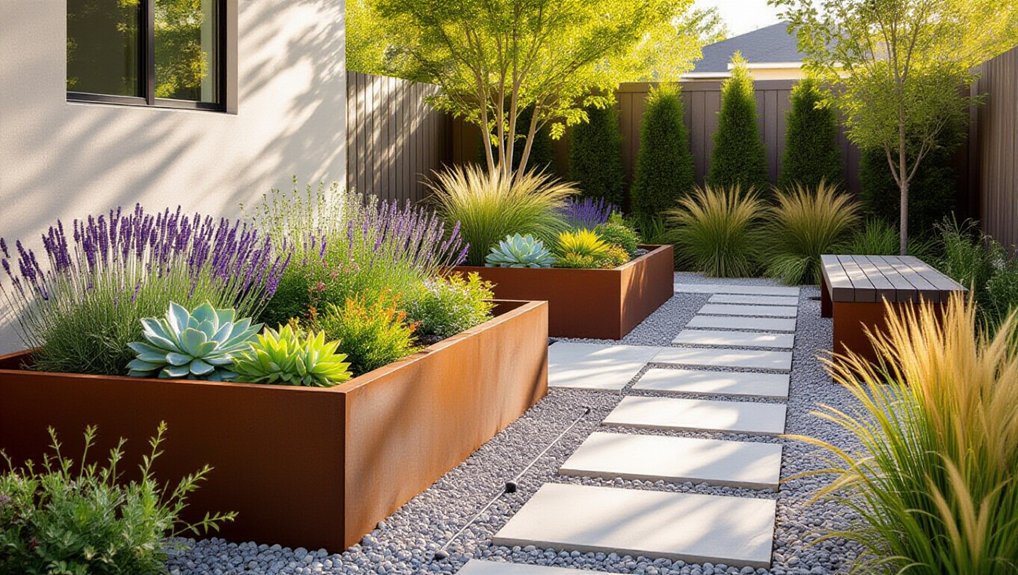
You’ll get more yield with less upkeep when you size raised beds to your footprint—L-shapes for corners, narrow rectangles for tight runs, and keyhole beds where you need reach from one access point. Choose planters and bed kits with drip-ready features (1/2″ mainline routing, 1/4″ takeoff ports, and a stable rim for emitters) so irrigation stays uniform and leak-free. Place beds along existing hardscape edges and within arm’s reach of a hose bib or valve box so you shorten supply lines, reduce trip hazards, and simplify maintenance.
Space-Smart Raised Bed Shapes
Although a basic rectangle works, space-smart raised bed shapes let you increase planting area while keeping reach, edging, and irrigation runs efficient. Use an L-shape to wrap a corner patio and maintain a 24–30 inch access aisle; keep bed width at 36–48 inches so you can reach the center without stepping in soil. Fit a U-shape against a fence to create a sheltered work bay and reduce path square footage. On slopes, terrace with short trapezoids aligned to contour so the top edge stays level and runoff doesn’t scour. For tight courtyards, try a keyhole bed to concentrate access in one notch. Pair these footprints with Vertical gardening trellises and coordinated container arrangements along hardscape edges for extra capacity.
Drip-Irrigation Planter Selection
Because drip systems deliver water at low pressure and in fixed zones, choose planters that accept a clean, stable supply line and keep emitters evenly spaced across the root zone. Favor raised beds with straight runs for 1/2-inch mainline, plus rigid edges that let you clip tubing without kinks. Match bed depth to crop rooting: 10–12 inches for greens, 16–24 for fruiting plants, so water isn’t wasted below active roots and drip irrigation efficiency stays high. For planter material choices, use composite or rot-resistant wood to hold fasteners, galvanized stock tanks for heat but add insulation in hot sites, and food-safe plastic for lightweight roofs or balconies. Specify level bottoms, accessible end caps, and inline filters at each zone.
Easy-Access Bed Placement
When you place raised beds and drip-friendly planters where paths, water, and sunlight naturally line up, routine tasks stay fast and the system runs more reliably. Set beds within one step of a hard, level path so you can weed and harvest without compacting soil. Keep bed width to 3–4 feet so you can reach the center from both sides, and align the long axis east–west to reduce self-shading. Cluster planters near a hose bib or drip manifold to shorten tubing runs, limit pressure loss, and simplify winter blowout. Put compost bins downwind but within 20 feet of the beds. Leave a clear turning radius around garden furniture so access stays uninterrupted year-round.
Pick Tough, Small-Space Plants That Thrive on Neglect
If your garden has tight square footage and you don’t want a weekly care schedule, you’ll get the best results by selecting compact, drought-tolerant plants that hold their form and color with minimal inputs. Match species to your microclimate: full-sun heat pockets favor lavender, thyme, sedum, and dwarf rosemary; bright shade suits hellebores, epimedium, and ferns. Prioritize Tough plants with slow growth, thick leaves, and deep or fibrous roots that handle missed watering. Use cultivars bred for compact habits to prevent constant trimming. In Small containers, choose plants tolerant of root restriction, then stabilize moisture with a gritty, well-aerated mix and a narrow irrigation ring. Limit feeding; use a low-rate, slow-release fertilizer once in spring.
Add Weed-Blocking Paths and Low Groundcovers
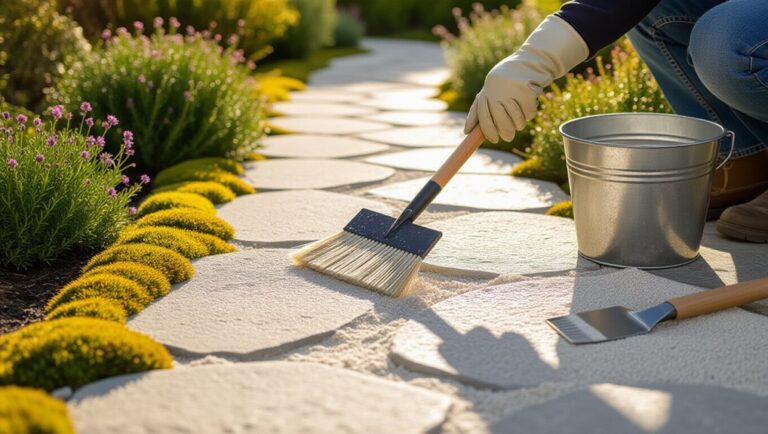
Tough, compact plants handle neglect best, but bare soil and undefined edges still invite weeds and force extra upkeep, so lock down the open areas with hard paths and living groundcovers. For weed prevention, install a 3–4 inch compacted base of crushed stone, then set pavers or decomposed granite with tight joints. Underlay paths with a commercial-grade woven geotextile and overlap seams 6–8 inches to block rhizomes. Edge paths with steel, brick, or stone to stop soil creep and keep mulch from spilling. For groundcover selection, match species to exposure and foot traffic: thyme for sun and light stepping, sedum for hot, dry pockets, or ajuga for shade. Plant densely on 6–12 inch centers, then top-dress with gravel mulch.
Keep the Garden Layout Easy to Reach and Easy to Water
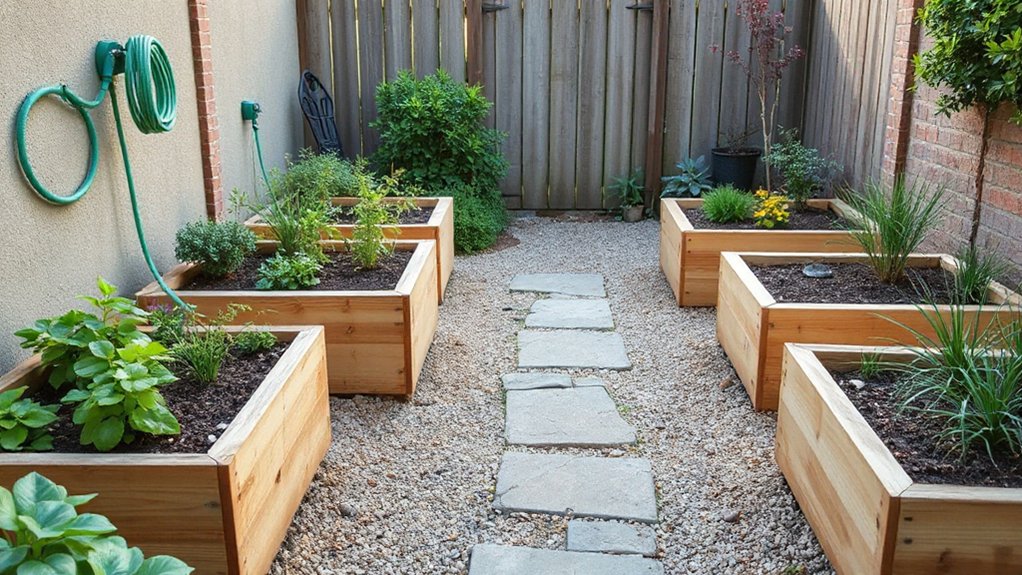
Because even “low-care” plants still need periodic access and consistent moisture, design your beds, paths, and irrigation so you can reach every plant and deliver water efficiently without dragging hoses across foliage. Keep beds no deeper than 4 feet if you’ll access from both sides, or 2 feet against a fence; that preserves reach for pruning, harvest, and Pest control checks. Align paths to your door and spigot, and maintain a continuous 30–36-inch working corridor for a hose reel or cart. Grade surfaces at 1–2% away from structures so water infiltrates beds, not patios. Use dripline with a filter, pressure regulator, and zone valves matched to sun exposure and Plant variety. Add a simple moisture sensor to prevent overwatering. Place shutoffs where you can reach them quickly.
Finish With Low-Maintenance Edging, Lighting, and Seating
Once you’ve locked in an accessible, water-smart layout, finish the space with edges, lights, and seating that won’t demand constant adjustment or repair. Specify steel, aluminum, or composite edging set on compacted base and pinned every 12–18 inches to resist frost heave; keep top edges flush with paving to prevent trip points. Use Decorative borders only where they can be blown clear, not weeded. For lighting, choose low-voltage LED fixtures with sealed connectors and a photocell/timer; route cable in conduit under hardscape and leave slack loops for settling. Select seating that matches exposure: powder-coated metal for sun, teak or recycled plastic for damp shade. Anchor benches on pavers, not soil. Add Garden art on a gravel pad.
Frequently Asked Questions
What Is the Best Budget for Creating a Low-Maintenance Small Garden?
You should budget $300–$1,500 for a low-maintenance small garden, depending on hardscape and irrigation. Prioritize durable garden design, smart plant selection, quality mulch, edging, and drought-tolerant species matched to your site’s sun, soil.
Do I Need Planning Permission for Hardscape Features in a Small Garden?
You don’t usually need planning permission for small hardscape, like a puzzle fitting your site, but check local Building codes and Permitting requirements. Drainage changes, boundary walls, raised decks, or listed-property sites often trigger approvals.
How Can I Make a Low-Maintenance Garden Safe for Pets and Children?
Choose non-toxic garden plant choices, avoid thorns, and keep mulch coarse. Install pet safe fencing with smooth mesh, buried toe-kick, and self-closing gates. Specify slip-resistant paving, rounded edges, and segregated play zones.
Which Tools Are Essential for Maintaining a Small, Low-Maintenance Garden?
You’ll need bypass pruners, a hori-hori knife, hand trowel, cultivator, soil knife, and a narrow rake. Add drip watering systems with timer for native plants. Use a hose-end sprayer, kneeling pad, gloves.
How Do I Prevent Mosquitoes in a Small Garden With Minimal Upkeep?
To prevent mosquitoes, you’ll cut breeding sites, not chase adults. Prioritize water management: empty saucers weekly, refresh birdbaths, fix leaks, keep gutters clear. For plant selection, use air-moving grasses; avoid dense, damp groundcovers.
Conclusion
When you’ve zoned your space, swapped lawn for gravel, and paired raised beds with drip lines, maintenance drops to minutes, not weekends. For example, in a 3×5 m courtyard with afternoon sun, you can run a single 13 mm poly line from the tap, feed four drip rings in planters, and edge a 1 m gravel path with steel to stop spread. Add thyme groundcover at joints, a timer, and you’re done.
About the Author