Start by mapping morning and late-day sun so you can zone a soft-shade lounge for calm and reserve bright edges for plants, keeping a 36-inch path clear. Tame heat and glare with overhangs or louvers plus low-E glazing, then add woven shades and drapery for layered control. Choose sealed oak, slate, or terracotta with linen, rattan, and oiled teak that age well. Ground it in warm whites, sandy neutrals, and nature greens, then layer soft lighting, breathable textiles, and collected accents to make it feel effortlessly restorative—there’s more ahead to refine every detail.
Key Takeaways
- Map sunlight patterns and place seating in gentle light, keeping a 36-inch clear circulation path parallel to the glazing.
- Control heat and glare with overhangs or louvers, low-E glazing, and layered shades or drapery for comfortable daylight.
- Choose durable natural materials—sealed wood, slate, linen, rattan, teak—and UV-stable finishes that age gracefully in sun and humidity.
- Build a calm palette of warm whites and soft neutrals, accented with nature-inspired greens or blues in matte finishes to reduce glare.
- Layer comfort with deep seating, dimmable warm lighting, breathable textiles, and curated plants in cohesive vessels for a relaxed, collected feel.
Plan Sunroom Zones for Sun, Shade, and Flow
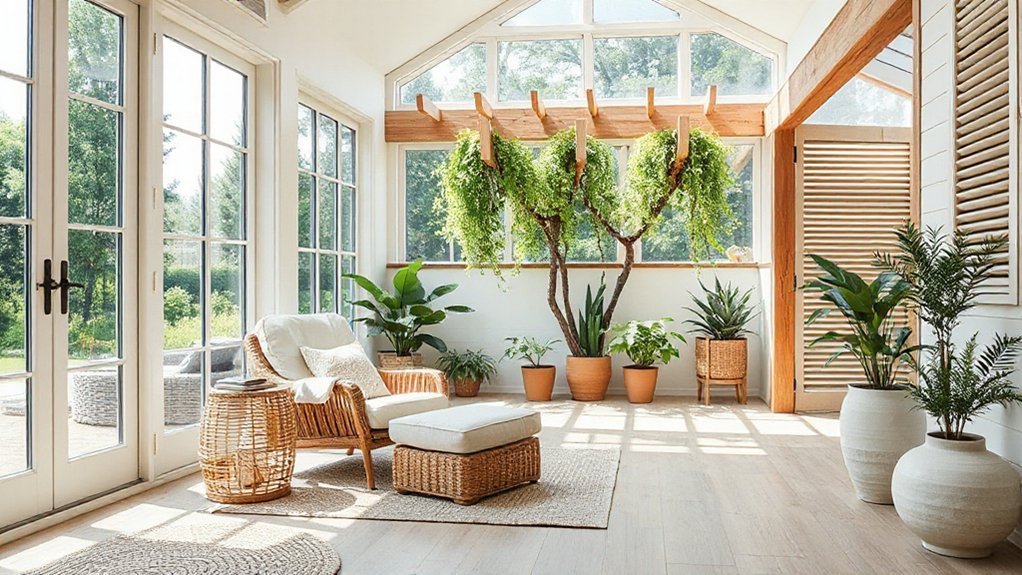
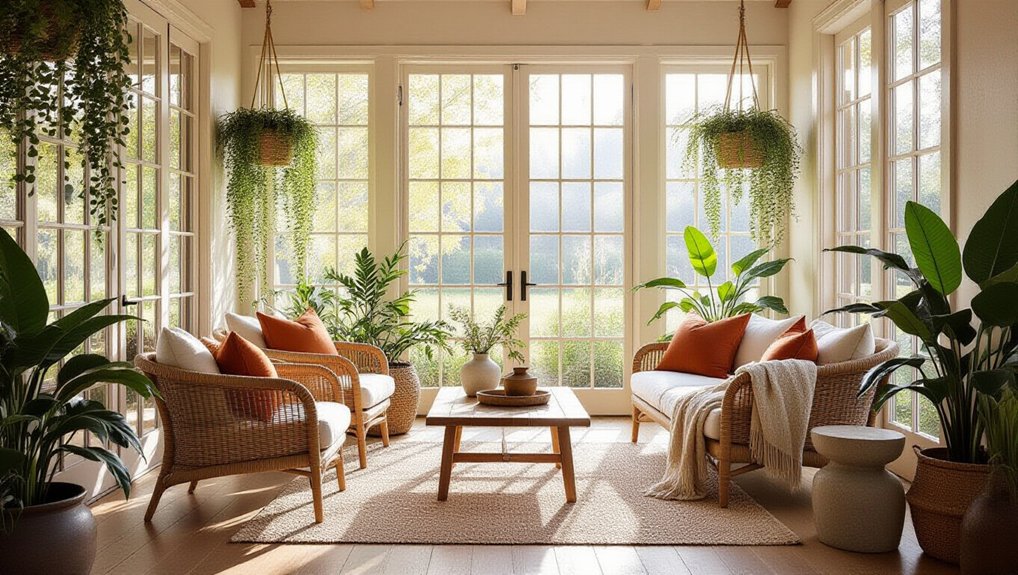
Because a sunroom’s light shifts hour by hour, you’ll get the most comfort and polish by zoning the space for full sun, soft shade, and easy circulation. Start with Sunlight zoning: map where morning and late-day rays land, then place your “sun seat” there—an armless lounge chair and small drink table that won’t block views. In the soft-shade zone, anchor a reading corner with a slim sofa, textured throw, and low book ledge so it feels calm, not crowded. Reserve the brightest edges for plants on tiered stands, keeping leaves off walk paths. For Flow optimization, keep a 36-inch clear route from door to door, float furniture on a natural fiber rug, and align key pieces parallel to glazing for cleaner lines.
Control Sunroom Heat and Glare First
Once you’ve mapped your sunny, shaded, and circulation zones, handle heat and glare so the room stays livable at noon and golden-hour. Start with exterior solutions: roof overhangs, adjustable louvers, or a pergola that cuts high summer sun while preserving winter warmth. Specify high-performance glazing with low-E coatings and a tuned solar heat-gain coefficient for your climate. For Sunlight management, layer interior controls: woven shades for soft diffusion, blackout rollers for screen time, and ceiling-mounted tracks for full-height drapery that stacks cleanly. Aim for Glare reduction at eye level by angling slats and placing seating so sightlines avoid direct reflections. Add quiet air movement with a ceiling fan, and plan operable clerestories for purge ventilation. You’ll feel calmer, longer.
Choose Relaxed Sunroom Materials That Age Well
Once you’ve managed heat and glare, you’ll want materials that stay calm-looking under sun, sand, and daily traffic. Choose durable natural flooring—sealed oak, slate, or terracotta—that holds up to UV and moisture while gaining character instead of showing wear. Then layer in patina-friendly furniture like linen upholstery, rattan, and oiled teak so scratches and soft fading read intentional and lived-in.
Durable Natural Flooring Choices
How do you pick a sunroom floor that feels effortless now and still looks better after years of sun, foot traffic, and the occasional muddy shoe? Start with materials that handle UV, moisture swings, and grit without looking “tired.” If you love warmth underfoot, choose engineered oak or heat-treated ash with Eco friendly finishes that won’t yellow in bright light. Prefer a coastal, spa-clean look? Honed limestone or slate brings quiet texture, hides scuffs, and stays cool on hot days—just specify slip resistant surfaces near doors and planters. For a laid-back, beachy weave, consider porcelain that mimics seagrass or travertine; you’ll get the look with lower upkeep. Finish with tight transitions and a washable entry mat.
Patina-Friendly Furniture Materials
Because a sunroom amplifies light, heat, and daily touch, your furniture materials need to wear in gracefully instead of breaking down or looking “over it.” Start with honest surfaces that develop a soft patina—solid teak or white oak, rattan and cane with tight weaving, powder-coated aluminum, and performance linen or solution-dyed acrylic—so fading reads like character, not damage. Specify Weather resistant finishes that won’t yellow: marine-grade oils on teak, hardwax on oak, and UV-stable powder coat on metal. Choose cushions with quick-dry foam and zip covers you can wash, then ground the mix with tactile, Eco friendly materials like FSC woods, recycled aluminum, and low-VOC sealers. Keep hardware stainless, add felt glides, and you’ll get relaxed pieces that improve with every sunny season.
Pick a Calm Sunroom Color Palette
To keep your sunroom feeling serene from morning glare to golden hour, you’ll want a calm palette that flatters natural light. Start with soft neutrals and clean whites as your base, then layer in nature-inspired greens and blues to echo the view outside. Finish with warm earth-tone mixes—think sand, clay, and muted terracotta—to add depth without breaking the relaxed, natural mood.
Soft Neutrals And Whites
While sunlight does most of the heavy lifting in a sunroom, a soft neutral-and-white palette keeps the space calm, cohesive, and intentionally styled. Start with warm whites on walls and trim so light bounces evenly without feeling stark, then layer in cream, oatmeal, sand, and pale taupe through upholstery and textiles for depth.
You’ll get the most polish when you control undertones: keep everything either warm or softly balanced, and sample paint at different times of day. Choose natural materials that read quiet—linen drapery, boucle cushions, light oak, rattan, and matte ceramics—so your Neutral color palettes feel lived-in, not flat. For calming decor, use tonal patterns, subtle texture, and a single dark accent (blackened metal or espresso wood) to anchor the room without breaking the serenity.
Nature-Inspired Greens Blues
If you want a calm sunroom that still feels connected to the outdoors, build your palette around nature-inspired greens and blues that look sun-washed rather than saturated. Choose eucalyptus, sage, and soft sea-glass for walls or upholstery, then layer in misty blue-gray on trim, rugs, or woven shades to cool the light without dimming it.
Keep finishes matte or eggshell so glare stays low, and let texture do the work: linen drapes, rattan seating, and a pale oak table. Anchor the scheme with crisp white to sharpen edges and reflect daylight. Add Wildflower accents through botanical prints or a small vase mix, and echo Zen inspired decor with simple ceramics, smooth stones, and uncluttered surfaces. This palette reads restful all day.
Warm Earth Tones Mixes
Because strong sun can wash out cool hues, warm earth tones give your sunroom a grounded calm that still feels bright. Start with a creamy clay or sand wall color to reflect light without glare. Layer terracotta, tobacco, and muted ochre in pillows and throws, keeping patterns simple so the view stays primary. Add earth tone accents through pottery, framed botanicals, or a rust-toned rug that anchors seating. Balance warmth with crisp linen whites and a few matte black details for definition. You’ll elevate the palette when you lean into natural material textures: rattan, jute, oak, and honed stone. Choose one dominant tone, two supporting shades, and repeat them at different heights to create an easy, cohesive flow.
Add Sunroom Seating You’ll Actually Linger In
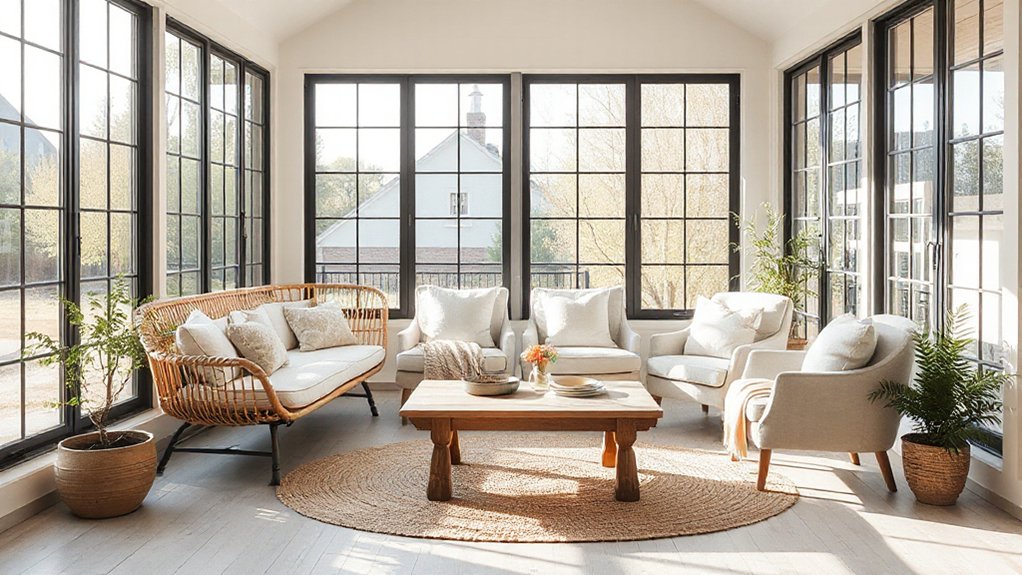
Once you treat your sunroom seating like a destination—not a placeholder—you’ll start using the space daily. Anchor the room with one generous piece: a low, deep sofa or a pair of curved lounge chairs that face the view, not the TV. Prioritize Lounge comfort with supportive seat depth, a slightly reclined back, and performance upholstery that won’t panic at sun, paws, or spilled tea. Add a tailored bench under the windows for extra perching without crowding circulation. Keep scale airy: slim arms, raised legs, and a compact side table you can actually reach. Finish with a lumbar pillow and a soft throw in natural textures, so the seat invites lingering, not quick passes.
Layer Sunroom Lighting for Cozy Evenings
Comfortable seating earns its keep during daylight, but layered lighting keeps you in the sunroom long after the sun drops. Start with a dimmable ceiling fixture or discreet recessed lights to set an even, flattering base without glare on glass. Add a pair of warm LED table lamps at reading height so you can relax without harsh overhead beams. For flexible mood, tuck an uplight behind a console or in a corner to wash walls and create moonlit ambiance. Finish with candlelit accents—real candles in hurricane holders or flicker-safe LEDs—on a tray to soften edges and make conversations feel intimate. Put each layer on separate switches or smart dimmers, so your evening shifts effortlessly.
Style the Sunroom With Plants and Nature-Inspired Decor
While the sunroom already delivers the view, you can make it feel curated by styling with plants and nature-inspired decor that echo what’s outside the glass. Start with one statement plant—an olive tree, fiddle-leaf fig, or fern—and repeat the same vessel finish to keep sightlines calm. Cluster smaller pots in odd numbers on a console, then add botanical arrangements in low bowls where they won’t block the horizon.
Choose outdoor inspired decor that looks collected, not themed: a river-stone tray for remotes, driftwood sculpture, framed pressed leaves, or a ceramic bowl in mossy glaze. Tie it all together by matching tones to your landscape—sandy neutrals for dunes, deep greens for woods—and you’ll get a cohesive, restful room.
Finish With Breathable Sunroom Textiles and Easy Layers
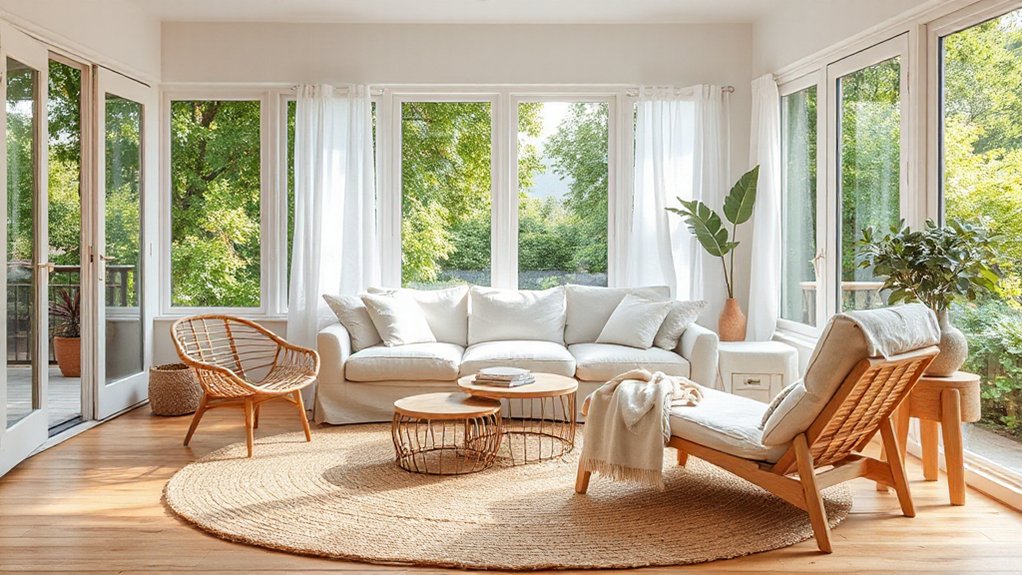
Because sunrooms run brighter, warmer, and more humid than the rest of your home, you’ll get the best finish by layering breathable textiles that look polished but won’t trap heat. Start with breathable fabrics like linen drapery, cotton canvas cushions, or performance blends that resist fading and clean easily. Choose light, tactile weaves in sand, oat, or soft clay to keep the space calm and sun-washed.
Build layered textures with a flatweave rug, a nubby throw, and a few piped pillows in varied scales so the room feels designed, not busy. Add an easy slipcovered chair for casual lounging and quick laundering. Finish with a lidded basket for spare throws, and you’ll keep the sunroom airy, inviting, and ready for guests.
Frequently Asked Questions
How Much Does a Sunroom Addition Typically Cost per Square Foot?
You’ll typically pay $150–$350 per square foot for a sunroom addition, depending on Sunroom materials, structural upgrades, and Natural lighting features. You’ll spend more for insulated glazing, HVAC, and seamless interior finishes.
Do I Need a Building Permit or HOA Approval for a Sunroom?
You’ll usually need a building permit, and you may need HOA approval—check your city and bylaws early. These rules affect Sunroom aesthetics and Interior lighting options, including glazing, rooflines, fixture placement, and exterior finishes.
What’s the Best HVAC Option for Heating and Cooling a Sunroom Year-Round?
Like a tailored blazer, a ductless mini-split fits best for year-round sunroom comfort. You’ll pair it with smart ventilation options and polished insulation techniques, ensuring quiet zoning, efficient dehumidification, and a sleek, unobtrusive look.
Which Window Glazing Is Best for UV Protection and Energy Efficiency?
You’ll get the best UV blocking and Energy saving with double-pane low‑E glazing using argon fill and a warm-edge spacer; choose laminated glass for added fade protection, and match SHGC/U‑factor to your climate.
How Do I Prevent Condensation and Mold in a Sunroom?
Stop condensation and mold by treating your sunroom like a breathing jacket: use ventilation strategies (cross-breezes, exhaust fan), and humidity control (dehumidifier, 40–50% RH). Seal leaks, insulate cold surfaces, wipe morning moisture.
Conclusion
Design your sunroom like a gentle journey: bright lounging, shaded reading, and clear pathways that feel effortless. Tame heat and glare first, then let materials—wood, rattan, stone—soften and patina with time. Keep colors quiet, seating sink-in comfortable, and lighting layered for dusk. Add living greens and nature-led accents for calm. Finish with breathable linens and easy throws. In this space, you don’t just sit—you stay.
About the Author