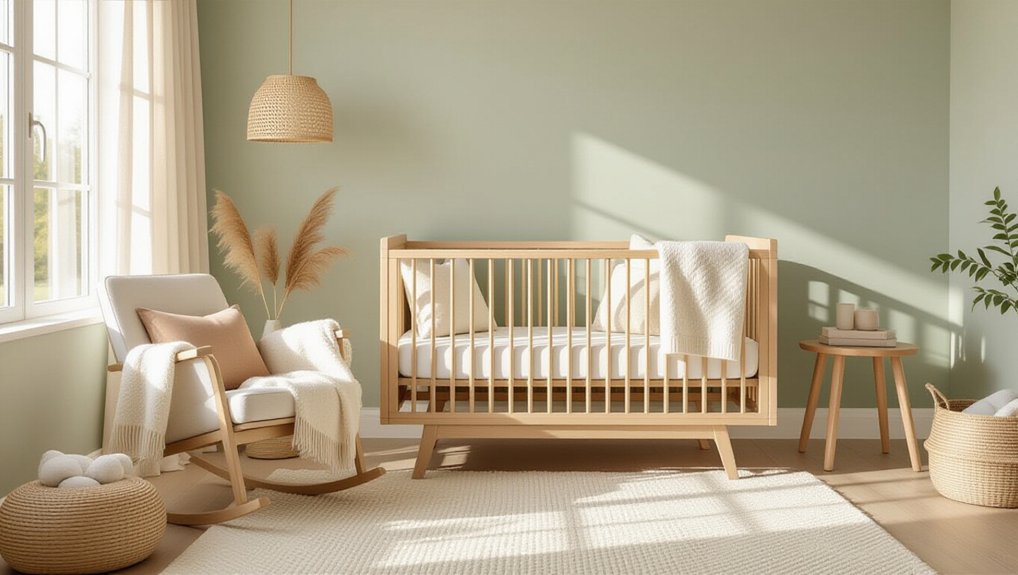
You create a serene nursery by choosing a low-saturation wall color like warm white, greige, or muted sage, then layering two to three soft accents for predictable calm. You’ll use matte or eggshell, low-VOC paint and let it fully cure. Add layered lighting: bright daytime light, a dimmable overhead, and an amber nightlight. Keep the crib bare and hazard-free, add a low-pile rug, and hide clutter in anchored, lidded storage—next up, you’ll see how to pull it all together.
Key Takeaways
- Choose a low-saturation wall color, then add two to three predictable accents in matte or eggshell to reduce glare.
- Use layered lighting with sheers, a dimmable overhead fixture, and warm amber/red nightlights for gentle nighttime visibility.
- Arrange safety-first anchor pieces—a compliant crib and supportive chair—keeping clear pathways and the sleep area free of loose bedding.
- Add softness with low-pile rugs and firm, smooth upholstery in low-VOC materials to minimize dust and support healthier air.
- Hide clutter using anchored cabinets, lidded bins, and simple labels, keeping essentials within reach for faster, calmer routines.
Choose a Calming Nursery Color Palette
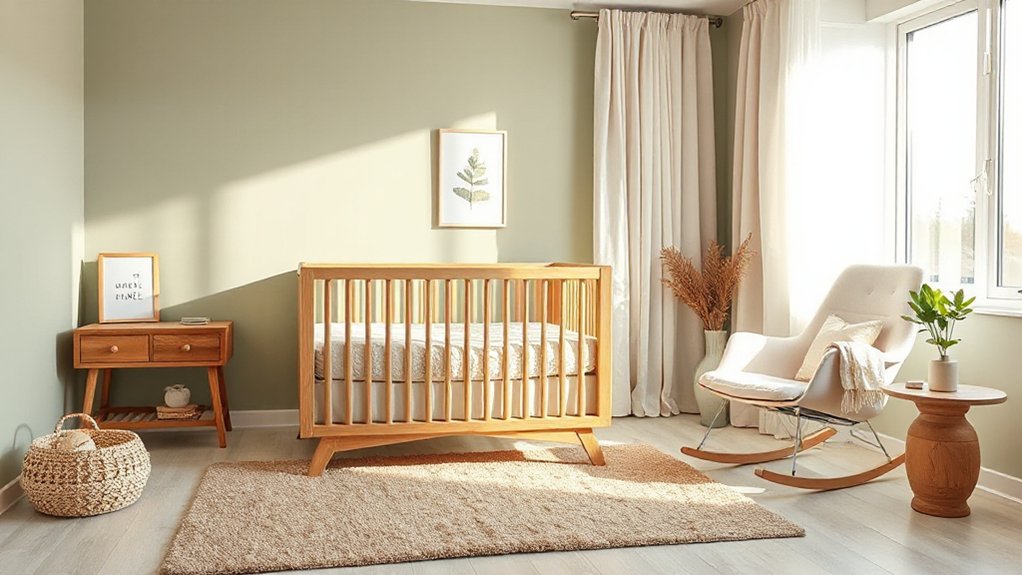
Although bright, high-contrast colors can feel playful, you’ll usually create a more restful nursery by choosing a soft, low-saturation palette—think warm whites, gentle greige, muted sage, dusty blue, or blush—because calmer hues reduce visual stimulation and support easier settling. Start with one main wall color, then layer two to three accents so the room feels predictable for your baby. Choose soothing color schemes with matte or eggshell finishes; they reflect less glare and are easier to wipe clean without harsh scrubbing. Keep contrast moderate for visual development—clear edges on furniture and art help—while avoiding busy patterns near the sleep area. Use low-VOC, certified paints and let them cure fully to protect tiny lungs. Aim for gentle hue combinations that stay consistent across textiles and decor.
Plan Soft Nursery Lighting (Daylight to Nightlight)
Because light strongly influences your baby’s circadian rhythm and settling cues, plan a layered lighting setup that shifts smoothly from bright daytime support to dim, sleep-friendly evening glow. Use daylight first: keep curtains open for morning feeds and play, then soften glare with sheer shades. Add an overhead fixture for safe, even illumination, but pair it with Dimmer switches so you can lower intensity during wind-down and overnight checks. For nighttime care, choose a warm, low-lux nightlight that creates an Ambient glow without shining into your baby’s eyes; red or amber tones tend to preserve melatonin better than blue-white light. Keep cords secured, bulbs cool-touch or LED, and place lights out of reach. Test brightness from your baby’s level before bedtime.
Pick Calming Anchor Pieces (Crib, Chair, Layout)
Once you’ve set lighting that supports sleep cues, lock in the room’s calm with a few anchor pieces that feel steady and work safely every day: the crib, a supportive feeding chair, and a layout that keeps your baby within easy reach without clutter. Choose a crib that meets current safety standards, uses a firm, snug mattress, and keeps sleep space empty—no bumpers, pillows, or loose blankets. Place it away from cords, blinds, heaters, and windows. Pick a feeding chair with solid arm support so you can hold and transfer your baby securely when you’re tired. For nursery furniture arrangement, keep a clear path between crib, changing area, and door, and limit add-ons. Finish with calming decorative accents that don’t shed or dangle.
Add Plush Texture With Rugs and Upholstery
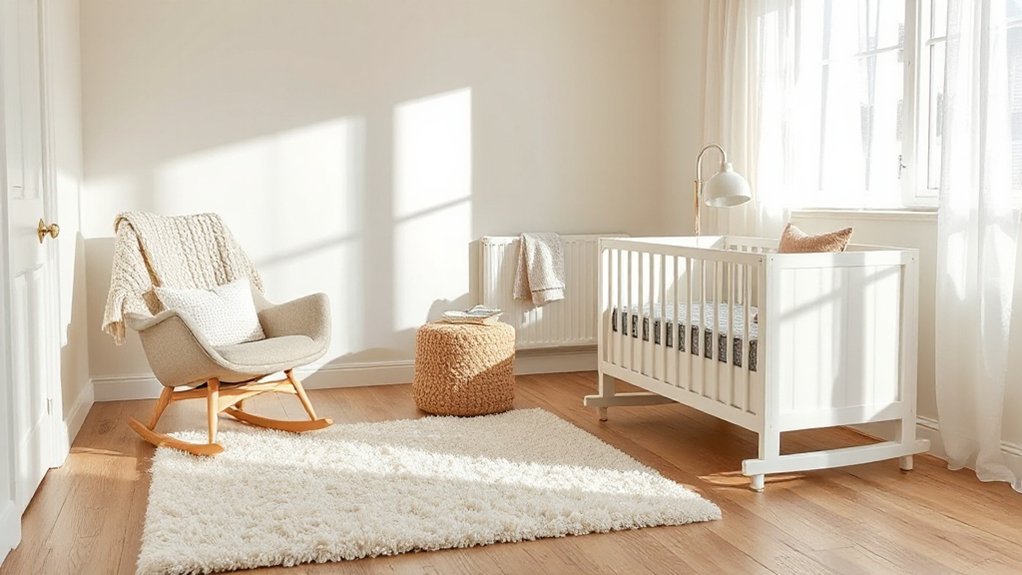
When you add plush texture through rugs and upholstery, you soften the room’s feel without adding anything to your baby’s sleep space. Choose a low-pile, tightly woven rug so it’s easier to vacuum and less likely to trap dust; pair it with a quality rug pad to prevent slips when you’re carrying your baby. Opt for upholstered seating with firm cushioning and smooth seams, so feeding and soothing feel supported and you don’t snag little fingers. Pick materials labeled low-VOC to reduce indoor air pollutants. Keep Plush wall accents out of reach and securely mounted to avoid falls. If you use Soft fabric mobiles, hang them well away from the crib and remove them as soon as your baby can push up.
Layer Baby-Safe Textiles (Curtains, Blankets, Bedding)
Plush rugs and supportive upholstery can make the nursery feel calm underfoot, and you can extend that comfort with baby-safe textiles that don’t compromise sleep safety. Choose breathable, snug-fitted crib sheets and keep bedding minimal; evidence-based safe-sleep guidance supports a firm mattress with no loose blankets, pillows, or bumpers. If you want warmth, you can use a wearable sleep sack instead.
For curtains, pick cordless designs or secure cords high and out of reach, and use blackout or light-filtering liners to protect naps without adding hazards. Prioritize Textile safety by selecting low-VOC, hypoallergenic fabrics and washing new items before use. Plan Fabric maintenance: launder in fragrance-free detergent, rinse well, and repair snags so little fingers and toes stay safe.
Hide Clutter With Closed, Easy-Reach Storage
You keep the nursery calmer and safer when you hide visual clutter in closed bins your baby can’t tip easily, while still keeping diapers and wipes within your reach. Choose low, lidded containers and anchored, streamlined cabinets so small items stay contained and choking hazards don’t end up on the floor. When everything has a closed “home,” you spend less time searching and more time responding to your baby’s needs.
Closed Bins Within Reach
Because visual clutter can overstimulate both babies and tired caregivers, closed bins placed within easy reach help keep the nursery calm without sacrificing access. Choose lidded, lightweight bins you can open one-handed during feeds or diaper changes, and place them at waist height to reduce bending. For safety, skip heavy hinged lids and pick soft-close or lift-off tops that can’t pinch fingers.
Use clear labels or simple icons so you’ll maintain toy organization without dumping everything out. Add decorative baskets with fitted liners for blankets and burp cloths, but keep handles tucked to avoid snagging. Anchor cubbies or shelving to the wall, and keep bins off the floor to reduce trip hazards. A consistent “one bin per category” system supports faster cleanups and steadier routines.
Streamlined Cabinets For Clutter
When daily essentials stay behind clean cabinet fronts, the nursery feels quieter and your baby gets fewer visual distractions during play and winding down. Choose streamlined cabinets with minimalist hardware so little fingers don’t snag, and so you can open doors quickly with one hand. Prioritize soft-close hinges to reduce sudden noise that can startle infants, and anchor all cabinetry to studs to prevent tip-overs. Keep frequently used items—diapers, wipes, swaddles—on lower, easy-reach shelves so you don’t lift and twist while holding your baby. Reserve upper sections for rarely used supplies, and use door latches that meet current child-safety standards. Wipeable, sleek cabinet finishes help you remove germs fast, supporting a healthier sleep space.
Frequently Asked Questions
What Paint Finishes Are Safest for Nurseries With Low VOC Requirements?
Choose water-based eggshell or satin finishes labeled low/zero-VOC; they emit fewer fumes and wipe clean. You’ll prefer Eco friendly paints with third-party certifications and non toxic finishes, and you’ll ventilate well during drying.
How Can I Soundproof a Nursery Without Permanent Construction Changes?
You can soundproof a nursery with rugs, thick curtains, door sweeps, and white noise—easy soundproofing options using temporary modifications. Studies show noise can wake babies above 45 dB, so you’ll dampen safely.
When Should I Start Setting up the Nursery Before the Baby Arrives?
Start setting up the nursery by 28–32 weeks, so you’ve time for safety checks. Prioritize crib assembly and safe sleep basics. Add baby sleep tips and nursery decor ideas that avoid hazards and keep supplies accessible.
Which Indoor Plants Are Safe to Keep in a Baby’s Nursery?
You can keep non toxic plants like spider plant, Boston fern, and African violet in your baby’s nursery. Choose low maintenance greenery in stable pots, out of reach, and confirm toxicity with ASPCA’s database.
How Do I Reduce Nursery Allergens and Improve Air Quality Safely?
You tame invisible dust-dragons by vacuuming with HEPA weekly, keeping humidity 40–50%, and washing hot. Use Air purifiers with HEPA filters, choose Allergen proof bedding, and avoid fragrances. You’ll help your baby breathe easier.
Conclusion
With soft colors, gentle lighting, and a few steady anchor pieces, you’re building a nursery that feels like a quiet lullaby. You’ll choose low-VOC finishes, secure furniture to studs, and keep cords and small items out of reach—simple steps backed by pediatric safety guidance. Plush rugs and layered, breathable textiles add comfort without clutter. When storage closes like a calm curtain, the room stays serene, and your baby can rest and grow.
About the Author