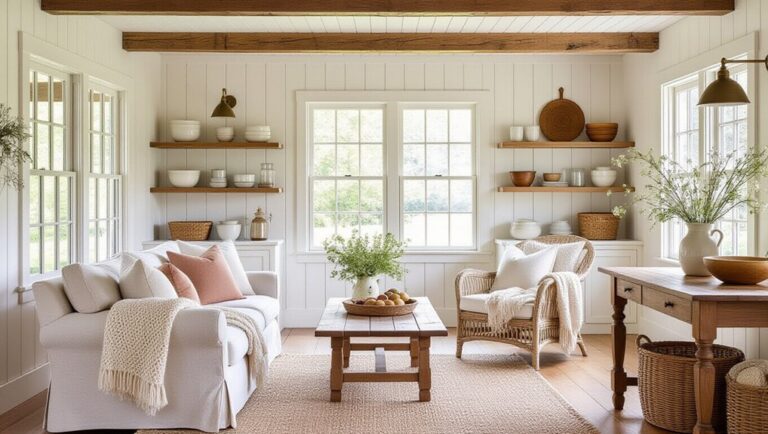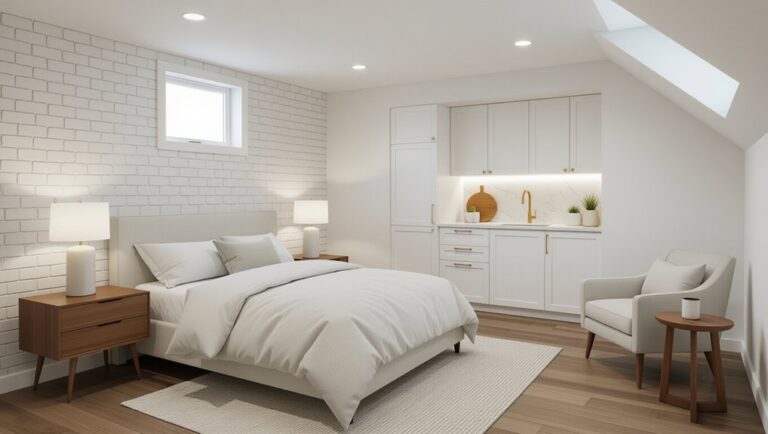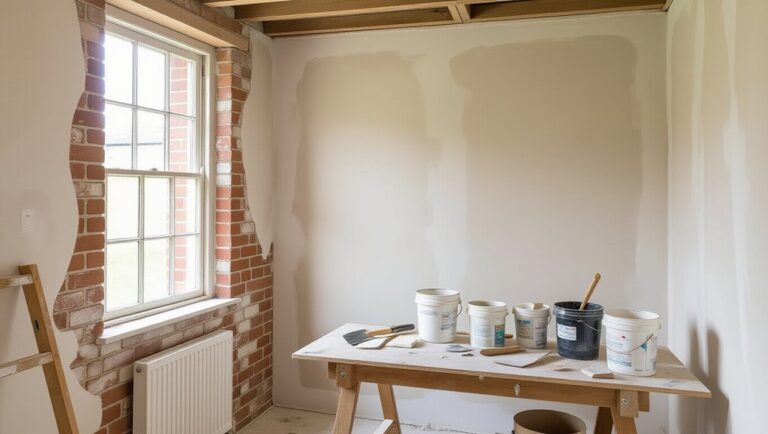
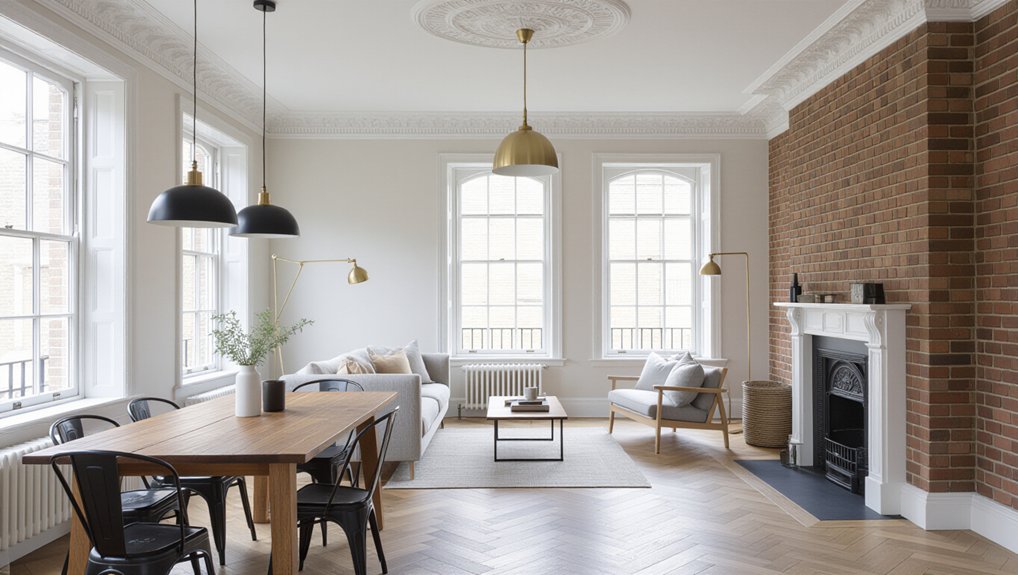
You reform a Victorian terrace with contemporary rustic flair by restoring cornices, ceiling roses, sash windows, fireplaces, and balustrades, then keeping profiles crisp with careful timber repairs and matched hardware. You soften the shell with warm chalky whites or limewash, sharpen sightlines with restrained black accents, and layer patina through aged brass and burnished iron. You add warmth by wrapping built-ins in reclaimed oak and finishing floors in matte oils. Keep going for layout, lighting, and styling moves.
Key Takeaways
- Restore Victorian features like cornices, ceiling roses, sash windows, fireplaces, and balustrades, repairing timber and mouldings instead of replacing.
- Use warm whites and limewash with low-sheen finishes, adding selective black accents to sharpen lines and make ceilings feel higher.
- Introduce reclaimed timber in built-ins and worktops, finished in matte oils, with chamfered edges, pegged corners, and aged-brass pulls.
- Improve flow by widening cased openings and using glazed or reeded doors, keeping key period details intact while increasing daylight.
- Layer ambience with dimmable 2700K lighting, grazing cornices and textures, then style with vintage textiles and restrained patina for a collected look.
Identify Victorian Terrace Features to Keep and Restore
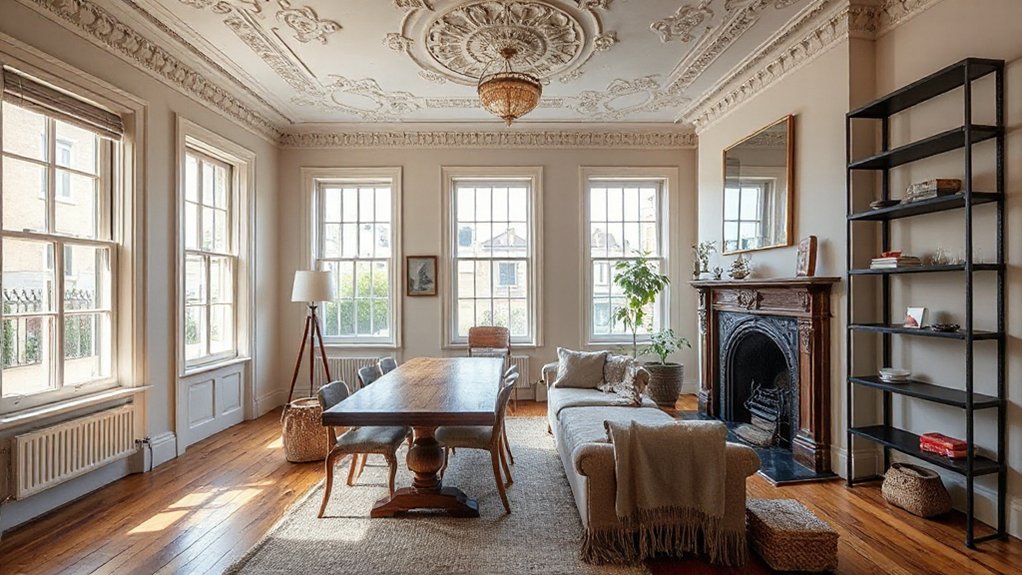
Before you pick up a sledgehammer or start sketching open-plan layouts, walk each room and flag the Victorian bones worth saving—original cornices and ceiling roses, encaustic hallway tiles, timber floorboards, sash windows, internal panel doors, fireplaces, and stair balustrades—because these elements anchor the terrace’s proportions and patina while giving you the perfect backdrop for a contemporary rustic layer. Next, test what’s repairable: lift carpet edges to check board thickness, probe stair treads for bounce, and inspect sash cords, pulleys, and glazing putty. Strip paint carefully to reveal profiles, then splice timber, re-pin loose mouldings, and re-point hearth surrounds. You’ll get the best results by matching joinery species and hardware, Restoring historic craftsmanship instead of swapping it out. Keep Victorian architectural details crisp, then integrate modern comforts discreetly.
Set a Victorian Terrace Palette (Warm Whites, Black, Patina)
Once you’ve kept the cornices, sash windows, and fireplaces that give the terrace its frame, lock in a palette that lets those details read cleanly while adding contemporary rustic edge. Start with warm whites on walls and ceilings to bounce London light and soften Victorian architecture’s sharp shadow lines; choose a chalky, low-sheen finish so trim still pops.
Anchor the plan with black: paint the stair balustrade, window reveals, or a single internal door in inky satin to sharpen sightlines and make rooms feel taller. Then layer patina through aged brass, burnished iron, and weathered leather tones, keeping metals consistent per floor for calm flow. In Rustic decor, you’re aiming for contrast, not chaos—repeat black and patina in small, spaced hits.
Blend Reclaimed Timber With Victorian Terrace Built-Ins
While Victorian terraces already come with generous built-ins—alcove cupboards, chimney-breast shelving, and under-stair storage—you can sharpen them with reclaimed timber that looks intentional rather than “added on.” Wrap existing shelves in a thick, character-grade oak or pitch-pine facing, swap painted cupboard tops for a reclaimed plank work surface, or line the back of an alcove with boards to pull warmth forward against your warm whites and black accents. Keep proportions crisp: match board thickness to skirting depth, and let edges read deliberate with a slim shadow gap. Choose sustainable sourcing—salvage yards, FSC-reclaimed suppliers, or local joiners—so the story feels as considered as the finish. Seal with a matt hardwax oil to keep grain tactile, then add handcrafted details like chamfered lips, pegged corners, and aged-brass pulls.
Update the Victorian Terrace Layout (Light and Flow)
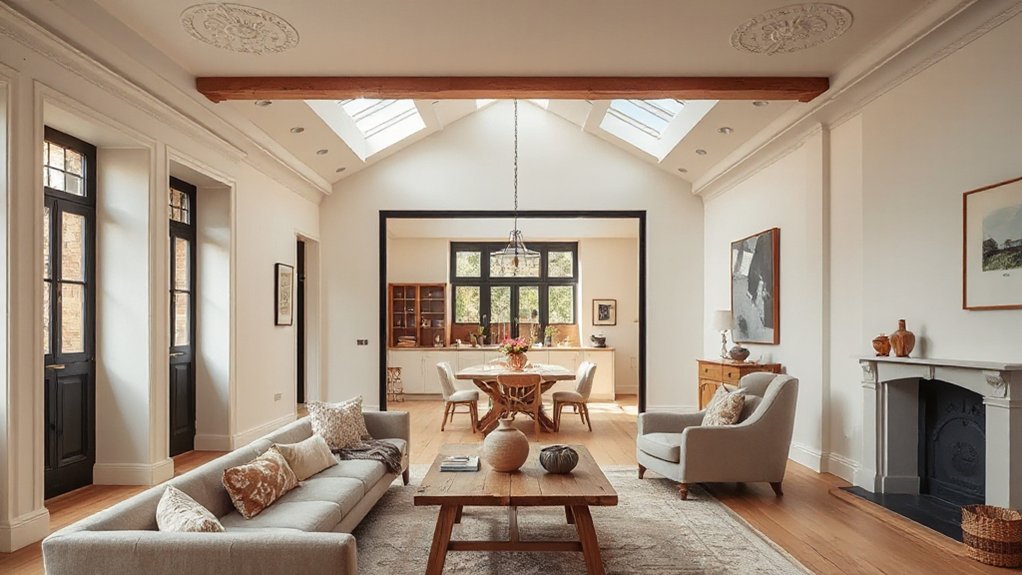
If you want a Victorian terrace to feel bigger without losing its bones, rework the layout to pull daylight deeper and smooth the front-to-back journey. Open up pinch points between front parlour and middle room with widened cased openings, keeping ceiling roses and corbels to respect Victorian architecture. Swap solid doors for glazed or reeded panels where privacy matters but light can travel.
At the rear, prioritise a single, flexible kitchen–dining zone, then carve out a compact utility wall so circulation stays clear. Use a slimline stair storage run to remove clutter from the hall and extend sightlines to the garden. Don’t ignore interior acoustics: add a partial-height joinery screen or pocket door to zone noise without blocking sun, and keep conversations comfortable.
Refresh Walls, Floors, and Trim With Honest Finishes
You’ll sharpen the terrace’s new light and flow by switching to honest finishes that read calm, tactile, and current. Limewash the walls for soft, shifting texture, and refinish reclaimed wood floors so the grain and wear look intentional underfoot. Keep trim and hardware matte to quiet reflections and frame each room with crisp, understated contrast.
Limewash Walls And Texture
Because Victorian terraces already carry so much architectural detail, limewash gives you a way to soften the envelope without flattening it. You’ll keep cornices, ceiling roses, and architraves legible while letting walls read calmer, chalkier, and more light-responsive. Choose warm off-whites, muted stone, or clay-tinted tones to complement period joinery and contemporary rustic accents.
To get the right textured finishes, you’ll prep plaster carefully, then build variation with a controlled limewash application: work in small sections, keep a wet edge, and crosshatch your brush to avoid striping. You can leave subtle mottling in circulation zones and smooth it slightly in tighter rooms. Finish trim in a compatible mineral paint so edges stay crisp without looking sealed or plastic.
Reclaimed Wood Floor Finishes
While limewashed walls quiet the backdrop, reclaimed wood floors bring the room back into focus with grain, seams, and age marks that feel intentional rather than “distressed.” In a Victorian terrace, the best finishes keep that honesty visible: think matte hardwax oil, soap finishes, or low-sheen penetrating oils that sink in and mute glare, instead of thick polyurethane that can read glossy and new-build. Start by testing in a corner: oils deepen tone, while soap keeps boards pale and Scandinavian-leaning. Work with the plank’s story—fill only splinters and active gaps, not every scar. Choose eco friendly finishes with low VOCs so the patina can breathe. Then style it simply: upcycled furniture, woven rugs, and linen drapery let the floor’s quiet character lead.
Matte Trim And Hardware
If glossy architraves and shiny knobs are making your Victorian terrace feel newly renovated in the wrong way, swap them for matte trim paint and low-sheen hardware that lets the proportions do the talking. Choose an eggshell or dead-matte on skirting, door casings, and ceiling roses so shadows read crisp, not plastic. Keep whites slightly warm to flatter aged plaster and brick, and match the same sheen across rooms to calm busy sightlines.
Bring in matte hardware in oil-rubbed bronze, blackened steel, or brushed nickel, then layer restrained metallic accents where you need sparkle: a keyhole escutcheon, a slim latch, a picture light. In narrow halls, the softer reflectance cuts glare and makes details feel intentional, not showroom-bright.
Choose Victorian Terrace Lighting (Period + Modern Layers)
Anchor the room with a period-appropriate feature light—think a restored brass pendant or a modest chandelier that sits neatly in the ceiling rose and respects the terrace’s proportions. Then you’ll build a modern, layered ambient glow with discreet downlights, wall washers, and dimmable lamps that soften corners and highlight texture. Mix warm color temperatures and clean-lined fittings so the heritage focal point reads intentional, not museum-like.
Period-Appropriate Feature Lighting
Where do you start when the room needs to feel unmistakably Victorian, yet live like today? You anchor the space with one feature fitting the terrace’s bones: a ceiling rose–friendly pendant in aged brass or patinated bronze, scaled to your bay or central axis. Choose opaline globes, ribbed glass, or a prismatic shade to echo period texture without going fussy. If you want visible filament, specify a warm Vintage Edison bulb but pair it with an authentic-looking holder and braided flex so it reads intentional, not themed. Add Contemporary sconces in hallways and beside chimney breasts, keeping plates slim and finishes muted. Place fittings to celebrate cornices, picture rails, and architraves, not compete with them. Keep dimmers on.
Modern Layered Ambient Glow
Three light layers make a Victorian terrace feel both authentic and effortless: start with a soft ambient wash (a discreet ceiling or wall uplight that grazes cornices and picture rails), add task lighting at living zones (a swing-arm reading light by the hearth, under-cabinet strips in the kitchen, a desk lamp that won’t fight the bay), then finish with modern accent points (LED art lights, slimline floor lamps, or toe-kick glow on stairs) to stretch the room after dark. You’ll keep the period shell intact by choosing warm 2700K LEDs and dimmers that fade smoothly. Let ambient lighting flatter layered textures—aged timber, linen, brick—by aiming light across surfaces, not straight down. In narrow halls, tuck wall washers high to widen sightlines and calm shadows.
Style the Victorian Terrace With Relaxed Vintage Finds
Although the bones of a Victorian terrace feel inherently polished—tall skirting, ceiling roses, and generous sash windows—you can soften that formality by styling each room with relaxed vintage finds that look collected, not curated. Start with Vintage textiles: a faded kilim runner through the hall, linen café curtains that skim the sash, and a patched throw tossed over the sofa to break up crisp joinery. Add antique accents sparingly—brass candlesticks on the mantel, a timeworn mirror above the hearth, or a bentwood chair pulled up as a bedside perch—so patina reads intentional, not themed. Keep the palette warm and earthy to suit contemporary rustic notes, then balance it with negative space so ornate details still breathe. Rotate small finds seasonally for freshness.
Frequently Asked Questions
Do I Need Planning Permission for Interior Changes in a Victorian Terrace?
You usually don’t need planning permission for interior changes in a Victorian terrace, but you will if it’s listed or affects structure. Check historic preservation rules, building control, and interior design details like walls, fireplaces, staircases.
How Can I Soundproof Party Walls Without Losing Period Proportions?
Like wrapping your room in a hush, you’ll add modern soundproofing with slim independent stud walls, acoustic mineral wool, resilient channels, and double plasterboard. You’ll use period preserving techniques: retain cornices, align skirtings, and match window reveals.
What Are Typical Costs and Timelines for a Full Terrace Refurbishment?
You’ll typically spend £80k–£250k and wait 12–26 weeks, depending on Historic preservation constraints and Modern materials choices. You’ll phase demolition, services, insulation, plastering, joinery, and finishes, protecting sightlines and ceiling heights.
How Do I Address Damp and Ventilation Issues in Older Brick Terraces?
Start where moisture hides: check gutters, flashings, and ground levels, then improve Moisture management with breathable lime, not sealed paints. Next, boost Air circulation using trickle vents, extractor fans, and underfloor airflow. Monitor humidity.
Which Insulation Upgrades Work Best Without Compromising Original Fabric?
You’ll protect original fabric best with breathable internal wall systems: wood-fibre or lime-hemp Insulation materials, plus loft sheep’s wool. Add draught-proofing, secondary glazing, and vapour-open membranes—Sustainable solutions that keep rooms warm, crisp, and authentic.
Conclusion
You don’t have to erase your terrace’s past to make it feel current—you just polish it until it glows. Keep the cornices, fireplaces, and sash lines, then let warm whites, inky black accents, and soft patina ripple through every room. Pair reclaimed timber with crisp built-ins, open sightlines for borrowed light, and choose honest finishes that age well. Layer period pendants with modern task lamps, then finish with relaxed vintage pieces.
About the Author