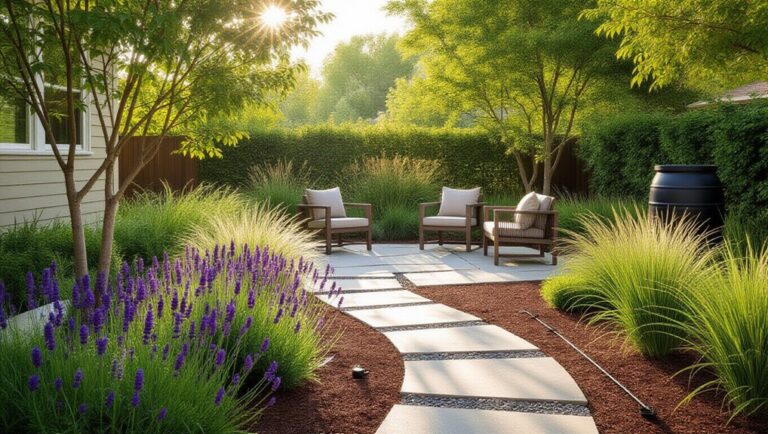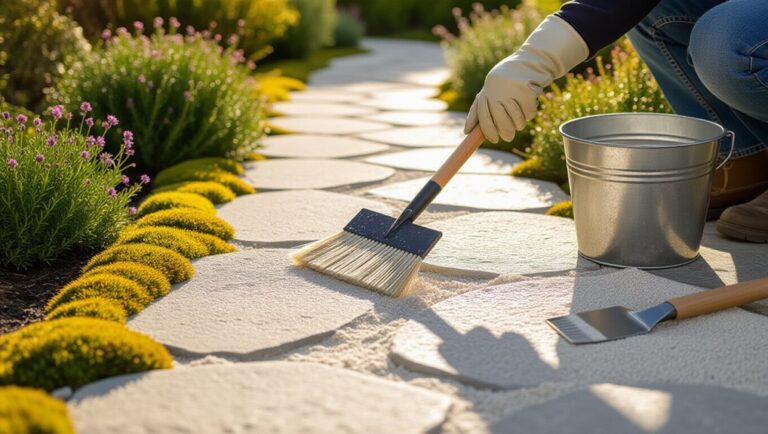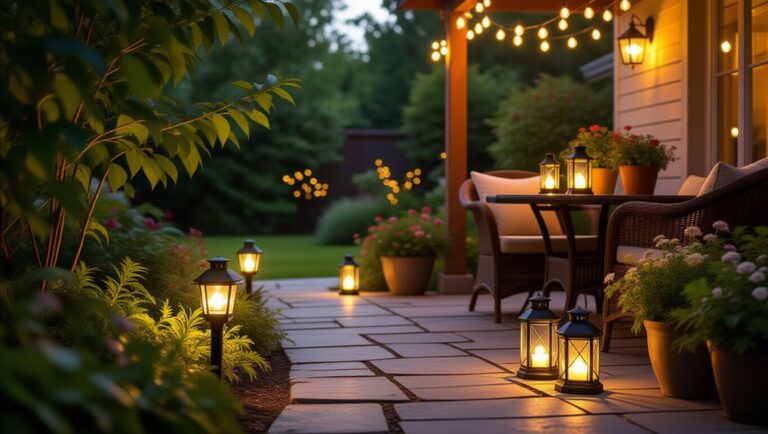
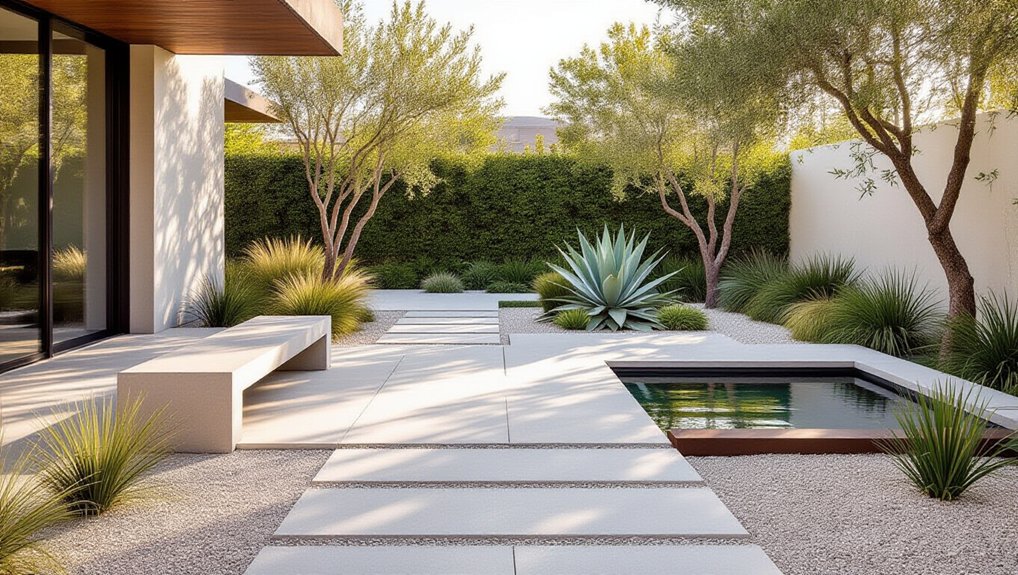
Start by mapping desire lines from doors and seating, then hold clear voids to frame focal points and keep circulation clean. Lock in simple geometry, aligned edges, and continuous joint lines. Limit to two main surfaces plus one accent, and choose dense, low-absorption paving where freeze-thaw matters. Over-excavate, compact in lifts, add geotextile, and set consistent falls to daylight. Lay slabs on full bed, hide cuts, and edge angular gravel zones. Next, you’ll refine steps, trims, and planting rhythm.
Key Takeaways
- Plan circulation from doors and seating, keeping clear voids to frame focal points like a specimen plant or water feature.
- Use simple geometry with aligned edges and continuous joint lines, referencing property lines and building datums to reduce visual noise.
- Limit the palette to two main surfaces plus one accent, selecting dense, low-absorption materials for clean, durable minimalist detailing.
- Build a stable base with compacted subgrade, free-draining subbase, geotextile where needed, and consistent fall to prevent pooling.
- Repeat one or two matrix plants at consistent spacing, aligning planting bands with paving grids for controlled seasonal color and crisp edges.
Plan a Minimalist Hardscaping Layout With Negative Space
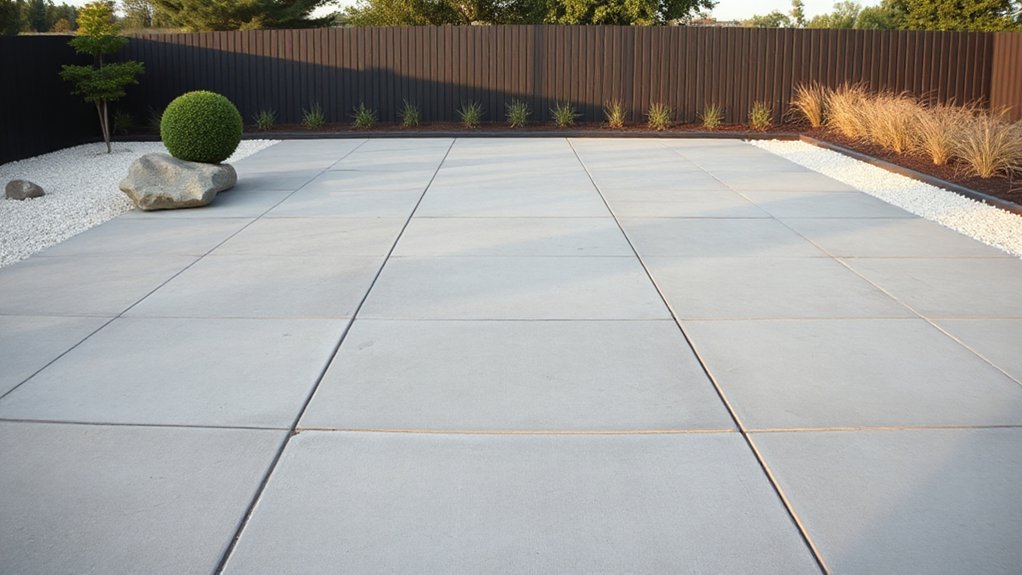
Although minimalist hardscaping relies on fewer elements, you’ll get a cleaner, more functional garden by planning the layout around negative space first—treating it as an intentional “material,” not leftover area. Start by mapping desire lines from doors, gates, and seating zones, then reserve clear voids that keep circulation legible. Set primary paths to consistent widths, and align edges to property lines or building datum points to reduce visual noise. Use negative space to frame focal plants, water features, or a single sculptural boulder without crowding them. Check visual balance by weighing solid paving against open gravel, lawn, or planting beds across key sightlines from indoors. Maintain simple geometry, control radii at turns, and keep joint lines continuous for precise, modern reading.
Choose a Minimalist Hardscaping Material Palette
Once you’ve locked in the negative-space plan, choose a tight material palette that supports the site’s climate, load demands, and visual datum lines. Limit hardscape elements to two primary surfaces and one accent so joints, edges, and heights read cleanly. In freeze-thaw zones, specify dense concrete pavers, sawn stone, or porcelain with low absorption; in hot, high-UV sites, favor light Color palettes to reduce heat gain and glare. Match slip resistance and surface flatness to use: honed stone for terraces, textured pavers for paths, and broom-finish concrete for service runs. Coordinate Material textures across planes—smooth horizontal, slightly rough vertical—so shadows define geometry. Keep metal trims consistent (powder-coated steel or aluminum) and repeat one aggregate tone for cohesion.
Prep Base Layers and Drainage for Hardscaping
A minimalist surface only reads crisp if you build a base that stays dry, dense, and uniformly supported. Start by stripping organics, probing for soft spots, and confirming finished grades and slopes to daylight. If subgrade is silty or expansive, over-excavate, then compact in lifts to spec; add geotextile for soil stabilization and to prevent fines pumping. Install a free-draining subbase (crushed angular aggregate), moisture-condition it, and compact to refusal. Tie edges into stable, undisturbed soil to reduce lateral creep. Handle water first: set consistent fall away from structures, route runoff to a swale, dry well, or underdrain. Use filter fabric around perforated pipe and wrap outlets with riprap for erosion control. Verify levels with a laser and recompact disturbed areas.
Lay Modern Paving With Clean Lines and Joints
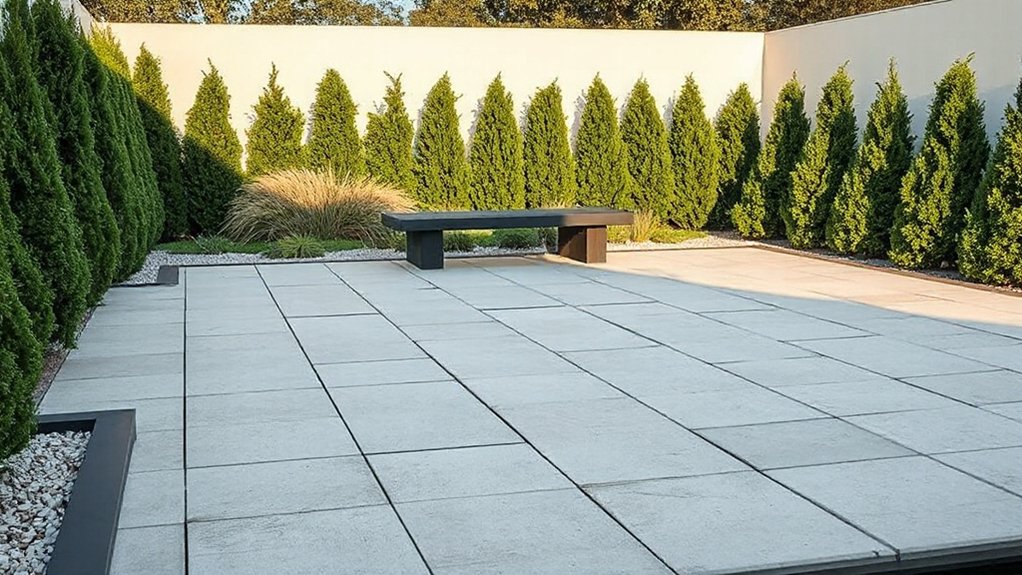
With the base locked in and drainage resolved, you can set the paving so every line reads intentional and every joint stays consistent under load. Snap control lines from fixed references, then dry-lay a test run to confirm module and cut strategy. Start from a square corner, keep courses true with a string line, and check plane with a long level. Butter or bed units to full contact, then tap to grade with a rubber mallet. Hold joint width with spacers; don’t chase gaps by eye. For a minimalist read, align joints with thresholds and steps, and hide cuts at edges. Keep Vintage ornamentation and Ornamental sculptures on separate pads so their loads don’t telegraph cracks through joints. Recheck alignment before final set.
Add Gravel Zones for Contrast and Permeability
Clean paving lines set the order; gravel zones add the negative space, drainage, and tonal contrast that keep minimalist hardscaping from reading as one continuous slab. Place gravel where runoff concentrates and where you want a quieter visual field beside large-format slabs. Excavate to stable subgrade, then install a geotextile separator to stop fines migrating upward. Build permeability zones with 75–100 mm of compacted, open-graded base, topped with 25–40 mm of angular gravel for lock-up and reduced kick-out. Keep grades at 1–2% to direct water without rilling. For gravel pathways, use 6–10 mm aggregate for comfortable footfall and easy raking. Maintain consistent depth so the surface stays level and doesn’t expose fabric.
Define Edges, Steps, and Low Walls Cleanly
You’ll lock the minimalist look in by cutting crisp progressions between gravel, paving, and planting beds using steel, stone, or concrete edging set to a consistent reveal. You’ll size steps with uniform risers and treads, align them to primary circulation lines, and keep joints tight and straight for clean reads. You’ll cap low walls with a flush, level coping, maintain a single material palette, and control grades so edges stay sharp instead of feathering into the soil.
Crisp Edge Transitions
Although minimalist hardscaping relies on restraint, crisp edge shifts demand deliberate detailing so every boundary reads as intentional. You’ll set out control lines with string, then hold tolerances: consistent joints, true 90° corners, and no wavering curves unless drawn. Where paving meets lawn or gravel, you’ll use a flush metal edge or a tight soldier course to prevent migration and keep mowing clean.
You’ll manage elevation changes with a clear datum and predictable reveals; avoid lippage by screeding bases to a single plane and checking with a straightedge. At interfaces near garden furniture and decorative sculptures, you’ll align seams to object axes so shadows fall evenly. You’ll specify crisp arrises or micro-chamfers to reduce spalling while keeping the profile sharp.
Minimalist Steps And Walls
When the site needs level changes or grade retention, minimalist steps and low walls should read as one continuous datum rather than a collection of parts. Set consistent riser heights and tread depths, align joints to the wall’s coursing, and hold a strict top-of-wall elevation to control sightlines.
You’ll define edges by keeping returns square, reveals uniform, and caps thin or flush. Use shadow gaps at paving interfaces instead of bulky trim, and run drainage behind walls with weeps placed on a deliberate grid. Specify slip-resistant nosings with a single material change, not multiple bands. Integrate lighting fixtures in recessed wall slots or under-cap channels so glare stays low. Place Garden furniture parallel to the datum, maintaining clear circulation and consistent setback from edges.
Soften Minimalist Hardscaping With Simple Planting
You’ll soften crisp paving, steps, and low walls by specifying soft, textural plants—fine grasses, mounding perennials, and compact shrubs—that read cleanly against hard edges. You’ll use repetition and rhythm by repeating the same plant modules at consistent spacing along runs and corners to stabilize sightlines and circulation paths. You’ll add seasonal color accents in controlled clusters at entries and focal nodes so the palette shifts without disrupting the minimalist structure.
Choose Soft, Textural Plants
To keep minimalist hardscaping from reading as cold or overly rigid, layer in soft, textural plants that blur edges and add quiet movement without cluttering the layout. Specify species by performance: drought tolerance, root behavior near slabs, and winter structure. Use fine blades (Festuca, Stipa), mounding evergreens, and matte-leaved perennials to contrast smooth concrete and steel. In each flower bed, set plants 150–300 mm off paving joints so irrigation doesn’t undermine base material. Keep heights low at circulation lines, then step up massing against walls for wind buffering. Around a water feature, choose moisture-tolerant textures like Carex, Acorus, or ferny foliage; avoid aggressive rhizomes that can invade liners. Mulch with 20–40 mm gravel to match hardscape.
Use Repetition And Rhythm
Soft, textural species handle the edge conditions; repetition and rhythm make the planting read intentional against crisp slabs and steel. You’ll get that effect by selecting one or two matrix plants and repeating them at fixed intervals, aligned to joints, steps, and drain lines. Keep spacing consistent (for example, 300–450 mm centers) so clumps knit and read as a continuous field. Vary only the run length, not the palette, to reinforce sightlines and circulation. Use your gardening tools to cut clean planting pockets, maintain sharp mulch edges, and reset any shifted gravel so the pattern stays legible. Repeat structural grasses near benches and thresholds to guide movement while leaving gaps for wildlife habitats in sheltered corners.
Add Seasonal Color Accents
Where can color live in a minimalist hardscape without breaking the geometry? Put it in controlled bands: narrow planting joints along paving edges, linear troughs beside walls, or a single block planter that aligns with slab grids. Keep soil volumes consistent and add drip lines so irrigation doesn’t stain concrete or stone.
Use Seasonal blooms as interchangeable modules. Rotate bulbs in spring, compact annuals in summer, and seed heads in fall, but keep the palette to one or two hues per season. Choose plants with tight habits and predictable spread, and maintain a clean gravel or mulch margin to protect hardscape lines. Place Colorful accents at sightline endpoints—entry, bench, or focal wall—so the hardscape stays primary and the planting reads as a precise overlay.
Frequently Asked Questions
What Is the Typical Cost Range for Minimalist Hardscaping Projects?
You’ll typically pay $15–$60 per sq ft for minimalist hardscaping, or $5,000–$50,000+ total. Costs rise with concrete pavers, site grading, drainage, landscape lighting, and precise plant integration at edges and joints.
Do I Need a Permit for Patios, Steps, or Low Retaining Walls?
You often need a permit for patios, steps, or low retaining walls; it depends on local codes, height, and drainage. Why risk a stop-work? Coordinate garden lighting conduit and plant integration plans for inspections. Check setbacks, utilities.
How Do I Keep Minimalist Hardscaping Safe and Slip-Resistant in Rain?
You’ll keep minimalist hardscaping safe by prioritizing Slip safety and Rain resistance: specify textured pavers (COF ≥0.6 wet), apply anti-slip sealer, add 1–2% slope, install trench drains, and maintain algae-free surfaces.
What Maintenance Schedule Should I Follow for Pavers and Gravel Areas?
After your townhouse patio install, you’ll sweep weekly, spot-weed monthly, and pressure-wash pavers plus top up gravel twice yearly; re-sand joints annually. Align Plant selection to reduce debris, and check Lighting integration wiring quarterly.
How Can Minimalist Hardscaping Improve Resale Value and Curb Appeal?
You boost resale value and curb appeal by delivering clean lines and low-maintenance surfaces that match Landscaping trends. You’ll signal quality via Material durability, reduce upkeep objections, and frame entries with precise edging, lighting, and drainage.
Conclusion
When you finish, your garden reads like a Bauhaus plan: structure first, nothing wasted. You’ve set negative space as a functional “room,” limited your palette for visual coherence, and built proper base and drainage so water exits cleanly. Crisp paving lines and tight joints keep geometry legible, while gravel zones add permeability and tonal contrast. Clean edges, steps, and low walls lock in levels. Then restrained planting softens it—more Mies than meadow.
About the Author