Choose the best plants for a shaded corner by measuring light and moisture first. Log direct sun hours: under 2 is deep shade, 2–4 is partial shade, and over 4 is bright shade, and note whether it’s dappled or solid. Test drainage with a 20 cm hole; slow soak rates signal damp shade. Match plants to conditions: epimedium for dry shade, ligularia for damp shade, and hosta for in-between. Next, you’ll see how to layer them.
Key Takeaways
- Measure daily sun hours across seasons; classify deep, partial, or bright shade to match plants accurately.
- Identify shade type—dappled canopy versus solid wall shade—since intensity affects flowering and foliage performance.
- Test drainage and moisture using a 20 cm infiltration hole and a squeeze test to distinguish damp shade from dry shade.
- Choose plants by moisture level: Epimedium for dry shade, Ligularia for damp shade, and Hosta or Dryopteris for intermediate sites.
- Plan for a full look using three height tiers and repeated groups of 3–5 plants spaced to mature spread.
What Kind of Shade Does Your Corner Get?
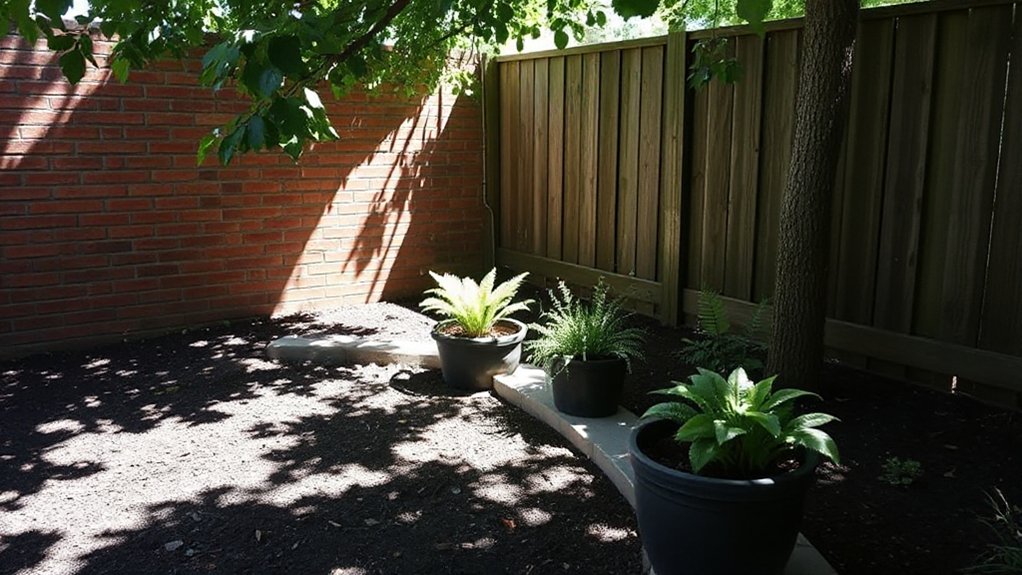
Although “shade” sounds like a single condition, your corner’s light profile can vary sharply by hour and season, and that difference determines which plants will actually thrive. You’ll get best results by classifying shade intensity and duration, not guessing. Track direct sun with a simple log (or phone compass) across morning, midday, and late afternoon in spring and midsummer. If you see <2 hours of direct sun, treat it as deep shade; 2–4 hours as partial shade; >4 hours as bright shade. Note “dappled” shade under open canopies versus “solid” shade near walls or evergreens, because leaf density changes photosynthetic light. Match plants accordingly: deep shade favors Colorful foliage; partial or bright shade supports Fragrant blooms and higher flower counts.
Is It Dry Shade or Damp Shade Soil?
Before you pick plants for shade, determine whether your corner runs dry or stays consistently damp, because soil moisture controls root oxygen, nutrient uptake, and drought stress more than light does. Start with a simple infiltration test: dig a 20 cm hole, fill it with water, let it drain, then refill and time the drop. If it falls less than 2.5 cm per hour, Soil drainage is limited and the site trends damp.
Next, assess Moisture retention. After rain, squeeze a handful of soil from 10 cm depth: if it ribbons and stains your palm, clay and organic matter hold water; if it crumbles and feels gritty, it dries fast. Finally, check cues: surface moss, anaerobic odor, and standing water indicate chronic saturation; hard, cracked soil and dry leaf litter suggest dry shade.
Best Plants for a Shaded Garden Corner (By Condition)
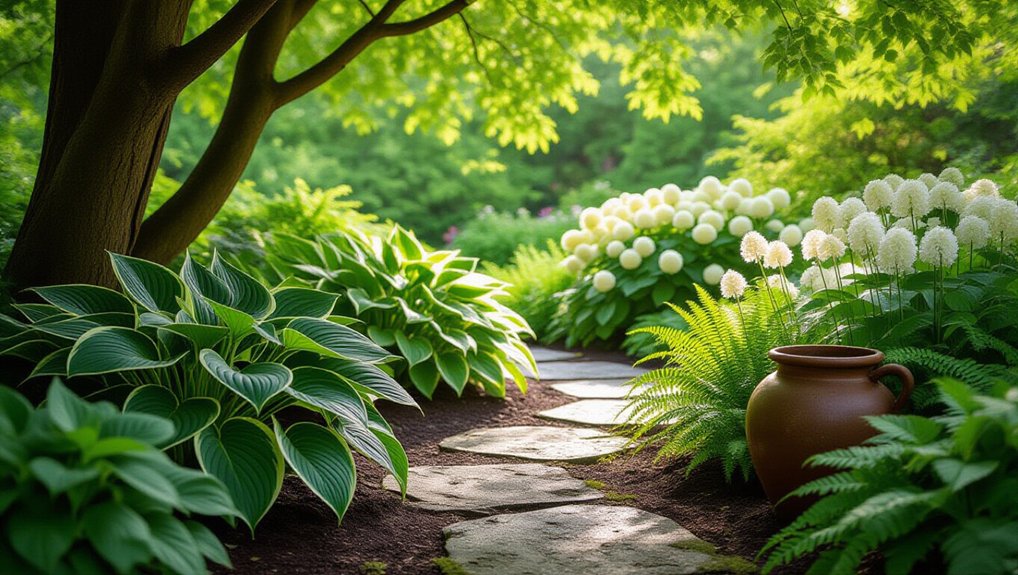
Once you’ve pinned down whether your shaded corner runs dry, stays damp, or swings between the two, you can match plants to the site’s limiting factor—usually moisture and drainage rather than light. In dry shade (under trees, fast-draining soils), choose drought-tolerant shade plants: Epimedium, Helleborus, Geranium macrorrhizum, and Carex. In damp shade (poor drainage, downspouts), pick moisture-tolerant species: Ligularia, Astilbe, Primula, and Osmunda ferns; they maintain turgor and reduce scorch. For intermediate sites, use versatile performers such as Hosta, Dryopteris ferns, and Heuchera. If root competition or drainage is extreme, apply plant containerization (pots or bottomless sleeves) to control substrate. Keep selections compatible with your garden layout constraints.
How to Design a Shade Corner That Looks Full
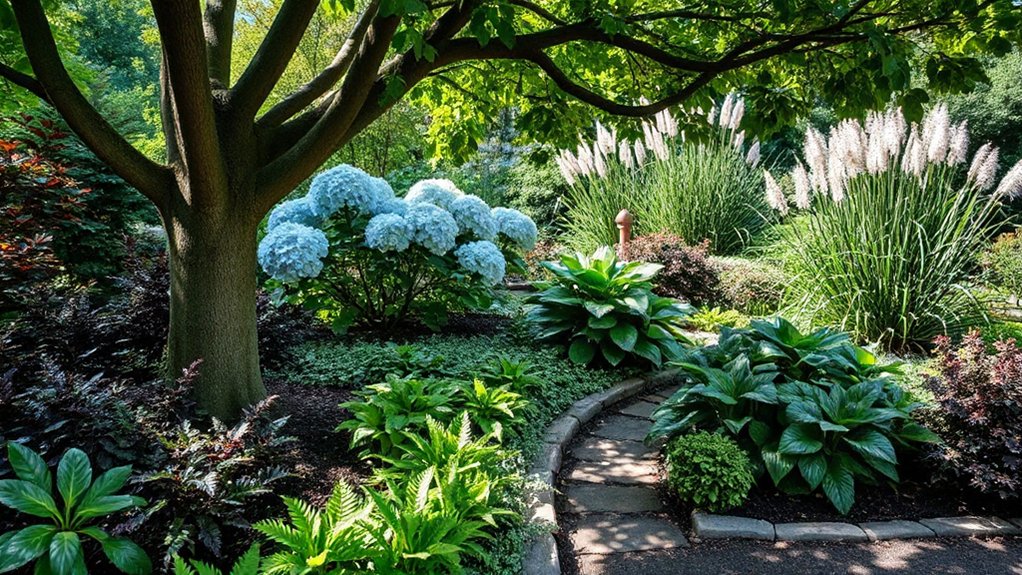
With moisture and drainage matched to the right shade-tolerant plants, you can make a shaded corner read “full” by controlling structure rather than chasing blooms. Start your garden layout with three height tiers: a tall backdrop (ferns, shrub), mid-layer (hosta, hellebore), and a ground layer (sedges, epimedium). Use repeat groups of 3–5 to create visual mass; research shows repetition improves perceived density more than single specimens. Tighten plant placement by spacing to mature spread, then interplant temporary fillers (annual impatiens, small heuchera) for year-one coverage. Stagger clumps in triangles to eliminate straight gaps. Keep leaf texture varied but limit to 2–3 dominant forms, and edge the bed crisply to signal intention.
Frequently Asked Questions
How Can I Improve Drainage in a Shaded Corner Without Removing Plants?
Improve drainage by top-dressing with Soil amendments like compost and grit, then aerating with a fork. Apply Mulching techniques using coarse bark to reduce compaction, and install a shallow French drain to redirect excess water.
Are There Shade Plants That Repel Slugs and Snails Naturally?
Yes—you can use shade plants as slug deterrents via natural repellents. Plant ferns, heuchera, and foxglove; their tougher textures and alkaloids reduce feeding. Pair with alliums and thyme to disrupt trails.
When Is the Best Time to Plant Shade-Loving Perennials?
You’ll get best results planting shade-loving perennials in early spring or early fall. For example, you plant hostas in September: cool roots establish fast. Keep garden soil moist, and match planting depth to the crown.
Can Shade Plants Survive Under Black Walnut Trees?
Yes, you can grow some shade plants under black walnut trees if you select juglone-tolerant species and improve drainage. You’ll succeed with Evergreen shrubs and Ornamental grasses, while you’ll avoid sensitive perennials, verified locally.
How Do I Prevent Fungal Diseases in a Densely Planted Shade Bed?
Prevent fungal disease by increasing airflow: thin plants, prune, water mornings at soil level, and mulch. Improve drainage with soil amendment (compost). Use companion planting for diversity, remove infected debris, and rotate susceptible species.
Conclusion
Congratulations—you’ve found the one garden corner where the sun refuses to clock in. Don’t “wing it.” Measure light hours, note whether shade is dappled or deep, and test soil moisture (dry under roots vs consistently damp). Then match plants to that data: dry shade needs tough, drought-tolerant picks; damp shade tolerates moisture. Layer heights and repeat textures so it looks intentional, not like you’re hiding horticultural mistakes.
About the Author