
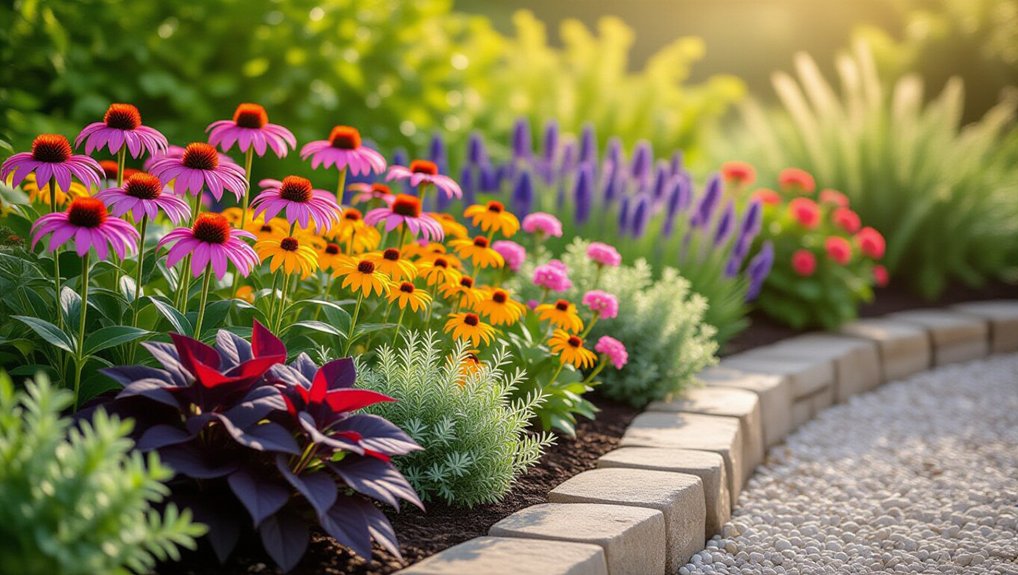
Start by matching perennials to your light: in full sun, plant catmint, coreopsis, and purple coneflower for long, heat-tough colour; in part shade, use hardy geranium and astilbe; in dry shade, tuck in epimedium. Repeat plants in drifts of 3–7 for bold blocks, and edge paths with low nepeta. Stagger bloomers—hellebores to peonies to asters—and deadhead weekly for repeat flushes. Keep going to see easy pairings and timing.
Key Takeaways
- Choose perennials that match your sun level (full sun, part shade, dry shade) for reliable colour and easier success.
- Pick long-blooming, heat-tolerant staples like coneflower, catmint, and coreopsis to keep beds colourful with minimal fuss.
- Stagger early-, mid-, and late-season bloomers so something is always flowering from spring through fall.
- Plant in drifts of 3–7 and layer heights (low, mid, tall) to create bold, cohesive colour blocks.
- Use colourful foliage plants like heuchera, artemisia, and alchemilla, and deadhead regularly to extend blooming.
Choose Beginner Perennials by Sun and Bloom Length
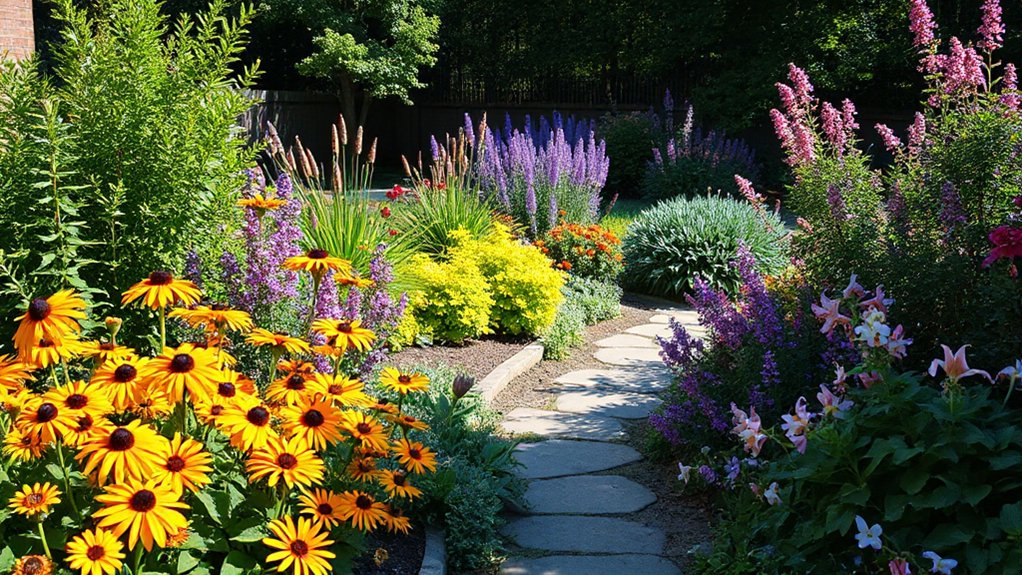
If you match perennials to your garden’s sun exposure and pick varieties with long or staggered bloom windows, you’ll get dependable colour without constant replanting. In full sun, start with purple coneflower, catmint, and coreopsis; they flower for weeks, handle heat, and forgive missed watering. For part shade, use hardy geranium and astilbe; in dry shade, try epimedium for tidy foliage and subtle spring colour. Let your garden layout do the work: mass one variety in drifts of three to seven for stronger colour blocks, and edge paths with low growers like catmint to soften lines. Choose cultivars bred for mildew resistance, and practice simple pest management by spacing plants for airflow and removing spent stems promptly.
Stagger Perennial Bloom Times for Nonstop Colour
Because most perennials peak hard and then rest, you’ll get steadier garden colour by planning a relay of bloom times—early, mid, and late—rather than relying on one long-flowering star. Start with early anchors like hellebores, creeping phlox, and iris reticulata to wake up beds. Move into midseason with peonies, catmint, and daylilies for bold blocks of colour. Finish strong with late performers such as coneflower, sedum ‘Autumn Joy’, Japanese anemone, and asters that carry you into fall. Use garden planning to map bloom windows on a simple calendar, then fill gaps with repeat-blooming salvias where needed. Seasonal planting matters: add spring bloomers in fall, and plant summer/fall perennials in spring for fast establishment.
Combine Perennials That Look Good Together
Once you’ve mapped bloom times, focus on pairings that stay attractive even when one plant rests by matching colour, texture, and habit. Anchor beds with repeat performers: purple Salvia nemorosa beside yellow Coreopsis verticillata creates crisp contrast, while Echinacea purpurea with Nepeta ‘Walker’s Low’ blends pinks and blue-violets for a calm drift. Use height stacking—tall Verbena bonariensis threaded through mid-height daylilies and low Geranium ‘Rozanne’—so gaps never read empty. For Colorful leaf combinations, pair silver Artemisia ‘Powis Castle’ with burgundy Heuchera and chartreuse Alchemilla mollis. Follow Companion planting tips: match sun and soil needs, and repeat the same duo in three spots to unify the border. Add white Achillea to cool hot schemes.
Use Colourful Perennial Foliage Between Blooms
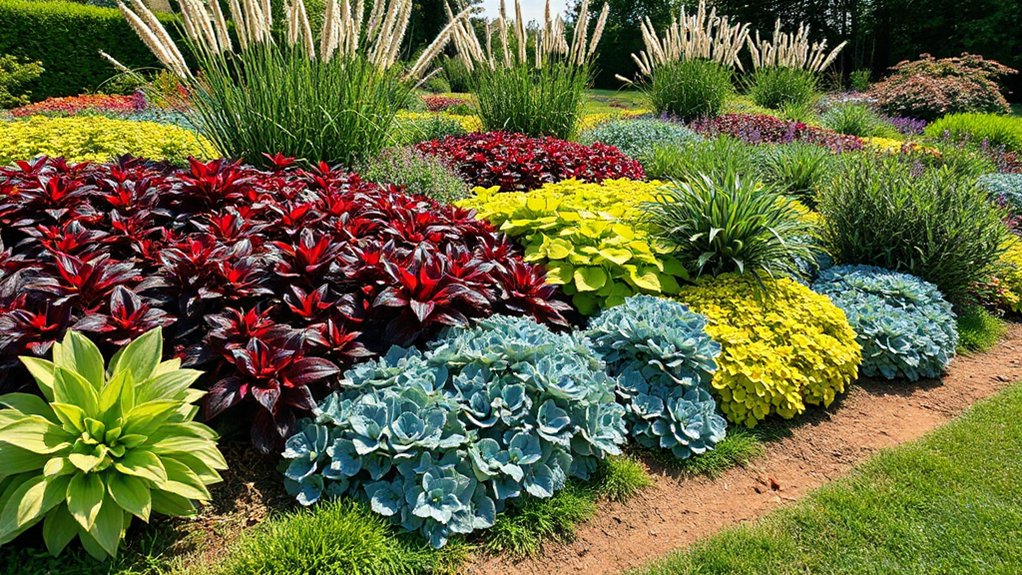
While blooms come and go, foliage carries your colour scheme all season, so build “between-bloom” interest with perennials chosen for leaves first: burgundy Heuchera (‘Obsidian’, ‘Caramel’), chartreuse Alchemilla mollis, silver Artemisia ‘Powis Castle’ or Stachys byzantina, and blue-green Hosta or Brunnera ‘Jack Frost’ in shade. For strong Foliage contrast, pair dark heucheras against golden grasses like Hakonechloa macra ‘Aureola’ or against lime sedges (Carex ‘Evergold’). Repeat one leaf colour every few feet to unify the bed, then use a second as an accent at entry points or corners. Pay attention to Seasonal foliage shifts: spring chartreuse matures greener, and silver reads brightest in full sun and lean soil. Use larger leaves up front for bold blocks.
Deadhead, Divide, and Feed Perennials for Repeats
Even if you’ve chosen long-blooming perennials, you’ll get noticeably more colour by treating maintenance like a design tool. Deadhead coreopsis, salvia, and coneflower weekly, cutting spent stems to the next bud or basal leaves; these pruning techniques push fresh flushes and keep borders crisp. For daylilies, remove seed pods and yellowing scapes so the clump reads clean.
When bloom slows, divide bearded iris, Shasta daisy, and nepeta every 3–4 years, replanting outer fans or vigorous crowns to reset flowering and tighten drifts. Pair division with soil preparation: loosen the bed, mix in compost, and top-dress with a balanced slow-release fertiliser. Water deeply after feeding, then mulch lightly so nutrients hold and colour rebounds fast.
Frequently Asked Questions
How Much Do Beginner Perennials Cost per Plant on Average?
You’ll typically pay $5–$15 per plant for beginner perennials; gallon pots run $12–$25, and premium cultivars hit $30+. Perennial pricing varies by size, rarity, and region, so compare plant cost before designing.
When Is the Best Season to Plant Perennials in My Region?
You’ll get best results planting perennials in early fall or spring, aligning seasonal planting with climate considerations. Set asters and coneflowers in fall; hostas and daylilies in spring. Site for sun, texture, and bloom sequence.
Can I Grow Colourful Perennials Successfully in Containers or Pots?
Yes—you can; containers can boost survival by up to 20% with improved drainage. Use Container gardening tips: big pots, gritty mix, steady watering. Focus on Colorful perennial selection like salvia, coreopsis, heuchera for layered color.
Are Any Colourful Perennials Toxic to Pets or Small Children?
Yes—some colourful perennials are toxic to pets or small children. For Pet safety, avoid Toxic plants like foxglove, lily-of-the-valley, monkshood, and hellebore. You’ll design safer borders by choosing pet-friendly alternatives and placement.
How Often Should I Water New Perennials During Their First Month?
Water new perennials every 2–3 days for two weeks, then weekly—adjust watering frequency for heat and soil. Soak deeply at roots. Add 2–3 inches mulch; mulch benefits include steadier moisture, cooler crowns, fewer weeds.
Conclusion
Start with sun-matched workhorses like coneflower, salvia, and daylily, then layer bloom times so one show hands off to the next. Pair reliable partners—catmint with roses, black-eyed Susan with ornamental grasses—and let foliage stars like heuchera and hosta keep beds vivid between flushes. Keep colour coming by deadheading, dividing crowded clumps, and feeding lightly. Do this, and your border becomes a baton relay of blooms—steady, seamless, and bright.
About the Author