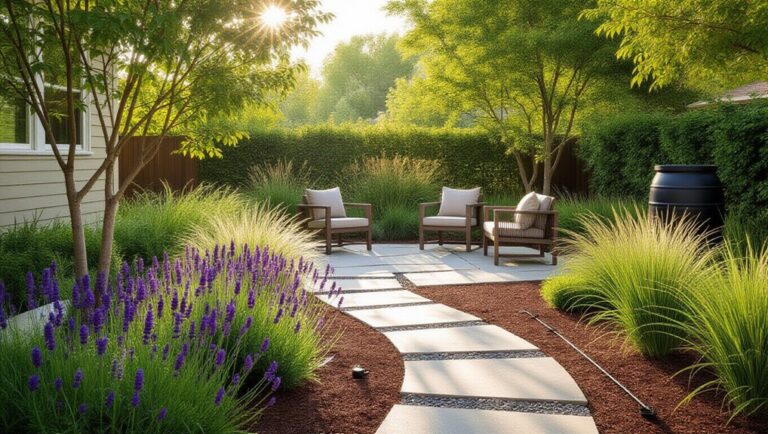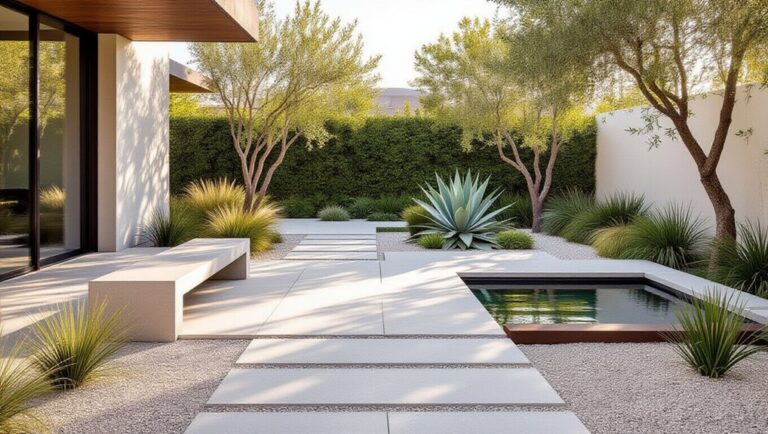
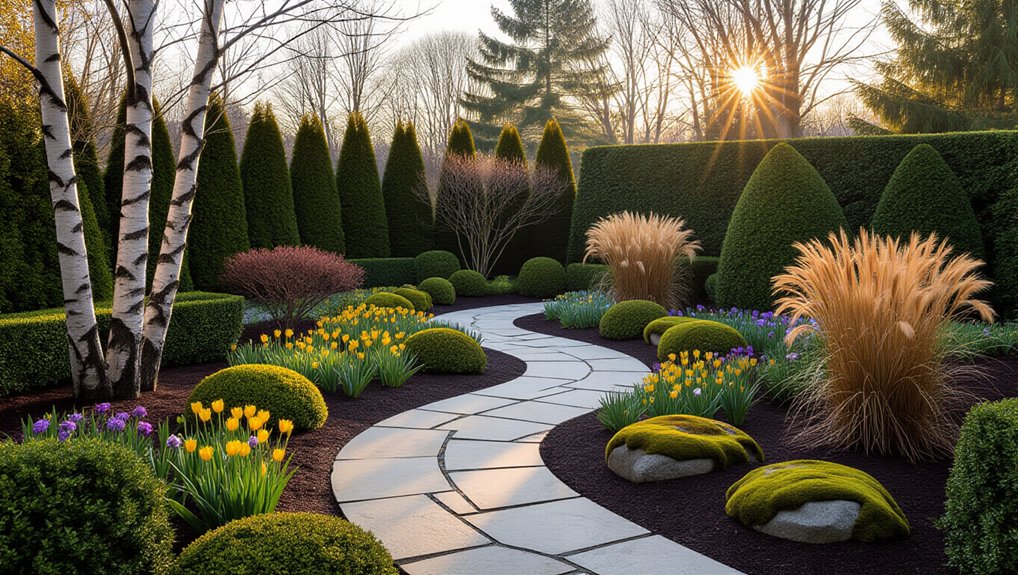
Start by mapping seasonal sun, wind corridors, frost pockets, and drainage so you place plants where they’ll thrive. Build “bones” with layered evergreens, then anchor sightlines with upright shrubs, multi-stem trees, and hardscape. Layer trees, shrubs, perennials, grasses, and bulbs to sequence bloom, foliage, and persistent seedheads. Repeat a few signature forms every 8–12 feet for cohesion. Maintain by phenology—adjust watering, pruning, and mulch as conditions shift—next, you’ll see how to time each season.
Key Takeaways
- Map seasonal sun, wind, drainage, and microclimates so plants match conditions and perform well in every season.
- Build “garden bones” with evergreens, shrubs, and hardscape to anchor views and provide year-round structure.
- Layer plants by height (trees, shrubs, perennials, grasses) and sequence bloom times for continuous interest.
- Repeat a few signature shapes and plants in modules along paths and edges to create cohesion across seasons.
- Plan maintenance by phenology: mulch and water deeply, divide and add bulbs in fall, and leave seedheads and bark for winter interest.
Set Your Site Basics for Year-Round Garden Design
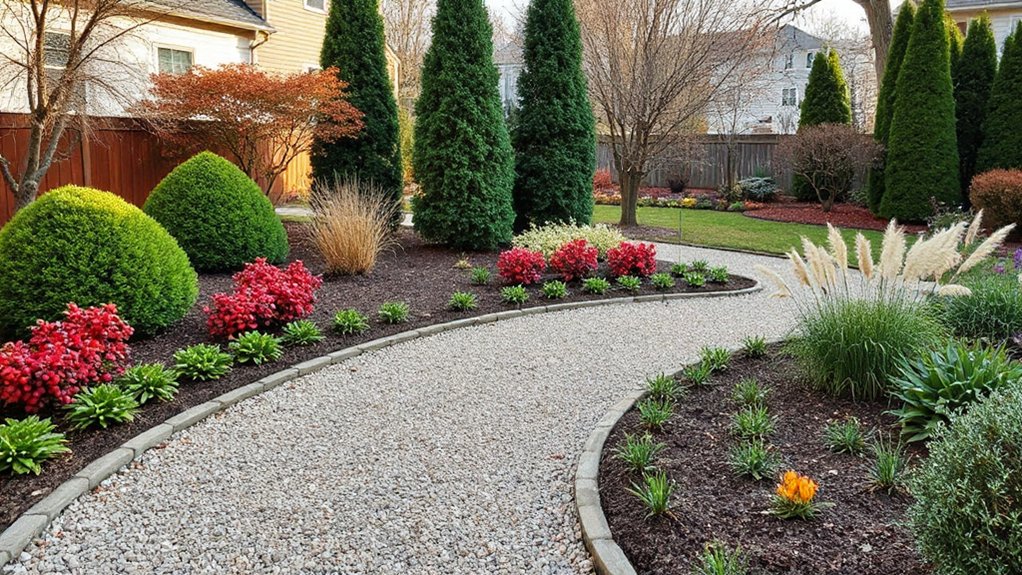
Before you pick plants or draw beds, lock down the site fundamentals that control year-round performance: sun exposure by season, drainage patterns, wind corridors, and existing soil conditions. Map winter shade from buildings and evergreens, then log summer peak sun hours; you’ll place beds where light is reliable. Flag low spots after storms, note downspout outlets, and trace flow paths so you don’t trap water against hardscape. For Water management, set grades to shed runoff, reserve infiltration zones, and plan hose reach or drip mainlines now, not later. For Soil preparation, run a soil test, confirm texture and compaction, and amend in-place with compost where structure is weak. Define access paths and service clearances to prevent soil damage and keep maintenance feasible.
Build Evergreen Structure (the Garden’s “Bones”)
Once you’ve confirmed sun, drainage, and access, build the garden’s evergreen framework so the space holds shape in every season. Start by mapping primary sightlines from doors, windows, and seating, then place anchor plants where you need year-round mass and screening.
Use Evergreen shrubs in layered bands: tall at boundaries for wind buffering, medium at mid-depth for visual weight, and low along edges to define beds. Keep spacing true to mature width so plants knit without constant shearing. Add vertical bones with multi-stem evergreens or clipped hedges to mark corners and terminate views.
Lock circulation with Garden pathways that follow desire lines, maintain 900–1200 mm width, and use edging to prevent gravel migration and soil creep.
Plan a Four-Season Garden Calendar (Spring to Winter)
Although your evergreen structure holds the garden’s shape, you’ll need a four-season calendar to time bloom, foliage, fruit, and winter interest against your site’s frost dates, heat peaks, and rainfall pattern. Start by mapping microclimates: south walls, low frost pockets, wind corridors, and dry shade under trees. Record last/first frost and weekly soil moisture; then assign tasks by window.
Spring: schedule soil testing, compost top-dressing, irrigation start-up, and slug monitoring. Summer: lock in deep watering cycles, mulch refresh, and heat-stress triage in exposed beds. Autumn: plan leaf capture for mulch, divide perennials, and install bulbs before soil drops below 50°F. Winter: prune on dry days, protect tender roots, and position garden art as focal points near paths. Maintain wildlife habitat with clean water, shelter zones, and reduced disturbance.
Pick Plants With Multi-Season Interest (Bloom, Bark, Seedheads)
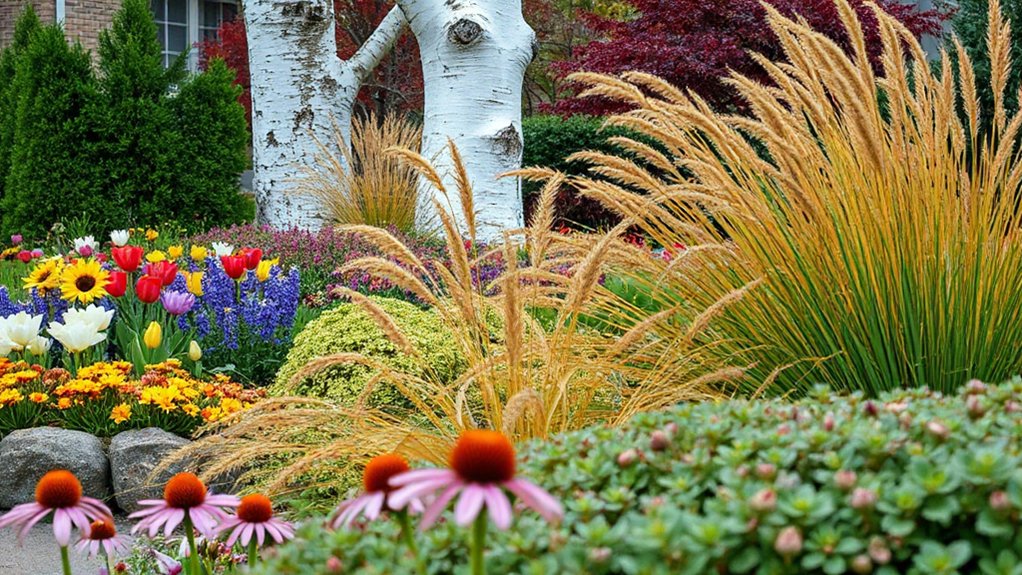
You’ll build four-season continuity by selecting plants that flower in sequence, matching bloom windows to your site’s sun exposure, soil moisture, and hardiness zone. You’ll then weight the palette toward winter structure—species with persistent seedheads and exfoliating or colored bark that holds visual contrast after frost. You’ll map these traits by bed and viewpoint so each planting zone carries interest from spring flush through dormant season.
Choose Plants For Succession
To keep your beds and borders visually active across all four seasons, choose plants that deliver succession through multiple features—flowers, foliage, bark, and seedheads—rather than relying on a single bloom window. Match each plant’s peak to your site’s light, moisture, and exposure so performance stays predictable.
Build a relay: start with early bulbs and cool-season perennials, hand off to summer repeat bloomers, then shift to late-season asters, salvias, and grasses. Use companion planting to overlap heights and textures, so gaps close as one plant fades and another expands. In lean soils, pair nitrogen-fixing legumes with heavy feeders and top-dress with compost to stabilize soil fertility and sustain rebloom. In windier beds, favor sturdy stems and basal rosettes that hold form between flushes.
Prioritize Bark And Seedheads
Succession planning works best when you also bank on structure that persists after petals drop, so prioritize plants with standout bark and durable seedheads. On north-facing beds, use paperbark maple or river birch to catch low winter light; in exposed sites, choose dogwood with colored stems for windproof color.
In mixed borders, layer seedhead performers: Echinacea, rudbeckia, sedum, and ornamental grasses. Leave stems standing through frost for birds and snow-catching texture, then cut back in late winter before new growth. Anchor them with evergreen backdrops so silhouettes read from the house.
Match selections to soil and drainage: add composted leaf mold for soil enrichment, and avoid waterlogged crowns. Use garden accessories—uplights, dark mulch, and steel edging—to frame bark and seedheads after dusk.
Layer Trees, Shrubs, Perennials, and Grasses for Continuity
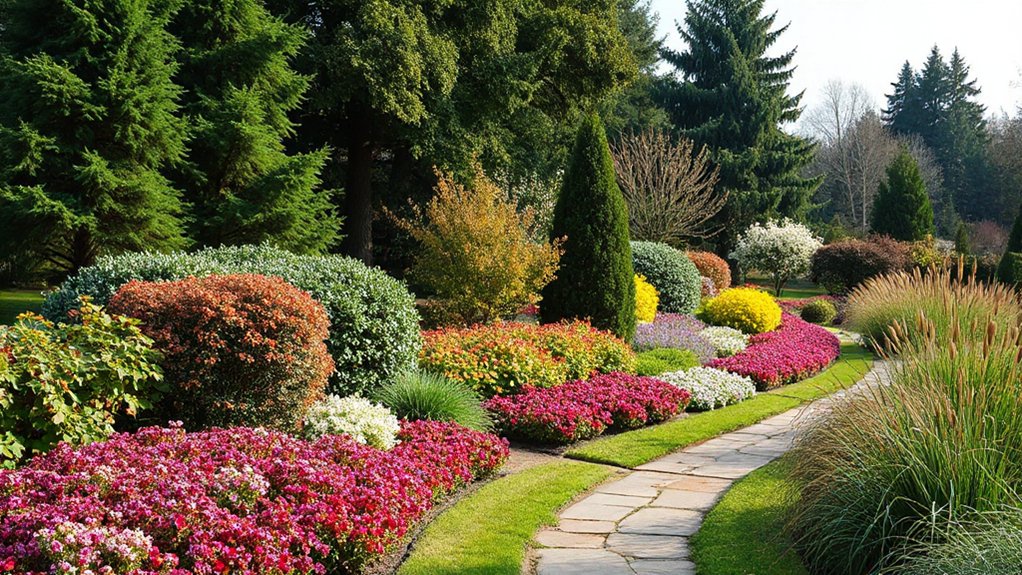
Start by building a layered backbone: place canopy and understory trees to set structure and wind filtering, then mass shrubs at bed edges for mid-height volume. You’ll stitch continuity by threading perennials and clump-forming grasses through the shrub matrix to cover soil, buffer shifts, and hold form after bloom. Stagger seasonal interest by sequencing species so foliage, flowers, seedheads, and winter silhouettes trade off across each layer from spring through freeze.
Build A Layered Backbone
Although your flower choices may shift with trends and microclimates, a layered backbone keeps the garden visually stable in every season by assigning year-round roles to canopy trees, understory shrubs, structural perennials, and grasses. Start by mapping sun, wind, and soil moisture zones, then place 1–2 canopy anchors where roots won’t conflict with paving or utilities. Add mid-layer shrubs along sightlines and property edges to define “walls” and reduce winter exposure. Use structural perennials as repeating uprights at path nodes and bed corners, spacing for mature clumps and maintenance access. Thread grasses in drifts to unify gaps and soften hard edges without blocking views. This Structural foundation lets you edit colors later without breaking form. Keep layers legible and proportionate to scale.
Stagger Seasonal Interest
Where does your garden go visually quiet—late winter, the post-bulb “gap” in early summer, or after the first frost? Map those dead zones to microclimates: south walls warm early, low spots frost late, and windy corners desiccate.
Then stack plants by season and height. Anchor winter with evergreen structure plus bark and berry shrubs (Ilex, Cornus). Bridge spring to summer using early bulbs under leafing deciduous shrubs, followed by long-bloom perennials (Nepeta, Salvia). Carry late summer into fall with seedheads and drought-tolerant grasses (Panicum, Calamagrostis) that stand through snow. Group in repeating drifts for continuity and efficient garden maintenance. Leave stems and seedheads until late winter for wildlife attraction, then cut back before new basal growth starts.
Use Bulbs to Fill Gaps With a Simple Bloom Timeline
When you map your garden by season and sunlight exposure, bulbs become the most reliable way to plug color gaps without redesigning entire beds. Start with Bulb planting in drifts that match each microclimate: south-facing borders warm early, north sides bloom later, and under deciduous trees tolerate spring sun then summer shade. Build a Bloom timeline: late winter/early spring (snowdrops, crocus), mid-spring (daffodils, species tulips), late spring (alliums, camassia), early summer (lilies). Place early bulbs near paths and entries where you’ll notice them first; tuck later bulbs behind perennials that expand after bulb foliage ripens. Keep spacing tight (2–3× bulb width) and label clusters for future gap-filling. Water after planting, then let rainfall carry them.
Design Winter Interest: Texture, Silhouette, and Color
Even if your planting beds go dormant, you can design winter interest by specifying plants and hardscape for three measurable traits—texture, silhouette, and color—based on what remains visible above snowline and against your site’s winter light. For texture, place fine stems and grasses where prevailing winds won’t flatten them; pair with coarse bark, stone, or gravel that reads at 20–30 feet. For silhouette, anchor corners and sightlines with upright shrubs, multi-stem trees, and persistent seedheads that hold structure after leaf drop. For color, prioritize winter foliage (evergreen needles, leathery leaves) plus high-contrast bark and berries that stay through freeze–thaw cycles. In shady north exposures, use pale stems and light rock to catch low sun and amplify snow accents.
Repeat Plants and Shapes for a Cohesive Year-Round Look
Because seasonal change can make a mixed border read as visual noise, you’ll get a cohesive year-round look by repeating a small set of “signature” plants and echoing their shapes at consistent intervals along paths, bed edges, and key sightlines from windows and entries. Use Plant repetition in modules: repeat the same evergreen mound, the same vertical accent, and the same airy filler every 8–12 feet, adjusted to your bed depth and viewing distance. Maintain shape consistency by pairing like forms across seasons: spheres (boxwood, heuchera), spires (calamagrostis, salvia), and flats (sedum, lamium). On corners and gate views, double the signature forms to anchor perspective. In long borders, run a continuous rhythm at the front edge to unify gaps.
Keep Year-Round Impact With a Season-by-Season Care Plan
Repeated “signature” plants and echoed shapes keep the design readable, but they’ll only hold their form and timing if you run a season-by-season care plan keyed to your site. Map exposures, wind, and drainage, then schedule tasks by phenology, not calendar dates.
Spring: do soil testing, top-dress compost to match results, and prune summer bloomers late. Set drip timing to soil texture and slope.
Summer: scout weekly for garden pests, threshold-treat, and deadhead to extend flowering; adjust irrigation using morning moisture checks.
Fall: cut back only what flops, leave seedheads for winter structure, divide congested clumps, and refresh mulch after first rains.
Winter: protect crowns on frost pockets, clean tools, and review notes to shift plant placement where performance lagged.
Frequently Asked Questions
How Do I Design a Four-Season Garden on a Tight Budget?
You’ll design a four-season garden cheaply by prioritizing Seasonal plant selection for your zone/exposure, using perennials, bulbs, and shrubs. Apply Garden maintenance tips: mulch, compost, divide plants, sow seed, buy end-of-season sales.
Which Plants Are Safest for Gardens With Pets and Children?
Choose non-toxic species: marigold, zinnia, sunflower, nasturtium, rosemary, basil, thyme, and fescue. Verify Plant toxicity via ASPCA for your zone. Use Child safe foliage like hosta on shaded beds; fence bulbs.
How Can I Reduce Allergies With Plant Choices and Garden Layout?
Even if you think you can’t avoid pollen, you can: choose female/low-pollen species, add Pollution resistant plants as windbreaks, and apply Allergy friendly landscaping—hardscape near entries, drip irrigation, and place high-pollen trees downwind.
What Are the Best Year-Round Garden Options for Renters or Balconies?
For renters/balconies, you’ll get year-round success with Urban gardening via Container planting: use frost-hardy herbs, dwarf evergreens, and seasonal annuals. Site containers by sun exposure, add drip trays, and layer heights for microclimate control.
How Do I Protect a Four-Season Garden From Deer and Rabbits?
Like a well-locked gate, you’ll protect a four-season garden by installing rabbit proof fencing (¼-inch mesh, 24 inches buried) and applying Deer deterrent strategies: 8-foot perimeter fence, motion lights, and localized repellents near entry trails.
Conclusion
You’ve set the site, built evergreen bones, and scheduled bloom so each bed performs from thaw to freeze. In April, bulbs puncture wet mulch; in August, grasses stitch heat shimmer into edges. When flowers fade, bark, seedheads, and silhouettes take over, bright against low winter light. You’ll repeat forms, anchor sightlines, and maintain soil, water, and cuts by season. The result feels controlled yet alive: clipped structure beside drifting texture, year-round.
About the Author