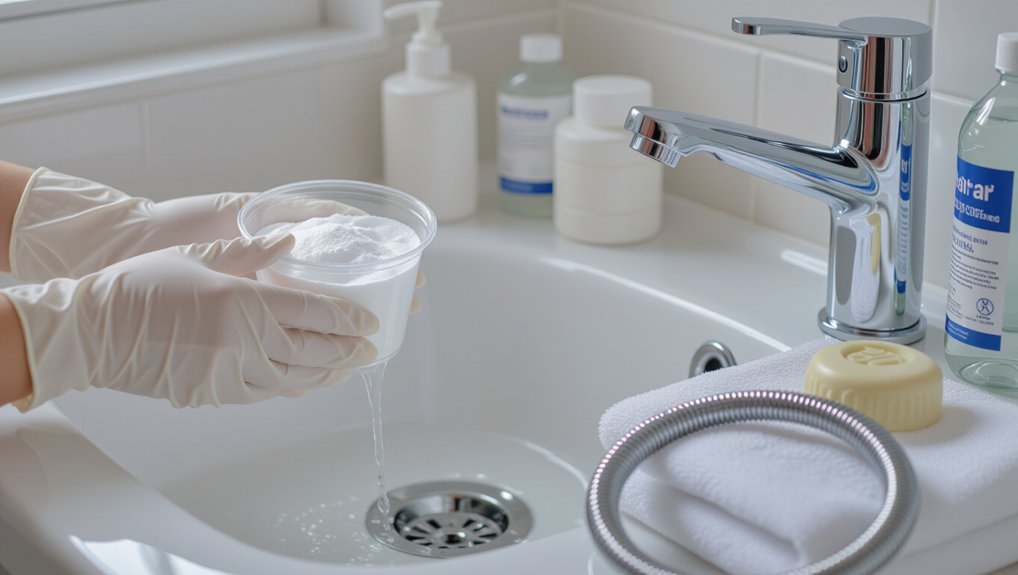
Shut off the faucet, wear nitrile gloves, and pull the stopper so you can remove the hair and soap scum plug first; wipe the flange and bag the debris. Add a few inches of water, seal the overflow with a wet rag, and use a cup plunger for 10–15 firm strokes. If it’s still slow, feed a small hand snake straight down, rotate clockwise, then retract and flush hot water. Keep going to learn the next steps and warning signs.
Key Takeaways
- Remove the drain stopper and pull out hair and soap scum using a plastic drain tool or bent zip tie.
- Rinse the stopper and drain flange with hot water, bag the debris, and reinstall the stopper to test drainage.
- Plunge with a cup plunger: fill basin slightly, seal the overflow with a wet rag, and do 10–15 firm strokes.
- If still slow, use a drain snake: feed straight down, rotate clockwise, retract slowly, then flush with hot water for 60 seconds.
- Call a plumber if backups persist, multiple fixtures drain slowly, or sewage odors/gurgling occur; avoid caustic chemical drain cleaners.
Remove Hair From the Drain Stopper First
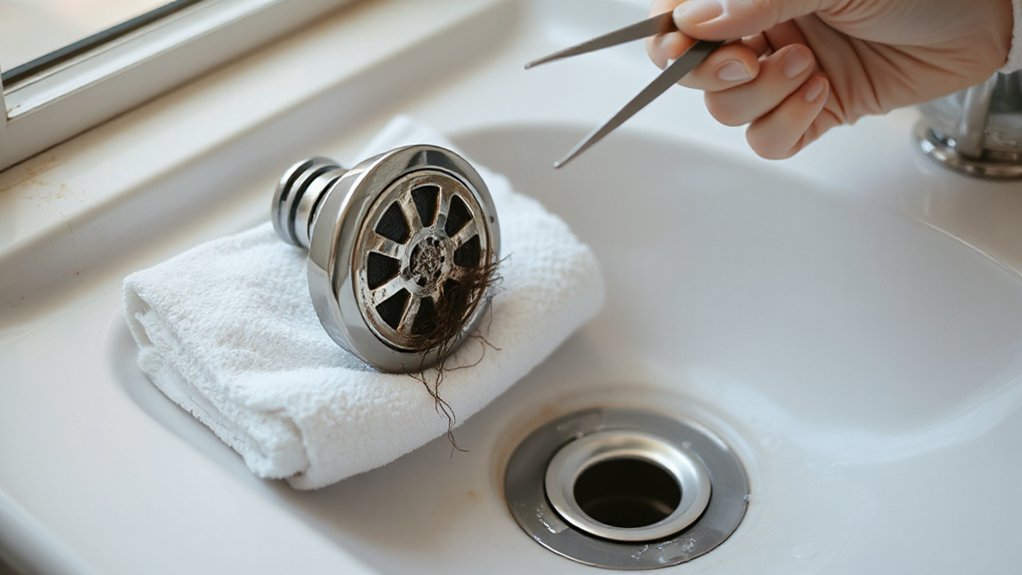
Before you reach for chemicals or a drain snake, remove the stopper and clear any hair and soap scum trapped around it, since this is the most common restriction in slow bathroom drains. Shut off the faucet, don nitrile gloves, and place a towel in the basin to protect the finish. Remove the stopper per manufacturer type: lift-and-turn, push-pull, toe-touch, or pop-up (disconnect the pivot rod only if accessible and you can reassemble). Use a plastic drain tool or bent zip tie for Hair removal, then wipe the stopper and flange. Collect debris in a bag; don’t rinse it into the trap. Rinse with hot water for Drain cleaning, and verify the seal and stopper travel. Restore parts tightly.
Plunge the Slow Bathroom Drain in 60 Seconds
Once you’ve cleared the stopper area, use a cup plunger to pulse water through the trap and break up the remaining soft clog without chemicals. Partially fill the basin so the plunger’s cup stays submerged, then seal the overflow opening with a wet rag to prevent air loss and splashback. Center the plunger over the drain, keep the handle vertical, and deliver 10–15 firm strokes in about 60 seconds. You should hear the trap gurgle and feel suction return. Run hot tap water for 30 seconds to verify flow and clear loosened residue. Don’t use Chemical cleaners before plunging; they can splash and violate safe work practices. For Drain maintenance, repeat monthly and restore the stopper.
Snake Hair and Soap Scum From a Slow Bathroom Drain
If plunging doesn’t restore full flow, use a hand-crank drain snake (or plastic hair zip tool) to physically remove hair and soap scum from the branch line instead of relying on chemicals. Put on nitrile gloves and eye protection, and set a bucket under the trap to catch drips. Remove the stopper, feed the tool straight down the drain, and rotate clockwise while advancing. You’ll feel resistance at Hair buildup; keep steady pressure so you don’t kink the cable or damage the trap arm. Retract slowly and wipe off gunk outside the fixture to avoid splatter. Repeat until the tool comes back mostly clean. Flush with hot (not boiling) water to melt soap residue, then run the faucet for 60 seconds and check for leaks.
Know When a Slow Bathroom Drain Needs a Plumber
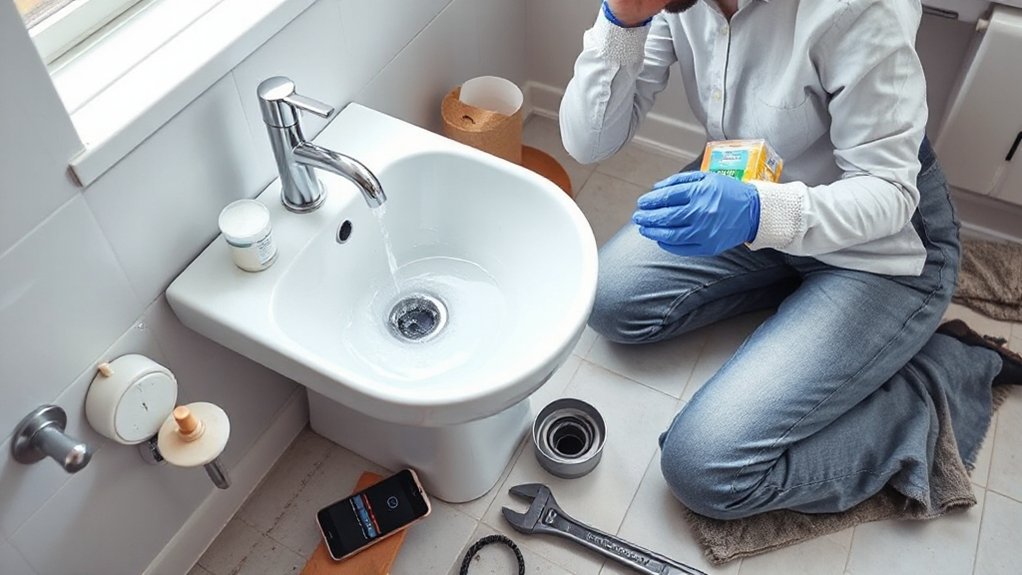
Although you can clear most minor clogs with a plunger or small snake, you should call a licensed plumber when the slow drain points to a system-level problem you can’t access safely or service to code—such as repeated backups after cleaning, multiple fixtures draining slowly at the same time, sewage odor or gurgling that suggests a venting issue, standing water that returns within hours, or any leak at the trap arm or slip joints that won’t seal with proper parts and torque. If you’ve used proper Drain cleaning steps and the line still won’t hold flow, stop before you damage fittings or violate trap and vent requirements. Don’t use caustic chemicals; they can burn you and deteriorate piping. A plumber can camera-inspect, clear the branch or stack, verify venting, and restore code-compliant Plumbing maintenance.
Frequently Asked Questions
How Can I Prevent Slow Bathroom Drains From Returning Regularly?
Prevent slow drains by practicing drain maintenance weekly: remove hair, flush with hot water, and use enzyme cleaners. You’ll schedule plumbing inspections annually, keep traps sealed, and avoid caustics to stay code-compliant.
Are Chemical Drain Cleaners Safe for Older Bathroom Plumbing?
Up to 50% of plumbing failures involve corrosion, so you shouldn’t use chemical drain cleaners on older plumbing. Chemical safety concerns include fumes and heat; plumbing corrosion can accelerate, violating code—use enzymatic cleaners or mechanical snaking.
Can Baking Soda and Vinegar Damage My Pipes or Fixtures?
You generally won’t damage pipes or fixtures using baking soda and vinegar, but you should avoid frequent use. Their chemical reactions can loosen debris, yet won’t cause pipe corrosion; still, follow local plumbing code.
Why Does My Bathroom Drain Smell Even After Clearing Clogs?
Your drain smells because drain odor lingers in biofilm, dry P-traps, or venting faults even after clogs clear. Like a guarded gate, you must flush, refill traps, clean safely, and schedule plumbing maintenance.
How Do I Know if My Slow Drain Is Caused by a Vent Blockage?
You’ll suspect Vent blockages if fixtures gurgle, traps siphon, or water drains sluggishly across multiple drains. Perform a Drain inspection: verify roof vent airflow safely, follow local plumbing code, and stop if you smell sewer gas.
Conclusion
You’ve cleared hair, plunged, and snaked the line, so your drain should run faster—but don’t assume “slow” is harmless. If backups persist, you’re likely dealing with a venting issue, a partial main-line blockage, or damaged piping, and DIY chemicals can violate manufacturer instructions and local code while risking burns. Stop if you see leaks, corrosion, or repeated clogs. Call a licensed plumber to protect your plumbing system and keep your bathroom safe.
About the Author