Start by measuring your room and mapping doors, windows, and circulation so you don’t block flow—long rooms suit a single aisle, square rooms need balanced zones, and L-shapes should keep inner corners open. Fit storage to what you own: double rails for shirts, full-height rails for coats, shallow shelves above, deeper shelves at eye level, and divided drawers on full-extension runners. Add slim shoe tiers, a storage bench, accessory inserts, and vertical LED strips; there’s more ahead.
Key Takeaways
- Measure the room footprint first, sketch circulation paths, and keep a clear central dressing zone to prevent cramped, blocked walkways.
- Match storage to garments: double rails for short items, full-height hanging for coats and dresses, plus shallow top shelves for folded pieces.
- Add deep eye-level shelves for neat denim stacks and full-extension drawers with dividers to keep small items visible and organized.
- Store shoes on slim tiered shelves or angled pull-outs, keep daily pairs low, and use labeled high boxes for seasonal storage.
- Use layered lighting and materials: vertical LED strips reduce shadows, mirrors expand depth, and matte laminates or felt-lined drawers add style and practicality.
Plan Your Walk‑In Wardrobe Layout by Room Shape
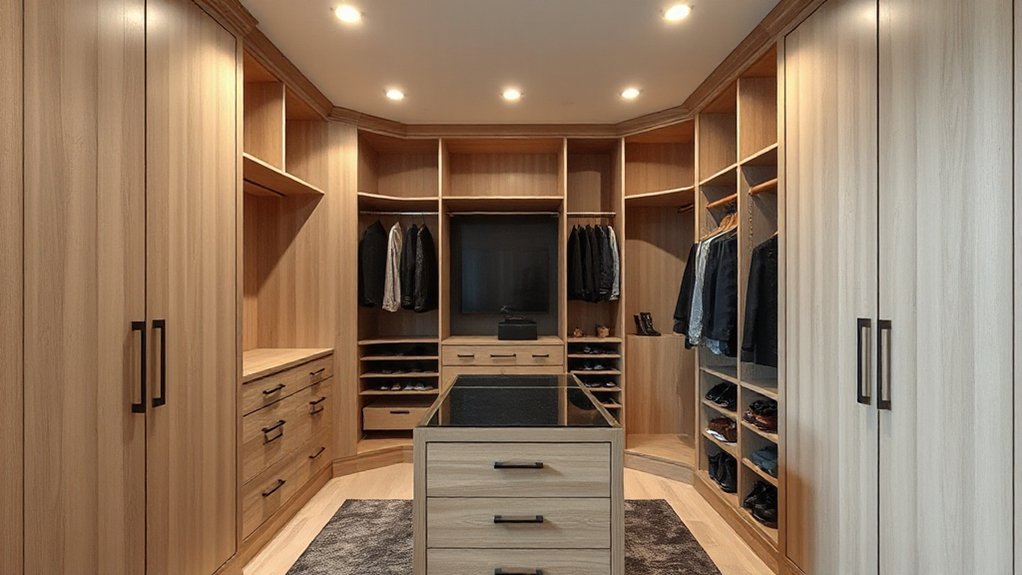
Because the shape of your room dictates how you’ll move, store, and see what you own, start your walk‑in wardrobe plan by mapping the footprint before you choose any fittings. Measure wall runs, ceiling height changes, door swings, and window locations, then sketch circulation lines you won’t block.
Let Room shape drive layout optimization: a long, narrow room suits a single clear aisle with uninterrupted sightlines; a square room benefits from balanced zones on all sides without crowding corners. In L‑shaped spaces, treat the bend as a progression point, keeping the inner corner open for turning. Reserve a calm, central standing area for dressing, and position mirrors and lighting where they broaden depth rather than create glare. Keep access to switches, vents, and outlets unobstructed.
Set Up Walk‑In Wardrobe Storage for Clothes (Rails, Shelves, Drawers)
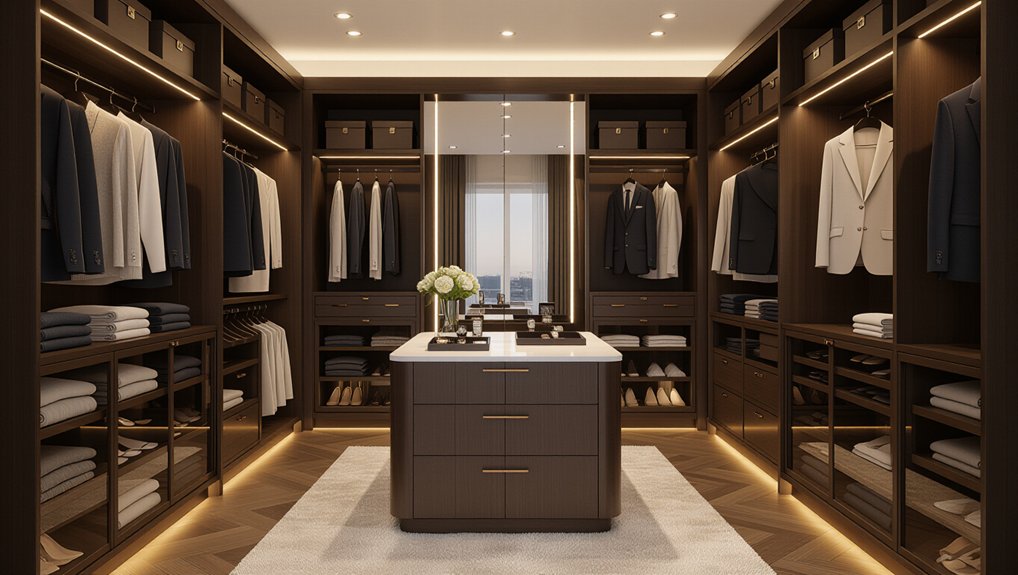
Once your layout feels effortless to walk through, dial in the storage by matching each garment type to the right mix of rails, shelves, and drawers. Use double rails for shirts and jackets, and a full‑height rail for coats and dresses so hems don’t crush. Keep a shallow shelf above rails for folded knits and spare hangers, and set deeper shelves at eye level for denim stacks that stay tidy. Add drawers for tees, lingerie, and workout wear; choose full‑extension runners and dividers so every item stays visible. For Lighting ideas, install vertical LED strips at cabinet sides to eliminate shadows. For Material choices, pick matte laminate for easy cleaning, timber veneer for warmth, and felt‑lined drawers to protect delicates.
Add Walk‑In Wardrobe Shoe and Accessory Storage That Saves Space
Even if your wardrobe isn’t oversized, you can make shoes and accessories feel effortless to grab by giving them dedicated, space‑smart zones that prevent piles from forming. Start with Shoe organization: slim, tiered shelves or angled pull‑out trays keep pairs visible without wasting depth, while clear toe‑front dividers stop leaning stacks. Reserve the lowest run for daily shoes and place seasonal pairs up high in labeled boxes. Add a narrow bench with lift‑up storage so you can sit, stash polish, and keep the floor clear. For accessories, use Accessory displays that double as décor: velvet‑lined drawer inserts for watches and jewellery, a wall rail with hooks for belts, and a vertical scarf hanger that keeps prints uncreased. Finish with mirrored trays for fragrance and keys.
Keep Your Walk‑In Wardrobe Organised With Simple Weekly Resets
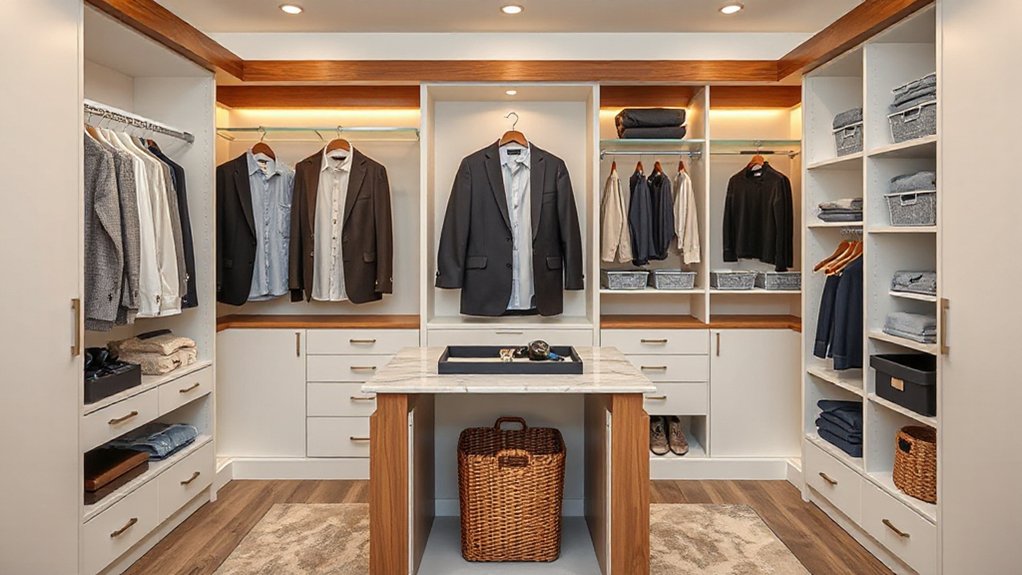
Dedicated shoe and accessory zones keep clutter from starting, but a quick weekly reset keeps it from creeping back. Set a 12‑minute timer, return stray items to their homes, and rehang pieces facing the same direction. Wipe shelf edges, straighten folded stacks, and empty pockets into a small catch dish you’ll sort immediately.
Next, edit with intent: move anything unworn to a “review” hanger, then decide—launder, repair, donate, or store. Refresh drawers by grouping by function and color for personalized organization, so outfits build faster. Finish with seasonal maintenance: rotate knits, sandals, and outerwear, check cedar blocks, and replace sachets. You’ll preserve space, protect fabrics, and keep your walk‑in wardrobe polished all week.
Frequently Asked Questions
How Much Does a Custom Walk‑In Wardrobe Typically Cost?
You’ll typically pay $2,000–$15,000+ for a custom walk‑in wardrobe, depending on size, finishes, and accessories. For Cost estimation and Budget planning, you’ll need measured drawings, material choices, and installation quotes from professionals.
Do I Need Building Permits to Convert a Room Into a Wardrobe?
You might need renovation permits, depending on your local building codes and the scope. If you’re moving walls, adding plumbing, or altering electrical, check with your council early to avoid delays.
What Lighting Temperature Is Best for Accurate Outfit Colour Matching?
Choose 5000K–6500K daylight color temperature for truest color matching. Like a lantern guiding a traveler, you’ll use balanced lighting techniques—high CRI LEDs, diffused beams, and even placement—so fabrics don’t skew warm or cool.
Which Wardrobe Materials Resist Humidity and Prevent Mould Best?
You’ll get the best humidity and mould resistance from Moisture resistant woods like marine‑grade plywood, teak, or cedar, plus stainless hardware and laminate panels. Pair them with Ventilation solutions—louvered doors, fans, and dehumidifiers.
How Can I Soundproof a Walk‑In Wardrobe to Reduce Noise?
You’ll soundproof your walk‑in wardrobe by sealing gaps with acoustic caulk, adding door sweeps, and lining walls with dense insulation and mass‑loaded vinyl—soundproofing techniques using noise reduction materials. Finish with thick carpet, heavy curtains.
Conclusion
You’ve shaped your walk‑in wardrobe to fit the room, then filled it with rails, shelves, and drawers that work as hard as you do. Where chaos once crept in, calm now lands: shoes stay paired, belts hang ready, jewellery rests in shallow trays. Small choices deliver big ease—open space beside precise zones. Finish with a weekly reset: rehang, refold, return. You’ll trade frantic mornings for quiet efficiency, every day.
About the Author