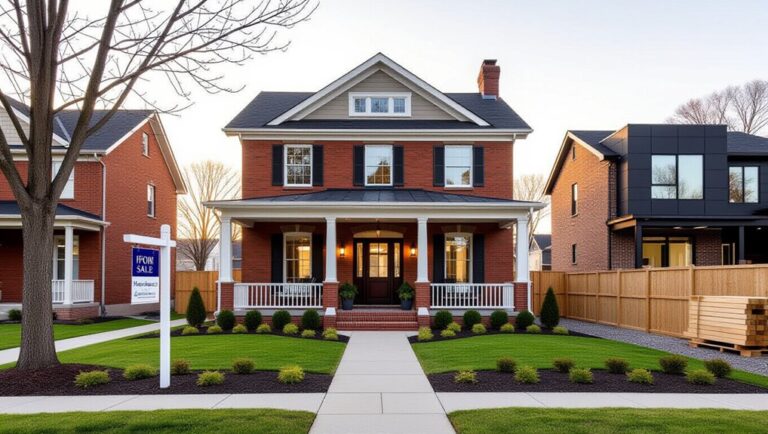
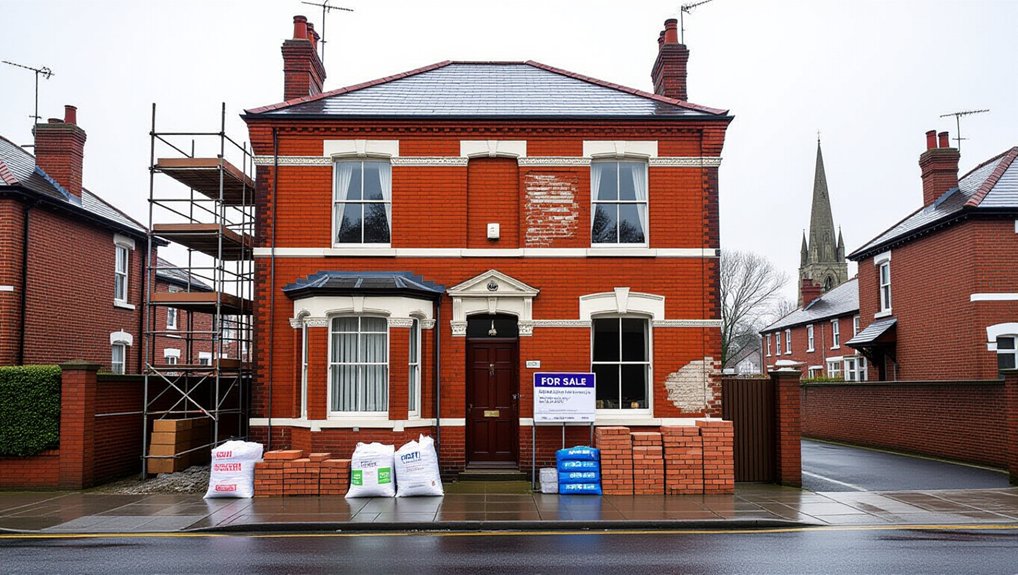
You’ll get the best budget renovation ROI in Midlands spots where sold-price data shows a clear “done vs tired” spread and demand stays liquid. In cities, look at Birmingham inner-ring terraces, Stoke-on-Trent below replacement cost, plus Nottingham and Leicester near job nodes. For commuter value-add, target Nuneaton, Rugby, Lichfield, and Long Eaton near stations. For character-led uplifts, consider Newark, Market Harborough, and Shrewsbury edge streets. Next, you’ll see how to shortlist streets and model returns.
Key Takeaways
- Birmingham inner-ring terraces offer high demand and fast resales; target cosmetic or layout issues for reliable value-add.
- Stoke-on-Trent lets you buy below replacement cost; prioritise rental-proof refurb specs to secure strong, steady yields.
- Nottingham supports balanced flips with multiple buyer pools; focus on areas where “done” homes sell 15–25% above tired stock.
- Rail-linked towns like Nuneaton, Rugby, Lichfield, and Long Eaton suit budget renovations near stations, boosted by commuter-led demand.
- Market towns like Newark, Market Harborough, and Shrewsbury edge streets offer sub-£250k terraces; upgrade EPC, kitchens, and layout for family buyers.
How To Find a Good Midlands Fixer-Upper
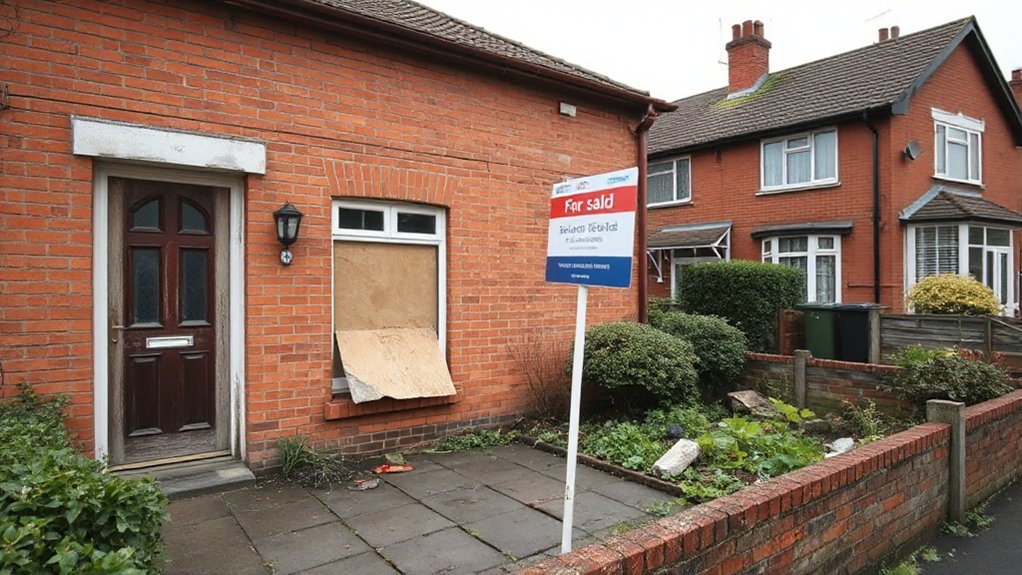
Although “cheap” listings can look like instant wins, you’ll find a good Midlands fixer-upper by screening for *value-add potential* rather than headline price—focus on locations with steady buyer demand (sold-price trend and average days on market), solid rental fundamentals (yield after financing, voids, and maintenance), and properties where the discount is driven by solvable issues (dated kitchens, layout inefficiency, cosmetic neglect) instead of structural risk (subsidence, chronic damp, roof failure). Build a quick ROI model: purchase plus works, contingency, and stamp duty versus expected resale or rent. Validate comps within 0.5 miles and match beds, parking, and EPC. Target homes with historic architecture only if you can price conservation constraints and timelines. Check eligibility for renovation grants, then ring-fence them in cashflow assumptions, not as guaranteed income.
Best Midlands Cities for Cheap Fixer-Uppers
Once you’ve screened a fixer-upper for true value-add (not just a low asking price), the next ROI lever is *where* you buy, because local demand sets your exit price, sale speed, and rental resilience. In Birmingham, target inner-ring terraces where transaction volumes stay high and refurbs reprice fastest per square metre. In Stoke-on-Trent, you’ll often buy below replacement cost; keep specs rental-proof to capture steady yield demand. Nottingham supports balanced flips: strong tenant churn and multiple buyer pools reduce exit risk. Leicester can work when you buy near employment nodes and budget tightly for compliance. In Coventry, prioritise streets with predictable comparables to avoid over-improving. Wherever you buy, price in Historical architecture constraints, and stack Local renovation grants to lift margins.
Best Midlands Commuter Towns To Add Value
When you buy in a Midlands commuter town, you’re effectively arbitraging transport-led demand against still-discounted entry prices, so the smartest value-add plays sit where journey times to Birmingham, Nottingham, Leicester, or London have tightened faster than local stock quality. Target rail-linked hubs like Nuneaton (WCML), Rugby (fast London links), Lichfield (Cross-City), and Long Eaton (Nottingham/Derby), where rental demand is commuter-led and voids stay low. You’ll lift ROI by buying tired terraces near stations, then upgrading EPC, kitchens, and layout to match rising tenant expectations. Track sold-price spreads: if “done” homes clear 15–25% above “needs work” on the same street, your margin’s proven. Combine Property investment with renovation grants for insulation and heating to improve yield and resale liquidity.
Best Midlands Market Towns for Budget Doer-Uppers

Commuter hubs win on speed-to-demand, but Midlands market towns can deliver cleaner renovation upside because you’re buying under-improved period stock in places where local amenity demand stays sticky year-round. Target towns with strong weekly footfall, tight conservation cores, and sub-£250k terraces where Historic architecture supports resale premiums after sensitive upgrades.
You’ll typically boost GDV fastest by fixing layout, insulation, and kitchens, then pricing to local family demand, not London overflow. Prioritise places like Newark, Market Harborough, Lichfield fringes, and Shrewsbury edge streets where sold-price dispersion signals mispriced “tired” listings. Track days-on-market, rent-to-price ratios above 5%, and EPC uplift potential from E/F to C. Back streets with active Neighborhood revitalization programmes often compress yields first, lifting exit values with lower marketing risk.
Best Midlands Rural Areas for Low-Cost Renovations
A smart rural Midlands buy comes from paying village prices for houses that behave like small-town stock once you fix the fundamentals—think underheated stone cottages, ex-council semis, and farm-adjacent terraces priced off condition rather than location. Target commutable pockets in South Derbyshire, North Warwickshire, and the fringes of Shropshire where sold prices lag nearby hubs, but demand holds. You’ll boost ROI fastest by prioritising EPC lifts (loft insulation, heat pumps where viable, windows), damp remediation, and roof integrity; these moves typically re-rate the valuation more than cosmetic spend. Look for Historic architecture that’s sound but tired: repointing and sympathetic repairs protect resale premiums. Before you offer, model cashflow using builder quotes plus 10–15% contingency, and check Local renovation grants to compress payback time.
Frequently Asked Questions
What Renovation Insurance Do I Need Before Starting Major Structural Work?
Before major structural work, you’ll need builder’s risk or specialist renovation insurance coverage, plus public liability and employer’s liability if you hire trades. Align with renovation permits, lender requirements, rebuild valuations, and risk controls.
How Do I Estimate a Realistic Renovation Timeline for a Full Property Overhaul?
Estimate your overhaul timeline by itemizing tasks, assigning durations from past quotes, adding 15–25% contingency, and mapping dependencies. Track ROI-critical path first. Use DIY tips to cut delays, and design inspiration to prevent scope creep.
Which Midlands Lenders Offer Mortgages for Homes Needing Significant Repairs?
You’ll find Mortgage options via Nationwide, Halifax, NatWest, and specialist intermediaries for heavy-repair homes; compare lender requirements on habitable status, retention, and surveys. Model ROI by rates, fees, loan-to-value, and staged drawdowns.
What Permissions Are Required for Extensions on Listed or Conservation-Area Properties?
You’ll need listed building consent and conservation-area planning permission; expect tighter heritage restrictions. You’ll submit planning applications with drawings, materials, and heritage statements. Factor approval timelines and conditions into ROI models; delays raise holding costs, reduce returns.
How Can I Budget for Unexpected Issues Like Damp, Asbestos, or Subsidence?
Like a town crier, you’ll budget by commissioning surveys, pricing worst-case remediation, and adding 15–25% contingency planning. Track Budget pitfalls in a spreadsheet, stage spend by risk, and protect ROI with fixed-price quotes.
Conclusion
When you chase a Midlands fixer-upper, you’re really chasing spread: low entry price, high uplift, and tight resale demand. Coincidentally, the same signals show up in cities with discounted stock, commuter towns with fast links, market towns with constrained supply, and rural pockets where land value protects downside. You’ll win by buying the ugliest house on the best street, pricing works with a contingency, and targeting a post-reno margin that still clears costs if rates rise.
About the Author