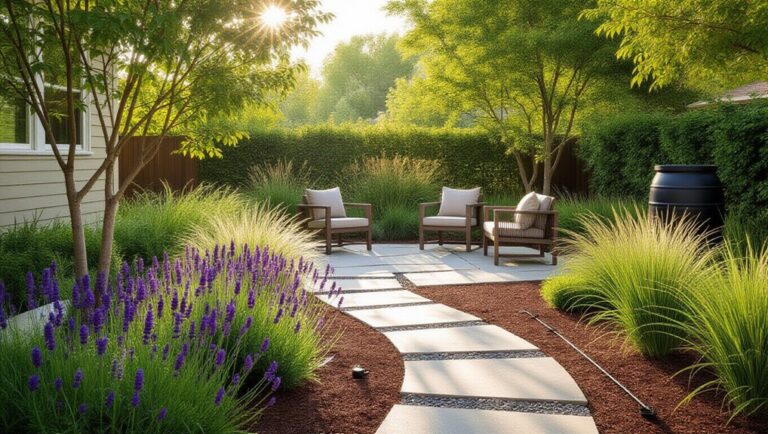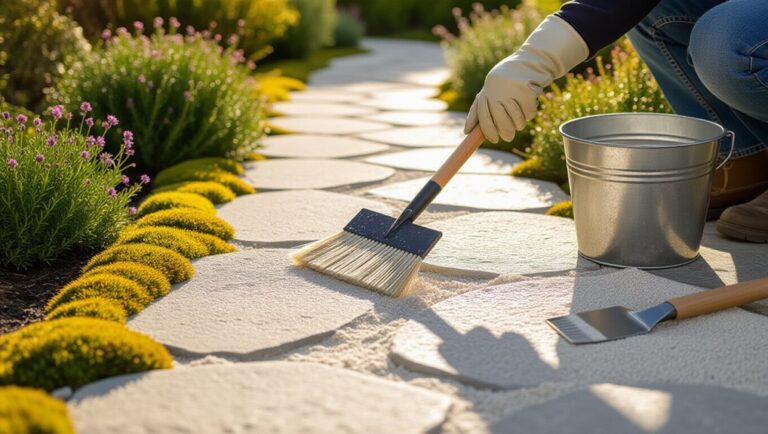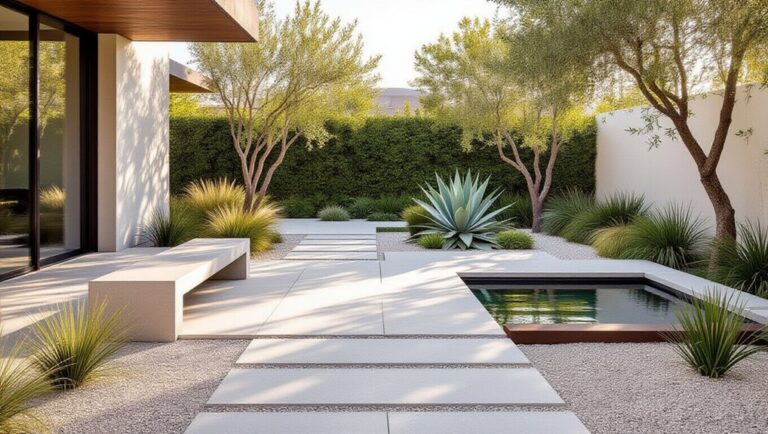
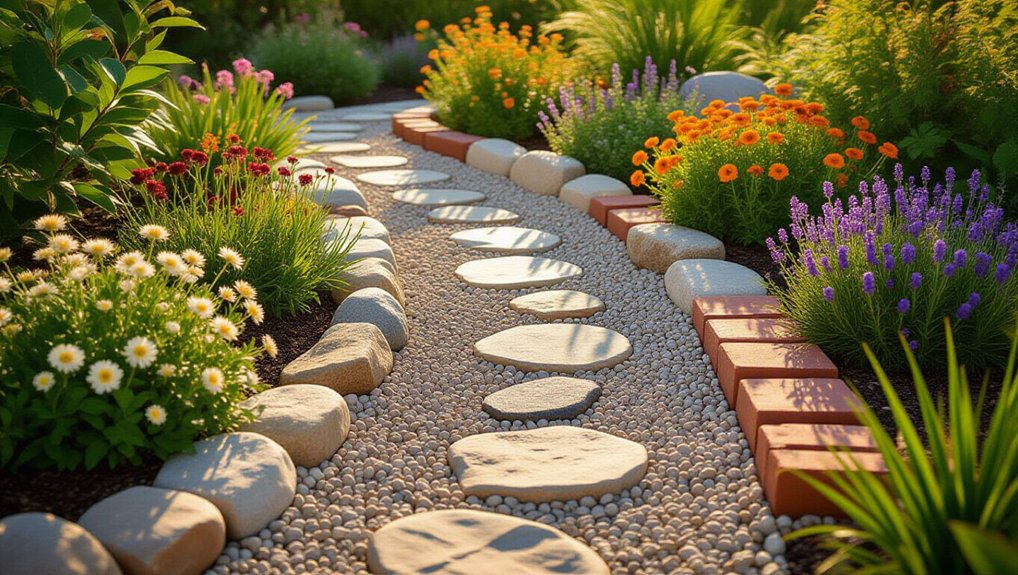
Pick a spot that gets 6–8 hours of sun and drains fast, then avoid low areas that stay wet. Excavate 6–10 inches, pull weed roots, and firm the subgrade; skip rototilling. Shape a 6×10 ft bed with a 6–10 inch berm for runoff. Add 2–4 inches of compacted angular rock, set three 12–18 inch anchors, and arrange 6–10 inch stones around 8–10 planting pockets. Source local reject stone, mulch with 1–2 inches of gravel, and plant compact, drought-tough growers by exposure. Keep going to see plant picks, spacing, and simple upkeep.
Key Takeaways
- Pick a spot with 6–8 hours of sun and fast drainage; avoid low areas that stay wet after rain.
- Start small with a 6×10 ft bed, add a 6–10 inch berm, and plan ~40% rock, 50% planting pockets.
- Source rocks locally and ask for reject or mixed loads; compare per-ton pricing and delivery versus bagged stone.
- Prep by excavating 6–10 inches, removing weed roots without rototilling, then firm the subgrade and amend clay with coarse sand or fines.
- Build 2–4 inches of compacted angular base rock, set boulders one-third buried, backfill crevices with gritty mix, and gravel-mulch around plants.
Choose the Best Spot for a Sunny Rock Garden
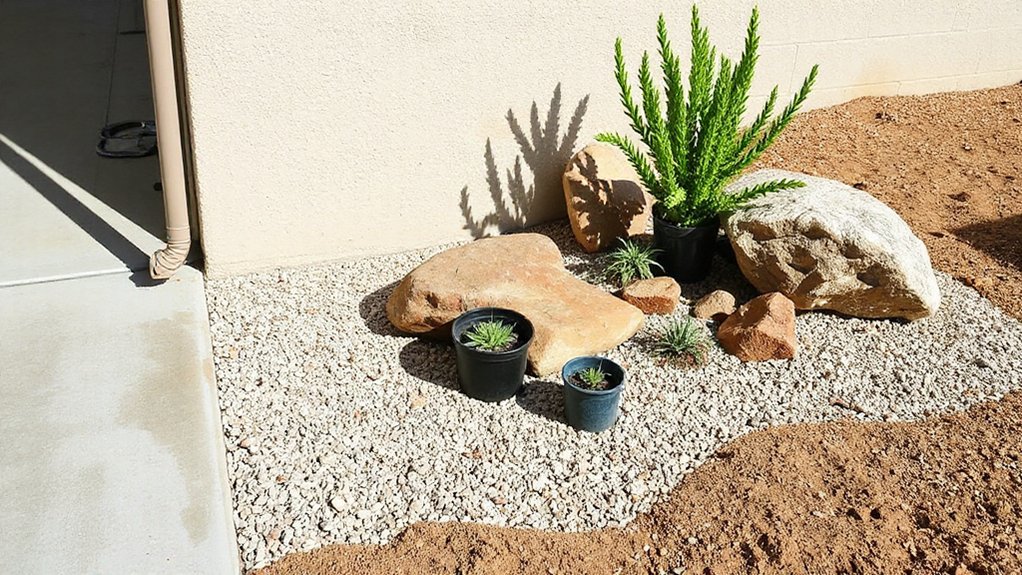
Although rock gardens tolerate lean conditions, you’ll get the best results by siting yours where it receives 6–8 hours of direct sun and drains fast after rain or irrigation. Choose a slight slope or crown the bed so water sheds, and avoid low spots that stay saturated and rot taproots.
Check soil texture and percolation: gritty, mineral soil suits sedums, thyme, and dwarf penstemons; heavy clay needs elevation and sharp aggregate for rapid aeration. Use shade considerations to read your site across seasons—afternoon shade can reduce heat stress, but too much shade stretches plants and cuts bloom. Place the garden near existing hardscape for reflected heat, yet buffer from roof runoff. Add nearby native nectar plants to increase wildlife attraction without increasing irrigation.
Sketch a Low-Cost Sunny Rock Garden Plan (Sizes + Quantities)
Once you’ve picked a fast-draining, 6–8-hour sun site, sketch your plan by locking in one small, repeatable module—start with a 6 ft × 10 ft bed (60 sq ft), contour it with a simple crescent berm 6–10 inches high, then allocate roughly 40% rock/gravel, 50% planting pockets, and 10% stepping/maintenance gaps. Place 3 anchor boulders (12–18 in) on the berm’s crest, then add 20–25 medium stones (6–10 in) to knit lines and create shade cracks. Draw 8–10 planting pockets, each 18–24 in wide. For waterwise rock garden design, group by exposure: hottest edge gets 3–5 succulents; mid-slope gets 4–6 droughty perennials; toe gets 2–3 grasses. Let plant selection follow mature spread, not pot size.
Source Cheap Rocks, Gravel, and Edging Locally
Before you buy anything, price rock and edging like a materials job: you’ll cut costs fastest by sourcing close to home and matching stone size to the microclimates you planned (boulders for heat-sink structure, ¾–1½ in gravel for infiltration, and “fines” only where you need to lock a path). Call landscape supply yards, quarries, and municipal gravel pits; ask for “reject,” “overs,” or mixed loads for boulder clusters and planting pockets. Compare per-ton pricing to bagged product, and factor delivery minimums versus pickup by trailer. Choose local stone that mirrors native color so plants read cleaner and you avoid forced rock yard aesthetics. For edging, use salvaged urbanite, rot-resistant logs, or steel strips bought in bulk. Keep it budget friendly landscaping by standardizing sizes and ordering once.
Prep a Sunny Rock Garden Site (Drainage + Weeds)
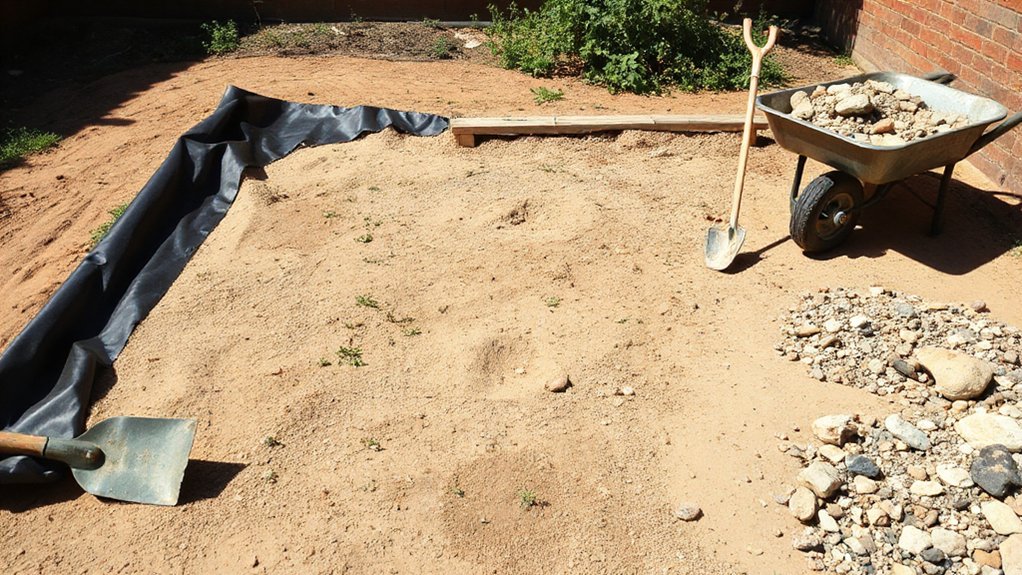
Because sun-baked rock beds magnify heat and shed water fast, you’ll get the best plant performance by prepping the site to drain cleanly while eliminating perennial weeds at the roots. Start by mapping runoff: spot downspout splash zones and low pockets, then plan a slight slope away from foundations. Use gardening tools (spade, mattock, soil knife) to strip sod and excavate 6–10 inches, removing rhizomes of bermudagrass, bindweed, and nutsedge. Don’t rototill; you’ll shred roots and spread them. Screen soil for weed fragments, then firm the subgrade so water doesn’t pond. If you’ve got heavy clay, blend in coarse sand or small crushed fines to increase infiltration without creating a perched layer. Border the area with temporary rock garden accessories like stakes and string to keep your footprint accurate.
Lay the Base, Set Stones, and Add Gravel
After you’ve got a clean, firm subgrade, build a base that locks stones in place and keeps water moving through the root zone: spread 2–4 inches of angular crushed rock (¾” minus) and compact it in lifts, then set your largest rocks first with at least one-third of each stone buried and tilted slightly to shed runoff. Chock and tamp around each stone so it can’t settle. Backfill crevices with a gritty mineral mix and targeted soil amendments (washed sand, small gravel, a little compost) to create fast drainage with modest fertility. Keep fines out of low spots so water won’t perch. Finish by raking 1–2 inches of gravel mulch between rocks, leaving pockets open for later planting techniques and drip placement.
Pick Sun-Loving Rock Garden Plants (Layout + Spacing)
Once your stones and gravel sit tight, choose sun-loving plants that stay compact, shrug off heat, and root into lean, fast-draining pockets. Start with structural anchors like dwarf yucca, hardy ice plant, or creeping rosemary at high points and along stone edges.
For Plant pairing, tuck mat-formers (sedum, thyme) beside upright accents (blue fescue, dwarf santolina) to contrast texture and reduce bare soil. Use Color coordination by repeating two or three hues—silver foliage, blue grasses, and magenta blooms—in drifts that echo across the bed. Space by mature width: set rosettes 12–18 inches apart, small shrubs 18–30, and groundcovers 6–12, leaving gravel seams between crowns for airflow and clean lines. Place the smallest species in shallow pockets.
Keep a Sunny Rock Garden Easy (Watering + Quick Upkeep)
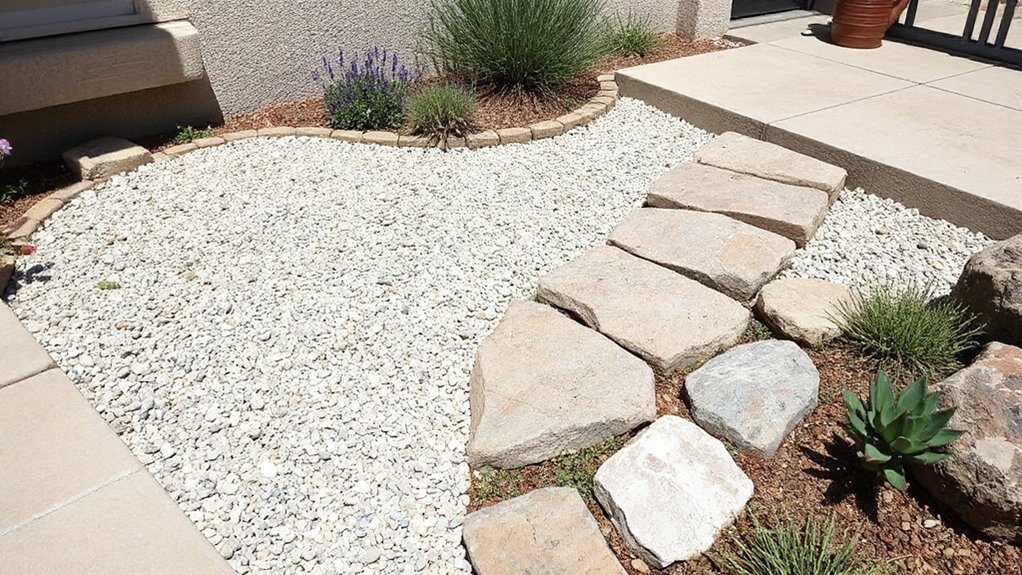
To keep a sunny rock garden low-effort, you’ll set a smart watering schedule that matches each plant’s drought tolerance and the soil’s drain rate. Water deeply but infrequently at the root zone to drive deep rooting, then let the surface dry to discourage shallow stress and fungal issues. For fast weed control, you’ll pull seedlings right after irrigation or rain, and you’ll spot-scrape weeds before they set seed in gravel seams.
Smart Watering Schedule
Because sun-baked rock gardens shed water fast and heat up the root zone, you’ll get better plant survival by watering on a schedule that targets roots, not stones. Water at dawn, using a slow trickle or soaker line tucked under gravel, so moisture penetrates 6–8 inches where drought-tough roots form. In week one, water every 2–3 days to establish; by week four, shift to a deep soak every 7–10 days, adjusting for heat waves and wind.
Check soil, not garden decor: dig a small test hole near crowns; if it’s dry at 3 inches, irrigate. Match frequency to plant selection—succulents need less, grasses and new transplants need more. Pause irrigation after rain.
Fast Weed Control
Where do weeds gain a foothold in a sunny rock garden? They root in fine soil pockets between stones, along edging, and in mulch that breaks down. For fast weed control, pull after irrigation or a light soak so roots slide out intact. Slice seedlings at the crown with a hori-hori, then tamp gravel back to block light. For weed prevention, top-dress with 1–2 inches of angular gravel over permeable fabric only where plants won’t spread, and keep joints tight to reduce germination sites. Avoid overwatering; frequent surface moisture triggers annual weeds. For soil enhancement without feeding weeds, tuck compost only into planting basins, not across open gravel. Spot-treat regrowth with boiling water on calm mornings, shielding succulents.
Frequently Asked Questions
How Do I Keep Neighborhood Cats From Using the Rock Garden?
Use Cat deterrents like motion sprinklers, citrus/pepper sprays, and prickly mulch (pinecones) to disrupt digging. Install low Garden fencing or netting. Keep gravel dry, add dense drought-tolerant groundcovers, and remove attractants.
Will a Rock Garden Increase or Decrease My Home’s Resale Value?
A rock garden can increase your resale value if you design it well; it can decrease value if it looks harsh or weedy. Use quality garden soil, smart plant selection, and waterwise natives for curb appeal.
Do I Need Permits or HOA Approval for a Front-Yard Rock Garden?
You might need permits or HOA approval; check local codes and covenants first. Like Xerxes’ gardens, align garden design with setbacks, drainage, and waterwise plant selection, avoiding invasive species, protecting utilities, and meeting xeriscape rules.
How Can I Make a Sunny Rock Garden Accessible for Walking or Wheelchairs?
You’ll guarantee wheelchair accessibility by building 36–48-inch-wide, firm pathway materials like compacted decomposed granite or pavers, keeping slopes under 5% and cross-slope minimal. Border paths with drought-tough sedums, thyme, and agave.
What Are Budget-Friendly Ways to Add Lighting to a Rock Garden?
Use solar lamps on stakes to highlight agaves, sedums, and thyme without wiring. Make DIY lanterns from jars and LED tea lights. Aim beams at rocks, not plants, to limit heat and conserve moisture.
Conclusion
You’ve now put your sunny rock garden on the right side of thrift and drought. With a tight plan, locally “rescued” stone, and a weed-suppressing, free-draining base, you’re set for success. Tuck in sun lovers—sedum, thyme, ice plant, lavender, and dwarf grasses—giving each plant room to breathe and roots a quick exit for excess water. Keep irrigation on a light “sip,” spot-weed, and top up gravel as needed.
About the Author