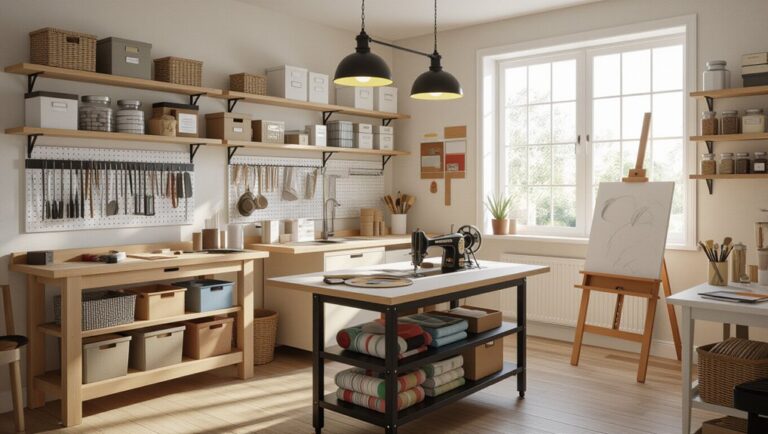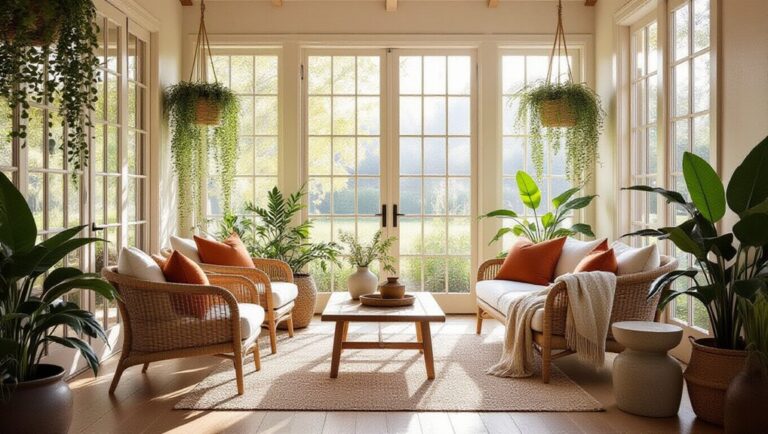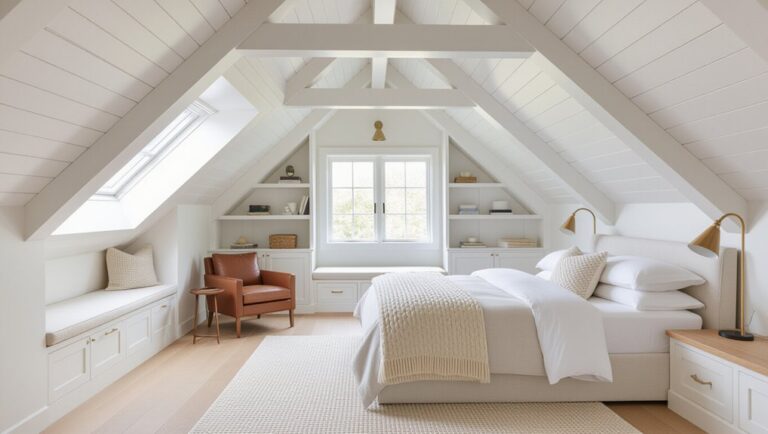
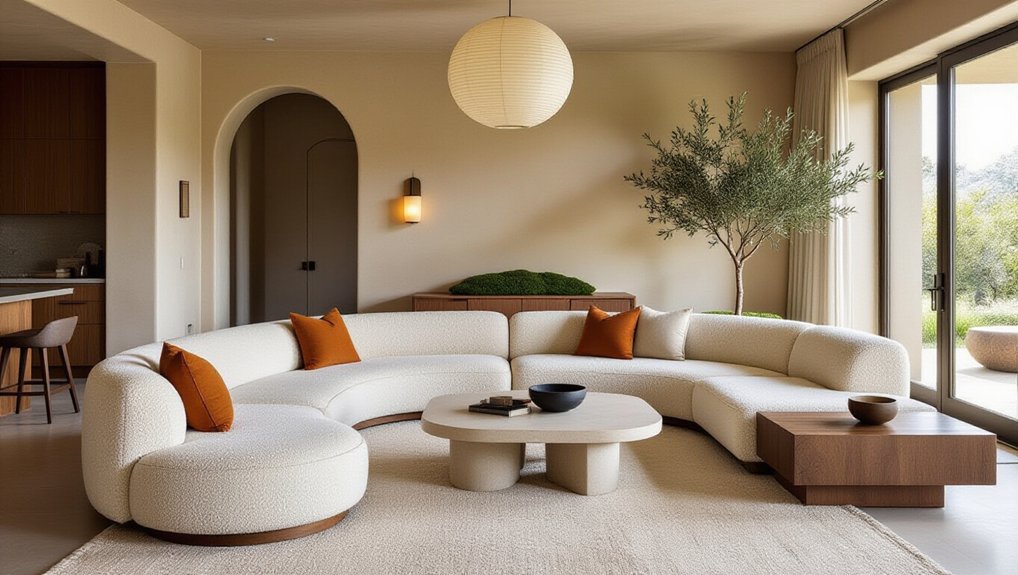
In 2025, you’ll nail a polished look by layering warm earth tones—creamy off-whites, clay, terracotta, and dusty olive—with tactile finishes like travertine, limewash, and clay plaster. You’ll see more curved silhouettes, arches, and soft-edged cabinetry, plus flexible layouts that hide storage and adapt fast. Mix matte woods (oak, walnut) with aged brass or blackened steel, then add vintage art and sculptural lighting. Keep going to see easy pairings and budget-smart swaps.
Key Takeaways
- Expect artistic statements and vintage revival pieces, including oversized art, sculptural lighting, handcrafted ceramics, and restored or reupholstered furniture.
- Prioritize performance and sustainability with stain-resistant textiles, low-VOC finishes, FSC-certified cabinetry, and recycled tile or durable stone-look surfaces.
- Use warm earth tones and layered neutrals like terracotta, clay, greige, and creamy whites, with accents in inky navy or lacquered black.
- Add tactile texture through travertine, limewash, clay plaster, and micro-cement walls, favoring honed or brushed finishes for warmth.
- Design for comfort and flexibility using curved forms, modular multifunctional furniture, and layered lighting with discreet smart-home features like hidden sensors and motorized shades.
Interior Design Trends 2025: Quick List
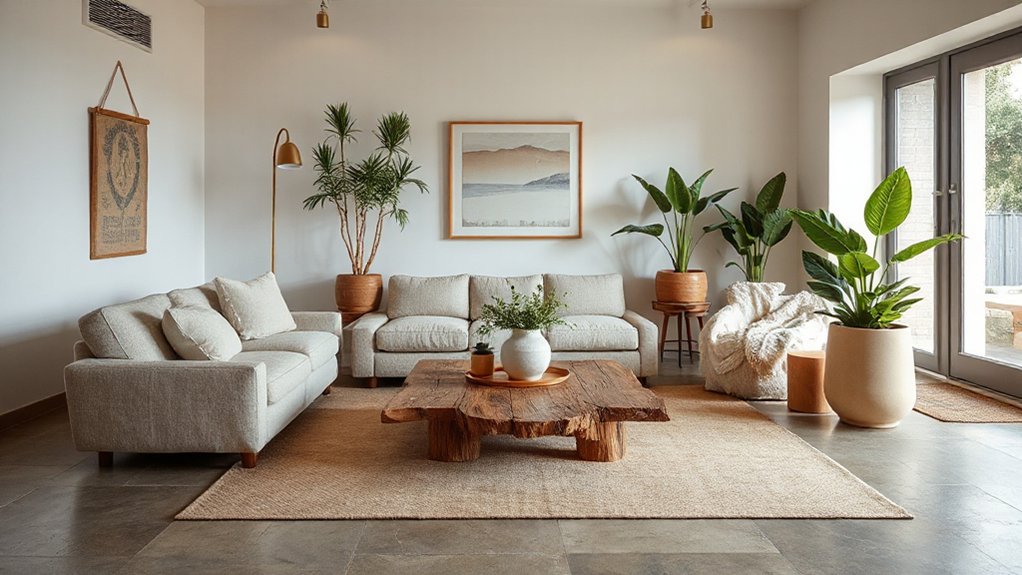
Whether you’re revitalizing one room or planning a full-home update, this quick list highlights the interior design trends set to define 2025—think warmer, more personal spaces; smarter, better-looking tech; and materials that feel as good as they perform. Start with an Artistic statement: oversized art, sculptural lighting, and bold, handcrafted ceramics that anchor the room. Embrace Vintage revival by mixing restored wood casegoods, reupholstered seating, and heirloom-style hardware with clean contemporary lines. Prioritize performance: stain-resistant textiles, acoustic panels that read like wall décor, and durable stone-look surfaces. Upgrade tech invisibly with flush outlets, concealed charging drawers, and low-profile speakers. Finally, refine layout choices—curved seating for conversation, layered task lighting, and storage that’s built in, not bulky, so your space stays tailored to you.
2025 Color Palette: Warm Earth Tones
In 2025, you’ll warm up your space with terracotta and clay accents that add grounded, artisanal character. You can anchor the room with sunbaked neutrals and rich browns, building a palette that feels calm but elevated. You’ll get the most impact when you layer that warmth with tactile textures—linen, bouclé, matte ceramics, and natural woods—for depth that reads intentional.
Terracotta And Clay Accents
As you pivot toward warmer, more tactile interiors in 2025, terracotta and clay accents deliver that grounded, sunbaked richness clients keep asking for. You can layer Terracotta decor through sculptural planters, ribbed table lamps, or matte tile edging that reads artisanal, not themed.
To keep it elevated, you’ll balance raw texture with refined forms: a slim console topped with clay pottery, a hand-thrown vase in a niche, or a terracotta-toned microcement fireplace surround. You can also specify reactive-glaze finishes and imperfect rims to signal craftsmanship, then repeat the hue in small doses—cabinet pulls, grout, or a framed pigment wash. If clients want low commitment, you’ll start with removable objects and swap in larger pieces as confidence grows over time.
Sunbaked Neutrals And Browns
Terracotta’s handcrafted warmth sets you up for the bigger 2025 shift: sunbaked neutrals and browns that make spaces feel calm, tailored, and lived-in. You’ll see designers moving beyond cool greiges toward dusty sand, camel, biscuit, toffee, and soft cacao—tones that flatter natural light and reduce visual noise.
Use Sunbaked neutrals on larger surfaces to create an easy, high-end backdrop: walls, cabinetry, and broad upholstery. Then anchor the plan with earthy browns in trim, built-ins, or statement furniture so the room reads intentional, not monotone. Specify warm whites with a yellow or peach undertone to keep everything cohesive. If you’re renovating, pair these hues with matte black or aged brass for crisp contrast and a modern edge.
Layered Warmth With Textures
Because color alone can fall flat, 2025 interiors lean into layered warmth—building richness through tactile materials in a warm earth-tone palette of clay, camel, cinnamon, cacao, and creamy bone. You’ll get the most impact when you pair matte paint with Textured wall treatments like limewash, clay plaster, or micro-cement, then echo that depth in joinery and furnishings. Choose camel oak, cacao-stained walnut, and cinnamon leather to keep the scheme grounded, not heavy. For softness, you can stack Cozy layered textiles: bouclé upholstery, chunky knits, washed linen drapery, and hand-tufted wool rugs. Balance sheen with burnished brass or aged bronze, and add bone-toned ceramics for lift. When you layer thoughtfully, your space feels tailored, calm, and unmistakably current for everyday living.
Paint Color Picks and Easy Pairings
You’re going to see 2025’s paint front-runners lead with grounded clay, muted terracotta, and creamy off-whites that make your space feel current without feeling cold. Pair them fast with foolproof two-color combos like warm greige + soft ochre or sand + smoky olive, so your walls, trim, and cabinetry stay coordinated. Then you’ll finish strong with accent shades that pop—inky navy, lacquered black, or a crisp coppery red—used in a door, niche, or built-in to add targeted contrast.
2025 Palette Front-Runners
Five paint directions are leading 2025 interiors, and each one comes with an easy “yes” pairing that makes the whole room feel intentional. Start with warmed-up whites (creamy, not stark) and pair them with matte black hardware for crisp definition. Next, clay and terracotta neutrals deliver Color psychology benefits—grounding your space for psychological comfort—especially with light oak and woven texture. Third, muted sage and dusty olive feel tailored; pair them with brushed brass and natural linen. Fourth, inky blue-black reads luxe without shouting; anchor it with warm walnut and soft boucle. Finally, smoky mauves and quiet berry tones modernize rooms fast; balance them with pale stone, ribbed glass, and layered lighting so you stay flattering in day and night.
Foolproof Two-Color Combos
If picking paint feels high-stakes, lock in a two-color combo that already has contrast and a clear “job” for each shade: one does the heavy lifting (walls or cabinetry), and the other sharpens the architecture (trim, ceilings, doors, or a built-in). For 2025, clients love creamy off-white walls with a soft, earthy olive on millwork—warm, calm, and forgiving in mixed light. Prefer cleaner modern? Pair a mineral greige field color with a crisp, slightly cool white trim to keep edges tailored. Want depth without drama? Use a muted inky blue on cabinetry and a pale putty on walls for a steady contrast balance. Test each color pairing in morning and evening; undertones decide everything.
Accent Colors That Pop
While your main palette should stay steady, a dialed-in accent color gives the room its 2025 edge without committing you to a full repaint. For a Bold accent, try saturated persimmon, lacquered oxblood, or electric cobalt on a single door, built-in, or ceiling medallion for impact. Create Color contrast by pairing persimmon with warm white and rattan, oxblood with putty neutrals and walnut, and cobalt with greige, chrome, and crisp black. Keep the finish intentional: eggshell for walls, high-gloss for trim, matte for cabinetry. Repeat the accent three times—pillow, art, and a small object—so it reads designed, not random. If you’re nervous, start with a removable sample and scale up.
2025 Materials: Wood, Clay, Linen, Metal
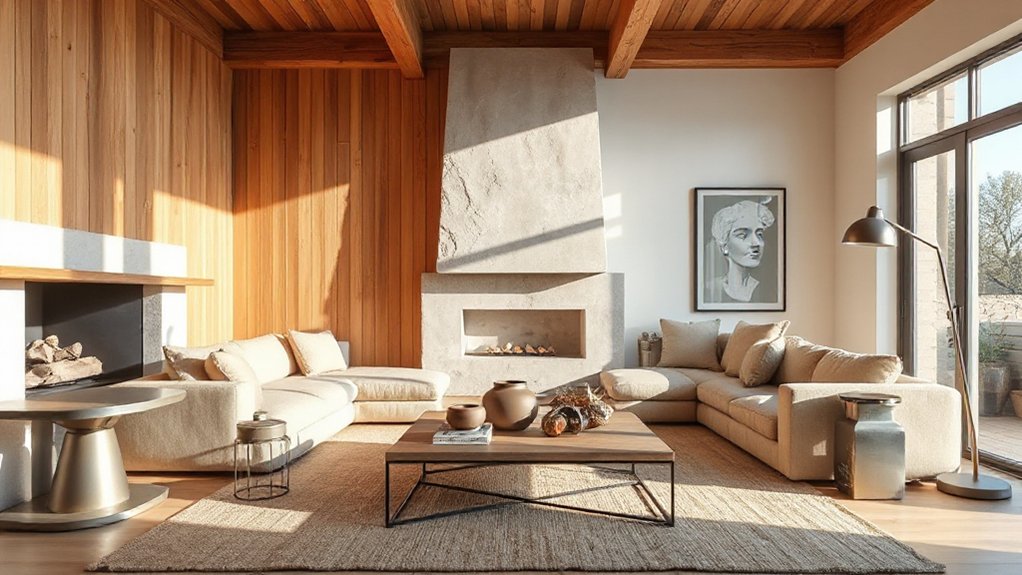
As homes continue to double as workspaces and retreats, you’ll see 2025 lean into materials that feel honest to the touch and built to last: warm-grained wood, sun-baked clay, airy linen, and purposeful metal accents. You’ll specify Eco friendly finishes on oak, ash, or walnut—matte oils, low-VOC sealers, and lightly brushed grains that hide daily wear. Clay shows up as terracotta lamps, hand-formed vessels, and earthy tile details, adding Vintage inspired textures without feeling themed. Linen takes the lead in relaxed drapery, slipcovered seating, and tonal bedding, so rooms breathe and soften acoustics. Metal becomes the “jewelry”: aged brass pulls, blackened steel shelving, and satin nickel lighting that sharpens silhouettes and improves task performance.
Stone and Texture: Travertine, Limewash, Plaster
You’re seeing 2025 interiors lean into stone and surface texture, and travertine leads with a warm, sun-baked character that instantly softens modern lines. You can use it on tables, vanities, or hearths to add quiet patterning and a tactile, high-end feel without visual noise. Pair it with limewash or plaster walls, and you’ll get layered depth, subtle movement, and a finish that looks custom to your space and lighting.
Travertine’s Warm Character
Even if you’re chasing a sleek, modern look, travertine brings a sun-warmed softness that keeps 2025 interiors from feeling flat or sterile. You’ll see it specified in large-format slabs for kitchen islands, fluted fireplace surrounds, and floating vanities where subtle movement reads richer than marble’s sharp veining.
To nail travertine elegance, choose honed or brushed finishes that feel tactile but stay refined, then match grout tones to quiet visual noise. In open-plan homes, use warm stone textures to bridge cool metals and saturated paint without forcing a full rustic pivot. You can also mix vein-cut pieces for linear calm with cross-cut accents for organic depth. Seal it well, specify eased edges, and you’ll get durability with that effortless, resort-like glow year-round.
Limewash And Plaster Depth
Because 2025 interiors crave depth without busy pattern, limewash and plaster finishes are taking over where flat paint used to fall short. You’ll notice walls that shift subtly with daylight, reading more like stone than pigment. With Limewash techniques, you can choose a clouded, tonal wash for bedrooms, or a higher-contrast, brushed movement for entry halls and stairwells. Ask your installer to sample on-site, because undertones change against travertine, oak, and warm metals. For durability and refinement, lean into plaster application methods like skip-trowel for soft shadowing, or Venetian-style for a tighter sheen. You’ll get tactile luxury that hides minor scuffs, elevates acoustics, and makes minimal furnishings feel intentional and collected.
Curved Shapes: Arches, Rounded Sofas, Soft Edges
As minimalism softens for 2025, curved shapes take center stage, replacing hard corners with arches, rounded sofas, and gently profiled cabinetry that feels more welcoming on sight and on contact. You’ll see Organic shapes in doorways, niche shelving, and pass-throughs that visually widen tight plans.
Bring Soft edges into your layout with a curved sectional, an oval coffee table, or a pill-shaped rug that eases circulation. Specify bullnose stone counters, radius drywall returns, and fluted millwork to soften gradual changes without losing precision. If you’re renovating, swap squared cased openings for shallow arches and choose rounded hardware to reinforce the theme. Keep proportions intentional: one hero curve per zone, then echo it subtly in mirrors, headboards, or built-ins for a cohesive, client-ready finish.
Layered Lighting: Ambient, Task, and Accent
While a single overhead fixture can technically light a room, layered lighting delivers the polished, client-ready look you’ll see everywhere in 2025 by combining ambient, task, and accent sources into a flexible plan. Start with ceiling or wall-washers that create an even ambient glow, then add task lighting where you actually work: under-cabinet strips in the kitchen, an adjustable sconce by the bed, a focused lamp at your desk. Finish with accent layers that sell the design—picture lights, toe-kick lighting, and uplights behind plants or drapery—to add depth and highlight textures. You’ll control contrast, reduce harsh shadows, and make finishes read richer on camera and in person. Plan circuits by function so you can shift moods instantly.
Quiet Smart Home Upgrades That Blend In
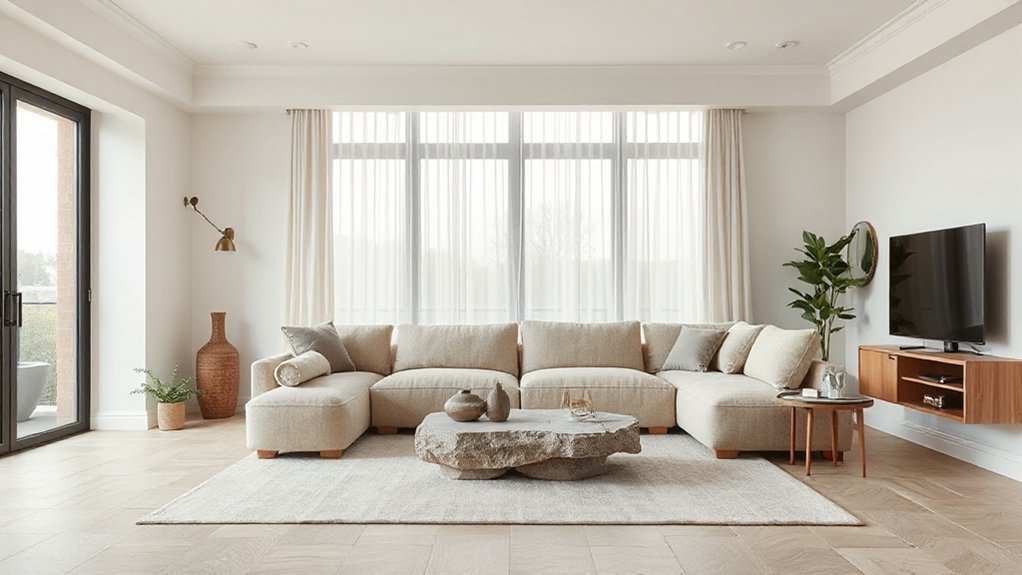
If you want your home to feel elevated without looking gadgety, 2025’s smartest upgrades hide in plain sight: recessed motion sensors that disappear into trim, flush-mount smart switches in the same finish as your hardware, and motorized shades tucked behind clean valances. You’ll also see smart security go quieter—slim doorbell cameras in matte tones, window contacts concealed in frames, and discreet sirens routed to utility zones. Specify voice integration through unseen mics in ceiling speakers, not countertop pucks, so commands feel effortless. Choose scene-based programming that ties shades, HVAC, and lighting to your daily rhythms, then lock controls behind a clean, minimalist interface. You’ll get polish and performance without visual noise, wires, or blinking LEDs anywhere.
Flexible Layouts for Real Life and Small Spaces
Because everyday routines rarely match a “perfect” floor plan, 2025 interiors prioritize flexible layouts that let you reconfigure space in minutes. You’ll see living rooms that pivot from work mode to hosting with a sliding screen, nesting tables, and a rug that zones traffic paths without walls.
To make small spaces feel bigger, you’ll lean on adaptive spaces: a dining spot that doubles as a desk, a hallway that becomes a drop zone, and a bedroom corner that converts into a studio. Choose multifunctional furniture with hidden storage, flip-top surfaces, and modular sections you can separate or lock together. Add casters to key pieces, keep clearance for movement, and use plug-in lighting to relocate ambiance as your day changes fast.
Sustainable Choices That Still Feel Elevated
Once you’ve built a layout that flexes with your day, you’ll want materials and finishes that work just as hard—without sacrificing polish. In 2025, elevated sustainability means choosing eco friendly materials that look tailored: low-VOC paints, natural clay plasters, FSC-certified cabinetry components, and recycled-content tile with refined, tonal variation. You’ll also see more plant-based textiles and responsibly sourced stone alternatives that keep visual weight light.
To make it feel luxe, specify consistent undertones, tight grout lines, and crisp edge details that support minimalist design. Prioritize durability where you touch most—entry floors, kitchen work zones, and washable wall coatings—so the room stays pristine longer. Finally, invest in fewer, better pieces and ask for transparent sourcing and third-party certifications before you approve samples.
Furniture Finishes: Matte Woods, Mixed Metals, Lacquer
While your layout sets the pace, furniture finishes deliver the mood—and in 2025, that means pairing tactile matte woods with intentional metal contrast and selective hits of lacquer. Choose open-grain oak, ash, or walnut in low-sheen sealers so the texture reads calm, not rustic. Then add mixed metals with purpose: brushed brass for warmth, blackened steel for edge, or satin nickel for balance—kept within two tones per room for cohesion. Use lacquer like punctuation, not a paragraph. A high-gloss console, lacquered cabinet doors, or a crisp piano-black side table sharpens silhouettes and bounces light without turning the space flashy. Anchor the palette with soft neutrals, then let finish variation do the work.
Which 2025 Trends Fit Your Home and Budget?
Even if you love every 2025 look on your feed, you’ll get the best results by matching trends to how you live, the bones of your home, and the budget you’ve set. Start with high-impact, low-commitment moves: swap in warm LED lighting, upgrade hardware to mixed metals, and add a matte-wood side table for instant texture. If you rent or crave flexibility, lean into peel-and-stick murals, modular seating, and performance textiles that handle pets and spills. For tighter timelines, pick one “hero” finish—lacquered cabinet fronts or a micro-cement accent wall—and keep the rest quiet. Build a plan around Budget friendly upgrades, then use DIY decorating tips like paint-blocked trim, thrifted frames, and tailored curtain hems to stretch your dollars without sacrificing polish.
Frequently Asked Questions
How Do I Update My Home for 2025 Trends Without Renovating?
Swap textiles, lighting, and hardware to refresh your space fast without renovation. Try DIY decor upgrades, update color palettes with earthy neutrals plus bold accents, layer curves, add biophilic plants, and curate artisanal accessories.
Which 2025 Interior Trends Are Already Starting to Feel Dated?
Why chase hype? You’ll find ultra-sterile all-white rooms, TikTok micro-trends, and overdone Bold wallpapers already feeling dated; instead, you should layer Vintage accents, tone down maximalism, and prioritize timeless textures tailored to your lifestyle.
What Are the Biggest Interior Design Mistakes to Avoid in 2025?
In 2025, you’ll avoid biggest mistakes by skipping Color clashes, resisting Overcrowding decor, and balancing bold pieces with breathing room. You’ll choose quality lighting, cohesive materials, and timeless layouts so your space photographs well and lives comfortably.
How Do 2025 Design Trends Affect Home Resale Value?
Like upgrading an old phone, you’ll boost resale when you add Smart technology and Eco friendly materials; Zillow reports eco upgrades can lift sale prices ~2%. You’ll win buyers with timeless palettes and flexible layouts.
What Are the Best 2025 Trends for Renters With Strict Lease Rules?
You’ll get the best 2025 renter-friendly results with Temporary decor and Portable furniture: peel-and-stick wallpaper, removable tiles, tension-rod drapery, modular sofas, nesting tables, and smart lighting—everything upgrades style without holes, paint, or penalties.
Conclusion
As you plan for 2025, you’ll get the most impact by layering warm earth tones with tactile materials like wood, clay, linen, and mixed metals. You can elevate walls with limewash or plaster, then add travertine-inspired texture for depth. Choose flexible layouts that fit how you actually live, especially in smaller spaces. Prioritize sustainable pieces that still feel polished with matte woods or subtle lacquer—your home will look a million times more intentional.
About the Author