Close the door and shine a flashlight from inside to spot light gaps at the sill, then slide a feeler gauge or folded paper along the threshold to map low spots and check for rubbing. Tighten loose threshold and hinge screws, and use any height-adjustment screws to level the threshold so the sweep seals evenly. Scrape a hidden spot to confirm wood, aluminum, or composite, then patch dents with epoxy or exterior filler, sand flush, and caulk seams. Keep going to see when replacement makes more sense.
Key Takeaways
- Inspect the threshold and door bottom for gaps, leaks, rubbing, rot, and uneven contact using a flashlight and feeler gauge.
- Test for water intrusion by running a light hose outside and checking inside with a paper towel for damp spots.
- Identify the threshold material (wood, aluminum, composite) by scraping a hidden spot and checking for metal, grain, or uniform fibers.
- Tighten or replace loose screws, adjust threshold height screws, and correct hinge alignment to stop dragging and restore an even seal.
- Clean out loose debris, fill shallow dents with appropriate epoxy or exterior filler, sand flush, and seal seams with exterior-grade caulk.
Check for Gaps, Leaks, Rub, and Rot
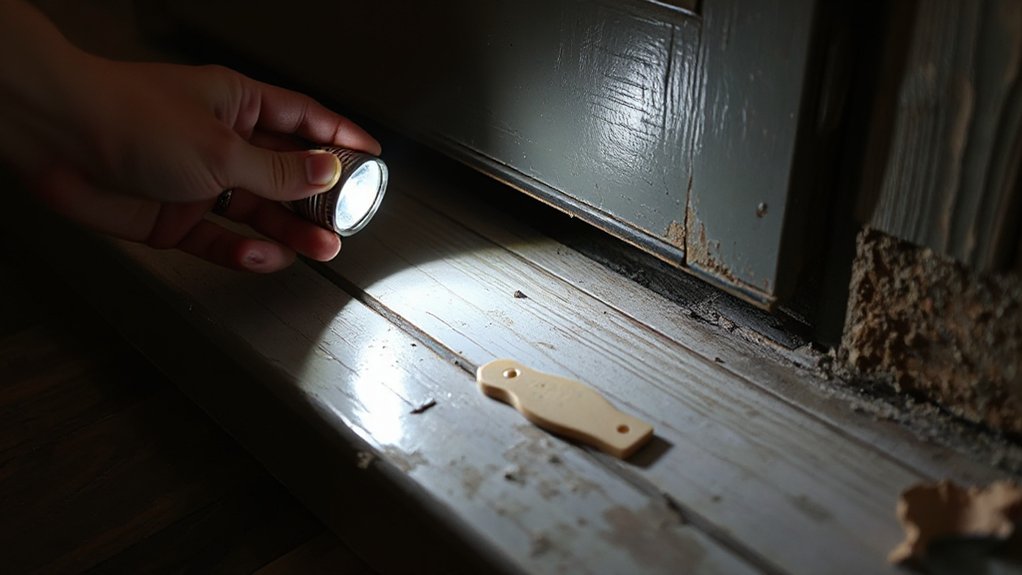
Before you grab any tools, inspect the threshold and the bottom of the door for four common problems: gaps, leaks, rubbing, and rot. Shine a flashlight from inside while the door’s closed; light at the sill shows a gap. Slip a feeler gauge or folded paper along the contact line to map uneven spots. For leaks, run a hose lightly over the exterior and watch for water tracks on a paper towel inside. Check rubbing by opening and closing slowly; listen for scraping and look for fresh scuffs on the sweep or threshold. Probe for rot with an awl, especially at end joints and fastener holes. Note door threshold materials (aluminum, oak, composite) to match weatherproofing techniques later.
Decide: Repair or Replace the Exterior Door Threshold
Once you’ve mapped the gaps, leaks, rub points, and any rot, decide whether you can tune the existing threshold with adjustments and patching or whether you need a full replacement. If the core is solid and the damage is shallow, repair makes sense: tighten or reset screws, shim low spots, and fill small chips with exterior epoxy. Then restore the seal with caulk, fresh sweep contact, and other weatherproofing techniques like adding a bead under the threshold edge.
Replace if you find soft, spreading rot, a warped profile you can’t level with shims, missing sections, or fasteners that won’t bite. Also replace when incompatible Threshold materials prevent a durable patch or when repeated leaks show the assembly can’t hold a seal.
Identify Wood, Aluminum, or Composite Threshold Type
Your repair plan only holds if you match the fix to the threshold material, so start by identifying what you’ve got at the door. Scrape an inconspicuous spot with a utility knife: wood shows grain and shavings, aluminum shows bright metal, composite reveals uniform fibers or plastic-like curls. Check fastener heads and edges with a magnet and awl; aluminum won’t take a dent like wood, and composites resist splintering. Look underneath with a flashlight for a wood core wrapped in an aluminum cap—common in older doors. Note any factory grooves, risers, or end caps, since Threshold customization often relies on these profiles. Record Material differences, measurements, and finish type before you buy filler, sealant, or paint.
Tighten Screws and Adjust an Exterior Door Threshold
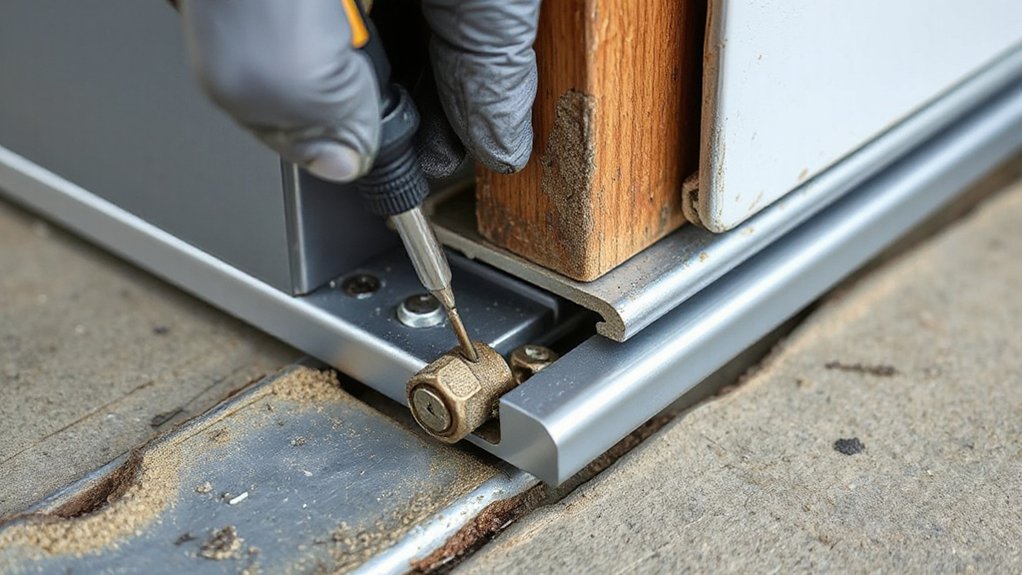
If the door drags, leaks light, or you feel a draft at the sill, start by tightening and re-leveling the threshold hardware. Grab a Phillips or square-bit driver, a small level, and a flashlight. Back out any loose threshold screws, then re-seat them snugly without stripping. If your threshold has height-adjustment screws, turn them in small increments to raise or lower the cap until the door sweeps evenly across it. Check the reveal along the latch side as you adjust. Inspect weather stripping for compression: it should contact the door without bunching. If you can’t get an even seal, do quick door hinge maintenance—tighten hinge screws and replace any spun ones with longer screws to pull the jamb tight. Recheck operation.
Fill Cracks/Dents and Reseal to Stop Water and Drafts
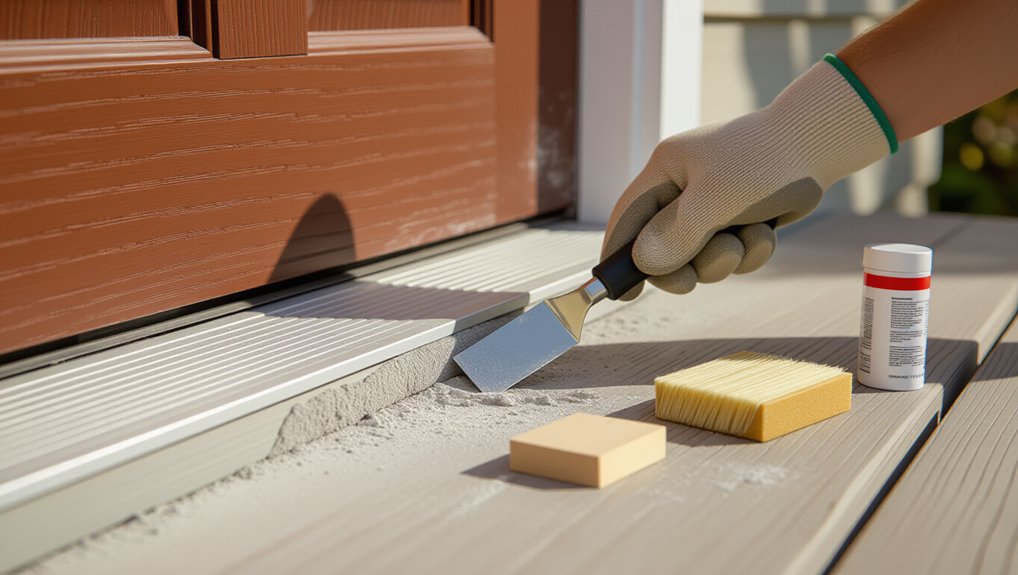
Even a hairline crack or a shallow dent in the threshold can wick water under the door and let air leak through, so patch the damage and reseal it before it grows. Scrape out loose material with a putty knife, then vacuum grit so filler bonds. For metal thresholds, mix two-part epoxy, press it into cracks, and shape it with a plastic spreader. For wood or composite, use exterior-grade wood filler or epoxy putty. Let it cure, then sand flush with 120–180 grit on a sanding block. Wipe dust, then run a continuous bead of exterior silicone or polyurethane caulk along the threshold-to-sill seam and tool it smooth. Touch up with primer and Paint color for aesthetic matching, if needed.
Frequently Asked Questions
How Much Does a Professional Threshold Repair Typically Cost?
You’ll typically pay $100–$350 for professional threshold repair, depending on threshold materials and repair techniques. You’ll spend more if they plane, shim, or epoxy-fill, less for caulk, screws, minor patching.
What Tools Are Essential for a DIY Threshold Repair?
Like a well-stocked toolbox, you’ll need a utility knife, pry bar, putty knife, caulk gun, drill/driver, chisel, sandpaper, level, and tape measure. Match threshold materials, and apply sealing techniques using weatherproof caulk properly.
Can I Fix a Threshold Without Removing the Door?
Yes, you can fix a threshold without removing the door. You’ll shim low spots, sand highs, and apply Weatherproofing materials. Replace the Door seal, then tighten screws and test closure using a straightedge and flashlight.
How Long Should a Repaired Threshold Last Before Needing Replacement?
A repaired threshold should last 2–5 years; well-executed repairs can restore up to 80% of service life. Your threshold material matters—aluminum lasts longer than wood. Apply weatherproofing techniques: caulk gun, screwgun adjustments, sealant.
Are There Building Codes Governing Exterior Door Threshold Height and Slope?
Yes—Building codes and threshold standards often govern exterior door threshold height and slope. You’ll typically follow IBC/IRC plus ADA, checking maximum rise, beveled changes, and drainage slope using a level, tape measure, and straightedge.
Conclusion
Your threshold’s the gatekeeper: when it’s tight and sealed, your home stays calm; when it’s cracked, weather sneaks in like sand through a sieve. You’ve checked gaps, leaks, rub, and rot, then chose repair or replacement based on what you found. Match the material—wood, aluminum, or composite—then grab a screwdriver to snug and adjust. Use epoxy or filler for dents, and finish with fresh caulk for a watertight line.
About the Author