

Before you bid at a property auction, you must confirm the auction type, bidder rules, deposit, buyer’s premium, and completion deadline because the gavel creates a binding contract. You should review the legal pack and special conditions, verify title, boundaries, access, easements, and order missing searches. You must check for charges, arrears, and what liabilities transfer. You should inspect the property, price repairs, confirm occupancy, and guarantee funding fits 20–28 days. More key checks follow.
Key Takeaways
- Read the auction legal pack and special conditions; confirm “as-is,” completion deadlines, buyer’s premium, and deposit requirements.
- Verify title, boundaries, access rights, easements, covenants, and any charges or liens that may transfer on completion.
- Confirm occupancy and tenancy status in writing; review leases, rent schedules, notices, and the risk, cost, and timeline of eviction.
- Inspect the property and commission surveys; price structural issues, damp, electrics, asbestos, and any unpermitted work into your maximum bid.
- Secure funds for the auction timetable; include all-in costs like taxes, legal fees, repairs, insurance, and holding or bridging interest.
Know the Auction Type and Rules
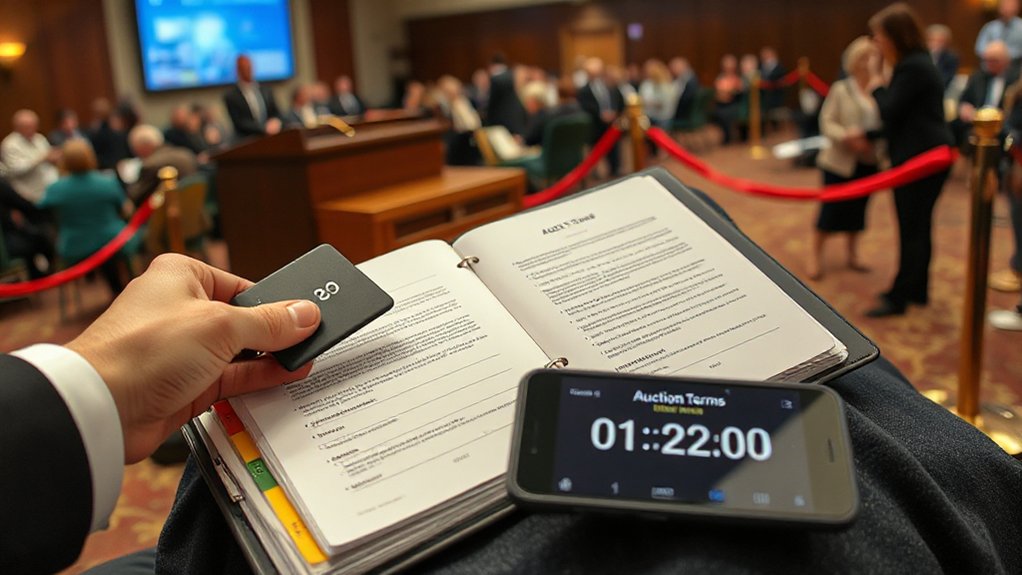
Before you even register to bid, confirm exactly which auction format you’re walking into—absolute (must sell), reserve (seller can reject), or foreclosure/tax sale—because the rules change your risk profile and your legal obligations. Get the auction house’s bidder packet and read it like a contract: deposit timing, identity requirements, buyer’s premium language, “as-is” clauses, inspection access, and default penalties. Verify the sale is governed by state legal regulations for auctions, trustees, or tax authorities, and note any redemption periods, occupancy rules, or required court confirmations. Ask whether the seller can withdraw, whether bids are binding immediately, and how disputes are resolved. If terms are unclear, get clarification in writing before you raise a paddle.
Set Your House Auction Budget (Include All Fees)
Set your maximum bid based on total acquisition cost, not just the hammer price, and include the buyer’s premium, admin fees, deposits, and any taxes or statutory charges due on settlement. Add a conservative allowance for repairs, utilities, insurance, vacancy, and financing interest so you don’t breach lender conditions or miss payment deadlines. If the numbers don’t work with all fees and holding costs included, don’t bid.
Account For Auction Fees
Even if the hammer price looks like a bargain, you’ll pay more once the auction’s mandatory charges are added. Before you set your cap, read the auction pack and terms for buyer’s premium, admin fees, and any platform or “technology” charges. Confirm whether fees are fixed or percentage-based, and whether VAT applies. Add required deposits and the balance timetable, because late payment can trigger interest, forfeiture, or rescission under the conditions of sale. Budget for search fees, legal document fees, and any seller’s costs you’re required to reimburse. Build these totals into your Auction strategy so your bidding ceiling reflects true acquisition cost. Then adjust your bidding tactics to avoid crossing that all-in limit in the room or online.
Include Repair And Holding Costs
Because auction properties often come “as seen,” you need to price in both the repairs and the cost of owning the place while work and compliance checks happen. Build a Renovation budgeting schedule from survey findings: structure, damp, electrics, gas safety, asbestos, fire doors, and EPC upgrades. Add contractor lead times and a contingency for hidden defects, then cap your bid accordingly.
Next, total holding costs for the expected program: council tax, insurance (often specialist vacant-property cover), utilities, security, loan interest, and any lender-required retention. If it’s leasehold, include ground rent, service charges, and arrears risk. For Maintenance planning, budget for immediate safety works and ongoing weatherproofing to avoid enforcement action. Don’t forget permits, inspections, and reinspection fees that can delay resale or letting.
Auction Legal Pack: Special Conditions and Searches
Before you bid, you must read the auction legal pack’s special conditions because they can shift costs, timelines, and liabilities onto you and override the standard contract terms. You’ll flag red flags such as seller-imposed fees, short completion deadlines, limited title guarantees, or clauses restricting objections and requisitions. You’ll also verify the key searches—local authority, drainage and water, environmental, and any relevant mining or flood reports—so you’re not buying into undisclosed enforcement action, contamination risk, or service issues.
Special Conditions Red Flags
While the headline price might look tempting, the Special Conditions in the auction legal pack can quietly shift major costs and legal risk onto you. Treat them as red flag indicators, not admin. Watch for contractual clauses that shorten completion, add daily interest, or make you pay the seller’s legal and auctioneer fees. Flag any term that lets the seller keep your deposit for minor breaches, limits your right to raise requisitions, or forces you to accept title defects “as is”. Be wary of obligations to reimburse arrears, insure from exchange, or take on existing occupiers without clear vacant possession wording. If the pack references undisclosed documents or “to be provided”, don’t bid until your solicitor confirms enforceability and any regulatory implications.
Key Searches To Verify
Although the legal pack often includes some searches, you should verify they’re complete, in-date, and actually cover the risks the Special Conditions try to push onto you—starting with Local Authority (planning/enforcement, highways adoption, CIL), Drainage & Water (mains connections and sewers), Environmental (contamination, flood risk, radon), and a current Land Registry title plan and register. Check search currency: lenders and insurers may reject stale results, and you’ll bear the risk post-completion. If the title shows restrictions, easements, or a rentcharge, price the impact into your Property valuation. Order a chancel and mining search where relevant, plus HS2/transport and utilities if the site’s unclear. Use Market analysis to judge resale liquidity if adoption, flood, or enforcement issues limit mortgageability. If the pack excludes searches, budget time and fees before exchange.
Title Checks: Boundaries, Access, and Easements
If you don’t confirm what the title actually grants, you can end up paying for a house with the wrong boundaries, no lawful access, or hidden rights that let others use the land. Review the title plan against the auction particulars and any survey, and flag mismatched fences, hedges, or outbuildings that could trigger Boundary disputes. Check whether the property fronts an adopted highway or relies on a private track; if access isn’t clearly granted, lenders and insurers may refuse cover. Read the register and any deeds for easements, covenants, and reserved rights, and map them on the ground. Pay attention to easement rights for neighbours’ drainage, shared drives, utilities, or footpaths, and confirm you can maintain and repair services lawfully. Don’t assume “as seen” fixes title defects.
Liens and Debts: What You Could Inherit
Because auction contracts usually lock you in on the fall of the hammer, you must treat debts and security interests as part of the asset you’re bidding on. Check the legal pack for registered charges, notices, restrictions, and any mention of arrears. Ask your solicitor to run up-to-date searches and confirm what will be discharged on completion versus what could remain attached to the property. In a true Liens inheritance scenario, you might take subject to unpaid service charges, ground rent, estate rentcharges, improvement grants, or secured loans, depending on priority and local law. Don’t assume the seller’s insolvency wipes them out. Verify council tax status, utilities, and enforcement action. Price the risk only after you quantify debt liabilities and understand recourse options.
Viewings and Surveys: Price Repairs Fast

When time windows are tight, you still need to see the property in person and treat every visible defect as a cost you’ll pay soon after completion. Ignore Property staging tricks; focus on damp, cracking, roof lines, electrics, and drains. Photograph everything and assume access limits mean hidden defects.
Order a RICS survey if the legal pack allows, or at least bring a builder for a walk-through estimate. Price immediate compliance items first: unsafe wiring, missing fire separation, asbestos risk, and unpermitted alterations that could trigger Building Control action. Check EPC rating implications for letting or resale and factor improvement deadlines. Model worst-case repairs, add contingency, then compare to your Market timing plan—can you fund works quickly enough to meet resale or refinance windows without breaches?
Occupancy Checks: Tenants, Keys, and Eviction Risk
Even though the catalogue may call it “vacant,” you must verify occupancy and access before you bid, since a sitting tenant, a squatter, or missing keys can turn a quick completion into months of legal cost and zero control over the asset.
Ask the auctioneer for written Tenant status and evidence of possession, not assurances. Check the legal pack for ASTs, licences, rent schedules, deposit protection, prescribed information, and any notices served. If a tenancy exists, confirm start date, rent arrears, and whether you’ll inherit management obligations. Treat unknown occupants as high eviction risk: you may need court action, bailiffs, and compliance with local authority rules on harassment and unlawful eviction. Confirm how you’ll get access on completion day: working keys, alarm codes, and meter locations. Factor security and insurance conditions immediately.
Finance and Auction Completion: Deadlines to Meet
Although the fall of the gavel feels like the finish line, it actually locks you into a fixed completion timetable and legally binding payment obligations you can’t renegotiate. You’ll usually pay a deposit immediately and complete within 20–28 days, so line up cleared funds before auction registration. Confirm your lender can meet auction timescales; many standard mortgages can’t. If you’re using bridging finance, check drawdown conditions, valuation requirements, and any retention that could leave a shortfall. Budget for buyer’s premium, legal fees, SDLT, insurance from exchange, and interest for delayed completion. Build bid strategies around your maximum cash-available figure, not optimistic funding. Miss deadlines and you risk forfeiting the deposit, interest, and seller rescission plus costs and damages, too.
Frequently Asked Questions
What Happens if the Seller Withdraws the Property After I Register to Bid?
If seller withdrawal occurs after you register, the lot’s usually pulled and you can’t bid, so bid consequences don’t apply. You should get your deposit refunded, but check auction terms and statutory cancellation rules.
Can I Bid Remotely, and What ID Checks Are Required on the Day?
You can usually do Remote bidding online or by phone if you register early and accept auction terms. Expect ID verification: passport/driving licence plus proof of address; companies need incorporation details, director ID, and anti‑money‑laundering checks.
Are Auction Purchases Covered by Any Warranties or Buyer Protection Schemes?
You usually don’t get warranties; you buy as seen. Buyer protections are limited to Auction legality rules, misdescription claims, and consumer law if you qualify. You must inspect, verify title, and budget legal recourse.
How Do I Arrange Buildings Insurance to Start Immediately After Exchange?
You arrange Building insurance by getting a quote in advance, confirming the insurer accepts immediate inception at exchange, and sending completion details. You’ll set Insurance arrangements with proof of cover for lender, listing perils.
What Tax Implications Apply, Including SDLT Deadlines and Surcharges?
You’ll owe SDLT, usually due within 14 days of completion; surcharges can apply for additional homes or non-residents. Like a friend’s “cheap” bid that grew taxes, prioritize tax planning and legal considerations early.
Conclusion
Before you raise your paddle, remember auctions don’t forgive wishful thinking. A friend once “won” a flat, then found a £6,800 service‑charge lien in the legal pack—like spotting a small crack that hides a sinkhole. You’ll do better: confirm the auction rules, total every fee, interrogate the title and special conditions, and price repairs fast. Check occupancy and eviction risk, then lock funding to meet the 28‑day completion deadline.
About the Author