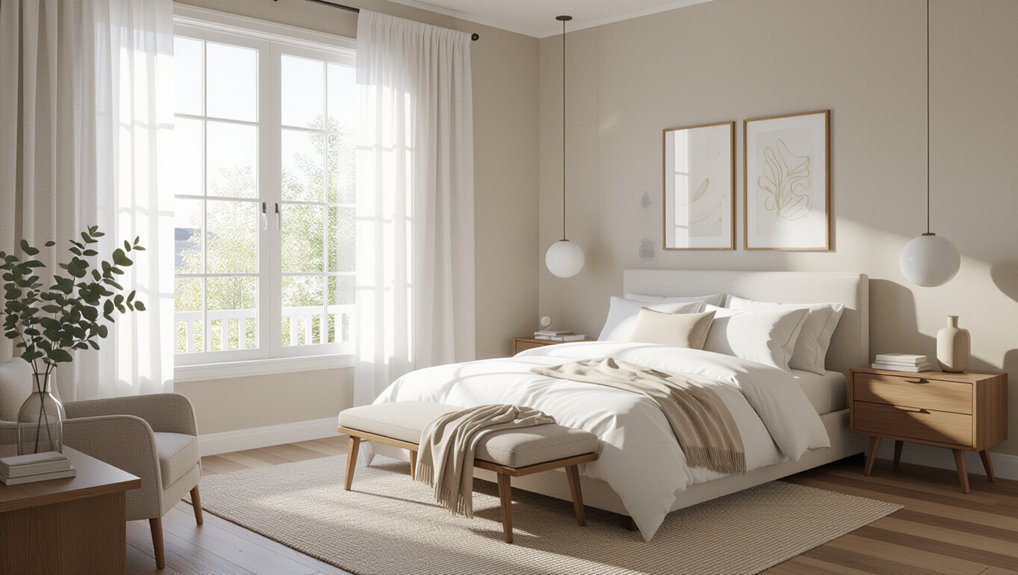
You’ll transform your master bedroom into a peaceful retreat by starting with a 10-minute sweep—stash dishes, receipts, cords, and clear your nightstand to a lamp, book, and water. Store skincare and jewelry in trays, hang non-sleepwear, and donate “maybe” clothes. Open 24–30 inch walkways and anchor the bed on a solid wall with matching nightstands. Choose soft blue-grays or warm off-whites, add dimmers and 2700K lamps, then layer crisp sheets, a structured duvet, and textured throws—there’s more to refine next.
Key Takeaways
- Do a daily 10-minute declutter sweep, keeping nightstands and surfaces to essentials to reduce visual noise.
- Rework the layout for clear 24–30 inch walkways, anchoring the bed on a solid wall with balanced nightstands.
- Choose a calming, low-contrast palette like warm off-whites, muted greens, or soft blue-grays with matte/eggshell finishes.
- Create layered, warm lighting with dimmers, matching bedside lamps, and 2700K high-CRI bulbs plus “Wind Down” smart scenes.
- Upgrade bedding with smooth cotton sheets, a structured duvet, textured layers, supportive pillows, and coordinated shams for a polished retreat feel.
Declutter Your Master Bedroom for Instant Calm
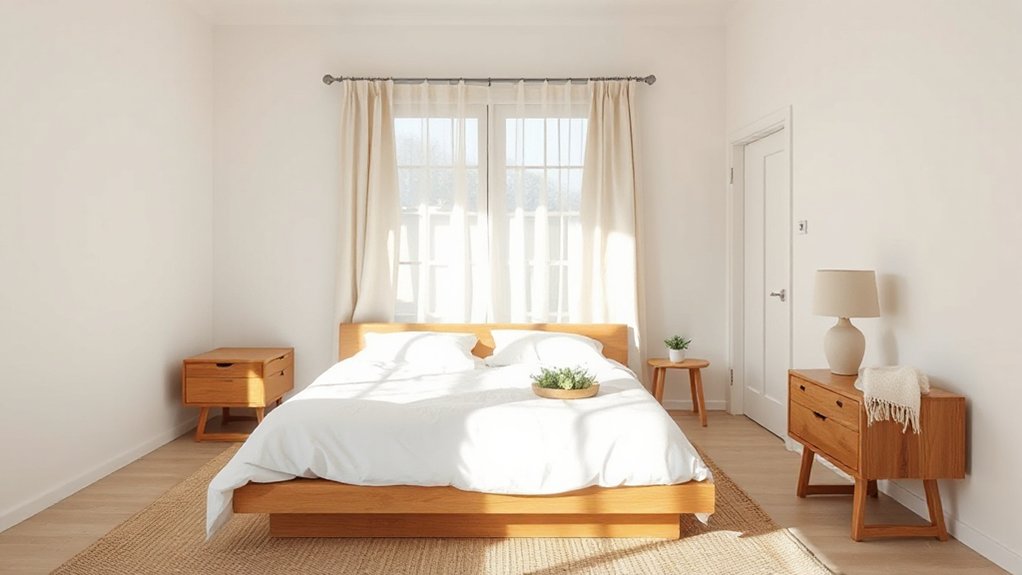
If your bedroom feels more like a storage unit than a sanctuary, decluttering is the fastest way to reset the mood. Start with a 10-minute sweep: remove dishes, receipts, and random cords, then return them to their real homes outside the room. Clear your nightstand to essentials only—lamp, book, water—so your eye lands on calm.
Edit surfaces next. Store skincare and jewelry in lidded trays or a drawer organizer to reduce visual noise. Hang or fold anything that isn’t sleepwear; donate “maybe” clothes immediately. Under the bed, keep just one labeled bin for off-season linens. These quick limits support feng shui principles by reducing stagnant clutter and reinforce minimalist decor with clean lines and breathing space.
Fix Your Bedroom Layout for Better Flow
With the clutter gone, your room can finally breathe—now make sure it moves well, too. Start by mapping clear walkways from the door to the bed, closet, and bathroom; aim for 24–30 inches of passage. Anchor the bed on a solid wall, then balance it with matching nightstands so the space feels intentional, not improvised. Practice smart Furniture placement: keep taller pieces away from windows, and angle seating toward the bed instead of blocking paths. Use Storage solutions that support flow, like under-bed drawers, a slim dresser, or wall-mounted shelves that free floor area. If a piece doesn’t earn its footprint, swap it for something narrower or multifunctional.
Choose Relaxing Master Bedroom Colors (Plus Finishes)
Although furniture placement sets the stage, your color palette and finishes determine whether the room actually feels calm. Use Color psychology to steer choices: soft blue-grays lower visual “noise,” muted greens feel restorative, and warm off-whites read clean without turning stark. If you crave coziness, try clay-tinted taupe or dusty blush in low-saturation tones. Keep contrast gentle—pair walls and trim within one to two shades, and limit bold accents to one controlled element like bedding or art.
Dial in paint finish options for real-world livability. Choose matte or flat on ceilings and low-traffic walls to hide imperfections; pick eggshell for most bedroom walls for a subtle glow and easier wipe-down. Use satin on trim and doors for crisp, tailored edges.
Layer Bedroom Lighting: Dimmers, Lamps, Warm Bulbs
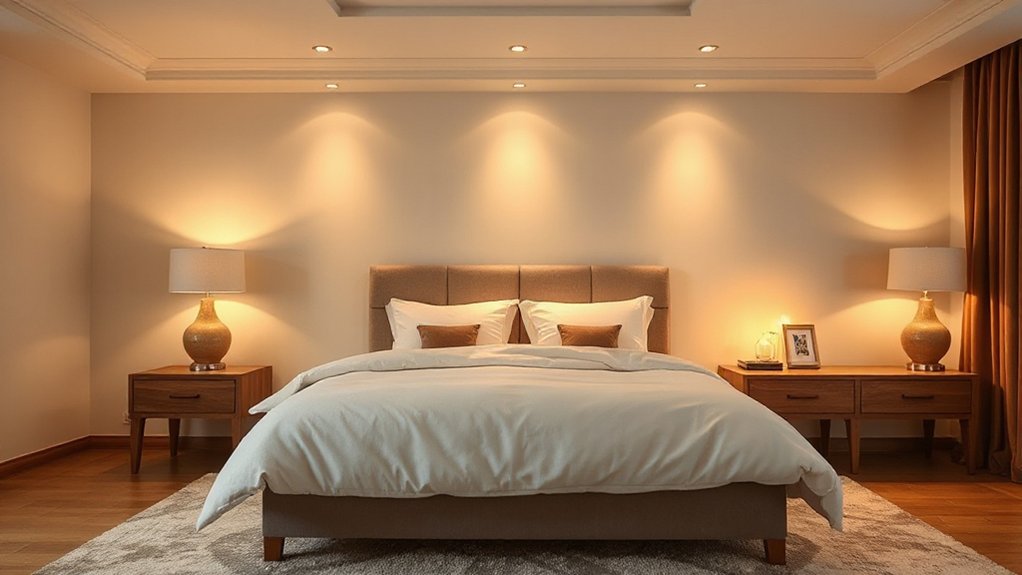
Once you’ve nailed a soothing palette, lighting decides whether those colors read soft and restorative or flat and harsh. Start with a dimmer on your overhead fixture so you can dial brightness down for evenings and up for chores. Add two bedside lamps to create balanced, face-flattering light; choose shades in linen or parchment to diffuse glare.
Swap in warm bulbs (2700K, high CRI) so whites look creamy and wood tones stay rich. Layer in a low floor lamp or picture light to build an ambient atmosphere without relying on the ceiling. If you want Smart lighting, program scenes: “Wind Down” at 20% and “Wake” with a gradual ramp. Hide cords, align lamp heights, and keep switch access effortless too.
Upgrade Bedding for a Cozy, Hotel-Feel Retreat
If you want your master bedroom to feel like a boutique hotel instead of just a place to sleep, start by upgrading the bedding layers you touch every night. Choose crisp, high-thread-count cotton or Silk sheets for that cool, smooth slide-in feel, then add a lightweight duvet with a structured cover that holds its shape. Layer a matelassé quilt or throw at the foot for texture and an intentional, styled finish.
Swap flat, lumpy inserts for supportive Memory foam pillows, and keep two firmness options so you can adjust for reading or side-sleeping. Use euro shams to create height, then standard shams for polish. Stick to a calm palette—ivory, sand, or soft gray—and finish with a neatly tailored bed skirt or low-profile fitted sheet.
Frequently Asked Questions
How Can I Soundproof My Master Bedroom for Better Sleep?
You can soundproof your master bedroom by sealing gaps with weatherstripping, adding a solid-core door, and hanging heavy curtains. Use soundproofing materials like rugs, acoustic panels, and underlayment, plus noise reduction techniques like white noise.
What Are the Best Low-Maintenance Plants for a Calming Bedroom?
Choose snake plants, ZZ plants, and pothos for your bedroom—they thrive on neglect, handle low light, and need sparse watering. You’ll get indoor greenery and calming flora with clean lines, tidy pots, and minimal mess.
How Do I Choose the Right Mattress Firmness for My Sleep Style?
Choose firmness by sleeping position: side sleepers go medium-soft, back medium, stomach firm. Test Mattress types—foam, hybrid, innerspring—for Sleep comfort. You’ll want aligned hips/shoulders, minimal pressure points, and easy returns.
What Window Treatments Improve Privacy Without Blocking Natural Light?
Choose sheer curtains to soften views while still letting daylight glow through. Add frosted glass film on lower panes for steady privacy. Layer a tailored roller shade for evenings, and match hardware finishes to your décor.
How Can I Reduce Bedroom Allergens and Improve Air Quality?
Reduce allergens by vacuuming with a HEPA filter, washing linens weekly hot, and keeping humidity 40–50%. Add allergen proof bedding and follow air purifier recommendations: true-HEPA unit sized to your room, run nightly.
Conclusion
Funny how the “retreat” you’ve been chasing starts with tossing that chair-pile and giving your bed breathing room. You tweak the layout, and suddenly the room stops fighting you. You pick calm, matte colors—nothing flashy, just quietly expensive-looking. You layer warm light with dimmers and bedside lamps, so midnight doesn’t feel like noon. Then you upgrade crisp sheets and a weighty duvet, and the hotel vibe shows up at home—no checkout required.
About the Author