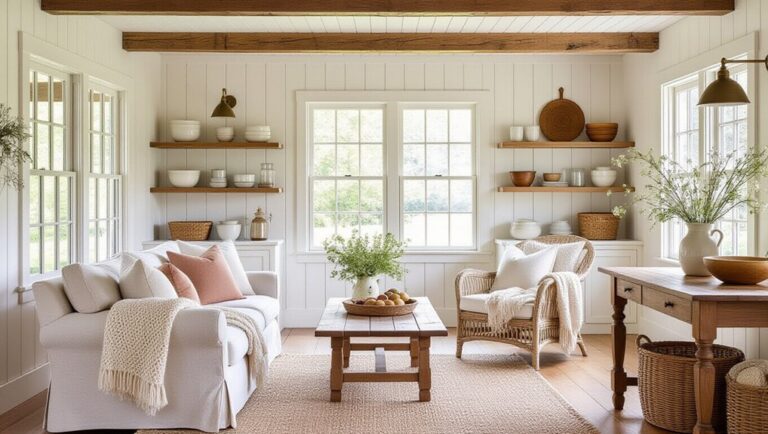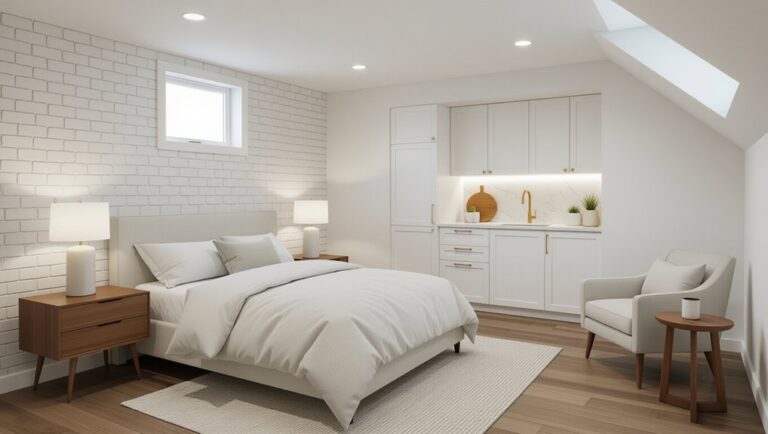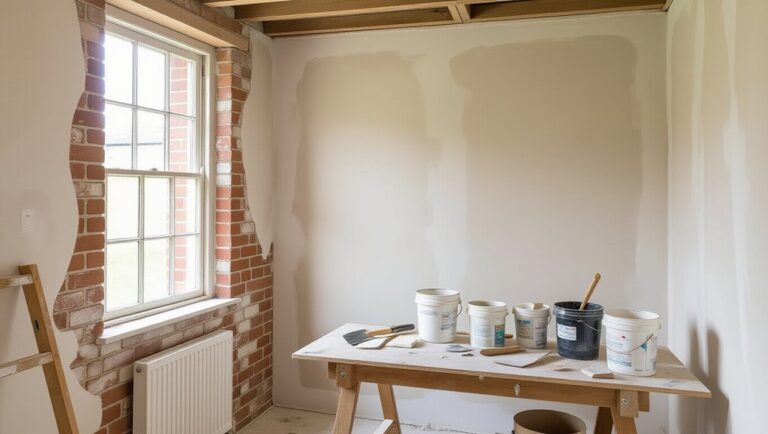
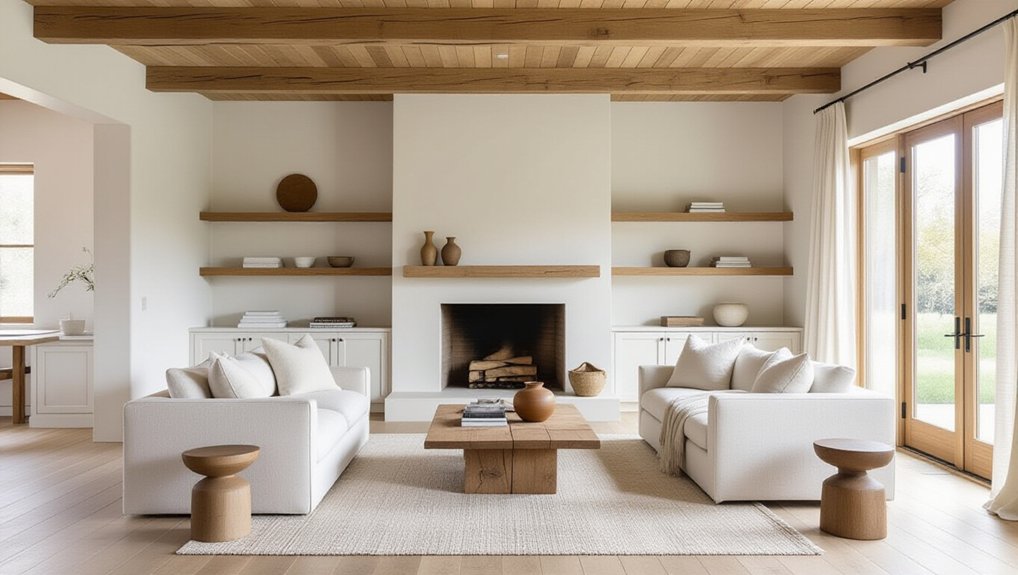
You’ll renovate your bungalow for soft rustic minimalism by keeping its quiet bones—watch how light moves, protect original trim and built-ins, and only fix pinch points in the flow. Build a low-contrast palette of creamy off-whites, warm putty, muted clay, and touches of charcoal, then ground it with matte oak floors and handmade-look tile. Update hardware in aged brass or blackened steel, and furnish with fewer, larger linen-and-wood pieces. Next, you’ll see where small choices matter most.
Key Takeaways
- Map light, sightlines, and daily circulation; keep calming room proportions and adjust only pinch points that disrupt flow.
- Build a soft rustic minimalist palette: creamy off-whites, warm putty, muted clay, with linen, oat, smoke, and dried-sage accents.
- Favor matte natural finishes: refinished wood or wide-plank oak floors, limewash walls, and handmade-look ceramic or tumbled stone tiles.
- Preserve and simplify architectural details: repair original trim and built-ins, unify casing profiles, and update hardware in aged brass or blackened steel.
- Furnish with fewer, larger textured pieces—linen, oak, wool—adding restrained vintage accents and warm opal-glass or aged-metal lighting.
Assess Your Bungalow Interior Layout and What to Keep
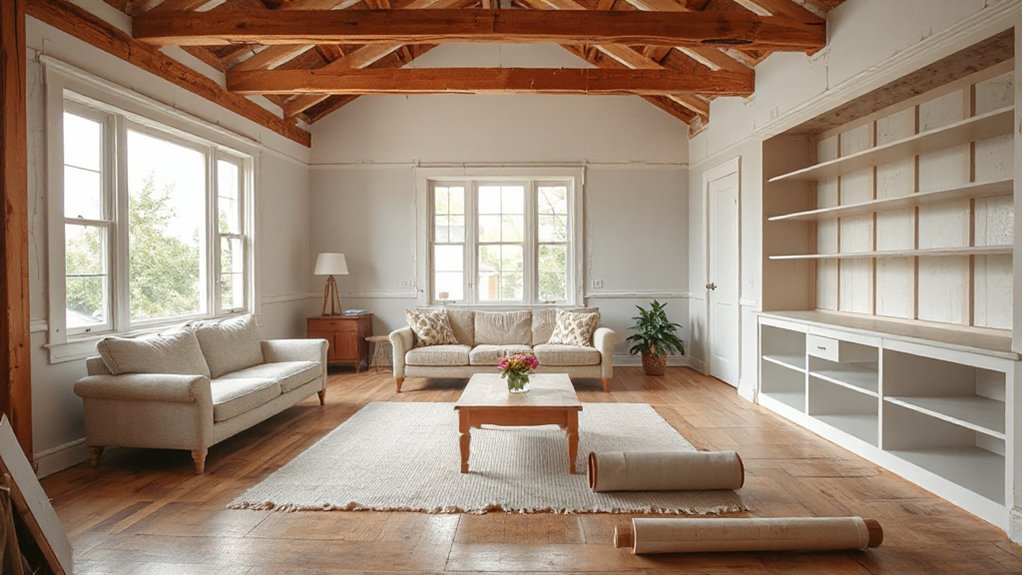
Before you move a wall or pick up a paint swatch, take a slow walk through your bungalow and read the layout for what it already does well. Notice how light travels, where you naturally pause, and which doorways feel generous. Track your daily path from entry to kitchen to living room; that’s your baseline layout flow.
Mark what’s worth keeping: original trim, built-ins, solid doors, and any archways that frame views without narrowing circulation. Test furniture placement with tape on the floor and quick mockups; see if seating can face both the fireplace and conversation without blocking routes. Keep rooms that already hold scale and calm, and change only the pinch points you can’t live with.
Set a Soft Rustic Minimalism Palette for Renovation
As you settle on a renovation direction, let your bungalow’s natural warmth guide a soft rustic minimalism palette—quiet, breathable, and grounded in honest materials. Start with creamy off-whites, warm putty, and muted clay, then add depth through soft charcoal and weathered wood tones. Keep contrast low, so rooms feel calm from dawn to lamp-light.
Choose a few touchstone hues you’ll repeat: linen, oat, smoke, and a dried-sage note. Bring in Vintage textiles sparingly—one woven runner, a faded cushion, a simple wool throw—to introduce age and story without visual noise. Balance them with Rustic lighting in subdued metals or aged finishes, using warm bulbs and gentle shades. You’ll get a palette that feels edited, lived-in, and quietly handmade throughout.
Pick Bungalow Interior Finishes: Floors, Walls, Tile
That soft rustic minimalism palette starts to feel real once you choose finishes you’ll touch every day—floors underfoot, walls that catch the light, and tile that handles heat and water. Start with wood: refinish existing boards if you can, or choose wide-plank oak in a matte, natural stain that hides wear. Keep walls quiet but not flat; pick a warm off-white limewash or a soft clay paint to add depth and soften shadows. In kitchens and baths, lean on handmade-look ceramic or tumbled stone in muted creams, foggy grays, or earthy taupes; use simple layouts, then let grout tone down contrast. Test everything in your light, especially under Vintage lighting. Leave visual punch to statement art.
Update Bungalow Trim, Built-Ins, and Hardware Quietly
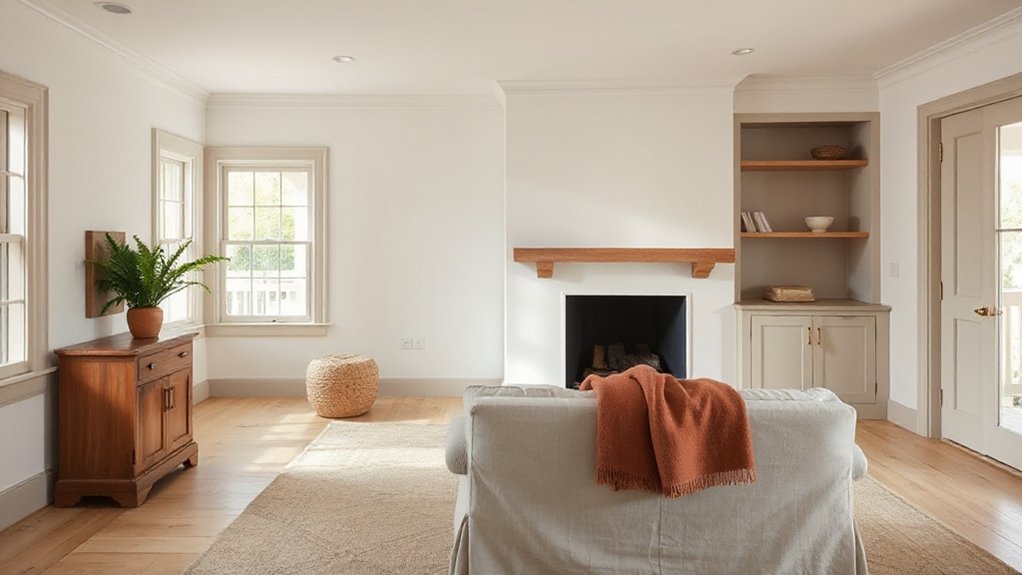
Once you’ve settled on floors and wall color, trim and built-ins become the quiet framework that makes the whole bungalow feel finished. Keep profiles simple: square casings, eased edges, and consistent base heights that read calm. Repair before replacing, and when you must add, match grain and shadow lines so it disappears.
Refresh built-ins with soft-matte paint or a rubbed oil finish, then swap pulls for aged brass or blackened steel with small backplates. Update latches and hinges to the same tone so doors feel intentional. For ceilings, choose gentle Ceiling treatments—painted beadboard, slim battens, or a clean plaster skim—to pull rooms together. Finish with Vintage lighting in warm metal and opal glass so hardware and trim glow, not shout.
Furnish the Bungalow Interior With Fewer, Warmer Pieces
If you keep the furniture plan spare, the bungalow’s rooms feel calmer and the original details read louder. Choose fewer pieces with generous texture: a linen sofa, a solid oak table, a wool rug that softens footfall. Let each item earn its place by comfort, proportion, and honest materials.
Warmth comes from tone, not clutter. Add Vintage accents in small doses—a turned-wood stool, a brass picture rail lamp, a worn pottery vase—so the patina reads like history, not décor. Keep storage quiet and low, and leave sightlines open to built-ins and trim. Anchor the room with statement lighting: a simple pendant in aged metal, or a paper shade that glows at dusk. You’ll feel the bungalow settle.
Frequently Asked Questions
How Do I Renovate in Phases While Living in the Bungalow?
Renovate room by room, sealing work zones with plastic and scheduling loud tasks when you’re out. Shift furniture placement to clear pathways, store essentials nearby, and keep a steady color palette so the home feels calm.
What Permits or Inspections Are Required for Interior Renovation Projects?
You’ll need permits for structural changes, electrical, plumbing, HVAC, and sometimes drywall or window work. Submit Permit applications, follow Building codes, and schedule rough-in and final inspections. Call your local office; they’ll confirm requirements.
How Can I Improve Soundproofing Between Rooms Without Major Reconstruction?
You can boost soundproofing between rooms by sealing gaps, adding dense door sweeps, hanging thick drapes, and laying rugs. Use soundproofing techniques like bookcases on shared walls and acoustic treatments like removable panels.
What’s the Best Way to Handle Asbestos or Lead Paint Safely?
Hire certified pros; you can’t DIY this safely. For Asbestos removal, you’ll seal, test, and follow regulated disposal. For Lead paint safety, you’ll test, contain dust, use HEPA cleanup, and document everything.
How Do I Create a Realistic Renovation Budget With Contingency Planning?
Build a realistic budget by mapping scope, using detailed cost estimation, and tracking budget allocation by trade. Add 10–20% contingency, plus a separate reserve for surprises. Update weekly with quotes, invoices, and decisions.
Conclusion
You’ve walked your bungalow room by room, keeping what still sings and clearing what clutters. Now let soft rustic minimalism settle in like morning light—quiet, steady, and kind. Let a calm palette guide your choices, and lean on honest floors, gentle walls, and simple tile. Refresh trim and built-ins with restraint, swap hardware without fuss, and choose fewer furnishings with warmth. In the end, you’ll live with more breath, less noise.
About the Author