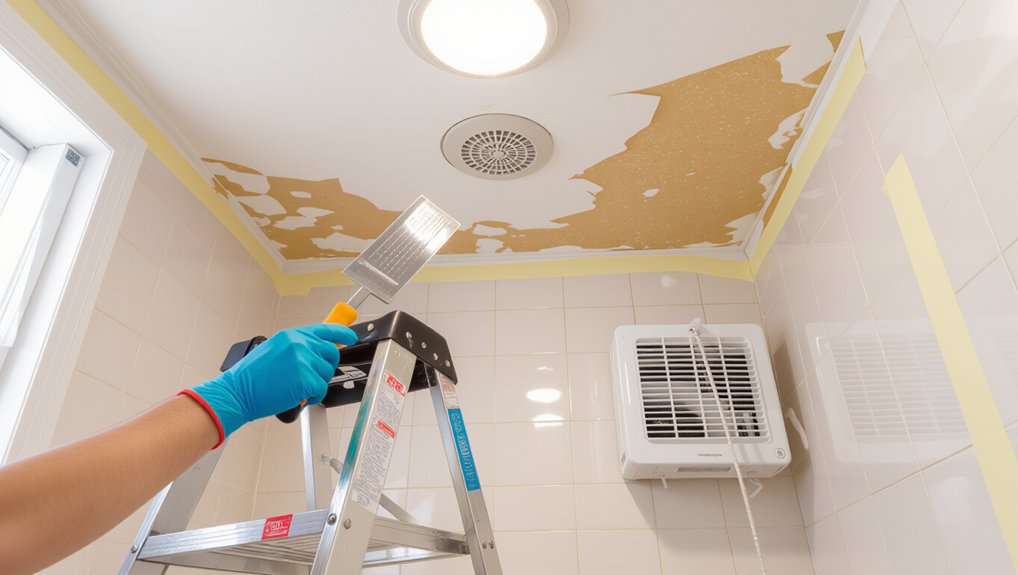
You’re seeing peeling because humid air condenses on cool walls and keeps cycling when ventilation is weak, pushing moisture behind marginal paint. First, rule out leaks and hidden dampness with a visual check and a moisture meter, and address any mold with gloves, eye protection, and an N95. Scrape to a sound edge, feather-sand 120–180 grit, degrease, dry fully, then prime bare/patchy areas with a high-adhesion sealer and topcoat with bathroom-rated satin enamel. Next, optimize fan run-time and ducting.
Key Takeaways
- Improve ventilation first: run the exhaust fan during showers and 20–30 minutes after, vented outdoors, sized at least 1 CFM/sq ft.
- Check for leaks and hidden moisture using visual inspection and a moisture meter before repainting to prevent recurring peeling.
- Scrape all loose paint to a sound edge, feather-sand 120–180 grit, and seal exposed drywall paper or soft areas.
- Clean walls with a degreasing cleaner to remove soap residue, rinse if needed, and let surfaces dry completely before priming.
- Prime with a high-adhesion, stain-blocking primer, then apply two thin coats of bathroom-rated acrylic enamel in satin or semi-gloss.
What Causes Peeling Bathroom Paint?
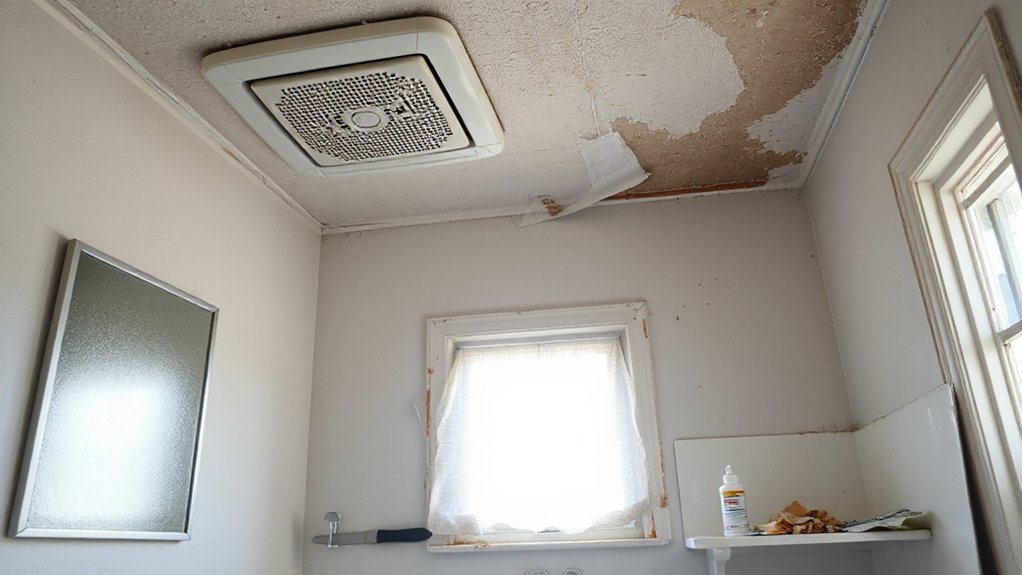
Although bathroom paint is formulated to handle moisture, it’ll peel when water vapor repeatedly condenses on cool surfaces and forces its way behind a weak paint film. Poor ventilation lets relative humidity stay high after showers, so condensation cycles persist on ceilings, exterior walls, and corners. You also weaken paint adhesion when you paint over glossy coatings, soap residue, or poorly sanded patches; the film can’t mechanically key into the substrate. If you rush recoat times or apply paint in a damp room, trapped moisture and surfactants reduce curing and leave a soft boundary layer. Low surface temperatures and inadequate airflow slow drying, increasing blistering and edge lift. For safety, you should ventilate during and after bathing and painting to maintain humidity control.
Rule Out Leaks, Mold, and Trapped Moisture
Before you repaint, confirm that moisture isn’t coming from a hidden source, because ventilation fixes won’t stop paint failure caused by leaks, mold growth, or water trapped in the substrate. Inspect supply lines, shutoff valves, the toilet base, tub/shower penetrations, and grout for seepage; look for staining, soft drywall, or efflorescence. Use a moisture meter on suspect walls and ceilings, and compare readings to dry areas. Check behind accessories and at exterior walls for cold-spot condensation that defeats Humidity control. If you smell mustiness or see spotting, treat it as potential mold: wear gloves, eye protection, and an N95, and isolate dust. Verify Exhaust fan options actually vent outdoors and that ducts aren’t crushed, disconnected, or backdrafting.
How to Repair Peeling Bathroom Paint (Step-by-Step)
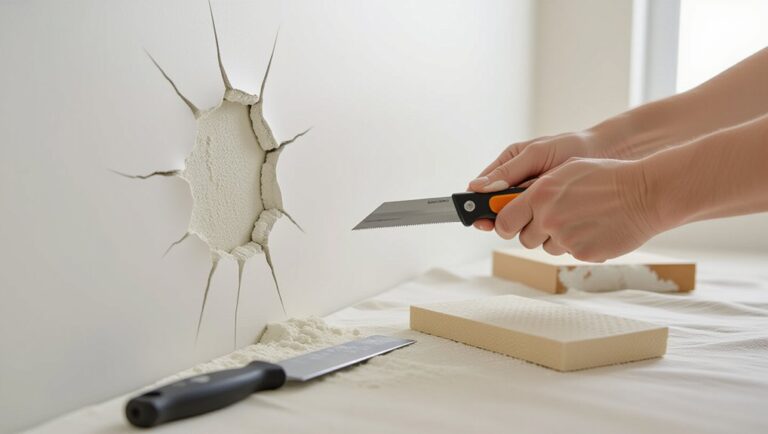
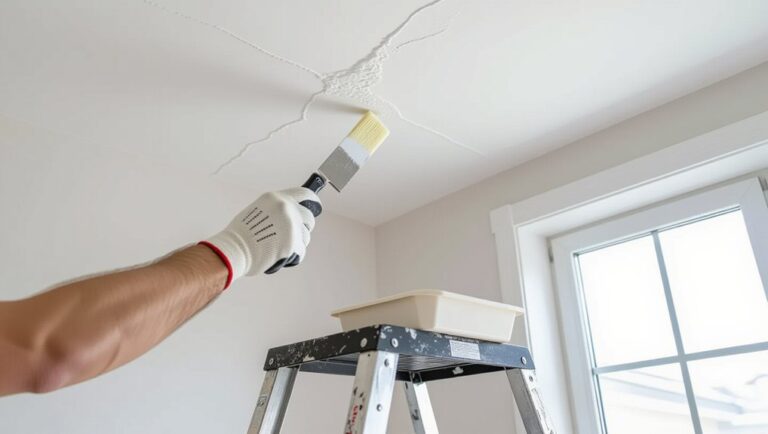
Once you’ve confirmed moisture isn’t coming from a leak or trapped water, repair peeling bathroom paint by removing all failed coating back to a sound edge, stabilizing the substrate, and rebuilding the finish system in thin, fully cured layers. Shut off power at the breaker and remove or mask Bathroom lighting fixtures. Wear eye protection and a respirator. Scrape loose paint; feather edges with 120–180 grit. If you expose soft drywall paper, cut it back and seal it. Wash the area with a degreasing cleaner, rinse, and let it dry fully. Spot-fill pits, then sand flush. For Decorative wall textures, re-create the pattern on the patch before recoating. Vacuum dust, tack-wipe, and keep the room ventilated while each layer cures.
Best Primer and Paint for Steamy Bathrooms
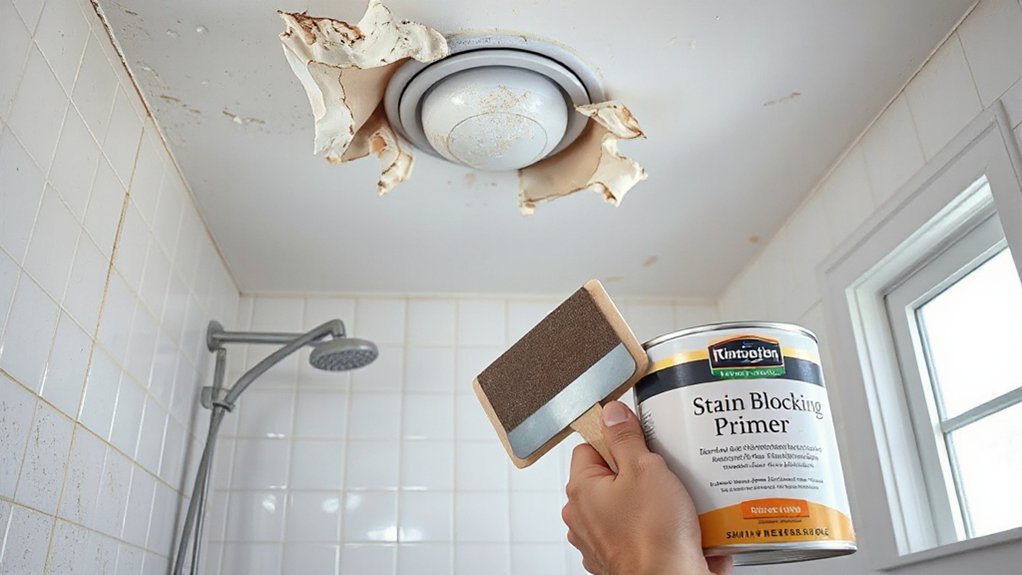
Because steam drives moisture into paint films and drywall faster than most rooms, you’ll get the longest-lasting repair by choosing a high-adhesion, stain-blocking primer matched to the substrate (drywall paper, joint compound, or previously painted areas) and topping it with a true bathroom-rated acrylic enamel or mildewcide-treated, moisture-resistant paint in a satin or semi-gloss sheen. For bare or patched areas, use a bonding primer or acrylic sealer; for water staining, use a stain-blocking primer and let it cure fully. Wear gloves and a respirator when sanding or applying solvent-based products, and keep ignition sources away. Apply two thin topcoats at the label’s spread rate. For Color selection, pick lighter tones that show less spotting. For Decorative finishes, use moisture-rated coatings only.
Improve Bathroom Ventilation to Stop Paint Peeling
Even the best bathroom primer and enamel will fail if humid air lingers on the walls, so you need to control steam at the source with ventilation. Run the exhaust fan during showers and for 20–30 minutes after, and keep the door cracked to promote make-up air. Verify the fan is ducted outdoors, not into an attic, and seal joints with foil tape to prevent moisture leaks. Size Ventilation systems to the room (at least 1 CFM per sq ft), and choose a quiet, ENERGY STAR unit so you’ll actually use it. Clean the grille and housing quarterly, and shut off power at the breaker first. Add a humidity-sensing switch to automate run time without affecting Bathroom decor.
Frequently Asked Questions
Can I Fix Peeling Bathroom Paint Without Sanding the Entire Wall?
Yes, you can fix it without sanding the entire wall. You’ll do localized paint removal, then wall preparation: scrape loose edges, feather-sand spots, clean, prime, patch, reprime, and repaint. Wear eye protection.
How Long Should I Wait Before Showering After Repainting?
Wait 24–48 hours before showering—fast use, slow curing. Follow drying time on the can, add Ventilation tips: run exhaust, crack a window, keep airflow. You’ll cut moisture risk and protect adhesion.
Will Peeling Paint Lower My Home’s Resale Value During Inspection?
Yes, it can lower resale value because inspectors flag moisture-related defects and reduced paint durability. You’ll mitigate concerns by repairing substrate damage, documenting fixes, and verifying ventilation systems meet airflow specs and operate safely.
Is It Safe to Paint a Bathroom if I Have Asthma or Allergies?
Yes, you can, but you must minimize exposure. Choose low-VOC, fragrance-free products to reduce paint allergy risk; use asthma safe options, ventilate aggressively, wear a P100 respirator, and leave until cured afterward.
What Should I Do With Old Peeling Paint Chips and Dust?
Bag and seal peeling chips immediately; don’t sweep. For paint removal, mist surfaces, scrape into a lined container, then HEPA-vacuum. For dust cleanup, wet-wipe twice, dispose rags sealed, and wash hands, change clothes.
Conclusion
You stop peeling bathroom paint by treating the cause, not just the symptom. Confirm you don’t have leaks, mold, or trapped moisture, then scrape and sand to sound edges, clean thoroughly, and let surfaces dry completely. Prime with a stain-blocking, mold-resistant primer, then apply a high-quality bathroom-rated paint. Ventilation is your shield: run the fan during showers and afterward, or add one if needed. Follow PPE and ladder safety throughout.
About the Author