You’ll get a stylish guest bedroom on a budget by setting a firm spend cap and prioritizing sleep first: a supportive topper, fresh linens, and good pillows. Shop your home for nightstands, chairs, and lamps, then upgrade what you keep with paint and modern pulls. Stick to a tight neutral palette with one muted color and a darker accent, add oversized art or a bold mirror, and layer warm 2700K lighting, blackout curtains, and textured bedding for hotel polish. Keep going for smart storage and finishing touches.
Key Takeaways
- Set a strict budget and prioritize sleep essentials first: topper, fresh linens, supportive pillows, and a clutter-free layout with reachable outlets.
- Use a cohesive neutral palette with one muted color and one dark accent, repeating tones in textiles and decor for a high-end feel.
- Repurpose existing furniture and elevate it with paint and modern hardware swaps, choosing slim, space-saving pieces when needed.
- Create hotel-style bedding with simple layers: crisp sheets, duvet cover, extra pillows, and a textured throw for polished comfort.
- Upgrade lighting and windows affordably with warm LED bulbs, layered lamps/sconces, and full-length curtains plus blackout panels for better sleep.
Set Your Guest Bedroom Budget (and Priorities)
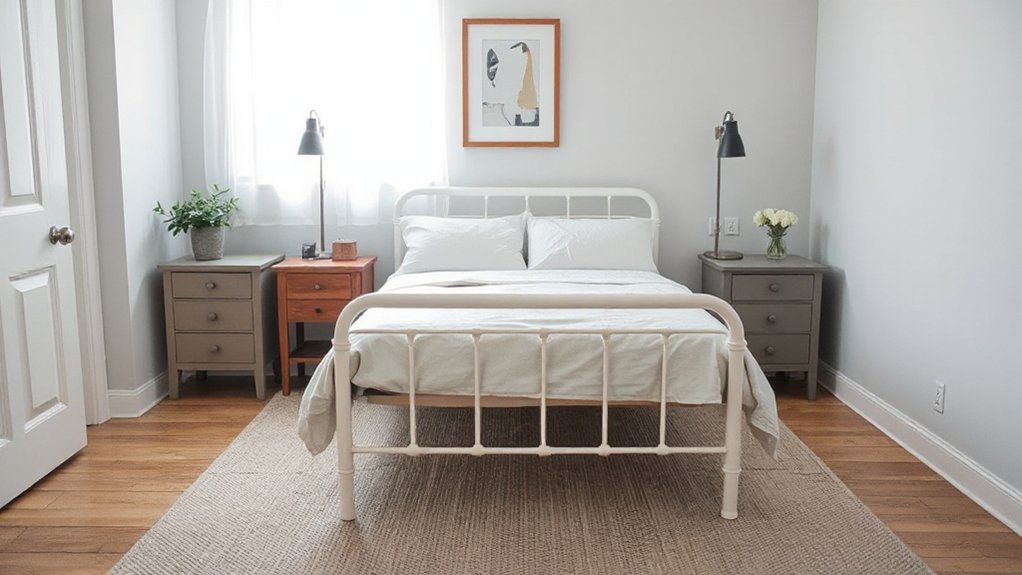
Before you buy a single throw pillow, decide exactly what you can spend—and what you want that spend to accomplish. Set a firm ceiling, then split it into three buckets: sleep quality, function, and polish. Prioritize a supportive mattress topper, fresh linens, and a pair of pillows as nonnegotiable guest comfort essentials. Next, map the guest room layout so it works like a boutique stay: clear walking paths, a reachable outlet, and one surface for a phone and water. Allocate remaining dollars to high-impact basics—blackout curtains, a bedside lamp with warm LEDs, and slim hangers or hooks. Track every purchase in a simple list, and pause before impulse buys. If it doesn’t improve rest or usability, skip it.
Choose a High-End Color Palette on a Budget
Although a guest room can look “designer” without designer prices, the secret is a tight, intentional palette that reads cohesive the moment someone walks in. Start with one anchoring neutral (warm ivory, greige, or soft taupe) to mimic boutique-hotel calm, then add one muted color and one darker accent for depth. Use Color psychology: dusty blue or sage lowers visual noise, while clay or blush feels welcoming without looking sweet. Keep the “expensive” look by repeating tones across walls, textiles, and art, not adding more colors. For polish, work with complementary palettes—navy with caramel, forest with blush, charcoal with sand—then limit metals to one finish. Finally, choose paint in mid-range sheens; it photographs richer.
Shop Your Home for Guest Bedroom Basics First
Before you buy anything, shop your own rooms for guest-bedroom basics—nightstands, a slim dresser, even a spare chair that can double as a luggage perch. You can repurpose linens and decor you already own, like crisp white sheets, a textured throw, and a pair of matching lamps, to create that elevated, boutique feel. With a quick edit and a cohesive arrangement, you’ll save money while keeping the space looking intentional and on-trend.
Start With Existing Furniture
If you want a guest bedroom that looks intentional without blowing your budget, start by shopping your own home for the big essentials. Walk through each room and “audition” pieces: a spare dresser, a streamlined nightstand, even an occasional chair that can double as a luggage perch.
Prioritize a bed frame and a supportive mattress first, then build smart furniture arrangement around clear pathways and easy access to outlets. Angle a chair near natural light, slide a small table within arm’s reach, and keep drawers or closet space available so your guest isn’t living out of a suitcase. You’ll save money, reduce waste, and create a layered, curated look that still nails guest comfort. Finish by tightening proportions so nothing feels cramped or temporary.
Repurpose Linens And Decor
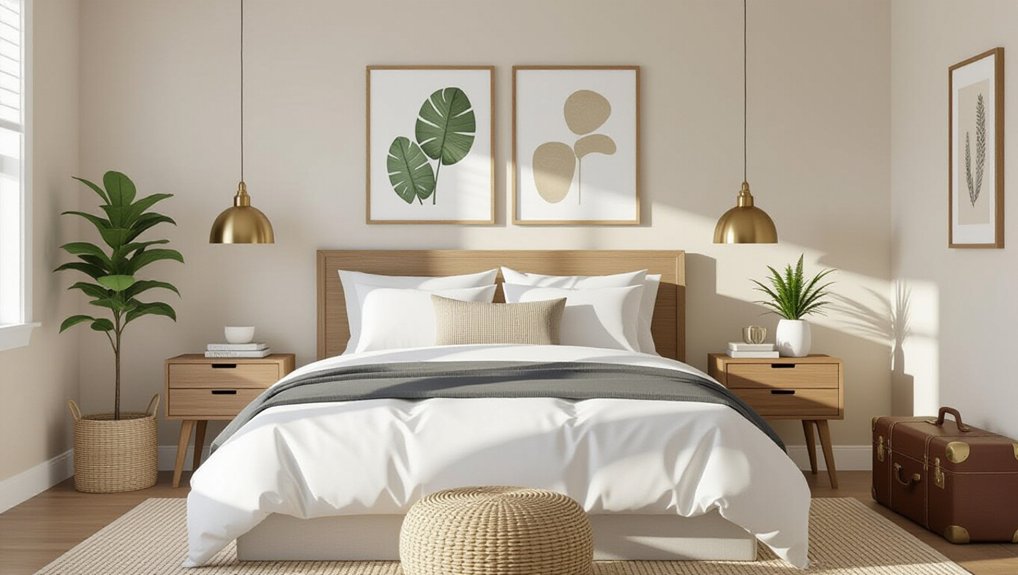
Once you’ve mapped out the furniture, pull the next layer from what you already own: linens and decor that can instantly make the room feel styled. Start with crisp sheets, then lean into linen layering—fold a textured throw at the foot of the bed and stack two pillow sizes for a boutique look. Rotate in your best neutral duvet cover, or brighten things with a patterned quilt you’re not using elsewhere. Shop closets for extra hangers, a spare laundry basket, and a tray for water and chargers. For decorative accents, borrow a framed print, a ceramic vase, and a small lamp from another room to create a finished bedside moment. Swap hardware or ribbon-tie curtains to refresh fast, no spend.
Update Guest Bedroom Furniture With Paint and Pulls
You can give your guest bedroom furniture a high-end refresh with budget-friendly paint and a simple hardware swap. You’ll get the best finish by cleaning, lightly sanding, priming when needed, then applying smooth, even coats in a modern satin or matte. Finish the look by trading dated knobs for sleek pulls—think brushed brass, matte black, or vintage glass—to instantly elevate the piece.
Choose Budget-Friendly Paint
Although new dressers and nightstands can blow a budget fast, a can of quality paint and a few updated pulls can make your existing guest-room furniture look intentionally designer. Choose a midpriced cabinet-and-trim enamel or furniture paint that levels smoothly, resists scuffs, and cleans easily—ideal for a high-touch guest space. For effortless color coordination, pull a tone from your bedding or rug, then go one shade deeper for the dresser to ground the room. Keep paint finishes strategic: satin or semi-gloss reads crisp and modern, while a soft matte looks elevated but may need more care. If you’re updating pulls, test your paint against brushed brass, black, or nickel so the undertone stays consistent under daylight and lamp light.
Prep, Prime, And Paint
Before the fun color goes on, dial in the prep so your finish looks factory-smooth and holds up to suitcases and frequent wiping. Pull drawers, label parts, and clean every surface with degreaser; residue ruins adhesion. Scuff-sand with 180–220 grit, then vacuum and tack-cloth for zero dust.
Next, choose a bonding primer matched to your material—stain-blocking for knots, high-adhesion for laminate—then spot-fill chips, sand flush, and re-prime repairs. Test your color palette selection under real bedroom lighting: warm bulbs deepen creams, cool LEDs sharpen grays and greens. Apply two thin coats with a mini foam roller and angled brush, keeping a wet edge. Let each coat cure fully before reassembling for durability and a crisp, modern look.
Swap Pulls For Style
Once the paint’s cured, swapping the pulls becomes the fastest way to make budget furniture read custom. Treat hardware like jewelry: it should echo your room’s vibe and elevate the silhouette. Choose warm brass for a modern organic look, matte black for crisp contrast, or Vintage hardware for collected charm. Measure hole spacing (center-to-center) before you shop so your new drawer pulls fit without patching. If you’re changing sizes, fill old holes with wood filler, sand smooth, and touch up paint for a seamless finish.
Keep finishes consistent across the dresser, nightstands, and closet doors, but vary shapes for interest—bin pulls on wide drawers, knobs on small ones. Add felt washers to protect fresh paint and stop wobble.
Buy Budget Bedding That Looks Hotel-Level
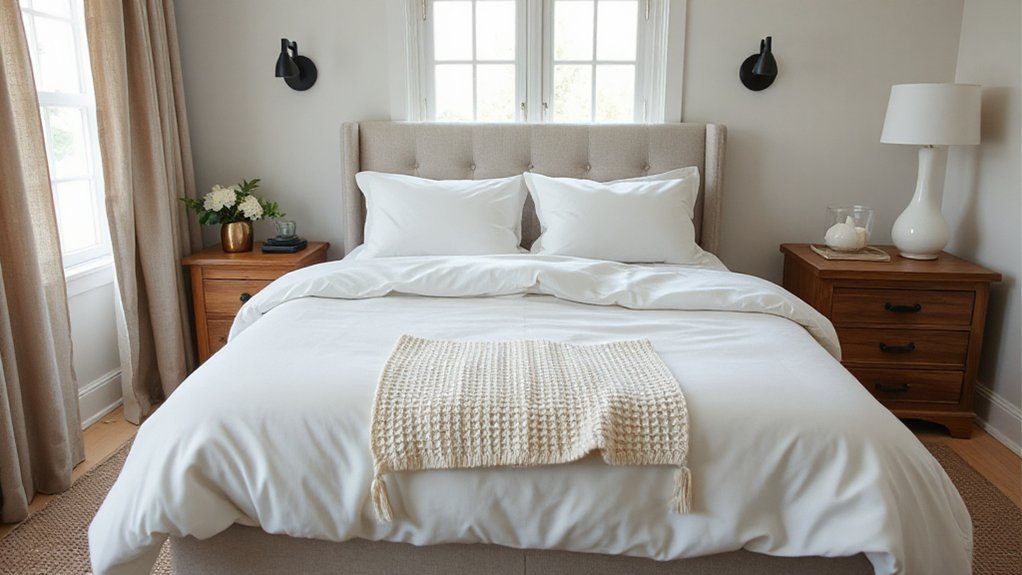
If you want your guest room to feel instantly elevated, start with bedding that looks crisp, layered, and intentionally coordinated—not expensive. Choose Budget bedding in hotel colors: bright white, soft ivory, or pale gray, then add one contrasting accent (navy, sage, or sand). Look for microfiber or cotton-percale blends with a matte finish; they mimic Luxury linens without the price tag.
Buy two matching pillowcases per sleeping spot, plus one extra set for easy turnover. Use a simple duvet insert and a duvet cover instead of a bulky comforter—you’ll get that tailored, tucked look and faster laundry days. Finish by steaming the duvet cover and folding the top sheet back evenly; those small details read premium.
Add Cozy Layers: Curtains, Rugs, and Throw Pillows
Once you’ve nailed hotel-level bedding, you can make the room feel finished with a few cozy layers that don’t blow your budget. Hang budget-friendly curtains high and wide to fake taller windows, then add a layered rug setup—like a neutral base with a smaller patterned topper—for instant warmth and style. Finish with a tight edit of throw pillows in mixed textures and a cohesive palette so the bed looks curated, not cluttered.
Budget-Friendly Window Curtains
How do you make a guest bedroom feel instantly warmer without blowing your budget? Start at the windows. Swap bare blinds for full-length curtains that skim the floor; that single move adds softness and makes the room look taller. Choose faux silk for a subtle sheen that reads “boutique hotel” but costs far less than real drapery fabric. If your guests are light sleepers, hang blackout panels behind the decorative layer so you get style plus real function. Keep hardware simple: matte black or brushed brass rods look current, and clip rings let you hem-less adjust length in minutes. Buy standard widths, then double them for a fuller, custom look without custom pricing. Stick to neutrals for easy future refreshes.
Layered Rugs And Pillows
Want the fastest way to make a guest bedroom feel finished and welcoming? Start from the floor up with a budget rug combo. Lay a neutral flatweave or jute as your base, then angle a smaller patterned vintage-style rug on top to create layered textures and hide wear. Keep edges visible so the layering looks intentional, not accidental.
On the bed, swap one-size-fits-all sets for a tight pillow edit: two sleeping pillows, two shams, and one lumbar. Mix materials—linen, chunky knit, and velvet—for contrast, but stick to one palette so it feels curated. Add a throw at the foot for hotel polish. These decorative accents make the room look styled, yet they’re easy to thrift, swap, and wash.
Get Guest Bedroom Lighting Right (Lamps, Bulbs, Glow)
Because lighting sets the mood faster than any throw pillow ever could, you’ll want a guest bedroom that layers a soft, flattering glow instead of relying on one harsh overhead fixture. Start with ambient lighting: a simple ceiling flush-mount on a dimmer, or plug-in wall sconces if you’re skipping hardwiring. Add bedside lamps for reading, keeping shades opaque or linen to diffuse hotspots. Your bulb selection matters: choose warm white (2700K), high CRI (90+) LEDs so skin tones look natural and colors don’t go gray. Match lumens to function—lower for nightstands, higher for a desk corner—and keep bulbs consistent across fixtures. Finish with a tiny night-light or motion-sensor plug-in so guests navigate without waking fully.
Use Art and Mirrors to Make the Room Feel Bigger
Even if your guest bedroom’s square footage stays the same, art and mirrors can make it feel brighter, taller, and more open with a few smart placements. Start with art placement: hang one oversized print or a tight grid slightly higher than eye level to pull the ceiling up. Keep frames consistent—black, oak, or thin brass reads intentional and modern. If your headboard wall feels cramped, shift art to the side wall so the bed can breathe visually.
Next, choose mirror styles that double light. Lean a full-length mirror opposite the window, or mount a round mirror above a slim nightstand to soften hard lines. Skip tiny mirrors; one bold piece works harder. Angle it to reflect art, not clutter.
Make Small Guest Bedroom Storage Actually Work
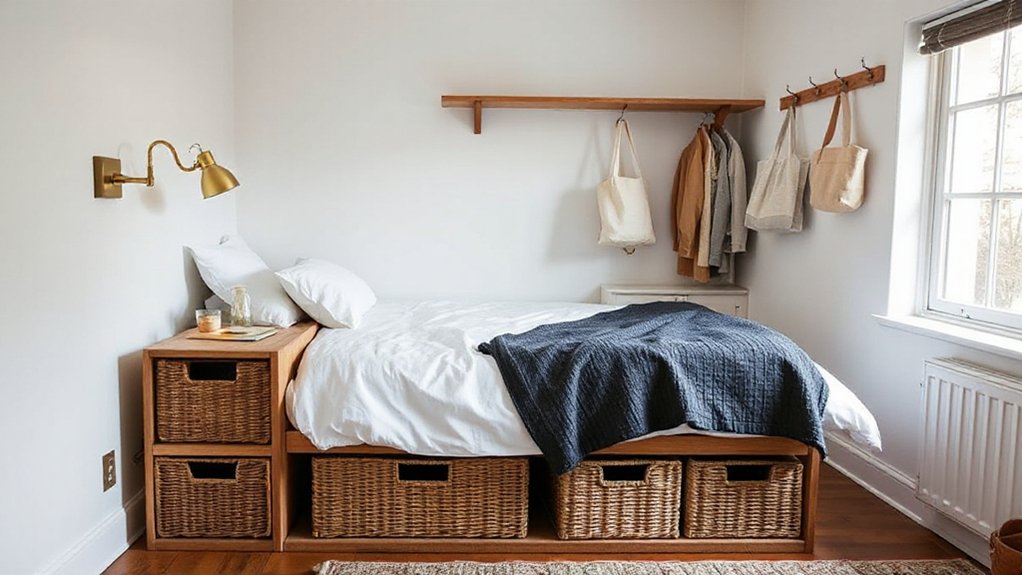
When your guest bedroom runs short on square footage, storage has to earn its keep without adding visual weight. Start with space saving furniture: a platform bed with drawers, a slim nightstand with a shelf, or a wall-mounted bedside ledge that frees floor space. Add a lidded bench at the foot of the bed for extra linens, and choose nesting stools that tuck away when not in use.
Treat vertical surfaces like prime real estate. Install one picture ledge above the dresser for books and a catchall tray, and mount hooks behind the door for bags and robes. For Creative storage solutions, use matching bins on the closet’s top shelf and a rolling under-bed tote for seasonal items. Keep labels minimal and tonal.
Thrift Guest Bedroom Decor That Looks Intentional
Three thrifting rules make budget guest bedroom decor look curated, not cobbled together: stick to a tight color palette, repeat one material finish (warm wood, brass, or matte black), and prioritize pieces with clean silhouettes. Shop with measurements in your notes, then edit hard—one great bedside lamp beats three random knickknacks. Anchor the room with a neutral quilt, then add Vintage accents like a framed botanical print, a small ceramic lamp base, or a cane tray that corrals essentials. Swap mismatched frames into one unified finish for instant cohesion. For DIY art, mount thrifted textiles in oversized mats, or paint abstract panels that echo your palette. Finish with texture: a nubby throw, tailored pillow, and one sculptural vase. You’ll get personality without visual noise.
Stock Guest-Room Extras: Towels, Water, and Chargers
Because the best guest room feels effortless, stock a few hotel-level extras—fresh towels, a sealed bottle of water, and easy charging—so your space reads thoughtful, not fussy. Fold two bath towels and a hand towel in a tight spa stack, then add a washcloth on top; it looks styled and saves space. Keep backup towels in a labeled basket so guests don’t have to ask. Place one sealed water bottle on the nightstand, plus a small coaster, so it feels intentional. For power, use a slim surge protector with USB-C and USB-A ports, or a bedside lamp with built-in charging. These guest room accessories double as budget friendly essentials when you buy multipacks or off-brand options.
Frequently Asked Questions
What Mattress Firmness Works Best for Most Overnight Guests?
Choose a medium-firm mattress; it suits most overnight guests by balancing support and plushness. You’ll satisfy varied Comfort preferences across Mattress types, especially hybrids. If you can, add a topper so you can fine-tune feel.
How Can I Reduce Guest Bedroom Allergies on a Tight Budget?
About 50 million Americans have allergies, so you’ll make a real impact fast: choose Allergy friendly bedding, wash weekly in hot water, declutter dust traps, and compare Air purifier options—HEPA or DIY box-fan filters.
What’s the Best Way to Soundproof a Guest Room Cheaply?
You’ll get the best cheap soundproofing by sealing leaks and adding soft mass: install door seals, hang blackout curtains, lay a thick rug, add bookcases, and use Wall insulation panels on shared walls.
How Do I Make a Guest Bedroom Feel Private Without Major Renovations?
You’ll boost privacy fast by layering Decorative window coverings, adding a door sweep and blackout curtain, and setting up Personal storage solutions like a lidded basket or suitcase stand. Use a folding screen for instant separation.
How Often Should Guest Bedding and Pillows Be Replaced?
Replace guest sheets every 2–3 years, comforters/duvets every 5–7, and pillows every 1–2 for Pillow hygiene. Prioritize Bedding maintenance: launder after each stay, rotate inserts, and retire anything lumpy or stained.
Conclusion
You don’t need a massive budget to give guests a stay that feels boutique. Stick to your priorities, lean on a crisp, high-end palette, and let fresh hardware, layered bedding, and a well-placed mirror do the heavy lifting. Worried thrifting will look mismatched? Keep to one finish family and repeat textures so it reads curated, not cluttered. Add smart storage, then top it off with towels, water, and chargers—instant “thoughtful host” energy.
About the Author