Start by auditing how your kids use the playroom now, then map flexible zones for active play, quiet reset, and messy work while keeping 36-inch egress paths and clear supervision sightlines. Choose adjustable-height tables, stackable seating, and tip-resistant, anchored storage with daily-use bins set 18–42 inches high. Specify durable, easy-clean finishes (LVP, scrub-rated paint, sealed worktops) and plan toy rotation with fixed-capacity bins to prevent clutter. Keep going to see layouts and specs that scale with age.
Key Takeaways
- Audit current play habits, traffic paths, and sightlines to place zones and furniture without blocking supervision or 36-inch egress routes.
- Create flexible active, quiet, and messy zones using movable rugs/screens, so the layout adapts as interests and ages change.
- Choose grow-with-me furniture: adjustable-height tables, stackable seating, rounded corners, and anchored shelving for safety and longevity.
- Build kid-usable storage with open cubbies and labeled bins at 18–42 inches high, plus hidden overflow compartments to prevent clutter.
- Specify durable, easy-clean finishes—LVP or sealed cork floors, scrub-rated washable paint, and sealed worktops—to withstand years of wear.
Start With How Your Kids Use the Playroom Now
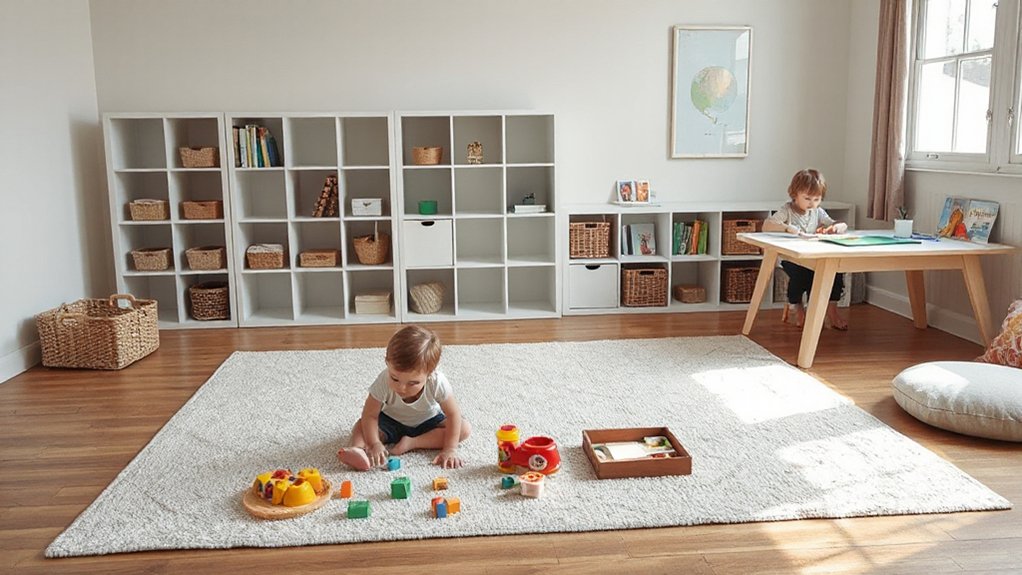
Before you buy storage systems or commit to built-ins, audit how your kids actually use the playroom today: map the primary activities (floor play, crafts, reading, screen time), note peak traffic paths and supervision sightlines, and measure the clearances each zone requires so you can place furniture and outlets where they’re needed, keep egress routes unobstructed, and avoid costly rework when their routines shift. Then verify power and lighting against function: specify playroom lighting levels that limit glare on screens and provide task illumination at tables. Locate receptacles to minimize cord runs, and use tamper-resistant devices where required. Confirm window coverings are cordless. Document safety precautions: anchor tall furniture, select rounded-edge pieces, and maintain required guard heights at stairs or lofts. Record findings for future updates.
Map Flexible Play Zones (Active, Quiet, Messy)
Although your kids’ interests will shift, you can keep the playroom functional by mapping three flexible zones—active play, quiet reset, and messy work—then sizing and separating them based on noise, cleanup needs, and supervision lines. Place active play on resilient flooring away from glazing; maintain clear egress paths and keep outlets GFCI-protected where required. Set a quiet reset zone in a low-traffic corner with acoustic soft goods; keep lighting glare-free and cords managed to reduce trip hazards. Locate messy work near a sink or hard-surface area; specify washable finishes, sealed baseboards, and a dedicated waste bin. Use Flexible zone customization with movable boundaries (rugs, screens, tape lines) so you can re-balance space without demolition. Document Safety considerations: anchor tall storage, add corner guards, and verify smoke-detector access.
Choose Grow-With-Me Playroom Furniture
When you choose playroom furniture that scales with your kids, you cut replacement cycles and keep circulation, supervision sightlines, and storage capacity consistent as activities change. Specify adjustable-height tables and stackable seating that maintain a 36-inch clear egress path and support ADA-style maneuvering where applicable. Select rounded corners, stable bases, and tip-resistant anchors to meet anti-tip best practices and reduce impact risk. Prioritize Sustainable materials—FSC-certified plywood, low-VOC finishes, and durable hardware—so wear doesn’t force early disposal. Dial in ergonomic design with seat heights that match age ranges, foot support, and back angles that promote neutral posture during reading, crafts, or building. Choose modular pieces that reconfigure without tools, and verify load ratings for active use.
Set Up Playroom Storage Kids Will Actually Use
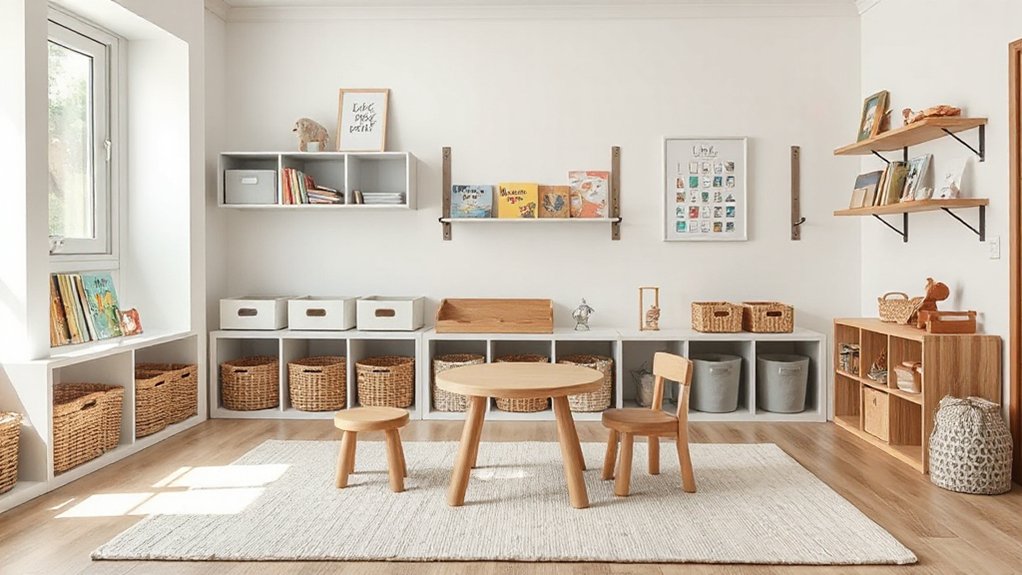
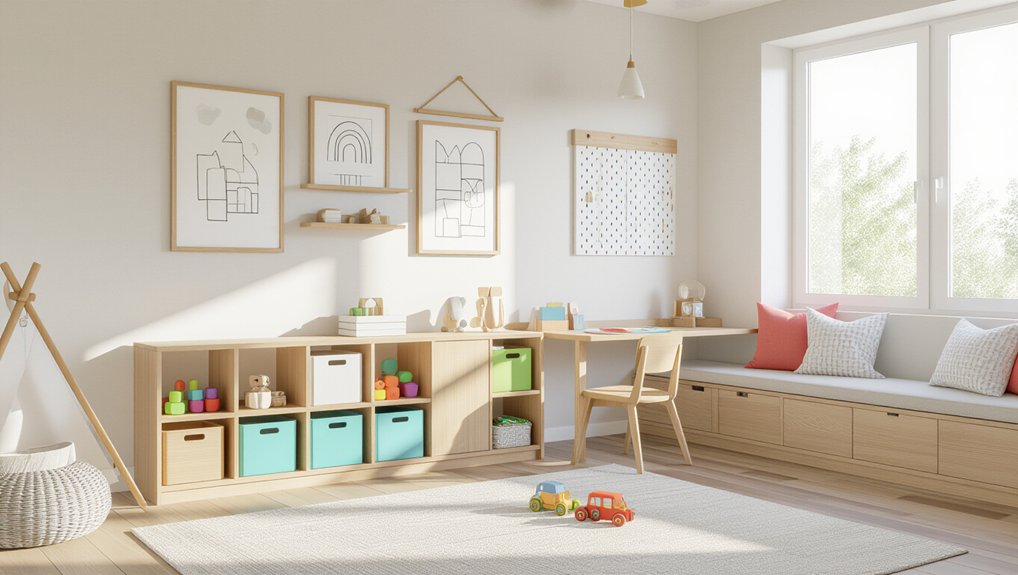
Since a playroom only stays functional if clean-up happens fast, design storage that matches how your kids actually sort and reach items while maintaining safe clearances. Keep frequently used bins between 18–42 inches high, and anchor tall shelving to studs to reduce tip hazards. Choose open cubbies for daily toys, and reserve lidded, labeled totes for small parts that need supervision.
Create zones: active play, quiet reading, and maker supplies, each with a “home” that’s visible from the activity area. Use picture labels before kids can read, then switch to text as they grow. Build in a hamper for plush items and a drop tray for daily clutter. These Creative storage solutions support Kid friendly organization and shorten reset time. Keep egress paths unobstructed.
Use Durable, Easy-Clean Playroom Finishes
Fast clean-up depends on storage, but it only stays manageable if the room’s surfaces can take daily wear and wipe down quickly. Specify high-durability flooring like LVP or sealed cork with manufacturer-rated abrasion class and low-VOC adhesives to support indoor air quality. For walls, use scrub-rated acrylic enamel or clay-based Eco friendly finishes with documented washability. Protect corners with impact-resistant guards and choose washable, matte sheen to hide scuffs without glare.
At work surfaces, install HPL or sealed plywood with edge banding; avoid porous butcher block unless you’ll maintain a food-safe sealer. Use stain resistant surfaces on tabletops and window sills, and select washable grout or large-format tile to reduce joints. Confirm all coatings meet ASTM D3359 adhesion and local fire/smoke requirements.
Rotate Playroom Toys Without Creating Clutter
You’ll keep the playroom compliant and manageable by assigning toy rotation zones that cap what stays on the floor and what cycles out weekly. You’ll support that system with hidden storage—labeled bins in closed cabinets, under-bench drawers, or closet shelving—so toys stay secured, out of egress paths, and quick to access. You’ll reduce clutter and maintenance time by standardizing container sizes and storing like-items together for fast swaps.
Toy Rotation Zones
How do you keep a playroom functional when the toy count keeps changing? You define toy rotation zones with fixed capacity and clear boundaries. Start with Interactive shelving sized to your bins: label each bay with max items and age range. Then create themed zones (build, pretend, art, quiet) so each category always has a compliant footprint. Keep circulation clear: maintain a 36-inch minimum pathway and anchor shelving to studs to meet safety expectations. Set a rotation cadence (weekly or biweekly) and swap only within each zone’s limit to prevent overflow. Use a simple check-out card or QR list so you track what’s active and what’s due to rotate. You’ll sustain order without restricting play.
Hidden Storage Systems
Toy rotation zones set the capacity rules; hidden storage systems handle the overflow without letting “off-cycle” toys migrate back onto the floor. Specify closed, label-ready bins sized to your inventory, then lock them behind doors, drawers, or lidded benches so the visual field stays calm. Use Modular shelving with adjustable bays to keep weight limits predictable and anchoring compliant; fasten units to studs and maintain required egress clearances. Build Hidden compartments into window seats, toe-kick drawers, and under-platform stages, and confirm lids are soft-close to reduce pinch hazards. Assign each category a numbered container and track it on a simple checklist, so you’ll rotate toys weekly without hunting. Keep batteries and small parts in child-resistant, upper-level bins always.
Add a Homework Zone Without Losing Play Space
Although a playroom prioritizes open floor area, you can integrate a homework zone by treating it as built-in infrastructure rather than extra furniture. Specify a wall-mounted desk with a flip-up top or shallow counter, and keep knee clearance per accessibility targets where feasible. Place the study corner on a perimeter wall to preserve the central play field and maintain a clear egress path to the door. Provide task lighting and locate receptacles to meet spacing requirements, with tamper-resistant devices and cord control to reduce trip hazards. Add pin-up rails and a magnetic strip above the work surface so supplies stay vertical, not scattered. Use an adjustable chair and a height-tunable surface so Homework zones scale from crayons to laptops.
Frequently Asked Questions
How Do I Soundproof a Playroom to Reduce Noise for the Rest of the House?
You’ll soundproof a playroom by sealing gaps, adding a solid-core door, and installing insulated drywall with resilient channel. Use soundproofing techniques and code-rated noise reduction materials like acoustic caulk, underlayment, and mineral wool.
What’s the Safest Way to Anchor Shelves, Cubbies, and Furniture in a Playroom?
Anchor everything like it could tip over a ton: locate studs, install L-brackets or anti-tip straps, and use rated screws/anchors. Prioritize shelf safety and furniture anchoring, follow manufacturer instructions, and check fasteners routinely for loosening.
How Can I Design a Playroom That Works for Children With Sensory Sensitivities?
You’ll create zones with Sensory friendly materials, apply calming color schemes, and control lighting and acoustics. Specify low-VOC finishes, rounded edges, and slip-resistant flooring. Provide a quiet retreat, adjustable storage, and clear circulation for accessibility.
What Playroom Lighting Works Best for Both Playtime and Reading?
Use dimmable ambient lighting at 2700–3000K with high CRI for playtime, then add glare-controlled task lighting at 3500–4000K over reading zones. You’ll meet safety expectations by using LED fixtures, shields, and secure switching.
How Do I Set Playroom Rules and Boundaries Without Making It Feel Restrictive?
Set rules as clear, positive choices: “do this,” not “don’t.” Test the theory that fewer rules increase compliance. Post 3–5 pictograms at eye level, pair creative storage zones with playful decor cues.
Conclusion
You’ve built a playroom that adapts as your kids’ needs change, without sacrificing safety or function. The numbers back it up: the NFPA reports U.S. fire departments respond to about 33,000 home fires each year involving children playing with fire, so you’ll want clear egress paths, anchored storage, and cord-managed lighting. Keep zones flexible, finishes washable, and toy rotation scheduled. Add a compact, task-lit homework station so the room stays compliant, efficient, and future-ready.
About the Author