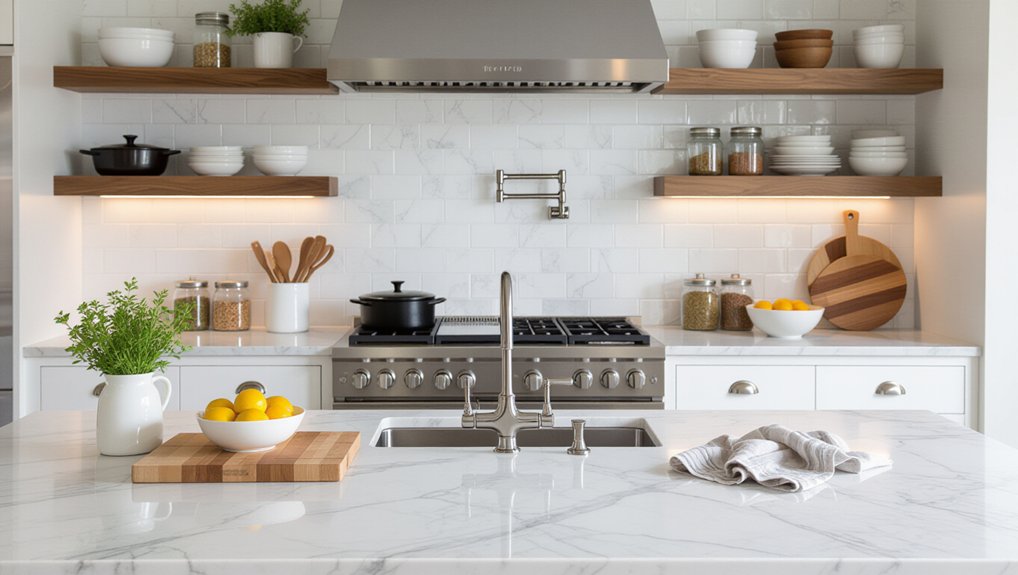
Design a chef‑inspired kitchen by zoning prep, cook, clean, and storage so your routes stay short and safe. Keep prep anchored by the main sink with landing space, knives, and tools one step away, then stage the flow from fridge to prep to cook to plate. Choose your range and hood early, prioritizing straight, efficient ducting. Add durable, low‑maintenance counters, layered task lighting, and pull‑out storage for spices, pans, and pantry bins. Keep going for smarter layout details.
Key Takeaways
- Plan prep, cook, clean, and storage zones with short, safe routes that match your cooking sequence.
- Anchor prep near the main sink, with landing space and knives, boards, and tools within one step.
- Choose range and hood first, ensuring strong capture, short straight ducting, and required make-up air before designing cabinets.
- Specify durable, low-maintenance finishes like quartz or stainless, eased edges, tight seams, and fingerprint-hiding cabinet textures.
- Layer task lighting and smart storage: high-CRI undercabinet LEDs, in-drawer organizers, spice pull-outs, and full-extension pantry pull-outs.
Map Your Chef‑Inspired Zones and Workflow
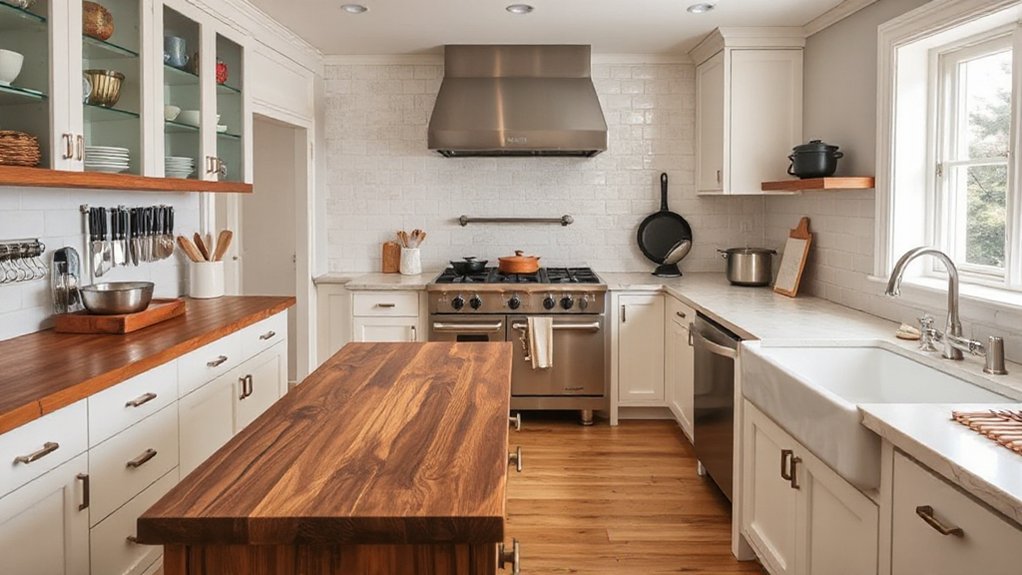
Before you pick finishes or splurge on a range, map your kitchen like a working line: define clear prep, cook, clean, and storage zones, then connect them with the shortest, safest routes. Anchor prep beside your primary sink with 18–24 inches of landing space, knives, and mixing tools within one step. Put storage where you unload: pantry pull-outs and drawers near the fridge for Ingredient organization, labeled by category and height. Set your Cooking sequence: fridge-to-prep-to-cook-to-plate, with heat tools and spices staged at the cook zone, and a landing spot for hot pans. Keep clean-up downstream: trash, recycling, and dishwasher adjacent to the sink, not across traffic. Use slim carts, vertical rails, and corner solutions to tighten the loop.
Choose Chef‑Inspired Appliances and Ventilation First
Once you’ve locked in your zones and workflow, pick appliances and ventilation first because they dictate clearances, electrical/gas runs, and cabinet dimensions. Start with your range or cooktop size, then confirm hood depth, capture area, and duct path before you draw uppers. Prioritize Ventilation efficiency: aim for a short, straight run, larger ducting when possible, and make-up air if your local code requires it.
Dial in Appliance placement by keeping the fridge on the perimeter, landing space beside ovens, and a prep sink within a step of the cook zone. Choose panel-ready or counter-depth units to protect sightlines in tight layouts. Add an induction option for faster boil and cooler kitchens, and spec quiet dishwashers so open-plan rooms stay livable.
Pick Durable Chef‑Inspired Counters and Finishes
Because your counters take the most abuse—hot pans, knife work, acidic spills, and daily wipe-downs—choose chef-inspired surfaces and finishes that prioritize heat tolerance, low maintenance, and repairability. Quartz excels for stain resistance and consistency; specify eased edges to reduce chipping. If you want true pro resilience, consider stainless steel for heat and hygiene, but plan for patina and noise. For natural stone, honed granite outperforms marble around citrus and wine; apply a penetrating sealer on schedule.
Select cabinet and hardware finishes with the same mindset: matte, textured, or brushed coatings hide fingerprints and micro-scratches, boosting finish durability. Use integrated backsplashes or tight seams to block grime, and pick dark grout or epoxy where spills are constant.
Plan Chef‑Inspired Task Lighting by Zone
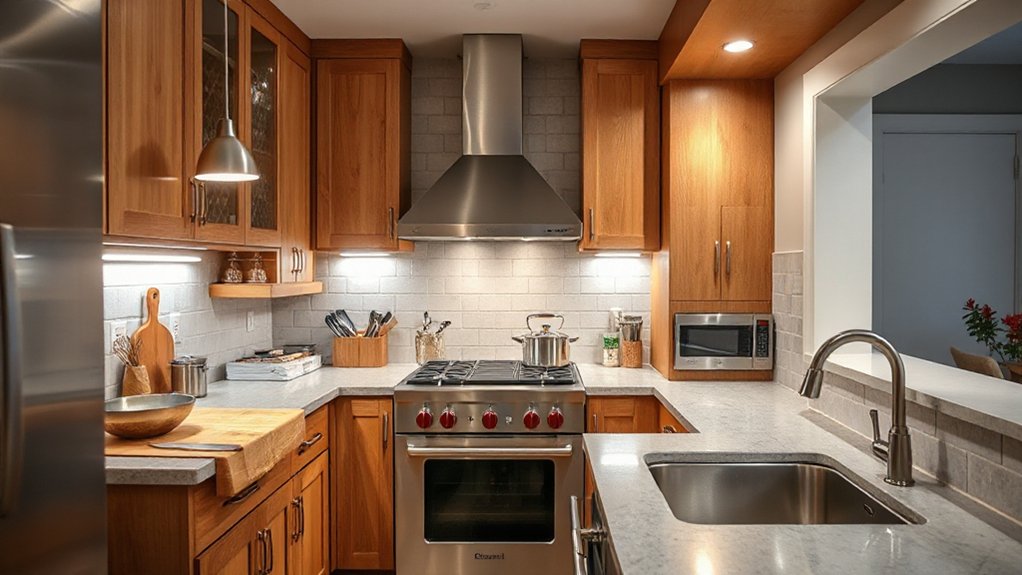
Even if your kitchen looks bright overall, you’ll cook faster and safer when you layer task lighting by zone instead of relying on one ceiling fixture. Start with even ambient lighting on dimmers so your eyes adjust smoothly from prep to plating. Over counters, add undercabinet LEDs (90+ CRI, 3000–3500K) to eliminate knife-hand shadows; mount them close to the front rail for cleaner coverage. At the range, install a hood with integrated lights or a slim linear fixture aimed at the cooktop, not your face. For sinks, use a recessed downlight slightly in front of the bowl to cut glare on water. Finish islands with decorative fixtures, but keep them high-output and glare-controlled.
Build Chef‑Inspired Storage for Tools and Pantry
Good task lighting shows you what you’re doing; chef‑inspired storage keeps every tool exactly where your hands expect it. Start by mapping your workflow: prep, cook, plate, clean. Place knives, boards, and mixing tools in the prep zone with drawer dividers and in-drawer knife blocks for safer, faster grabs. Add a shallow “spice + oils” pull-out beside the range, and hang frequently used pans on a wall rail to free cabinet volume—classic Tool storage solutions that feel pro-level. For Pantry organization, switch to clear, square containers, label by ingredient and use-by, and group by cuisine or meal type. Use full-extension pull-out shelves, a vertical baking-sheet slot, and a narrow broom cabinet so no inch gets wasted.
Frequently Asked Questions
How Much Does a Chef-Inspired Kitchen Remodel Typically Cost?
You’ll typically spend $50,000–$150,000 on a chef-inspired kitchen remodel, depending on layout changes, Luxury appliances, and Custom cabinetry. Keep workflows tight, add smart storage, and choose durable finishes and integrated lighting for trend-forward efficiency.
Do I Need Permits or Inspections for Kitchen Upgrades?
You’ll likely need Building permits and must meet Inspection requirements if you change plumbing, electrical, walls, windows, or gas lines. For cosmetic swaps, you often don’t. Check your city, HOA rules, and licensed trades.
Which Kitchen Layout Works Best for My Home’s Footprint?
You’ll find the best layout by tracing your main walkways first—then the surprise: an L-shape often fits most footprints. Prioritize Kitchen storage in corners and optimize Appliance placement along one run for efficient, trend-forward flow.
How Long Does a Chef-Inspired Kitchen Renovation Usually Take?
You’ll usually spend 8–16 weeks, depending on Appliance selection lead times and Material durability upgrades. You’ll move faster with stock cabinetry, quartz, and streamlined permits; you’ll slow down with custom millwork, specialty ranges.
What Are Common Mistakes to Avoid When Planning a Chef-Inspired Kitchen?
Avoid poor Appliance placement that blocks workflow, skimpy task lighting, and ignoring ventilation. Don’t rush Material selection—choose durable, easy-clean surfaces. You’ll regret undersized prep zones, limited storage, and mismeasured clearances around doors.
Conclusion
You’ve mapped zones like a line cook, locked in pro-level appliances and ventilation, and chosen counters tough enough to survive a culinary apocalypse. Now your task lighting hits every chop, sear, and garnish like a spotlight, while storage swallows gadgets, spices, and pantry hauls without breaking a sweat. In this chef-inspired setup, weeknight pasta feels Michelin-adjacent, cleanup stays civilized, and your workflow runs so smooth you’ll wonder how you ever cooked in the dark ages.
About the Author