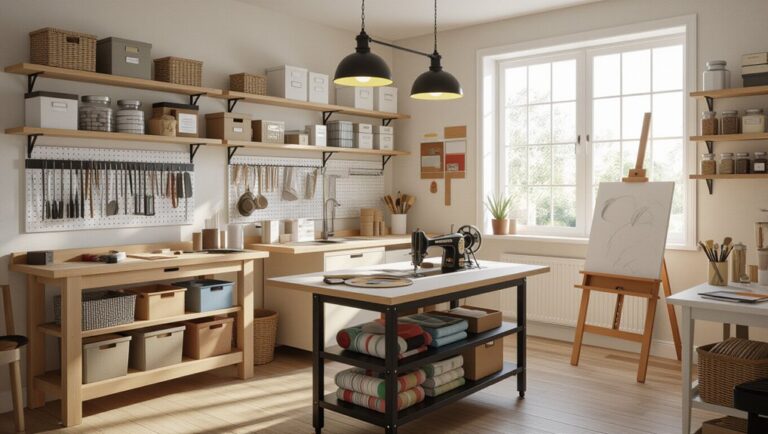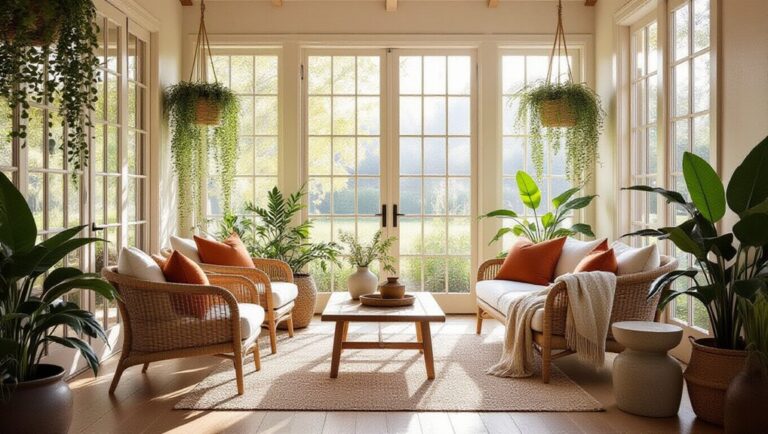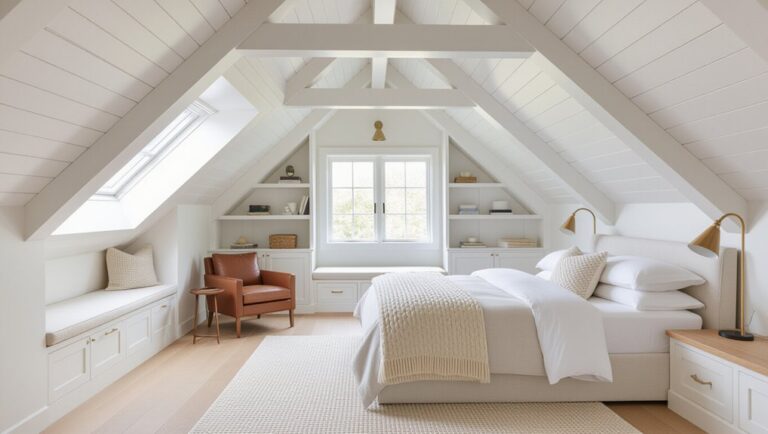
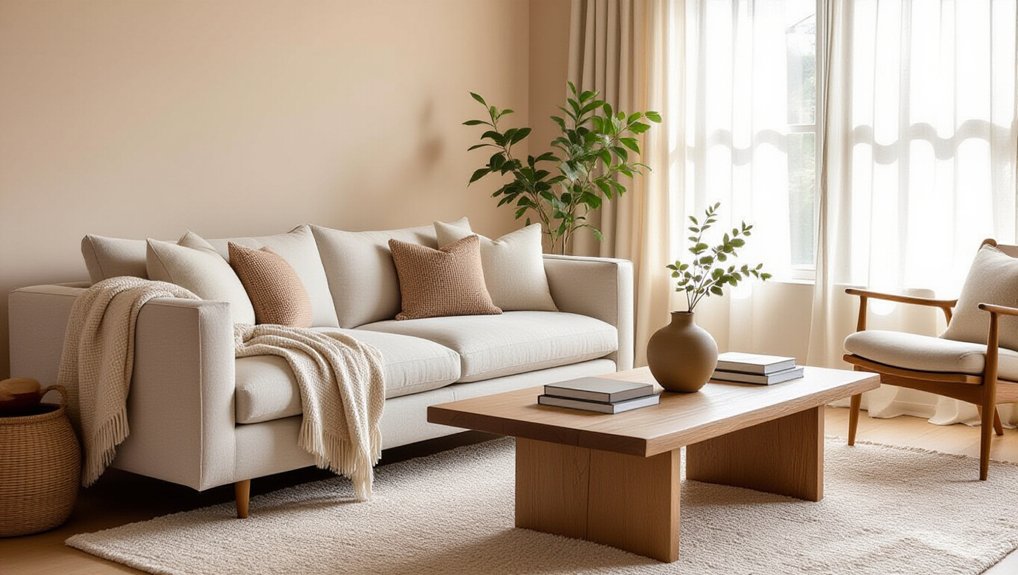
Start by measuring your room and planning clear pathways that don’t cut through seating, then anchor the space with a properly sized rug and a conversation zone with facing chairs and reachable tables. Keep your palette to 3–5 colors: a quiet base, a secondary neutral, a muted tone, and a dark anchor repeated throughout. Layer warm 2700–3000K lighting with dimmers and mixed lamp heights. Add cozy textures and curated décor with negative space—there’s more ahead.
Key Takeaways
- Plan the layout with clear traffic paths, a defined conversation zone, and a properly sized rug anchoring key furniture.
- Use a cohesive 3–5 color palette with a quiet base, muted accent tone, and a darker anchor repeated throughout the room.
- Layer lighting with ambient, task, and accent sources using warm 2700–3000K bulbs and dimmers for adjustable, soothing mood.
- Add calm texture through soft throws, low-pile rugs, and linen pillows, keeping patterns subtle and aligned to the palette.
- Curate décor with negative space, repeat pieces in small doses, and regularly edit clutter to maintain a serene, inviting finish.
Plan the Calm Living Room Layout First
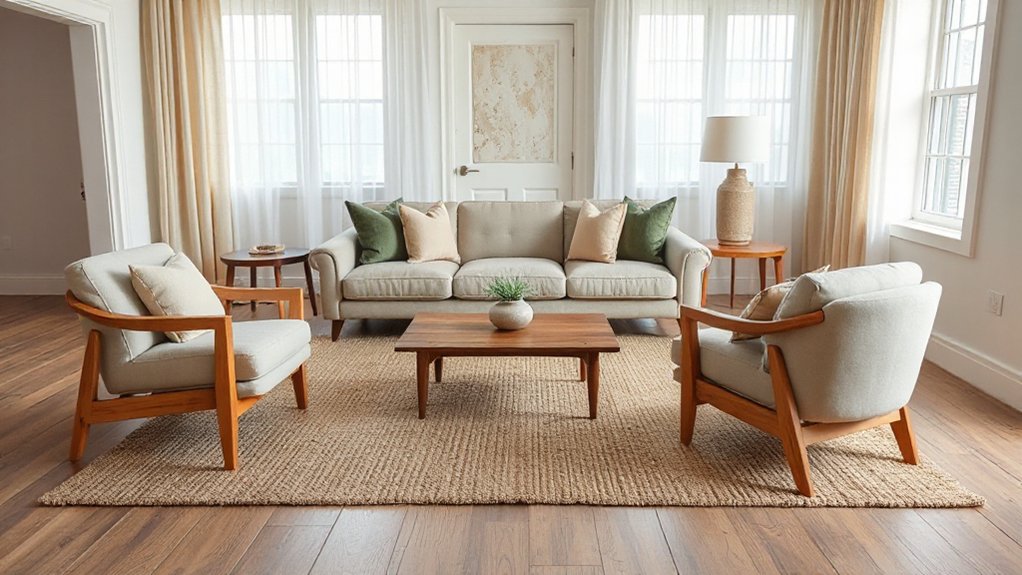
Before you buy anything, map out a calm living room layout that supports how you actually move, sit, and gather in the space. Measure walls, windows, and door swings, then sketch clear pathways that don’t cut through seating. Anchor the room with a rug sized to fit front legs of key pieces, so everything feels grounded.
Use Furniture arrangement to create a simple conversation zone: seat faces seat, with a reachable surface for drinks and books. Keep traffic lanes open, and float furniture when it improves circulation. Make Focal point selection early—fireplace, view, or media wall—so seating aligns naturally without awkward angles. Balance visual weight with matching heights and spacing, and leave breathing room around edges for a calmer, more cohesive finish.
Choose a Calm Living Room Palette (3–5 Colors)
Even if you love bold accents, a calm living room palette works best when you limit it to 3–5 colors and repeat them with intention. Pick one quiet base (warm white, greige, sand), a secondary neutral, and one muted tone like sage, dusty blue, or clay. Then add one dark anchor (charcoal, espresso) and, if needed, a small accent.
Use Color psychology to guide mood: soft greens calm, blues steady, warm neutrals comfort, and black grounds. Keep color coordination tight by matching undertones across paint, upholstery, rug, and wood. Repeat each hue at least three times—pillows, art, and a throw—so nothing feels random. If a pattern enters, let it include your palette so the room stays cohesive.
Layer Living Room Lighting (Bulbs, Lamps, Dimmers)
Because one overhead fixture can’t handle every mood, you’ll get a calmer, more inviting living room by layering light: ambient for overall glow, task lighting for reading and routines, and accent lighting to add depth and highlight texture. Start with warm bulbs (2700–3000K) and consistent finishes so fixtures feel cohesive. Add a dimmer to your ceiling light to soften evenings and prevent glare. Place table or floor accent lamps at different heights to balance the room and reduce harsh shadows. For task light, aim an adjustable lamp at your seating spot or console, keeping the beam below eye level. Use Smart lighting to set scenes—bright for cleaning, medium for guests, low for winding down—and keep controls simple with one switch or app preset.
Add Calming Textures and Personal Décor (Without Clutter)
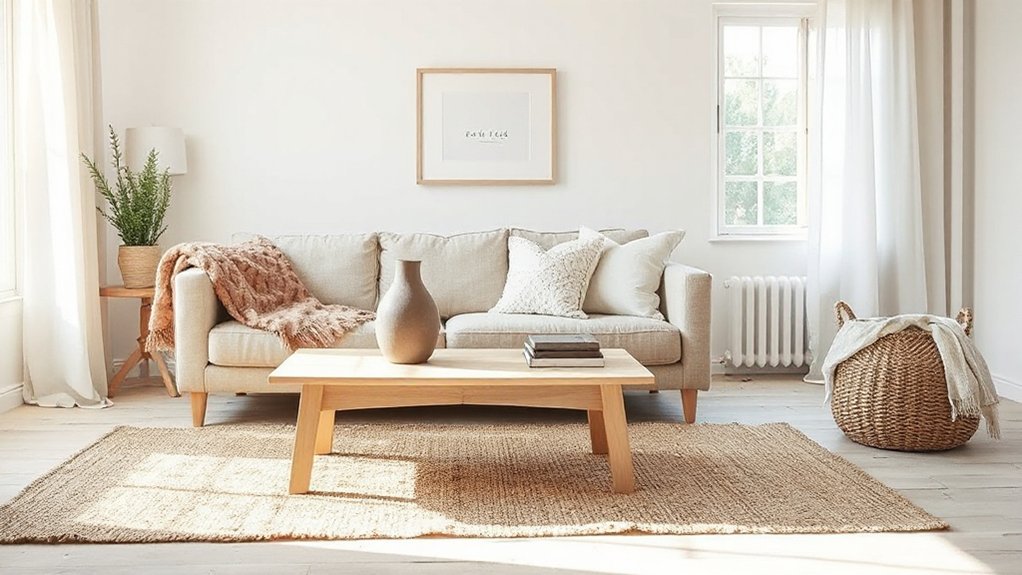
Once your lighting feels right, you can calm the room further by adding a few tactile layers and meaningful pieces that won’t compete for attention. Choose one throw with a soft weave, a low-pile rug, and a pair of linen or cotton pillows to create comfort without visual noise. Keep your palette tight so the textures do the work.
Use textural accessories in small, repeatable doses: a ceramic vase, a woven tray, or a matte wood bowl. Anchor them on a coffee table or shelf with clear negative space around each object. For personalized accents, pick two or three items with real story—framed photos in matching frames, a travel print, or a handmade piece. Rotate seasonally, and edit anything that doesn’t earn its spot.
Frequently Asked Questions
How Can I Calm a Living Room When I Have Pets?
Choose washable slipcovers, tight-weave rugs, and closed storage so you manage pet fur quickly. Add felt pads, curtains, and a soft throw for noise reduction. Create a dedicated pet zone with calming beds and toys.
What Budget-Friendly Upgrades Make the Biggest Calming Impact?
Like lowering the volume on a busy day, you’ll get the biggest calming impact by tightening your color palette, adding soft textiles, swapping harsh bulbs for warm LEDs, and decluttering surfaces with matching baskets.
Which Plants Are Safest and Easiest for Low-Light Living Rooms?
Choose Low light plants like cast iron plant, parlor palm, and pothos for easy care in dim rooms. For Pet safe greenery, pick spider plant or prayer plant. Group them in matching pots, water sparingly.
How Can I Reduce Echo and Improve Acoustics in My Living Room?
Soften, sponge, and subdue sound by adding rugs, layered curtains, and plush pillows. Use wall treatments like fabric panels or bookshelves, and tweak furniture placement to break reflections. You’ll get clearer, cozier conversation fast.
What Cleaning Routine Helps Keep a Calm Living Room Looking Fresh?
Stick to weekly cleaning schedules: reset surfaces daily, vacuum midweek, and mop weekends. Use decluttering tips like a 5-minute nightly basket sweep and one-in-one-out. Wipe glass, fluff textiles, and air out the room.
Conclusion
You’ve set the tone by planning a layout that lets you move and breathe with ease. You’ve chosen a tight, calming palette that keeps the room cohesive, not busy. You’ve layered lighting—soft bulbs, warm lamps, and dimmers—so the space shifts with your day. You’ve added textures and personal pieces with restraint, leaving surfaces clear. Now your living room feels so soothing it’s practically a sanctuary, every single day.
About the Author