Start by measuring your family room’s length, width, and ceiling height, then map doors, windows, outlets, and vents so furniture lands where it works. Protect circulation with 30–36 inches of clear walkway. Define zones for TV time, play, and quiet seating using rugs, lighting, and console tables as boundaries. Anchor the sofa to your main focal point, then add chairs to form a balanced conversation triangle. Keep storage and lighting layered, with more ideas ahead.
Key Takeaways
- Measure the room, noting doors, windows, ceiling height, and outlets to ensure furniture fits and walkways stay clear.
- Define activity zones like TV-watching, reading, and play, while maintaining 30–36 inches of circulation space.
- Anchor seating to a main focal point (TV, fireplace, or view) and arrange chairs to support conversation and sightlines.
- Add storage and flexible pieces like consoles, baskets, ottomans, and nesting tables to reduce clutter and adapt to changing needs.
- Layer lighting and cohesive decor—rugs, color accents, and dimmers—to unify zones and create a balanced, intentional layout.
Measure Your Room for a Family Room Layout
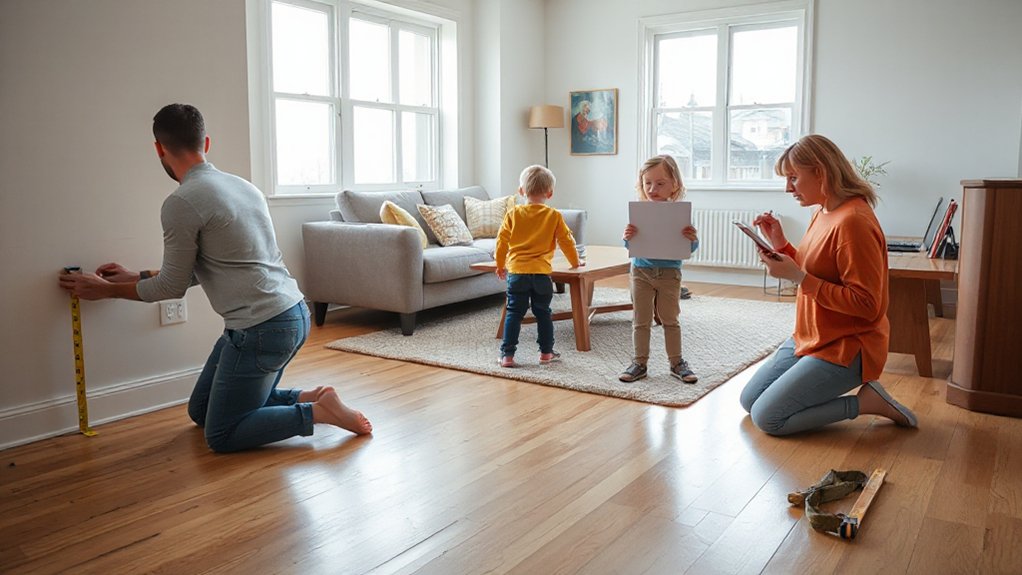
Before you pick a sofa or commit to a focal wall, measure the room so your family room layout works on paper and in real life. Start with overall length and width, then note ceiling height, soffits, and any bumps that affect millwork or tall shelving. Map every window and door, including swing direction and trim depth, and record outlet, vent, and switch locations so lighting and media placement stay practical. Measure clearances: you’ll want comfortable walk paths and enough space to pull chairs out without snagging rugs. Sketch to scale and block in key pieces, then test alternate Color schemes against daylight exposure and wall area. Finally, reserve inches for Decorative accents—floor lamps, art ledges, and side tables—so nothing feels squeezed.
Define Zones by How Your Family Uses It
Once you’ve got the measurements down, define clear zones based on what your family actually does in the room—watch movies, read, play games, work, or host friends—so the layout supports those routines instead of fighting them. Start with Zone definition: assign each activity a footprint, then protect circulation with 30–36 inches of clear walk space. Use Furniture arrangement to reinforce boundaries: float a sofa back to a console to signal a lounging area, or angle two chairs with a small table to create a conversation pocket. Put a desk or game table in a quieter corner, and add task lighting that matches the function. Tie zones together with a cohesive palette, but shift textures—rug, throw, and upholstery—to subtly separate each use.
Anchor Seating to the TV, Fireplace, and Windows
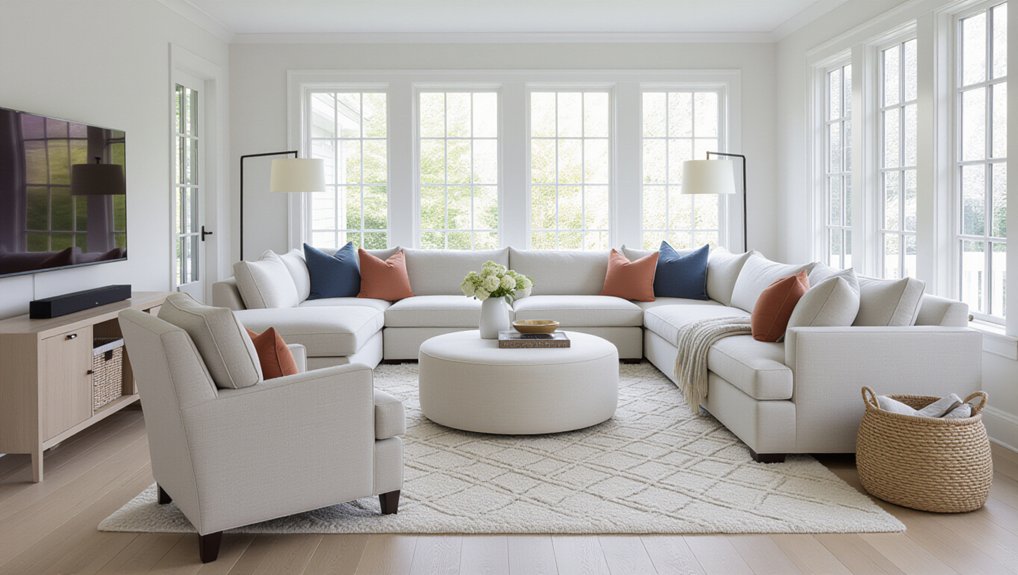
Although your family room may have multiple focal points, you’ll get the cleanest layout by choosing a primary anchor—TV, fireplace, or the strongest window wall—and aiming the main seating toward it with comfortable sightlines. Place your sofa first, centered on that anchor, then build a balanced conversational triangle with chairs or a sectional return. If the TV and fireplace compete, angle seating between them or prioritize the one you use most, keeping viewing height and glare in check near windows. When windows lead, float seating to preserve circulation behind it and frame the view without blocking light. Use a rug to lock the arrangement, then echo the anchor with Decorative accents and coordinated Color schemes so the room feels intentional, not pulled apart.
Add Storage, Lighting, and Flexible Layout Extras
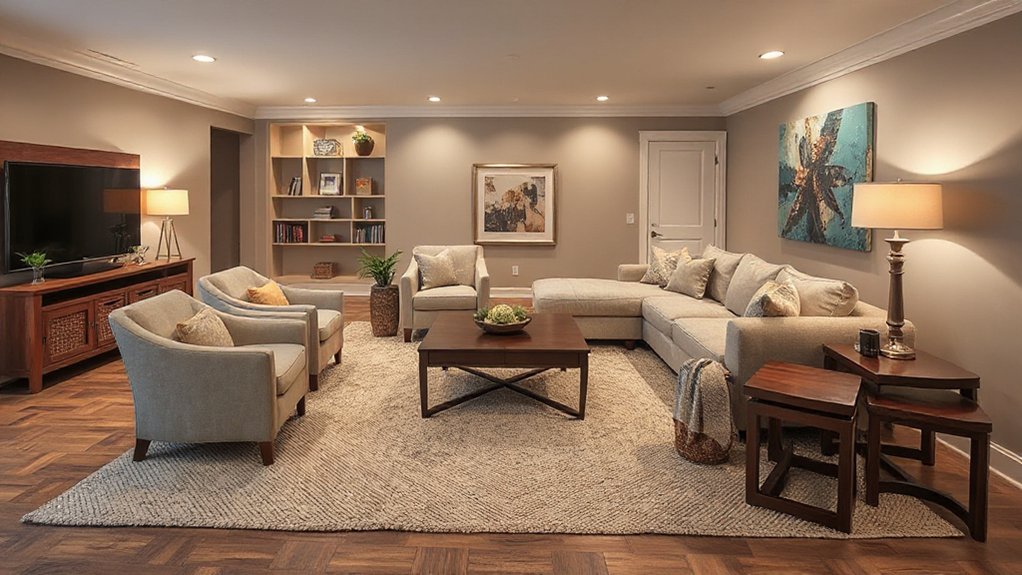
If you want the room to stay tidy and adaptable, layer in storage, lighting, and a few flexible pieces right after you lock the main seating. Add a low media console or closed credenza to hide cords, games, and remotes, then float a slim bookcase to define zones without blocking sightlines. Tuck lidded baskets under a console or inside an ottoman to catch daily clutter fast.
Build lighting in tiers: an overhead fixture for ambient glow, a floor lamp at the sofa corner for reading, and a table lamp on a side table to soften glare. Choose dimmers so mood shifts with use. Finish with nesting tables or a swivel chair that pivots to conversations. Tie Decorative accents to your Color schemes for unity.
Frequently Asked Questions
What’s the Ideal Family Room Layout for Open-Concept Homes?
You’ll get the ideal open-concept family room by zoning with a rug, anchoring seating to a focal point, and keeping clear walkways. Optimize furniture arrangement, layer lighting solutions, and align sightlines with adjacent dining, kitchen.
How Do I Choose a Rug Size for My Family Room?
Choose a rug size by anchoring seating: go larger than your sofa width and keep front legs on. With Area rugs, prioritize rug placement—center it, leave 8–12 inches to walls, and align edges.
What’s the Best Paint Color for a Cozy, Functional Family Room?
Choose a warm greige or muted taupe as your base; it reads cozy and flexible. Build a layered color palette with creamy trim and soft accents. Pick durable, washable wall finishes in eggshell.
How Can I Soundproof a Family Room for Movies and Gaming?
Nip noise in the bud: you’ll layer soundproofing techniques—seal doors, add mass with solid-core panels and thick drapes, lay plush rugs—and use acoustic treatments like wall panels and bass traps, tuned to your seating.
How Do I Design a Family Room Layout That’s Kid- and Pet-Friendly?
Design your family room with clear circulation, anchored rugs, and rounded-edge zones. Choose child proof furniture with washable upholstery and secured shelving. Specify pet friendly materials like performance fabric and scratch-resistant flooring, and add concealed storage.
Conclusion
Measure your room, map your traffic paths, and you’ll plan with confidence. Define zones for lounging, playing, and working so everyone knows where to land. Anchor seating to the TV, fireplace, or best window view, then balance clearances with sightlines. Add storage that hides clutter, lighting that layers mood and task, and flex pieces that move fast. When you measure, zone, anchor, and refine, your family room works hard and looks polished.
About the Author