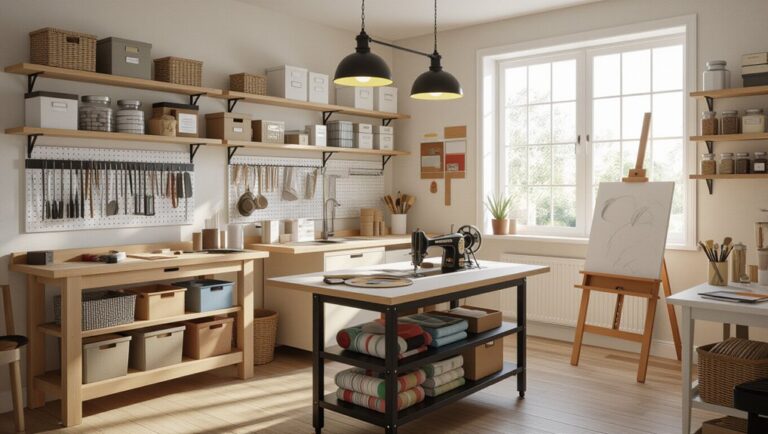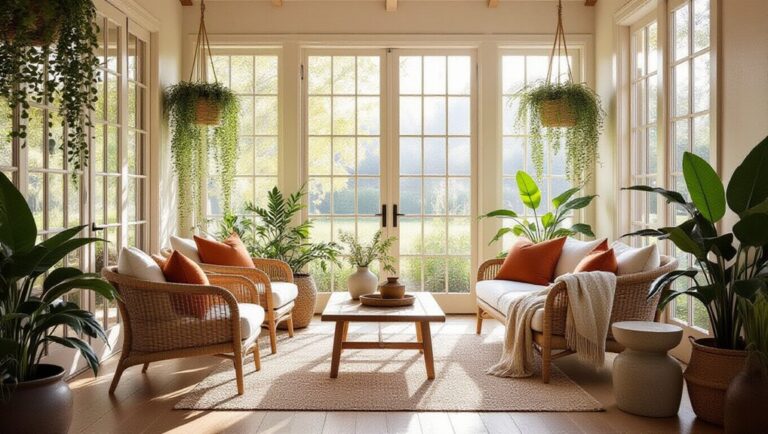
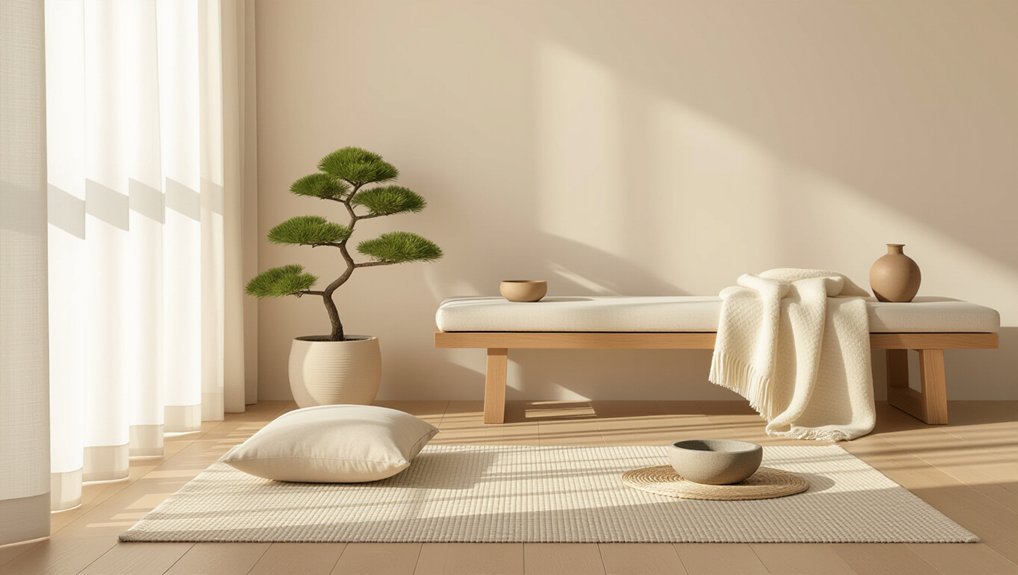
You create a calm meditation room by claiming the quietest corner, away from traffic and HVAC, then adding instant privacy with a ceiling-track curtain or an upholstered screen. Keep the palette low-saturation—warm off-whites, muted clay, or soft cool tones—and anchor your gaze with a deeper far wall. Lay a dense wool or jute rug, add a supportive cushion, and layer linen or brushed-cotton throws. Use warm 2700K diffused lighting and closed storage to hide clutter; keep going for more ideas.
Key Takeaways
- Choose the quietest, most private corner; use ceiling curtains, upholstered screens, rugs, and acoustic panels to block noise and define boundaries.
- Use a low-saturation palette of warm off-whites or muted clay, repeating two to three hues for a calm, breathable visual rhythm.
- Anchor the space with soft textures: low-pile wool or jute rug, linen throws, and a few supportive pillows kept off the meditation spot.
- Add diffused, layered lighting at 2700K with paper or frosted shades, avoiding glare by bouncing light off matte walls.
- Keep clutter invisible with low, closed storage and one clear surface; add subtle sensory cues like a ceramic diffuser and natural stone or wood accents.
Choose the Quietest Spot for Your Meditation Space
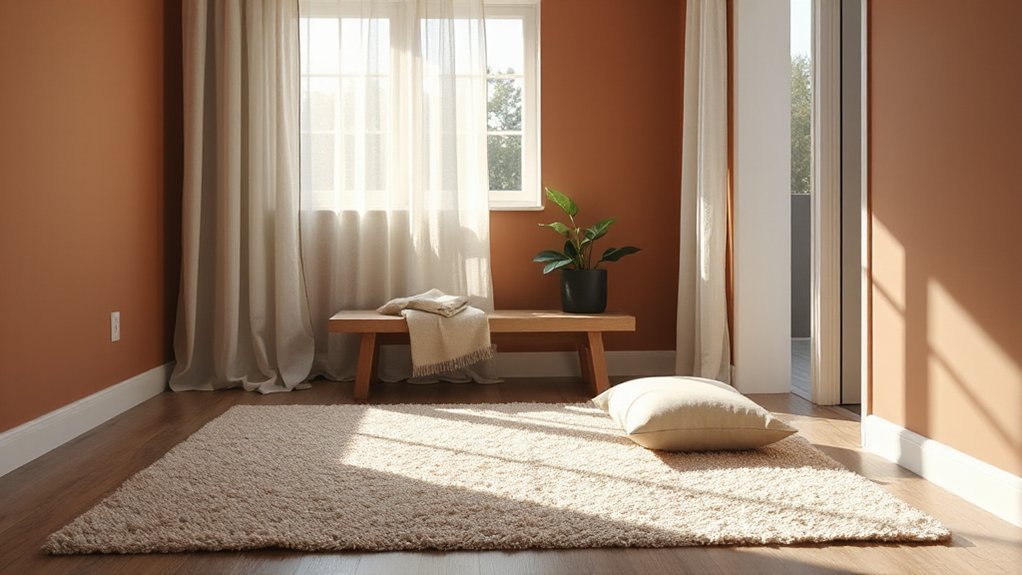
Where does your home naturally get quiet? Walk the plan like a designer: note which rooms sit farthest from entry traffic, kitchens, and HVAC returns. Favor interior corners with fewer shared walls, or a niche off a bedroom where circulation doesn’t cut through. Check daylight and glare; soft north light supports calm, while harsh west sun can feel restless.
Measure the footprint you need: a mat, a low cushion, and clear reach for a small shelf. Set the seat so your sightline lands on a simple focal point—maybe a potted stone arrangement that echoes a Zen garden. Place your speaker nearby and pre-queue a meditation playlist, then test the spot at morning and night before committing.
Create Privacy and Block Noise Fast
How quickly can you turn an open corner into a retreat? Start by defining edges. Slide a ceiling-mounted curtain track around your cushion zone, and you’ll get instant privacy without sacrificing floor area. If you can’t hang hardware, angle a tall upholstered screen to block sightlines and soften reflections.
Next, stop noise at the envelope. If traffic is the culprit, prioritize Soundproof windows with tight seals and layered glazing; pair them with dense drapery that returns to the wall. For shared-wall chatter, mount Acoustic panels at ear height where sound strikes first—behind you and on the adjacent wall. Add a thick rug pad under a low-pile rug to damp footfall. Keep clear circulation so your retreat stays effortless to enter.
Pick a Calming Meditation Room Color Palette
Start with color temperature, because it sets your nervous system’s baseline the moment you sit down. Choose warm off-whites, soft sand, or muted clay if you want grounded calm; choose cool mist, pale sage, or dusty blue for quiet clarity. Keep saturation low so the room feels breathable and shadows stay gentle.
Use Color psychology to assign roles: a light, matte wall color expands the perimeter, while a slightly deeper tone on the far wall adds visual anchor and slows your gaze. Repeat two to three hues across textiles, upholstery, and artwork, and let natural wood, linen, and stone act as neutrals. Limit high-contrast trims; soften edges with similar-value paint. This controlled palette supports mood enhancement without demanding attention.
Start With a Soft Meditation Rug or Mat
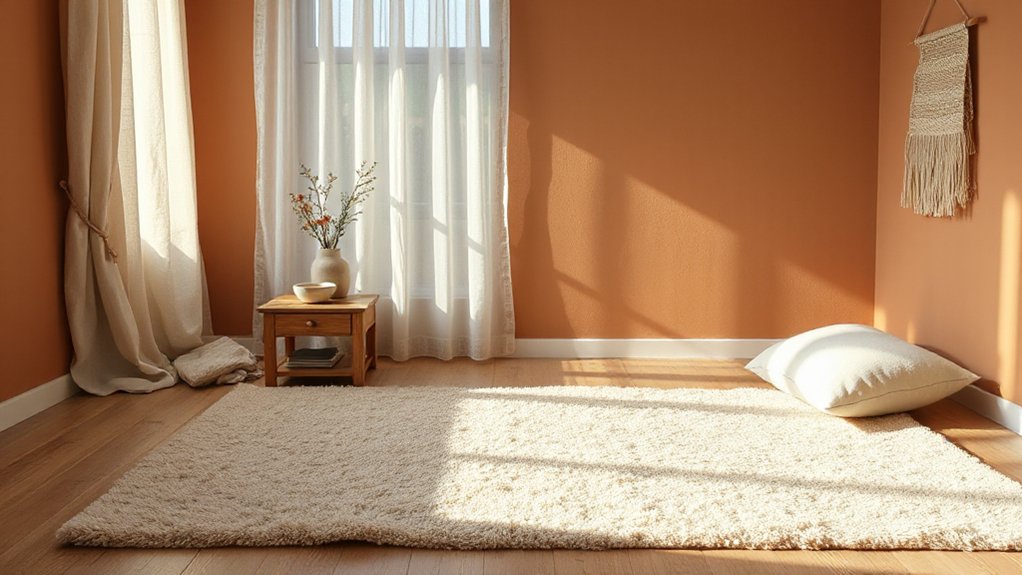
One soft layer underfoot can instantly quiet a meditation room by absorbing sound, warming the floor, and giving your body a clear place to settle. Start by sizing your Soft floor covering to the room’s scale: anchor it under your main wall or window, leaving a clean border of exposed floor to keep the layout airy. Choose low-pile wool for resilient softness, jute for a dry, grounded feel, or dense cotton for easy washing. If you prefer a Meditation mat, pick one with a grippy underside and a closed-cell core so it stays flat and insulates from cold slabs. Keep tones muted, avoid busy patterns, and align the rug’s edges with baseboards so the space reads calm. Add a slim underpad to prevent shifting.
Choose a Meditation Cushion for Your Posture
With a quiet rug or mat defining your landing zone, shape your seat next so your spine stacks naturally and the room keeps its uncluttered feel. Choose a zafu, crescent, or low bench based on hip mobility; higher lift suits tight hips, while a slimmer profile fits open hips and small rooms. Prioritize Ergonomic support: a firm kapok or buckwheat fill resists collapse, keeps knees lower than hips, and maintains pelvic tilt. For Cushion comfort, look for a breathable cotton or linen cover with a hidden zipper, so it reads tailored, not casual. Place the cushion centered on the rug’s axis, leaving a clean perimeter for circulation. Keep tones matte and muted to minimize visual noise.
Layer Blankets and Throws for Warmth
You’ll set a calmer tone by choosing throws in quiet textures like brushed cotton, linen, or fine wool that feel soft against your skin. Mix weights—light gauze for breathability, a midweight knit for everyday use, and a denser blanket for cool sessions—so you can adjust warmth without disrupting your layout. Keep the stack within arm’s reach in a low basket or slim shelf beside your cushion to maintain a clean, grounded floor plan.
Choose Calming Fabric Textures
How do you make a meditation room feel instantly grounded without adding visual noise? You choose calming fabric textures that read quiet at a glance and feel reassuring up close. Start with matte, low-sheen textiles—brushed cotton, washed linen, or a tight wool blend—to soften acoustics and reduce glare near candles or morning light. Place a folded throw within arm’s reach of your cushion or chair, and drape a second blanket neatly in a basket so it becomes part of the layout, not clutter. Prioritize Textile durability: look for dense weaves, reinforced edges, and pilling-resistant finishes. Keep Fabric maintenance simple with machine-washable options or removable covers, so your space stays serene without constant upkeep.
Mix Weights For Layering
Even if your palette stays neutral, mixing blanket weights adds warmth and structure without turning the room into a pile of textiles. Start with a medium-weight base throw in cotton or bamboo; it drapes cleanly over a meditation chair or floor cushion and won’t fight your lines. Then layer weights: add a heavier wool or wool-blend blanket for still sessions, folding it to create a crisp edge that visually anchors the corner. For fabric layering, top it with a light gauze or linen throw that introduces air and soft shadow without bulk. Keep proportions tight—one piece reads as the base plane, one as insulation, one as a tactile finish—so circulation stays clear and the room feels intentional. Adjust by season.
Store Throws Neatly Nearby
A calm room stays calm when your throws live within reach but never sprawl. Store throws in a lidded seagrass basket beside your cushion, or tuck them into a low oak bench with a lift-top, so surfaces stay visually quiet. Choose one vessel that matches your palette—warm neutrals, matte black, or pale ash—to keep the room’s rhythm steady.
Plan nearby storage like you’d plan lighting: close enough to grab mid-session, far enough to avoid cluttering your seat zone. Roll wool or cashmere to reduce bulk and show texture; fold chunky knits to prevent snags. If you use wall hooks, pick smooth wood pegs and hang only one throw, keeping negative space intact.
Use Natural Fabrics and Soothing Textures
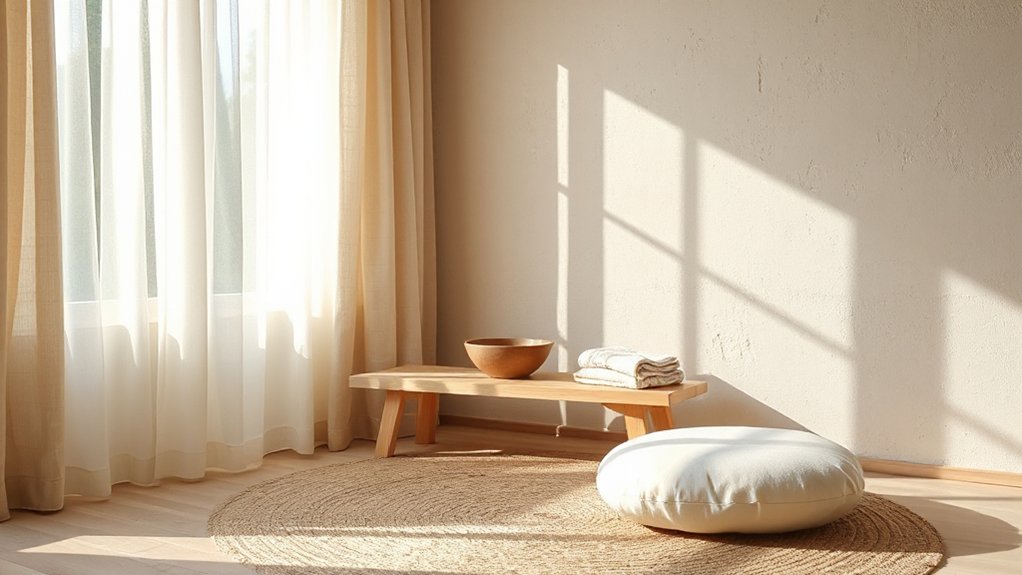
Choose breathable natural textiles like linen, cotton, or wool for cushions, curtains, and floor seating so your meditation zone stays cool, quiet, and comfortable. Layer calming textures—nubby weaves, soft knits, and smooth throws—to create tactile contrast without visual clutter. Stick with non-toxic, low-VOC materials and untreated fabrics so the room feels as clean as it looks.
Choose Breathable Natural Textiles
How your meditation room feels often comes down to what touches your skin, so build the space around breathable natural textiles. Choose linen, organic cotton, hemp, or light wool for cushions, floor seating, and simple drapery, and you’ll keep temperature and moisture balanced. Prioritize Breathable fabrics with a matte finish; they diffuse light and read calmer than synthetics. Keep a tight palette—oat, sand, soft clay—so the material texture does the work without visual noise. For space planning, place a washable cotton cover on your primary seat, then add a linen throw within arm’s reach for quick comfort adjustments. Use Natural textiles for curtains to soften glare while preserving airflow, and specify low-VOC dyes to protect indoor air quality.
Layer Soft Calming Textures
Once you’ve set your base textiles, build calm through layering—one soft surface at a time—so the room feels quiet even before you sit down. Start at the floor: add a low, dense wool rug that anchors your cushion and absorbs visual noise. Drape a linen or cotton throw within reach so you can regulate warmth without breaking posture.
Then soften vertical planes. Install textured wall coverings in a muted weave behind your seat to reduce glare and give your gaze a gentle landing point. Keep the palette tight—two neutrals and one warm accent—so texture does the work. Finish with plush decorative pillows on a bench or window ledge, not the meditation spot, to keep circulation clear. Layering like this guides movement, dampens echoes, and makes the room feel hushed.
Prefer Non-Toxic Materials
Because you’ll breathe more deeply in a meditation room, the materials need to stay as clean as the layout. Start with low-VOC foundations: choose non toxic paints on walls and ceiling to keep the air quiet and clear. Specify Eco friendly finishes on wood shelves, a low bench, and trim so you won’t introduce lingering odors where you sit and focus.
Plan soft elements as a breathable palette. Use organic cotton, linen, wool, or hemp for floor cushions, drapery, and a simple mat; skip heavy synthetics that trap heat and static. Add soothing texture with undyed boucle throws or felt panels, and place them away from vents to reduce fiber drift. Select washable covers and a closed storage basket to limit dust.
Add Diffused Lighting That Won’t Distract
While your meditation room can thrive on minimal décor, lighting still sets the emotional temperature. Choose diffused lighting that softens edges and keeps your focus inward; aim for an ambient glow rather than bright pools or sharp beams. Use paper, linen, or frosted glass shades to filter bulbs, and place fixtures outside your direct sightline from the cushion.
Layer low-level sources: a dimmable wall sconce, a shaded floor lamp in a corner, or LED strip lighting tucked behind a floating shelf to wash the wall. Keep color temperature warm (around 2700K) so skin tones and natural materials read calm. Control glare by bouncing light off matte paint or plaster, and avoid reflective metals that sparkle when you move.
Hide Clutter With Calm, Closed Storage
Soft, diffused lighting reads even calmer when your sightlines stay clean and uninterrupted. Plan closed storage as part of the room’s architecture, not an afterthought. Choose low, wall-hugging cabinets in pale oak, ash, or matte lacquer so the perimeter feels quiet and grounded. Use push-latch doors and minimal reveals to avoid visual “noise,” and align door seams with wall joints for a continuous plane. Build in Hidden compartments for props you don’t want to see: extra cushions, timer, journal, cords. Add a single deep drawer with felt dividers to stop items from shifting. For clutter concealment, specify opaque fronts over open shelves, and leave one surface clear for practice. Keep handles off entirely.
Add Gentle Scent, Sound, and Simple Accents
A few quiet sensory cues can anchor the room without adding visual clutter. Place a low-profile diffuser on a wood tray near the entry, so gentle essential oils disperse before you sit. Choose ceramic or matte glass to avoid glare, and keep cords hidden in a slim cable channel.
For sound, tuck a small speaker on a shelf behind linen panels, aiming it toward a soft surface to reduce sharp reflections; soft background music should feel like air, not a performance. Add one tactile accent: a stone bowl for beads, a wool throw folded on the bench, or a single branch in a narrow vase. Keep accents grouped, leaving clear floor edges for an open, breathable plan and easier movement.
Frequently Asked Questions
How Much Does It Cost to Set up a Meditation Room?
You’ll typically spend $200–$2,000+ to set up a meditation room. Use cost breakdown and budget planning for paint, flooring, cushions, lighting, acoustic panels, shelving, and incense; size, materials, and carpentry drive totals.
Can I Use My Meditation Room for Yoga or Stretching Too?
Yes—you can; plan a peaceful, practical practice zone. Make a Yoga space with a grippy mat, clear circulation, and wall storage; define a Stretching area with cushioned flooring, breathable textiles, and durable finishes.
What Ventilation or Air Quality Features Are Best for Longer Sessions?
For longer sessions, you’ll want cross-breezes via operable windows for natural ventilation, plus quiet air purifiers with HEPA. Add a CO₂ monitor, low-VOC finishes, and an ERV if the room’s sealed.
How Do I Make a Meditation Room Child- and Pet-Friendly?
Choose child proof decor with rounded edges, anchored shelving, and concealed cords. Specify pet safe materials like low-VOC finishes, washable textiles, and non-toxic plants. Zone a gated corner, add durable mats, and keep breakables elevated.
Do I Need Permission or Permits to Convert a Room Into a Meditation Space?
No, you usually don’t need permits; it’s as easy as rearranging a puzzle. If you move walls, add plumbing, or rewire, check building codes. Plan door placement, acoustic panels, and privacy concerns.
Conclusion
Step into your meditation room and let it feel like a soft exhale. You’ve chosen the quietest corner, wrapped it in privacy, and muted the edges with a calm palette. Underfoot, a plush rug steadies you; a supportive cushion lifts your spine with ease. Linen, cotton, and wool add gentle texture, while diffused light glows like dawn. Clutter stays tucked behind closed storage. A faint scent and low sound settle the space.
About the Author