
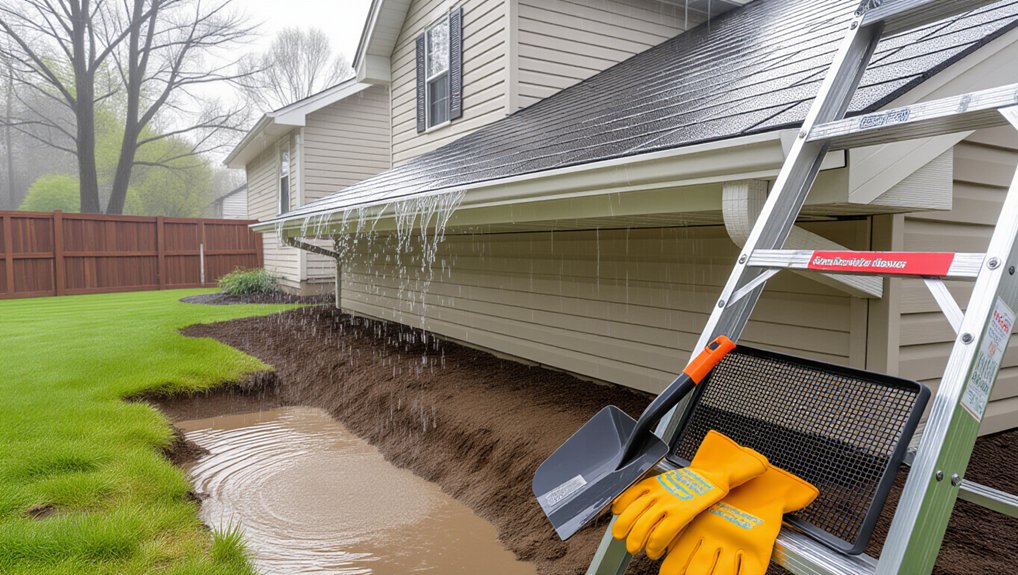
Start by watching your gutters during rainfall from the ground with binoculars, so you can spot sheet flow, splashback, or overshoot safely. Clear wet leaves, pine needles, and shingle grit at outlets and downspout inlets, then flush with a hose. Check pitch (about 1/4 inch per 10 feet) and tighten or add hangers to fix sags. Snake slow downspouts and verify discharge 4–6 feet from the foundation. Keep going to learn upgrades and diverters.
Key Takeaways
- Inspect gutters during rain to spot overflow points, sagging sections, and downspouts discharging at least 4–6 feet from the foundation.
- Clean gutters and downspout inlets regularly, removing leaves, needles, and shingle grit, then flush with a hose to confirm flow.
- Fix pitch and sagging by reseating hangers and maintaining about 1/4 inch fall per 10 feet toward each downspout.
- Improve capacity by adding downspouts or upgrading to 6-inch gutters and 3×4 downspouts where heavy rain overwhelms the system.
- Prevent backups by flushing downspouts and underground drains, snaking clogs, and adding simple extensions, splash blocks, or swales to spread water safely.
Diagnose Gutter Overflow in 5 Minutes
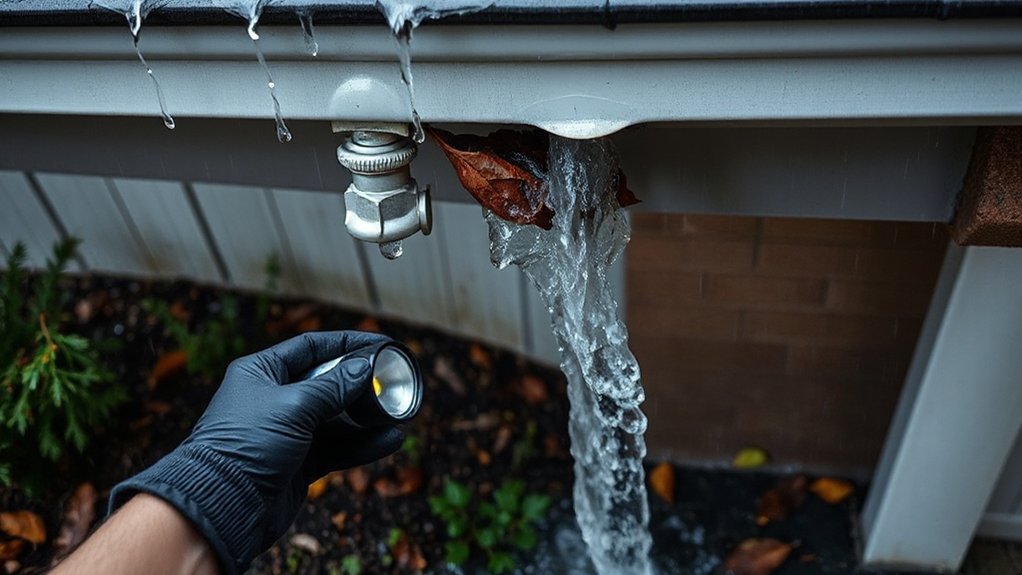
First, where’s the water actually going when it rains hard? Do a 5-minute field check. 1) Put on gloves, eye protection, and non-slip shoes; don’t climb—use binoculars from the ground. 2) During rainfall, trace runoff: roof edge → gutter line → downspout → discharge point. Note any sheet flow over the fascia or splashback onto siding. 3) Check alignment by sighting along the gutter; you’re looking for dips, loose hangers, or separation at joints. 4) Verify downspout discharge: confirm it exits at least 4–6 feet from the foundation and isn’t reconnecting to the roof area. 5) Photograph findings for repair planning. Keep Gutter aesthetics in mind; remove seasonal decoration that blocks observation.
Common Causes of Overflowing Gutters in Storms
When a storm dumps water faster than your gutter system can carry and discharge it, overflow usually traces back to one of a few failure points. First, confirm your gutter size matches roof area and local rainfall intensity; undersized profiles can’t keep up with peak flow for proper Rainwater management. Next, check gutter pitch: if it’s flat or back-pitched, water stalls and spills at the fascia. Then inspect downspout capacity and placement; too few outlets, long runs, or tight elbows bottleneck discharge and force water over the lip. Verify hangers and fascia are sound; sagging sections create low spots that overflow first. Finally, look for roof-edge issues—short drip edge, damaged edge metal, or Storm debris striking gutters—so water overshoots entirely.
Clear Roof and Gutter Clogs (Leaves, Shingle Grit)
First, you’ll inspect the roof edge and gutters for typical clogs—wet leaves, pine needles, and shingle grit packed at outlets and downspout inlets. Next, you’ll clean safely by setting a stable ladder, wearing gloves and eye protection, scooping debris into a bucket, and flushing with a hose while checking for free flow. Then, you’ll prevent repeat overflow by putting this on a routine schedule, especially after heavy wind, rain, or nearby tree drop.
Spot Common Blockages
Where does gutter overflow usually start? It starts at the first restriction: a leaf mat at the downspout throat, a shingle-grit ridge in the trough, or a crushed elbow. Step 1: From the ground, scan during light rain; you’re looking for a “sheeting” edge, corner spill, or a waterfall at one joint. Step 2: Check drip lines under shingles for dark streaks that suggest roof debris feeding the gutter. Step 3: Inspect downspout discharge; weak flow indicates an upstream plug. Step 4: Note sagging sections where water ponds and traps grit. Step 5: Log findings for Seasonal planning and to protect Gutter aesthetics by preventing stains and fascia rot. Avoid climbing until conditions are dry.
Safe Cleaning Methods
After you’ve pinpointed the restriction point, clear it using methods that keep you off wet roofs and away from unstable ladders. Start from the ground with a gutter scoop on an extension pole, pulling out leaves and packed debris into a bucket. Next, use a garden hose with a shutoff valve to flush toward the downspout; keep pressure moderate so you don’t dent aluminum or dislodge sealant on older joints—your gutter material choices set the safe limit. If water backs up, insert a plumber’s snake up the downspout cleanout or from the outlet, then flush again. For shingle grit, vacuum with a wet/dry vac attachment rather than scraping to protect finishes and maintain gutter aesthetics. Wear gloves, eye protection, and non-slip footwear.
Schedule Regular Maintenance
Because storms turn small accumulations into fast blockages, set a maintenance schedule that clears roof valleys, gutters, and downspouts before the next heavy rain. Plan Seasonal inspections: once after leaf drop, once before spring storms, and after any hail or high-wind event. Start on the roof only if you can work from a stable ladder; otherwise, use a pole brush or hire a pro. Sweep valleys and edges to remove leaves and shingle grit, then bag debris so it won’t wash back in. At the gutter, scoop clogs, then flush with a hose toward each downspout. Verify flow at the outlet and clear elbows with a plumber’s snake. Finish by rinsing exteriors to protect Gutter aesthetics and spot leaks early.
Fix Gutter Slope and Sagging Sections
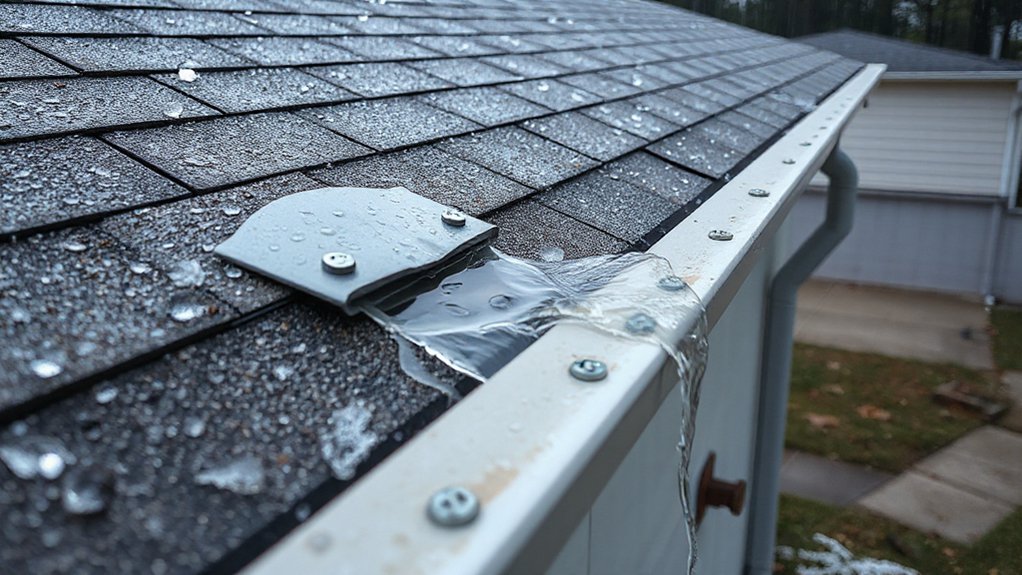
Even if your downspouts are clear, a gutter that’s pitched the wrong way or sagging between hangers will trap water and overflow in heavy rain. Set up a stable ladder, wear gloves and eye protection, and avoid working in wind or lightning.
Check pitch with a level: you want about 1/4 inch fall per 10 feet toward the outlet. Snap a chalk line, then loosen hanger screws and re-seat the gutter to match the line. Replace bent or spaced-out hangers every 24–36 inches, using fasteners suited to your Gutter material (aluminum, vinyl, steel). If a section bows, add a hidden hanger at the low spot and tighten until the bead sits straight. Seal reopened joints with gutter sealant, then recheck for standing water.
Unclog Downspouts and Fix Underground Backups
Next, you’ll clear downspout blockages so roof runoff can exit the gutter system without backing up and overflowing. Put on gloves and eye protection, then flush the downspout from the top with a hose, remove any obstructions at elbows or cleanouts, and confirm you’ve got a steady discharge at the outlet. If water still surges back or drains slowly, you’re likely dealing with an underground pipe backup, so you’ll locate the cleanout, run a drain snake or jetter carefully, and verify full flow before the next storm.
Clear Downspout Blockages
When water spills over the gutters during a storm, start by checking the downspouts and any underground drain line for blockages, since a single clog can force water back up the system. Set a stable ladder, wear gloves and eye protection, and keep clear of power lines. Disconnect the downspout at the elbow or cleanout, then probe with a plumber’s snake or flexible rod. Flush from the top with a hose while you listen for free flow at the outlet. If it backs up, pull out packed leaves, granules, or shingle grit, noting how Gutter material affects denting and tool choice. Reassemble tightly and test again. Schedule Seasonal inspections to catch buildup before storms.
Resolve Underground Pipe Backups
Clearing a downspout clog won’t stop gutter overflow if the underground drain line has a backup that’s holding water in the system. First, confirm the symptom: run a hose at the downspout and watch for slow flow, bubbling, or water rising at cleanouts. Wear gloves and eye protection, and keep ladders off wet soil.
Next, do underground pipe inspections. Open the cleanout, then feed a hand auger or drain snake downstream; don’t force it past hard resistance. Flush with low-pressure water to carry debris out. If you hit repeated blockages, rent a camera to locate roots, sags, or collapsed sections.
Finally, practice pipe corrosion awareness: rusty water, flaking metal, or soft spots mean replacement beats repeated clearing. Restore slope and add a debris filter.
Move Runoff Away From the Foundation (Extensions, Grading)
Where does all that roof runoff go once it leaves your gutters—onto your siding, or safely away from your foundation? Start by attaching rigid or hinged downspout extensions and aim discharge at least 6–10 feet from the house, toward a stable, erosion-resistant area. Lock joints with screws, and keep the outlet above grade so it can’t backflow or freeze shut.
Next, verify Landscape grading: you want soil sloping away from the foundation about 6 inches over the first 10 feet. Add compacted fill, not mulch, and keep siding clearance to prevent rot. Finish with simple Drainage solutions: a shallow swale, splash block, or gravel apron to spread flow. Recheck after storms and repair any settled spots promptly.
When to Add Bigger Gutters, Guards, or Overflow Diverters
If heavy rain regularly makes water sheet over the gutter lip or shoot past the downspout, you need to upgrade the system—not just clean it. First, size up: move from 5-inch K-style to 6-inch, and match downspouts to 3×4 inches for higher flow. Next, check pitch (about 1/4 inch per 10 feet) and add hangers so sagging can’t cause backflow. Then add guards only if debris is the trigger; choose designs that shed water at high velocity and won’t trap ice. Install overflow diverters at valleys, short runs, or behind low-slope sections to steer water back into the trough. Finally, balance Gutter aesthetics with Material durability by selecting thicker aluminum or steel and corrosion-safe fasteners.
Frequently Asked Questions
How Often Should Gutters Be Cleaned in Different Climates?
In temperate climates, you’ll clean gutters twice yearly; in wet/forested areas, quarterly; in arid zones, yearly. Step 1: inspect monthly for gutter clogging and debris buildup. Step 2: clean safely using gloves, stable ladder.
Can Gutter Overflow Cause Mold or Indoor Air-Quality Problems?
Yes, gutter overflow can cause mold and indoor air-quality problems. You’ll disrupt roof drainage, drive water damage into soffits, walls, and basements. Step-by-step: fix clogs, extend downspouts, seal penetrations, dry materials fast, monitor humidity.
Do I Need Permits to Replace or Reroute Gutter Downspouts?
Yes—you might need permits, or inspectors’ll rain citations like confetti. Step-by-step: check city Permit requirements, review HOA, verify Rerouting regulations for discharge, keep flow off sidewalks/foundations, call utility-locate, then pull permits before cutting.
What Gutter Materials Last Longest in Coastal or Snowy Regions?
Choose aluminum with marine-grade coating or copper for coasts; pick heavy-gauge steel or copper for snow. Compare Gutter color options, then follow Gutter installation tips: brace hangers, seal joints, add guards, guarantee safe ladders.
How Much Does Professional Gutter Maintenance Typically Cost?
Like a watchmaker’s tune-up, you’ll pay $150–$400 per visit; two-story homes run $250–$600. Step-by-step: inspect, clear, flush, test flow. Add gutter guard installation; evaluate downspout extension options; follow ladder safety.
Conclusion
In storms, you prevent gutter overflow by checking flow fast: run a hose, watch for spill points, and mark them. Clear roof valleys and gutters of leaves and shingle grit, then flush to confirm steady drainage. Tighten hangers and reset slope so water moves to outlets. Snake downspouts and clear any underground backups. Add extensions and adjust grading to push runoff away from your foundation. If water still pours like a waterfall, upgrade capacity.
About the Author