Start by measuring the landing and mapping the stair-to-door traffic lane, door swings, rail offsets, and headroom so you don’t pinch circulation. Anchor a slim chair or compact loveseat to a solid wall, then add a shallow side shelf or 8–10 inch wall-mounted book ledge for storage. Layer warm, high-CRI task lighting with soft ambient light to avoid glare. Quiet the space with rug pads, textiles, and lined panels. Next, you’ll see how to pull it all together.
Key Takeaways
- Measure the landing and map clearances, keeping the primary walkway from stairs to doors consistently open and unobstructed.
- Choose slim, proportional seating with armrests, and anchor it to a solid wall or balustrade to protect traffic flow.
- Add smart storage like a built-in bench, shallow shelves, or baskets to control clutter without encroaching on pathways.
- Layer warm, glare-free lighting with high-CRI bulbs, positioning task lights beside and slightly behind the reader’s shoulder.
- Use rugs, pads, curtains, and textured throws to soften acoustics and coordinate colors and finishes with adjacent rooms for cohesion.
Plan Your Landing Reading Zone (With Clearances)
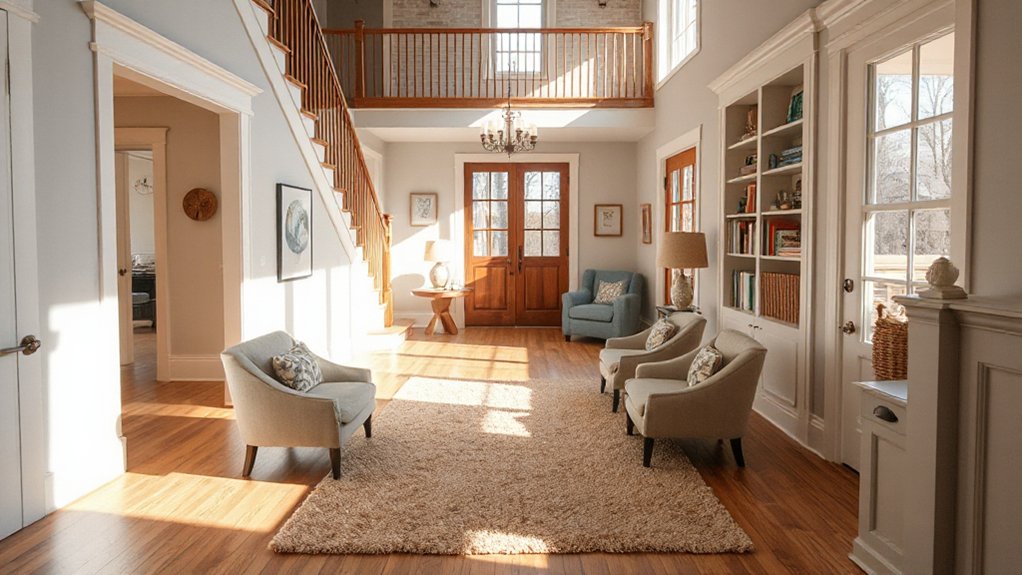
If your landing feels oversized, you can turn that extra square footage into a reading zone by mapping the clearances first. Measure the full footprint, then mark a primary walking lane from stair to hall; keep it consistently open so circulation stays intuitive. Reserve door swings, handrail offsets, and any HVAC returns, and don’t block light paths from nearby windows. Define a “quiet rectangle” beyond traffic, then anchor it with an area-rug outline or painter’s tape to confirm edges.
Next, plan vertical space: note outlet locations, sconce heights, and head-clearance under sloped ceilings. Align Color schemes with adjacent rooms to prevent visual chop, then layer decor accents at the perimeter so the center stays breathable and calm.
Choose Seating That Fits the Landing
A few well-chosen seating pieces will make your landing read as a lounge without pinching circulation. Start by matching scale to the footprint: a compact armchair, slipper chair, or settee works when you keep the profile tight and arms slim. Aim for Seating comfort with a supportive back, a seat depth you can actually settle into, and a cushion density that won’t bottom out.
Place the main seat against the most solid wall line to anchor the zone, then add a small ottoman or pouf that can tuck under a console when you need more passage width. Let Material selection do double duty: choose durable upholstery for high-touch areas, and add a textured throw for softness without bulk. Keep legs exposed to lighten visual mass.
Set Up Glare-Free Reading Lighting (Task + Ambient)
You’ll get a calm reading zone by layering a focused task lamp with soft ambient light that fills the landing without flattening it. Place fixtures to the side and slightly behind your shoulder line, and angle shades away from glossy trim and sightlines to cut glare. Choose warm, diffused bulbs so pages stay crisp while the space reads as quiet and inviting.
Layer Task And Ambient
While the chair and shelves define the lounge, layered lighting makes it usable at any hour without eye strain. Start by deciding how you’ll layer task light for pages and ambient lighting for the landing’s volume, so the space feels intentional rather than leftover. Choose a focused reading source with a warm, high-CRI lamp to keep paper tones true and reduce fatigue during long sessions. Then add a softer, room-filling layer—dimmable wall wash, cove, or a shaded ceiling fixture—to lift corners, reveal circulation paths, and keep the lounge from floating in darkness. Put both layers on separate controls, so you can tune contrast as daylight shifts. Aim for calm, even illumination that supports attention and makes the landing feel like a destination.
Position Lights To Reduce Glare
Where does glare actually come from in a landing lounge—overhead spill, bare bulbs in your sightline, or a hot reflection off glossy pages? You control it with Lighting placement: keep task lights just behind your shoulder and slightly to the side of your dominant hand, so the beam lands on the book, not your eyes. Angle heads downward, and choose shades that hide the light source when you’re seated. For ambient, bounce light off adjacent walls or the ceiling line instead of pointing fixtures straight down over the chair. If your landing has a railing, tuck floor lamps inside the reading zone so the bulb stays outside your peripheral view. Test by sitting, turning pages, and nudging angles until Glare reduction feels effortless.
Choose Warm, Diffused Bulbs
Once your fixtures sit outside your direct sightline, the bulb itself becomes the next lever for comfort. Choose warm, diffused bulbs that soften edges and keep the landing’s open volume calm. Aim for 2700K–3000K for your task lamp so pages read clean without a clinical cast; keep ambient sources slightly warmer to wrap the railings and wall planes in a gentle gradient. Prioritize frosted glass, opal globes, or shaded LEDs to hide the diode point and prevent sparkle on glossy trim. With Smart bulb options, you can dim without flicker and set scenes that shift from afternoon clarity to evening hush. Test color temperature choices against your upholstery and wood tones, then lock in presets.
Add Landing-Friendly Storage for Books and Blankets
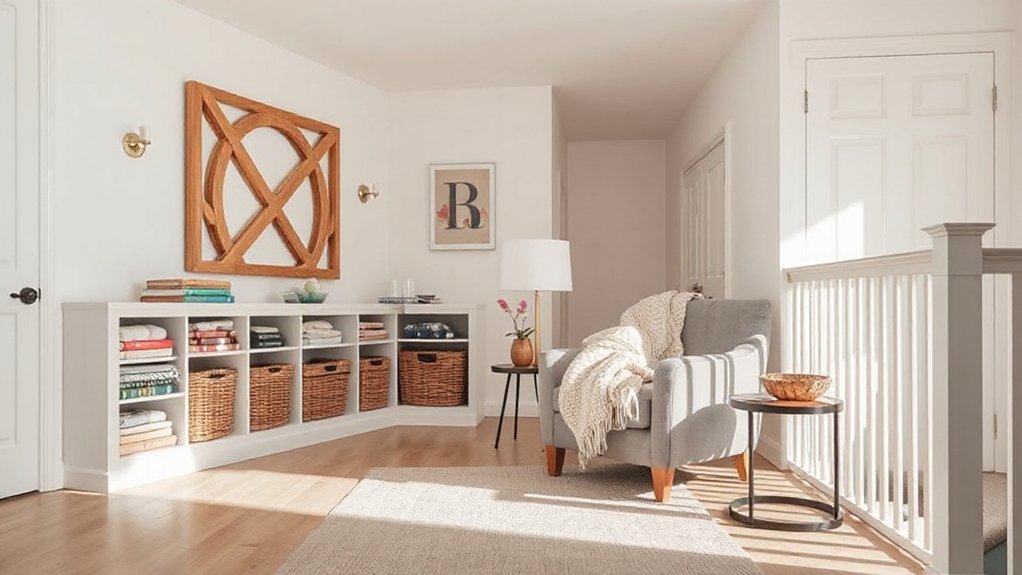
You’ll keep the landing calm and usable when storage sits tight to the perimeter and works at sitting height. Build a bench with hidden compartments for extra throws, then add slim wall-mounted bookcase units that read as architectural lines instead of bulk. Finish with a few structured baskets that corral blankets without interrupting your walkway.
Built-In Bench Storage
Because a landing often sits between rooms without a clear purpose, built-in bench storage gives it a job: seating plus a dedicated home for books and blankets. You anchor the zone by running a Built in bench along the longest wall, keeping circulation clear and the sightline calm.
Size it like furniture: 18 inches high, 16–18 inches deep, with a slightly overhanging top for comfort. Add bench seating with a tight cushion and a back pillow that won’t spill into the stair path. Divide the base into lift-up lids or deep drawers so you can sort paperbacks, throws, and seasonal pillows without visual clutter. Finish the front with flat panels, aligned seams, and quiet hardware so the landing reads intentional, not leftover. Add a small sconce above.
Slim Bookcase Wall Units
Where can a landing hold a real library without turning into a corridor obstacle course? You solve it with a slim bookcase wall unit that keeps depth tight and circulation clear. Aim for 8–10 inches deep, run it along the longest guardrail wall, and stop it short of door swings and stair headroom. Anchor every section into studs, then add a toe-kick shadow line so the base reads lighter.
Use Wall mounted shelves above the lower runs to shift weight visually upward while keeping the floor open. Set shelf spacing to your book formats: 10 inches for novels, 12 for art books, and a taller bay for folded throws. Finish the backs in a soft matte to reduce glare under landing lights.
Baskets For Blanket Storage
Slim wall units handle the hardbound volume, but a landing lounge still needs softer, grab-and-go storage for blankets and overflow reads. Place two to three lidded baskets under a console or beside the bench to keep the walkway clean and the lounge visually quiet. Aim for identical footprints so they read as one low band of storage, not scattered clutter.
Choose materials that support Basket aesthetics: woven seagrass for warmth, felt for minimalism, or cane for an airy look. Size each basket to your throws—folded, not rolled—so Blanket organization stays consistent and fast. Add a slim label strip inside the rim for categories like “winter throws” and “current reads.” Keep the tallest basket farthest from the stair edge for safety.
Quiet the Stair Landing With Rugs and Soft Textiles
Even if your landing feels like a natural pause point, hard surfaces can turn it into an echo chamber, so start by layering in rugs and soft textiles to absorb sound and slow the space down. Anchor the footprint with a low-pile runner that grips each tread and continues onto the landing, then add a thicker area rug to soften footfall. Choose rug pads with dense felt; they act like Soundproofing materials without visual bulk. If the landing is wide, hang a lined curtain panel on a ceiling track along the guardrail to tame bounce. Finish the seat with Decorative cushions in textured weaves, plus a wool throw that doubles as acoustic damping. You’ll hear the difference immediately, and the lounge feels calmer and quieter.
Style the Landing Reading Nook to Match Nearby Rooms
Once you’ve softened the acoustics with rugs and layered textiles, make the reading nook feel like it belongs to the rooms it connects. Pull cues from adjacent spaces: if the hallway leans modern, choose a slim-lined chair; if nearby bedrooms skew traditional, bring in a turned-leg side table and a tailored shade.
Build a Coordinated color palette by repeating two anchor tones already present—paint, drapery, or bedding—then add one bridging neutral through the upholstery and book spines. Echo finishes, too: match warm brass to door hardware or repeat blackened steel from stair balusters. Hang Decorative wall art that references the home’s visual rhythm: a pair of aligned frames, a single large print, or a compact gallery that mirrors spacing in adjoining rooms. Keep lighting consistent with nearby fixtures.
Avoid Landing Reading Nook Mistakes (Traffic, Safety, Scale)
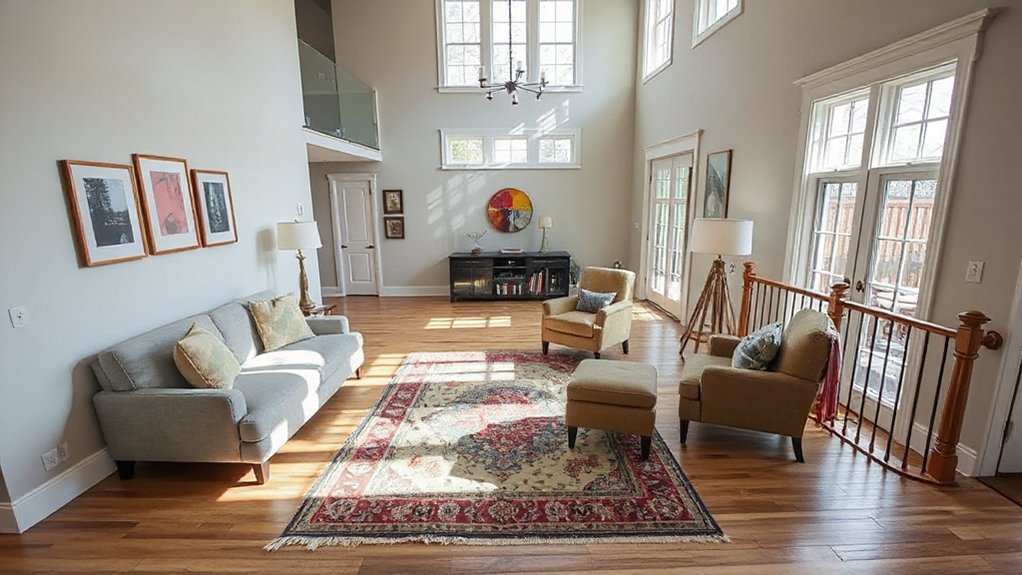
Because a landing functions as a passageway before it ever feels like a room, you’ve got to design the reading nook around traffic, safety, and scale. Map the natural traffic flow from stairs to doors, then keep a clear, straight path—no ottomans, baskets, or low tables in the line of travel. Anchor seating to a wall or balustrade so it can’t drift into circulation.
Treat edges like hazards: choose a chair with arms for stable sit-to-stand, add a non-slip rug pad, and avoid floor lamps where cords cross walkways. For safety considerations, leave stair headroom open and keep rail access unobstructed. Scale everything down: a compact chair, shallow book ledge, and slim side shelf preserve breathing room and sightlines. Keep it proportionate to the landing’s width.
Frequently Asked Questions
How Do I Add Privacy to a Landing Reading Lounge Without Blocking Light?
Add privacy without blocking light by layering translucent privacy screens and frosted window films. You’ll keep daylight flowing while defining a cozy zone. Use open slat dividers, sheer panels, and low bookcases to shape sightlines.
What Are the Best Paint Colors to Make a Landing Feel Calmer?
Choose soft, muted hues: warm greige, misty blue, sage, or dusty blush. Color psychology says cool greens/blues lower stress. Use paint finish options: matte for ceilings, eggshell for walls, satin for trim.
Can I Soundproof a Landing Reading Nook Without Major Construction?
Yes, you can reduce noise without major construction using soundproofing techniques and DIY insulation options: add dense rugs, thick curtains, upholstered seating, book-filled shelves, door sweeps, and acoustic panels; seal gaps for a quieter, cocooned zone.
How Can I Incorporate Plants Safely on a Stair Landing?
You can incorporate plants safely by anchoring pots in heavy, non-tip planters and keeping edges clear. Like a ship’s ballast, one 10-inch pot steadied my hallway. Prioritize Indoor air quality; follow Plant placement tips.
Do I Need Permits to Add Built-In Seating or Shelves on a Landing?
You might need permits if built-ins change egress width, affect structure, or require electrical work; your local code office decides. Keep custom seating options and storage solutions within clearances, anchored securely, fire-safe, and non-combustible.
Conclusion
You thought a landing’s only job was to get you somewhere else. Ironically, once you map clearances, it becomes the destination. You’ve sized seating to the edge, aimed glare-free task light at the page, and softened the echo with a rug that respects tread lines. Books slip into shallow storage; blankets stay contained, not cascading. Styled to echo nearby rooms, your “in-between” space reads intentional—without blocking traffic or borrowing danger.
About the Author