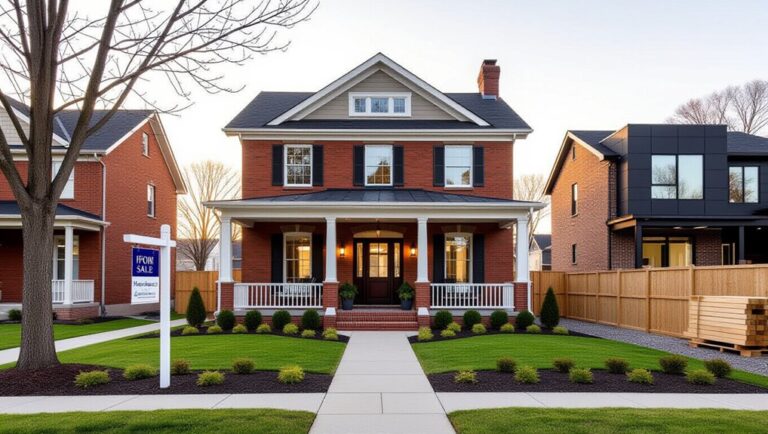
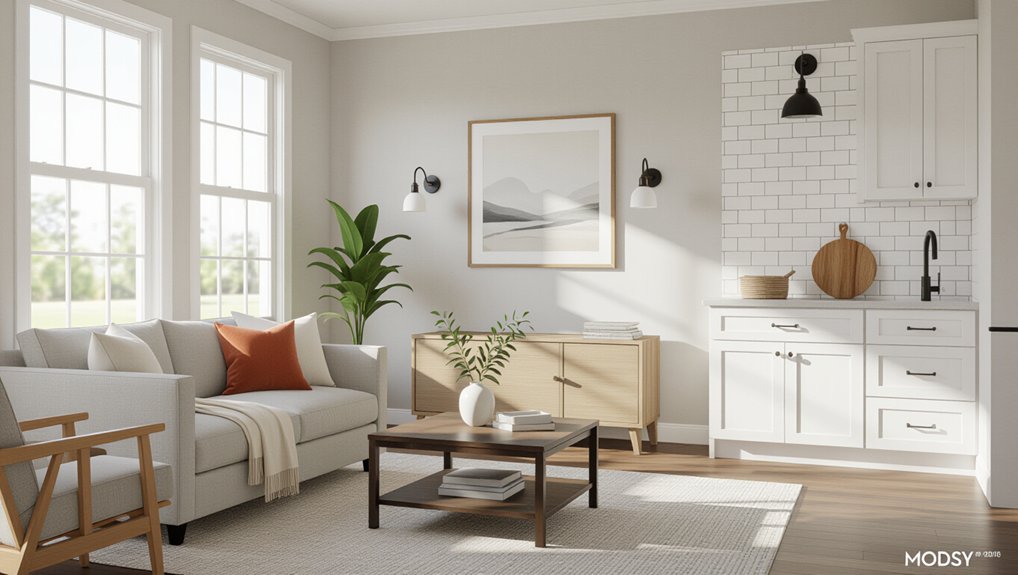
You’ll boost your selling price fastest by prioritizing buyer-visible, high-ROI fixes: deep clean, remove odors, declutter to model-home density, and repaint in a neutral warm white or light greige with consistent sheen. Improve curb appeal in a weekend by edging, mulching, trimming, pressure-washing, and upgrading exterior lighting to 2700–3000K LEDs. In kitchens and baths, swap dated faucets, pulls, and LED-rated fixtures, then re-caulk and re-grout. Next, compare upgrades against local comps and costs.
Key Takeaways
- Prioritize upgrades by ROI using local comps, focusing on visible “curb-signal” fixes with low cost, quick install, and minimal permit risk.
- Deep clean, remove odors, declutter 30–50% of belongings, and stage to improve first impressions and shorten days on market.
- Boost curb appeal fast: edge lawns, mulch beds, trim shrubs, pressure-wash paths, and repair obvious exterior defects.
- Refresh kitchens and bathrooms cheaply with new faucets, cabinet pulls, LED lighting, re-caulking, and selective re-grouting instead of full remodels.
- Signal strong maintenance by tightening hardware, touching up trim paint, fixing minor leaks, and correcting small defects buyers and appraisers notice.
Prioritize the Best Low-Cost Upgrades Before Listing
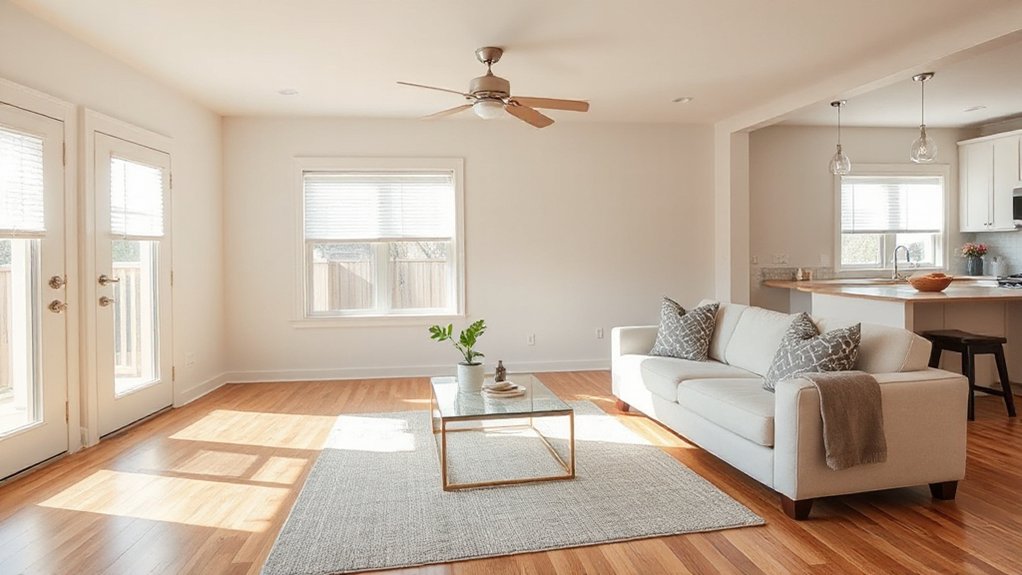
Before you spend a dollar, rank potential upgrades by return on investment and buyer impact so you don’t waste time on low-visibility fixes. Start with local comps and Neighborhood trends: note which features repeatedly appear in top-priced, fastest-selling listings. Then screen ideas against measurable criteria—cost, install time, permit risk, and expected appraisal recognition. Prioritize curb-signal items buyers notice in seconds, such as updated exterior lighting, refreshed hardware, and repaired minor defects that trigger inspection credits. Use Home staging as a decision tool: if a staged walkthrough highlights dated fixtures or poor lighting balance, target those first. Set a budget cap (for example, 1% of expected sale price) and require each project to justify itself against that threshold.
Clean, Declutter, and Paint for a Faster Sale
Although major remodels grab attention, the most reliable low-cost lever for a faster, higher-priced sale is making the home look clean, spacious, and move-in ready through deep cleaning, aggressive decluttering, and fresh, neutral paint. Start with a checklist: floors, baseboards, windows, baths, and kitchens; remove odors and repair minor scuffs so surfaces photograph evenly. Declutter to “model-home” density: clear countertops, reduce closet contents, and store 30–50% of visible items off-site to improve perceived square footage. Apply neutral paint (e.g., warm white or light greige) with consistent sheen to meet buyer expectations and reduce inspection flags. These steps strengthen Home staging, support tighter pricing strategies, and typically reduce days on market by improving first-showing conversion rates in competitive listings.
Add Curb Appeal in a Single Weekend (Cheap Wins)
Clean interiors set expectations, but buyers often decide whether to book a showing within seconds of seeing the exterior, so curb appeal becomes your next highest-ROI target. In one weekend, you can raise perceived condition with low-cost, standards-based fixes that appraisers and agents flag as “well maintained.” Start with landscaping enhancements: edge the lawn, pull weeds, mulch beds to a uniform 2–3 inches, and trim shrubs away from windows and walkways. Repair obvious defects: reattach loose house numbers, tighten railings, and touch up peeling trim paint. Then upgrade outdoor lighting: install LED porch bulbs at 2700–3000K, clean fixtures, and add a motion sensor at the entry for security cues. Finish by pressure-washing the walkway and front step.
Update Kitchens and Bathrooms Cheaply: Skip Full Remodels
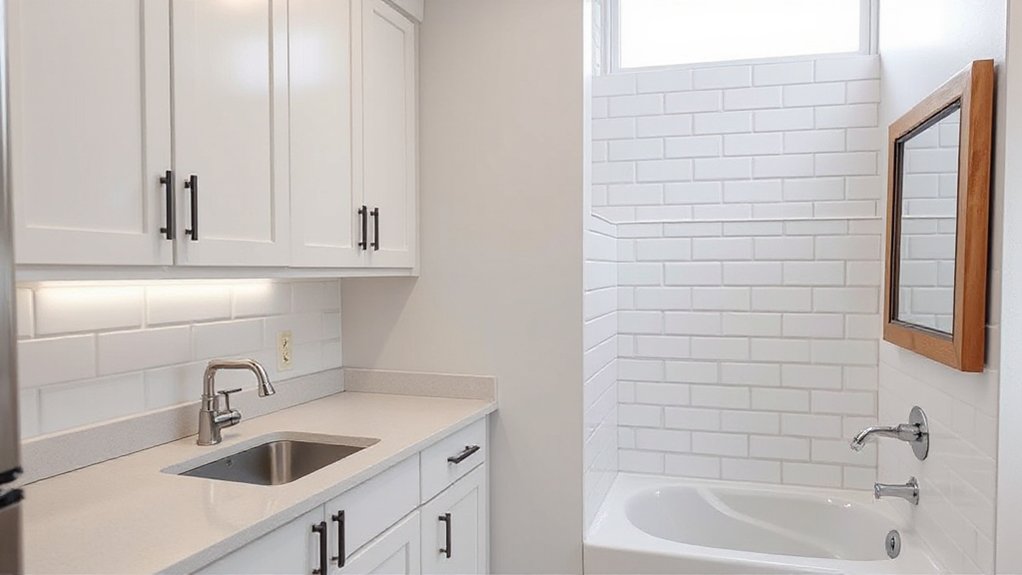
Because kitchens and bathrooms drive a disproportionate share of buyer attention and appraisal condition cues, you’ll usually get a better ROI from targeted, code-safe updates than from a full remodel. Start with Affordable fixtures: swap dated faucets, showerheads, and cabinet pulls for modern, water-efficient, ANSI/ASME-listed products. Replace worn light bars with LED fixtures rated for damp or wet locations, and install GFCI outlets where required. For cosmetic enhancements, refinish cabinets, update hardware, and add a durable, neutral backsplash; these changes photograph well and reduce “deferred maintenance” flags. Re-caulk tubs and sinks, fix leaks, and re-grout high-visibility areas to signal good upkeep. If counters look tired, consider resurfacing or a midrange laminate replacement instead of stone. Keep layouts, plumbing runs, and electrical circuits intact.
Frequently Asked Questions
Do Low-Cost Upgrades Affect Home Appraisal Values or Only Buyer Perception?
Low-cost upgrades can influence appraisal impact and buyer perception, but appraisers credit only market-supported, measurable improvements. You’ll see value when comps reflect similar updates; otherwise, upgrades mainly speed offers, reduce concessions, and improve sale-to-list ratios.
Which Improvements Could Hurt Resale Value or Turn Buyers Off?
You’ll hurt resale with Landscaping mistakes and Overly personalized decor. After Mark installed neon murals and gravel “Zen” beds, showings dropped. Buyers discount nonstandard changes, expect correction costs, and appraisers may flag condition, reducing value.
Should I Disclose DIY Upgrades, and What Documentation Should I Keep?
Yes—provide upgrade disclosure for material changes to meet common seller disclosure standards. Keep DIY documentation: dated photos, permits, inspection reports, invoices/receipts, product specs, and warranties. You’ll reduce liability and support buyer due diligence during negotiations.
How Do I Prioritize Upgrades for Selling if I’M Also Refinancing?
Prioritize upgrades that raise appraised value and buyer appeal: fix health/safety issues, then cosmetic updates with strong ROI. Use staging techniques and landscaping improvements. Verify costs, permits, and comps, and align timing with refinance underwriting.
When Is It Better to Offer Seller Credits Instead of Making Repairs?
You’ll choose seller credits over repairs when deadlines loom, bids vary, and you need certainty—especially if inspections flag non-safety issues. Use credits with seller financing limits and contingency waivers, anchored to contractor estimates.
Conclusion
When you’re listing, focus on proven, low-cost projects that lift perceived value and shorten time on market. You’ll get measurable gains by cleaning, clearing clutter, and coating walls with neutral paint—moves consistently linked to stronger buyer impressions. Then add curb appeal with simple, speedy fixes: trim, tidy beds, and a fresh front door. Inside, make kitchens and baths look modern by swapping hardware, lighting, and faucets. Small, smart steps sell.
About the Author