Design your playroom by zoning for real movement: keep active play in open space, add a quiet nook in a corner, and define sensory and craft areas with clear labels at kid height. You’ll boost safety by anchoring shelves, storing heavy items low, keeping exits clear, and setting simple rules like no climbing and no running near hard edges. Choose low-VOC washable paint, wipeable wall protection, and slip-resistant flooring, then secure cords, outlets, lights, and cordless blinds. Keep going to get zone-by-zone setup tips.
Key Takeaways
- Zone the playroom into active, calm, and sensory areas with wide pathways and kid-height labels to support independent, organized play.
- Choose durable, non-toxic, wipeable materials: low-VOC eggshell paint, sealed edges, and smooth nonporous worktops for frequent cleaning.
- Use resilient, slip-resistant flooring like rubber or commercial vinyl, adding non-skid rugs for traction, noise reduction, and safer falls.
- Prioritize safe, sturdy furniture: rounded corners, wide bases, wall-anchored shelves, and heavy items stored low in soft bins or cubbies.
- Reduce hazards with recessed lighting, tamper-resistant outlets, secured cords, cordless blinds, window locks, and clear emergency exits with practiced routes.
Plan Zones for How Kids Really Play
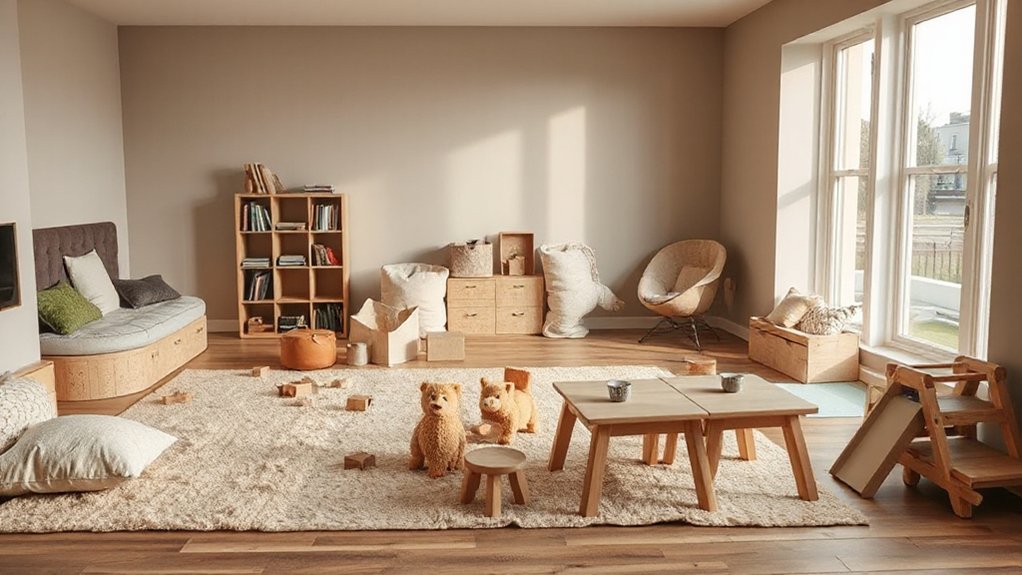
Before you buy bins or furniture, watch how your kids actually move through a room—then map the playroom into clear zones that match those patterns. Put active, Interactive play near open floor space so bodies can climb, build, and reset without crossing quiet areas. Set a calm corner for books, puzzles, and solo work, using soft lighting and low shelving they can reach independently. Create sensory zones with a small table for play dough, textured bins, or water-free sensory trays, and choose wipeable surfaces to keep cleanup fast. Keep pathways wide and predictable so kids can carry toys without bumping displays. Rotate materials by zone, not by type, so choices stay simple and development stays steady. Add labels at kid height.
Start With Safety Rules (Ages, Hazards, Exits)
Once you’ve mapped your play zones, lock in a few safety rules that fit your kids’ ages, the hazards in each area, and the room’s exits. Set clear boundaries: no climbing on shelving, no running near hard edges, and “hands to yourself” in shared spaces. Choose Age appropriate toys, and post a quick guide so older kids don’t hand small parts to toddlers. Store choking hazards, cords, and batteries up high, and anchor tall furniture to prevent tip-overs.
Walk the room at kid height to spot pinch points and reach risks. Keep Emergency exits unobstructed, and practice a simple “leave now” route with your kids. Add a rule for doors: adults open, kids wait, especially near stairs and windows.
Choose Easy-Clean, Kid-Friendly Materials
Choose materials that can take spills and scrubbing without trapping germs or leaving lingering odors, so kids can keep playing safely. You’ll want stain-resistant upholstery that holds up to rough-and-tumble use while staying soft and comfortable for developing bodies. Finish walls and trim with washable paints and non-toxic, low-VOC finishes so you can wipe marks off fast without adding harsh chemicals to the room.
Stain-Resistant Upholstery Choices
Because playroom seating takes the brunt of spills, marker streaks, and snack crumbs, you’ll want upholstery that cleans up fast without trapping allergens or degrading under frequent scrubbing. Prioritize tight-weave performance fabrics, solution-dyed acrylic, or microfiber; they boost fabric durability and stain resistance while staying soft for lounging and reading.
Pick removable, machine-washable slipcovers when possible, and choose zippers with covered pulls to reduce pinch risk. Avoid loose, shaggy textures that hold dust and small parts, and skip delicate linen blends that fray. Look for low-VOC, water-based stain barriers and a color pattern that disguises everyday messes without overstimulating kids. For safety, keep cushions firm enough for stable climbing and sit-to-stand practice, and confirm the fabric meets flammability standards without added harmful chemicals.
Washable Paints And Finishes
Where do fingerprints, crayon swipes, and the occasional juice splash land first? On your walls, doors, and trim, so pick washable, low‑VOC paint in eggshell or satin for easy wipe-downs. Avoid high-gloss on large walls; it highlights bumps and invites glare that can overstimulate kids. Use scrub‑rated formulas and let them fully cure before playtime to reduce odor and off‑gassing.
For baseboards, window stools, and shelving, choose water‑based polyurethane or a durable enamel that resists scuffs and won’t chip into sharp flakes. Add Artistic murals with the same washable system, then seal them for protection. Keep decorative accents minimal on climbing routes, and you’ll simplify cleaning while supporting safe, independent play.
Install Slip-Resistant, Durable Playroom Flooring
Before the toys arrive, install flooring that can take daily tumbles, spills, and high-energy play without turning into a slip hazard. Prioritize Non slip safety with textured surfaces that keep traction even when socks, juice, or bath-time drips hit the floor.
Choose rubber flooring for shock absorption and quieter landings; it cushions knees during crawling, softens falls during climbing, and supports balance practice for new walkers. If you prefer resilient vinyl or laminate, select commercial-wear layers and an embossed finish, then add grippy area rugs with non-skid pads. Keep seams tight to prevent trips, and avoid thick thresholds that snag scooters and push toys. Maintain hygiene by picking materials that tolerate frequent mopping and disinfecting without curling, staining, or cracking over time.
Use Low-VOC, Scuff-Resistant Playroom Paint
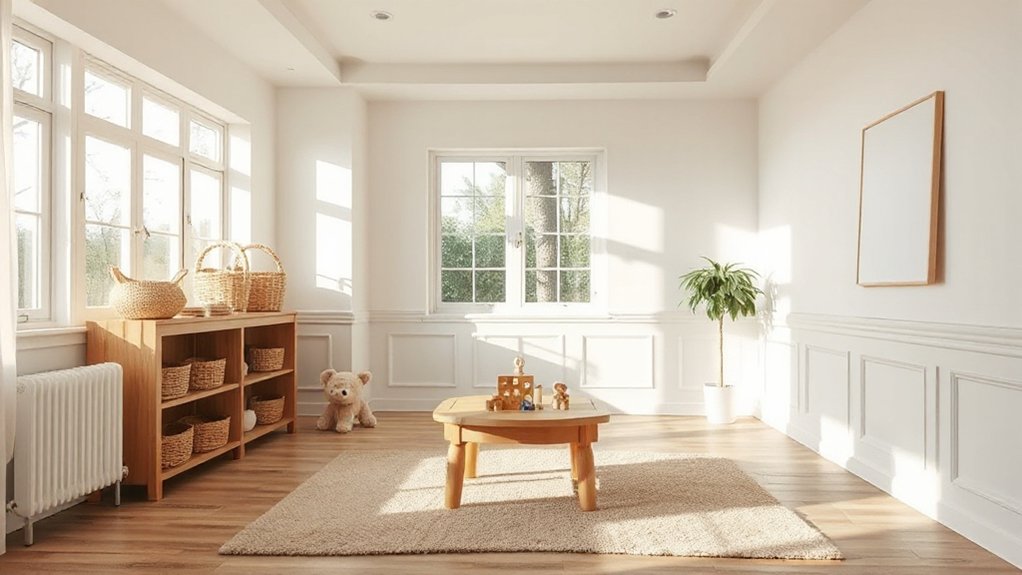
Once you’ve got flooring that grips and cushions, turn your attention to the walls—kids touch, rub, and bump into them constantly. Choose low-VOC paint to cut fumes that can irritate breathing, especially during long play sessions. Look for Eco friendly finishes certified for indoor air quality, and confirm the colorants use Non toxic pigments so curious hands and mouths face fewer risks.
Pick a scuff-resistant, washable eggshell or satin that stands up to toy impacts and frequent cleaning without burnishing. Use a high-adhesion primer to prevent peeling when kids tape up art or lean on corners. Ventilate well while you paint, then give the room a full cure time before heavy use. Keep leftover paint sealed and stored out of reach.
Add Wipeable Playroom Wall Protection
Because kids’ hands, shoes, and ride-on toys inevitably meet the walls, add wipeable protection in high-contact zones so you can clean up markers, sticky fingerprints, and scuffs without harsh scrubbing that damages paint or leaves residue. Install clear, washable wall panels or chair-rail wainscoting behind activity tables and along traffic paths. Choose rounded edges and securely fastened trims so nothing splinters or peels into little mouths. Use removable wall decals to label bins, create height charts, or set calm visual boundaries without repainting. Add a section of chalkboard paint for drawing and early-letter practice, then keep damp cloths nearby to reset quickly. Store kid-safe cleaners out of reach, and clean regularly to reduce allergens and keep surfaces hygienic.
Choose Sturdy, Kid-Safe Playroom Furniture
While you’re picking out playroom pieces, prioritize furniture that can take daily climbing, banging, and spills without tipping, pinching fingers, or shedding small parts. Look for wide bases, rounded corners, and smooth, sealed surfaces that wipe clean fast. Choose solid wood, quality plywood, or metal frames over brittle plastics to boost Furniture durability and reduce cracks that can snag skin. Check joints and hardware; they should feel tight, stable, and free of exposed screws. Pick chairs and tables sized to your child’s height so feet plant firmly and posture supports drawing, puzzles, and snack time. Confirm finishes are low‑VOC and non‑toxic, and verify labeling meets Child safety standards, including weight limits and age ratings. Replace worn pieces promptly.
Anchor Storage: Shelves, Cubbies, Toy Bins
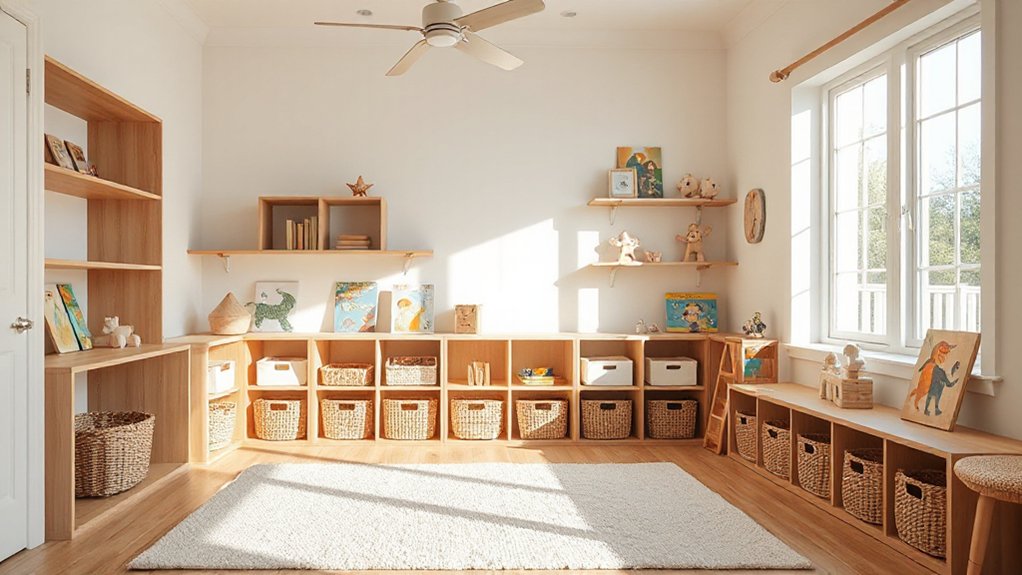
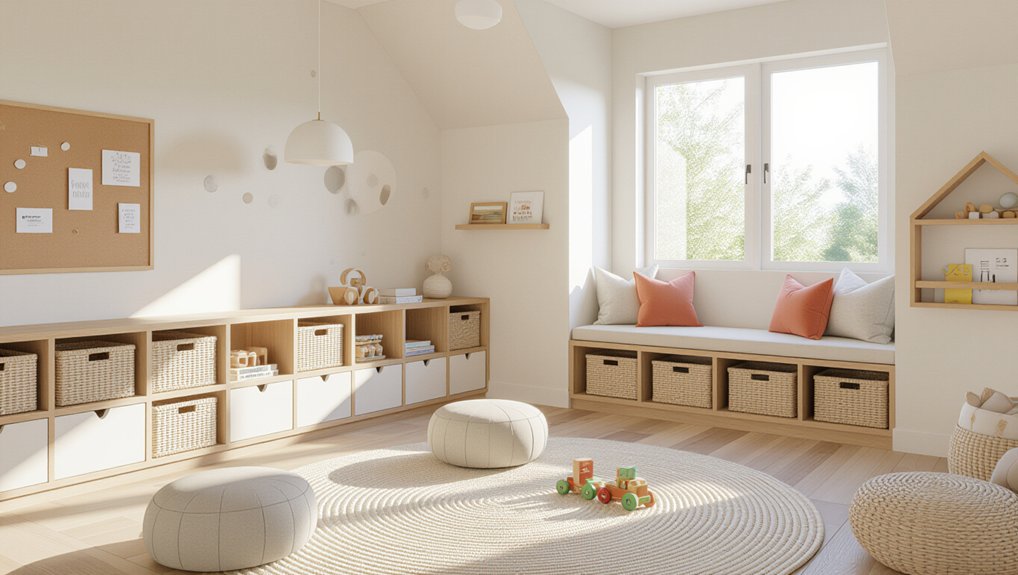
After you’ve defined the play zones, anchor the room with stable storage—wall‑secured shelves, low cubbies, and lidded toy bins—so cleanup stays predictable and hazards stay contained. Choose rounded corners and sturdy materials that won’t splinter, and keep heavy items on lower shelves to reduce tipping and falls. Use labeled bins with picture cues to support early sorting, memory, and independence; rotate toys so choices stay manageable. For Toy organization, assign one category per cubby and stick to it, so kids can reset the space without help. Pick storage solutions with soft-close hinges or fabric bins to protect small fingers. Leave clear pathways and set a quick daily “reset” routine that builds responsibility.
Set Up Safe Lighting, Outlets, and Window Blinds
Stable storage keeps clutter contained; now make sure the room’s power sources and light fixtures stay just as kid-proof. Choose flush-mount or recessed fixtures so little hands can’t grab bulbs, and add shatter-resistant covers where needed. Use dimmable, warm LEDs to reduce glare and support calmer play and better visual comfort.
Install Child proof outlets on every receptacle, including behind furniture. Use sliding-plate covers or tamper-resistant outlets, and route cords through secured raceways so kids can’t tug or chew them. Place a master switch or smart plug for quick shutoff during cleanup.
For windows, pick Safe window blinds: cordless shades or motorized blinds that eliminate looped cords. Add window locks and keep furniture away from sills to prevent climbing.
Build a Cozy Reading and Calm-Down Nook
Because kids regulate emotions through predictable routines, you should carve out a small reading and calm-down nook that feels separate from high-energy play and stays physically safe. Place it in a corner with clear sightlines, away from doors and traffic paths. Use a low bookshelf as a boundary, and anchor it so it can’t tip. Add a washable rug with a non-slip pad and a few firm floor cushions; skip beanbags that slump and trap faces. Choose soft, indirect lighting and keep cords out of reach. Stock board books and simple picture books to support Interactive storytelling, and include a few tactile items for sensory exploration, like textured pillows or a weighted lap pad. Post a “quiet choices” card so kids know what to do.
Create a Craft Area With Mess-Proof Surfaces
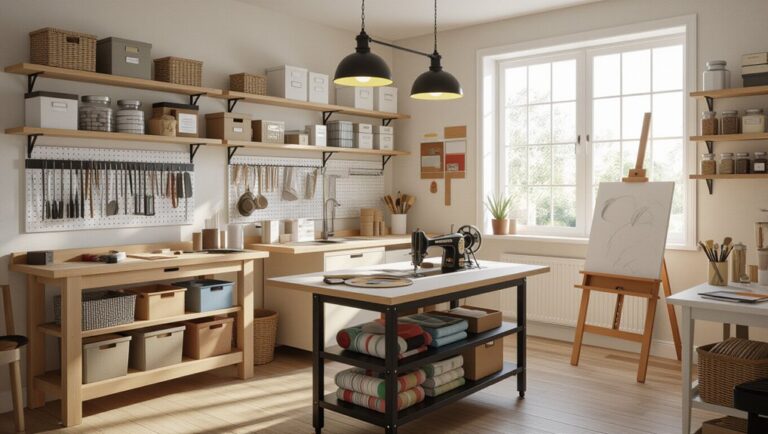
Set up a dedicated craft zone so you can encourage creativity without worrying about spills becoming safety hazards. Choose stain-resistant flooring and seating fabrics, and add an easy-clean worktop like laminate or sealed wood to handle paint, glue, and markers. Keep surfaces smooth and wipeable so you can sanitize quickly and keep kids focused on making, not mess-management.
Choose Stain-Resistant Materials
Where do spills and splatters land most often—right where kids create, explore, and experiment—so your craft area needs surfaces that resist stains and wipe clean fast. Choose finishes that handle markers, glue, paint, and snack drips without absorbing odors or leaving residue.
Use stain resistant fabrics on nearby seating, floor cushions, and storage bins, and pick tightly woven, washable textiles that don’t shed fibers kids could mouth. Add Durable wall coverings behind the table to stop scuffs and crayon streaks from becoming permanent; look for low‑VOC options to protect breathing. Favor rounded, sealed edges on built‑ins so moisture can’t swell joints or harbor germs. Keep materials non‑toxic and easy to disinfect so kids can focus on fine‑motor practice, not cleanup.
Add Easy-Clean Worktops
How do you keep a busy craft zone safe and manageable when spills are guaranteed? Start with a smooth, nonporous worktop like laminate, sealed hardwood, or stainless steel, so glue, paint, and slime wipe off fast. Round the edges to reduce bumps, and choose a matte surface to cut glare and eye strain during drawing. Seal seams and add a shallow lip to limit rolling beads and drips. Pick Non toxic finishes that resist stains without harsh solvents, and ventilate well when you set them. Pair the surface with Child proof storage: locking drawers for scissors, blades, and adhesives, plus open bins for paper and chunky tools kids can reach. Keep a washable mat under stools, and you’ll support independence while protecting skin, lungs, and floors.
Frequently Asked Questions
How Can I Soundproof a Playroom to Reduce Noise in the House?
Use Soundproofing techniques: seal gaps with weatherstripping, add solid-core doors, and hang thick curtains. Install Noise reduction materials like acoustic panels, carpet tiles, and rug pads. You’ll lower echoes and protect hearing during play.
What’s the Best Way to Control Playroom Temperature and Ventilation Year-Round?
Use a programmable thermostat, add balanced ventilation, and choose safe Insulation solutions to stabilize comfort. You’ll manage humidity with a quiet dehumidifier. Maximize Natural lighting for warmth, and keep vents covered and unobstructed.
How Do I Design a Playroom That Grows With Kids as They Age?
Choose modular furniture, adjustable tables, and neutral zones you can reconfigure for play, study, and hobbies. Add labeled playroom storage that evolves with interests, and follow safety tips: anchor shelves, pad corners, and manage cords.
What Permits or Building Codes Apply When Remodeling a Playroom?
You’ll typically need permits for electrical, framing, plumbing, or new windows—coincidentally, the same upgrades you’re planning. Follow egress, smoke/CO alarms, stair-rail rules, Playroom lighting standards, and secure Storage solutions anchoring.
How Can I Incorporate Accessible Design for Kids With Mobility Needs?
You can add Inclusive accessibility by widening pathways, choosing low-threshold flooring, and installing reachable storage. Use Adaptive furniture like adjustable tables and supportive seating. You’ll boost safety with grab bars, clear sightlines, and cushioned zones.
Conclusion
When you design your playroom around real play, you’ll support growth and keep risks low. Start with clear safety rules, age-appropriate zones, and an exit plan, then choose wipeable materials, slip-resistant flooring, and low-VOC, scuff-proof paint. Anchor storage so nothing tips, and secure lighting, outlets, and blinds. Add a calm reading nook and a craft station with mess-proof surfaces. With these basics, you’re on the right track.
About the Author