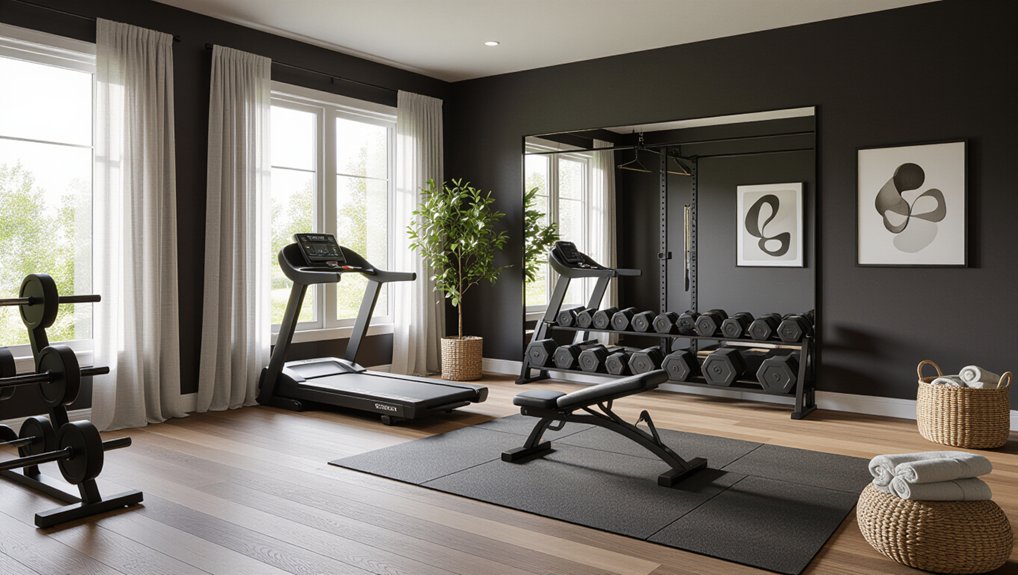
Design your home gym to keep you moving by zoning strength, cardio, mobility, and recovery, and putting your most-used station near the entry with clear bar paths and wide walkways. Add dense rubber flooring for lifts and softer surfaces for cardio to protect joints and cut noise. Use bright, neutral task lighting, mirrors for form, and steady airflow from a quiet fan or mini-split. Finish with wall storage, smart power, and a one-tap “start workout” scene—more ideas are just ahead.
Key Takeaways
- Zone your gym by activity and place the most-used zone near the entrance to reduce friction and boost consistency.
- Use mirrors and natural light to improve form feedback, expand visual space, and increase motivation.
- Layer lighting with ambient and task fixtures, plus dimmable controls, to match high-focus training and calming recovery sessions.
- Prioritize comfort with climate control, cushioned flooring, and ergonomic benches to keep workouts enjoyable and reduce fatigue.
- Keep the space inspiring and safe with clear walkways, marked movement zones, and tidy wall storage that eliminates clutter and hazards.
Plan Your Gym Layout by Training Zones + Clearance
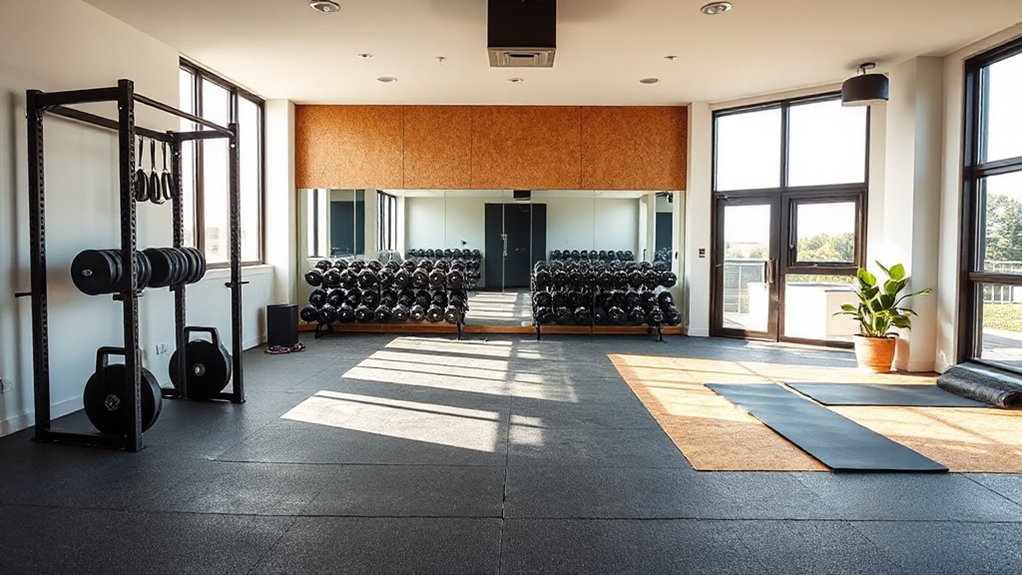
Before you buy another piece of equipment, map your home gym into clear training zones—strength, cardio, mobility, and recovery—so every square foot supports how you actually move. Put your most-used zone closest to the entry to reduce friction, and align each station with natural light or mirrors to boost drive and form.
Dial in Training zone placement by matching movements to space: rack and bench along a solid wall, cardio where airflow’s best, mobility where you can sprawl, recovery in the calmest corner. Then do equipment clearance planning: mark swing arcs for kettlebells, bar path for presses, step-back room for lunges, and full extension for pull-ups. Leave wide walkways so you don’t twist, bump, or rush your sets.
Choose Flooring for Lifting, Cardio, and Grip
Once you’ve mapped your zones, lock in flooring that protects your joints, your gear, and your confidence under load. For lifting, prioritize dense rubber flooring or stall mats that absorb impact, limit bar bounce, and steady your stance on heavy sets. Place an extra layer where you drop dumbbells or pull from the floor, and keep seams tight so you don’t catch a toe.
For cardio, choose slightly softer tiles or rolled rubber that reduces repetitive stress and keeps progressions smooth. Under machines, add a thin mat to prevent creeping and protect subfloor. For grip work and mobility, select non slip surfaces that stay reliable when you sweat—textured rubber beats slick foam. Cleanable, consistent footing helps you move with intent. Every rep feels grounded.
Improve Ventilation and Reduce Noise
You’ll breathe easier and train longer when you set up cross-ventilation with opposing windows, a door fan, or a discreet vent to keep fresh air moving. You’ll protect your focus (and your household) by soundproofing walls and floors with dense mats, underlayment, and sealed gaps that stop vibrations. You’ll keep the room calmer by placing quiet equipment away from shared walls and spacing noisy machines so your workouts stay smooth and restorative.
Cross Ventilation Strategies
Even if your home gym sits in a small spare room, smart cross ventilation keeps the air fresh while helping dampen workout noise. Create Natural airflow by opening two windows on opposite walls, or pair a window with a door transom so air sweeps across your training zone. Keep pathways clear so you don’t trip on cords or bump equipment as you move. Aim the flow past, not directly at, your mat to avoid chills during recovery. Use a quiet, low-speed fan near the outlet side to pull warm air out and reduce echoing strain. If privacy matters, use angled louvers or sheer shades that still breathe. You’ll feel cooler, steadier, and ready to push.
Soundproofing Walls And Floors
Two smart upgrades—soundproofing and breathable finishes—can turn a spare room gym into a calmer, cooler training zone. Start with walls: add Acoustic panels at reflection points to soften impact noise and sharp echoes, then seal gaps around outlets, doors, and baseboards to stop sound leaks and drafts. If you can, use a double layer of drywall with damping compound for a quieter, more focused feel.
For floors, lay dense rubber tiles or a floating underlayment to absorb vibration and protect joints during jumps and landings. Hang Soundproof curtains over windows to block street noise while still allowing you to crack them open for fresh air. Choose low-VOC paints and moisture-resistant finishes so you breathe easier and recover faster.
Quiet Equipment Placement
Because equipment placement affects both airflow and impact noise, map your gym layout before you drag anything into place. Put treadmills, rowers, and bikes along an exterior wall or near a vent so heat and humidity don’t linger. Keep heavy lifting away from shared walls, then center your rack to distribute vibration and protect joints with a stable stance. Angle speakers and fans away from doors to keep sound contained and breathing easy. Add acoustic wall panels behind cardio zones to cut slap echo and sharpen focus. If your room faces a street, upgrade with soundproofing windows so you can train early without stress. Leave clear walk paths, and you’ll move safely, recover faster, and stay consistent.
Set Lighting for Energy and Safety
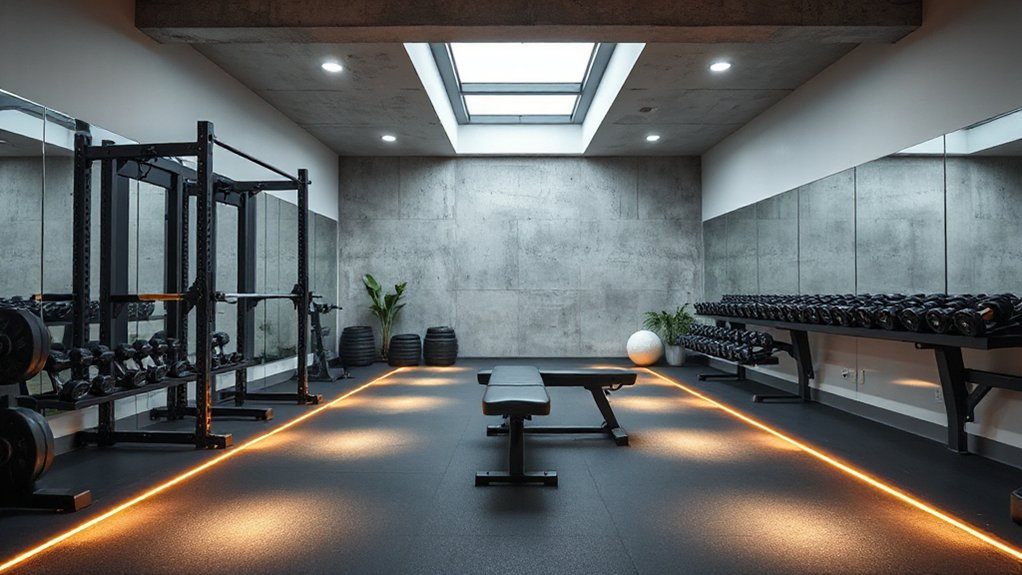
When you set your home gym lighting with intention, you boost your energy and protect your body at the same time. Start with an ambient glow that fills the room evenly, so your eyes don’t strain and you stay mentally alert. Layer in task lighting over your lifting zone, mat area, and cardio console to reduce shadows that can hide uneven flooring, misplaced plates, or sloppy foot placement. Choose adjustable brightness and a neutral-white temperature to keep you focused without feeling harsh. Aim fixtures away from your sightline to prevent glare during presses and rows. Add motion-activated night lights along the path to your gym so early sessions feel safe. Good lighting supports crisp form, confident pacing, and recovery-friendly calm.
Add Mirrors for Form and a Bigger Feel
Although mirrors look like a purely aesthetic upgrade, they quickly become one of your best training tools, helping you dial in technique while making the room feel open and energized. Place a full-length mirror where you lift, stretch, and practice balance so you can self-correct knees, hips, and spine alignment in real time. Smart mirror placement reduces neck craning: keep the center at eye level, leave a small gap above baseboards, and avoid forcing twists to check form. If you train with bands or cables, angle mirrors to capture your full range without glare. Mount them securely, or use shatter-resistant options for peace of mind. The result is visual expansion that boosts focus, confidence, and flow through every rep.
Pick Colors That Match Your Training Style
If you want your home gym to pull you into training the moment you walk in, choose a color palette that mirrors the way you move. Color psychology can cue energy, calm, or grit, so match tones to your workouts. If you lift heavy, anchor the room with deep charcoals or navy, then add a bold stripe for drive. If you do yoga or mobility, lean into soft greens, warm whites, or muted sand to slow your breathing and relax your nervous system. For HIIT, choose crisp contrasts like white and graphite with a controlled pop of red. During paint selection, test samples under your actual lighting and pick low-VOC finishes to support recovery and air quality.
Add Storage That Keeps Gear Off the Floor
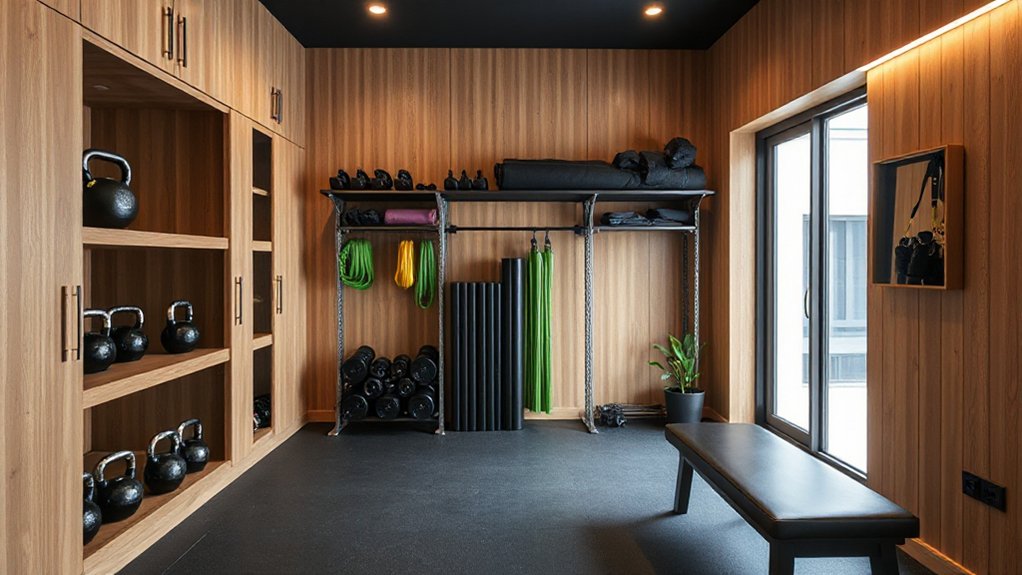
Because clutter drains focus and raises your risk of missteps, build storage that lifts gear off the floor and keeps every tool within easy reach. Start by zoning your room: strength tools in one area, mobility aids in another, and recovery items close to your mat. Install Wall mounted shelves at shoulder height so you can grab bands, chalk, and towels without bending or twisting. Add labeled bins to reduce decision fatigue and speed *progression* between sets. Use vertical hooks for jump ropes and belts, and park heavier dumbbells on a low rack to protect your back. Choose Storage benches that double as seating for shoe changes and stretching, then stash straps and blocks inside. Finish each session with a one-minute reset.
Add Comfort, Power, and Smart Tech Upgrades
Once your gear’s off the floor, you can dial in ergonomic comfort essentials that support your joints—think cushioned mats, a supportive bench, and airflow you can control. Add smart power where you train, so outlets and USB charging stay within reach without messy cords. Then plug in simple tech upgrades like adjustable lighting, a timer, and connected speakers to keep your workouts smooth, focused, and motivating.
Ergonomic Comfort Essentials
Although you may focus first on equipment, your home gym won’t feel truly motivating until it supports your body with ergonomic comfort and modern convenience. Start with flooring that cushions joints and reduces noise, then add ventilation and soft, glare-free lighting so you can breathe and focus. Choose ergonomic seating for warmups, stretching, and recovery work, keeping hips and spine aligned between sets. Add adjustable benches that fit your proportions, lock firmly, and move smoothly from incline to flat, so you lift with stable shoulders and a neutral neck. Keep frequently used accessories within easy reach to avoid awkward twisting. Finally, include mirrors for form checks and a tidy storage wall to protect your space—and your momentum—every day.
Smart Power And Tech
When you wire your home gym with smart power and tech, you remove friction from every session and keep your focus on movement. Place outlets where you train, not where builders guess, so cords don’t cross your feet. Use surge-protected strips, floor boxes, and USB-C charging pads as clean power solutions for tablets, fans, and wearables.
Layer in smart tech that supports recovery: voice-controlled lighting for warm-ups, bright task light for form checks, and dim modes for stretching. Add a smart thermostat or quiet mini-split to keep temperature steady, reducing fatigue and joint stiffness. Mount a small screen at eye level to protect your neck, and route cables with clips to avoid snags. Automate a “start workout” scene, and you’ll show up consistently.
Frequently Asked Questions
Do I Need a Permit or HOA Approval for a Home Gym?
You might need a permit or HOA approval if you alter structure, add plumbing/electrical, or exceed noise rules. Check bylaws and local codes early, then finalize your home gym layout and equipment selection confidently.
What’s the Best Way to Protect Walls From Equipment Impact?
Install wall padding where weights swing or machines contact, and add rubber baseboards for daily scuffs. Use impact resistant paint for easy cleanup. You’ll reduce noise, prevent dents, and train confidently, keeping your space calm.
How Can I Keep Kids and Pets Safe Around Gym Equipment?
You’ll boost Child safety and Pet protection by locking weights, using rack safeties, and storing bands. Block access with gates, cover sharp edges, secure cords, and supervise sessions. Keep floors grippy, tidy, and calm.
What Budget Should I Plan for a Motivating Home Gym Makeover?
Plan $800–$5,000, like a telegram from your future self. Prioritize equipment selection first, then invest in lighting design and mats. You’ll boost comfort, recovery, and consistency by upgrading airflow, mirrors, storage, and sound.
How Do I Prevent Rust and Sweat Damage on Equipment Long-Term?
Wipe sweat off after every session, dry crevices, and apply rust prevention spray or oil monthly. You’ll run a dehumidifier, improve airflow, use mats, and schedule Equipment maintenance checks to protect performance.
Conclusion
When you design your home gym with clear training zones, supportive flooring, fresh airflow, and glare-free lighting, you’re setting your body up to move better and recover faster. Add mirrors, calming or high-energy colors, and storage that keeps walkways open, and you’ll feel less stress before the first rep. Fun stat: people who exercise at home are about 50% more likely to meet weekly activity goals. Plug in smart tech, then keep showing up.
About the Author