Start by claiming a low-traffic corner with natural light, a clean wall for shelves, and a nearby outlet, then check door and vent clearances. Choose compact, supportive seating like a slipper chair or small recliner, and add an elbow-height side table to keep pathways clear. Layer lighting with a slim floor lamp or sconce and warm, dimmable bulbs. Ground it with a rug, throws, and lumbar pillows, then add ledges, baskets, and minimal decor. Keep going for more smart nook upgrades.
Key Takeaways
- Choose a quiet, low-traffic corner with natural light, a clear wall for shelving, and nearby outlets for lamps or chargers.
- Select compact, comfortable seating that fits the corner, and plan clearances so doors, drawers, and walkways stay unobstructed.
- Add layered, dimmable lighting (2700K–3000K) aimed at pages to reduce eye strain and create warm ambient glow.
- Use space-smart storage like picture ledges, lidded baskets, or slim rolling carts to keep books accessible without cluttering the floor.
- Layer textiles and minimal decor—rug, throw, lumbar pillow, and a small plant—to soften acoustics and make the nook feel calm.
Choose the Right Corner for Your Reading Nook
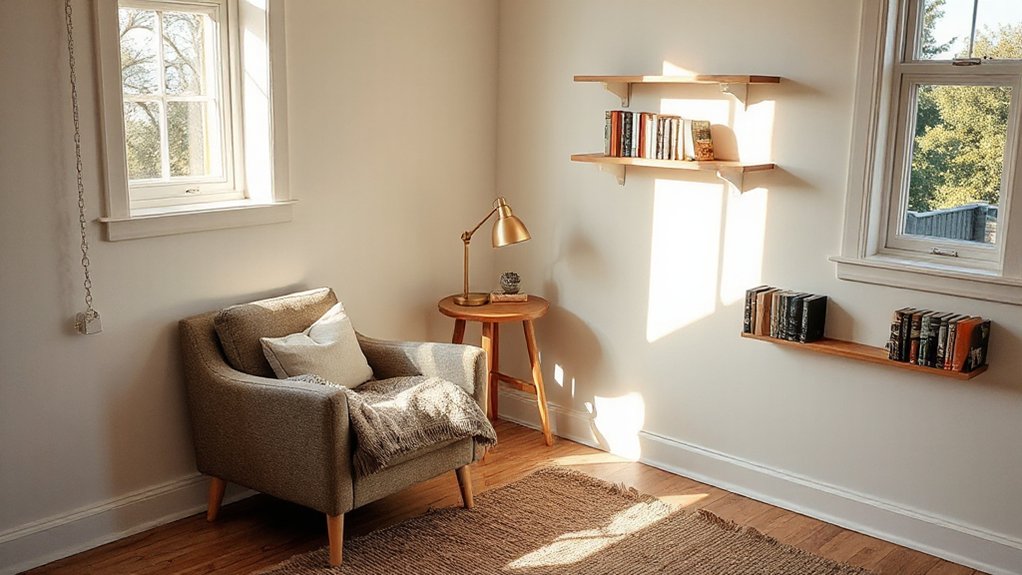
Where’s that one overlooked spot in your home that already feels a little quieter than the rest? Start your corner selection by scouting low-traffic zones: the end of a hallway, a bedroom alcove, or the gap beside a bookcase. Prioritize natural light without glare—east-facing windows often win—then confirm you can control brightness with a shade. Check the wall: you’ll want a clean vertical surface for shelves or art, and nearby outlets for a slim reading lamp or charger. Measure clearances so doors, drawers, and vents aren’t blocked; that’s space optimization, not wishful thinking. Finally, notice acoustics: soft furnishings nearby, rugs, or curtains reduce echo and keep the nook feeling intentionally calm.
Pick Cosy Seating and Plan the Layout
Once you’ve picked a quiet, well-lit corner, lock in seating that fits the footprint and supports how you actually read. In a tight spot, choose an armless slipper chair, compact recliner, or deep pouf; for wider corners, a small chaise or loveseat works. Measure clearance so you can slide in, cross your legs, and still open drawers or doors.
Anchor the layout with a side table at elbow height and keep a narrow pathway clear. Float a slim bookshelf or wall ledge within reach to avoid stack clutter. Add Decorative cushions to tune posture and make the seat look styled, not bulky. Position your chair to face the view or wall art, and angle it to catch Ambient lighting without glare on pages.
Warm up Your Reading Nook With Lighting and Textiles
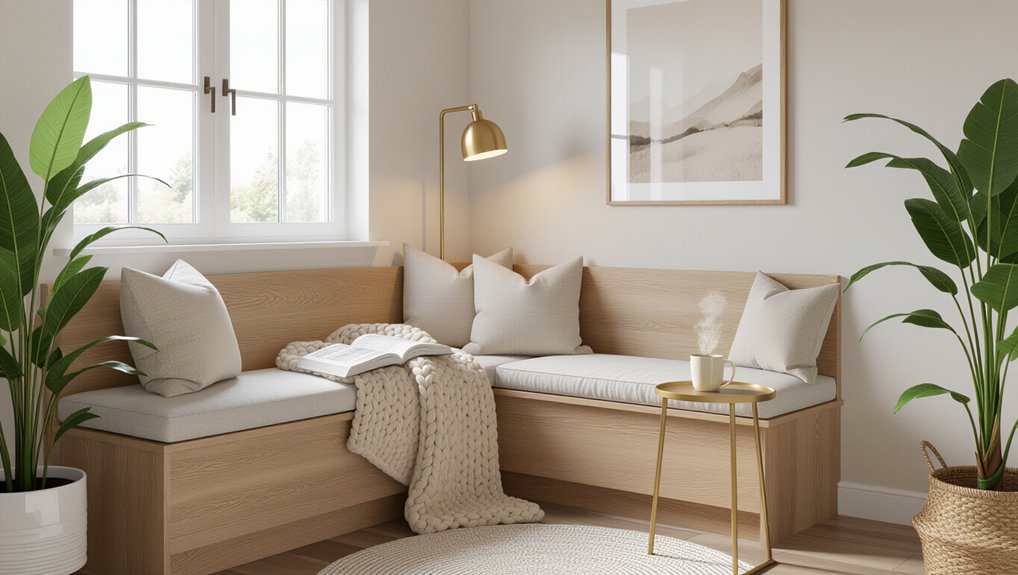
Even if your corner already gets decent daylight, layered lighting and tactile textiles turn it into a true reading zone after dark. Start with a slim floor lamp or wall sconce that doesn’t steal footprint; aim the beam at your pages to cut eye strain. Add a dimmable bulb (2700K–3000K) so you can shift from task brightness to soft, ambient illumination in seconds.
Then dial up comfort with plush textiles that also act as micro-zoning tools. Drape a textured throw over the chair back for grab-and-go warmth, and tuck a small wool or cotton rug under your feet to ground the nook visually. Finish with a lumbar pillow in bouclé or velvet for on-trend depth, without bulk or clutter.
Add Simple Book Storage and Calming Personal Touches
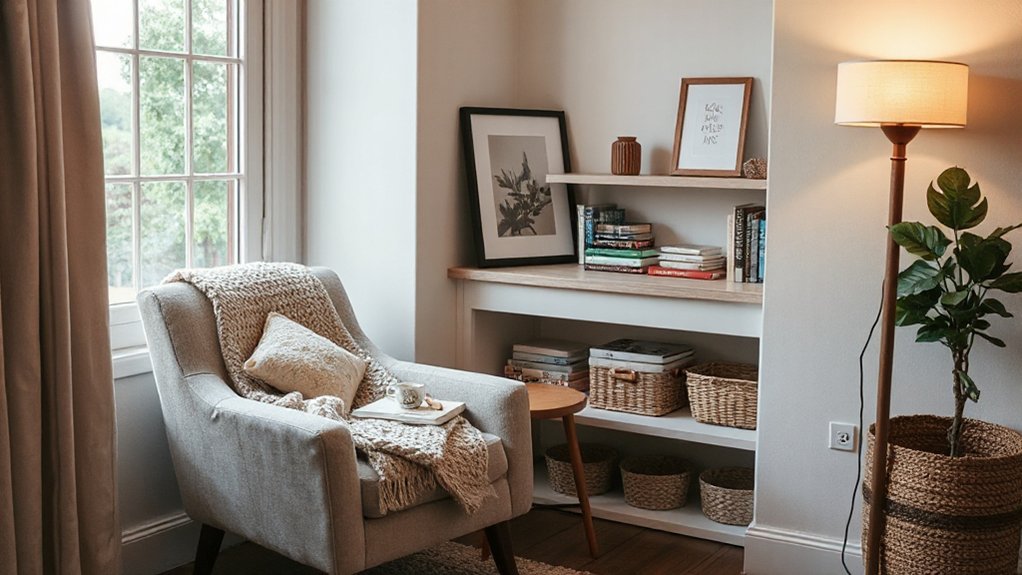
With your lighting and textiles set, keep the nook functional and serene by adding compact book storage and a few calming personal touches. Mount two slim picture ledges to float your current reads without stealing floor space. Tuck a lidded basket under the chair for overflow and quick book organization, then add a narrow rolling cart if the corner can spare 8 inches. Sort by genre or mood and face-cover a few titles for a curated, bookstore feel.Keep personal decor minimal and tactile: a small ceramic tray for tea, a framed print in soft neutrals, and one plant with clean lines. Choose scents lightly—one reed diffuser beats a cluster of candles. Finish with a catchall hook for headphones or a bookmark pouch.
Frequently Asked Questions
How Much Does It Cost to Build a Reading Nook on Average?
You’ll typically spend $500–$3,000 to build a reading nook, depending on built-ins, upholstery, and lighting. For cost estimation and budget planning, price space-savvy storage, trend-conscious textiles, and detail-oriented finishing separately, plus labor.
Do I Need Landlord Permission to Add a Built-In Nook?
Yes—you’ll likely need landlord permission for a built-in nook, even if you worry it’s “no big deal.” Renting restrictions often ban permanent changes. Choose reversible DIY modifications like freestanding benches, peel-and-stick lighting, removable trim.
What Are the Best Plants for Low-Light Reading Nooks?
You’ll do best with Indoor greenery like Low light plants: ZZ plant, snake plant, pothos, cast-iron plant, peace lily, and Chinese evergreen. You’ll tuck them on shelves, use slim pots, and rotate weekly for growth.
How Can I Soundproof a Reading Nook in a Noisy Home?
Use soundproofing techniques: add thick curtains, a dense rug, and acoustic panels. Seal gaps with weatherstripping and a door sweep. Choose noise reduction materials like felt wall tiles and book-filled shelving. Add white-noise.
Are There Safety Tips for Reading Nooks Designed for Children?
Yes—prioritize child safety: I once watched a beanbag “land” like a soft ship after a wobble, reminding me to anchor everything. Choose furniture stability with wall straps, rounded edges, non-slip rugs, cord covers, LED lighting.
Conclusion
You’ve got everything you need to turn that ignored corner into a cosy, design-forward reading nook. Choose a quiet spot, float a compact chair at an angle, and layer a warm throw, tactile cushion, and a soft-glow lamp to make it feel intentional. Add a slim ledge or crate for your current reads and one calming object. Picture converting the dead space by your bay window into a Sunday-morning retreat—coffee, chapters, and calm.
About the Author