

Register early, verify your ID and funds, and review the legal pack and auction conditions line by line with a solicitor. Inspect the property (building, pest, specialists), photograph defects, and price repairs. Set a hard max bid that includes deposit (often 10%), buyer’s premium, taxes, legal fees, and contingency, with cleared funds ready. On auction day, bid only in planned increments and stop if terms change. Win, then sign, pay, insure, and diarise completion—next you’ll see how to execute each step smoothly.
Key Takeaways
- Register early, verify ID and funds, read auction terms and legal pack, and clarify reserve, premiums, deposits, and settlement timelines.
- Inspect the property before bidding, photograph defects, estimate repair costs, and consult a solicitor on title, searches, leases, and special conditions.
- Set a firm maximum bid including fees, taxes, and contingencies, choose the auction format, and decide walk-away triggers before bidding starts.
- Bid calmly using planned increments, monitor timed auctions closely, and stop immediately if conditions change or due diligence remains unresolved.
- If you win, sign immediately, pay the deposit with cleared funds, notify your solicitor the same day, insure if required, and diarise completion deadlines.
How a Property Auction Works (And the Main Formats)

Whether you’re bidding online or in a room full of buyers, a property auction follows a structured, rules-driven process. You’ll register, prove identity and funds, accept the auction conditions, and receive a bidder number or login. The auctioneer sets the opening bid, then you place incremental offers until the hammer falls. Know core auction terminology: reserve price, guide, vendor bid, proxy, buyer’s premium, deposit, and settlement date. Main formats include in-room/live, online timed, and live-stream hybrid; each still enforces binding contracts at the fall of the hammer. Apply disciplined bidding strategies: set a hard ceiling, bid decisively, track increments, and stop when terms or price breach your written limits. Noncompliance can forfeit deposits or trigger penalties.
Choose the Right Property Auction Type for You
How do you pick the auction format that actually fits your risk tolerance, timeline, and ability to act fast? Start by matching the auction’s legal commitment point to your readiness. In an unconditional auction, you’re bound when the hammer falls, so only proceed if your funding, authority to sign, and deposit arrangements are locked. With conditional or “subject to” formats, you may gain limited flexibility, but you must track deadlines precisely and comply with stated conditions. Online timed auctions demand disciplined monitoring and fast execution; in-room auctions reward composure under pressure. Build auction strategies around your max bid and walk-away rules, then apply bidding tactics that fit the format—early signalling, late sniping, or steady increments—while staying within published terms and ID requirements.
Check Comps, Inspections, and the Legal Pack
Before you bid, you’ll verify value by researching comparable sale prices and adjusting for condition, location, and sale terms. You’ll arrange pre-auction inspections to confirm structural, mechanical, and safety issues, then price repairs into your limit. You’ll also review the legal pack line by line—title, searches, leases, special conditions, and completion deadlines—so you don’t accept liabilities you can’t meet.
Research Comparable Sale Prices
Because auction timelines move fast, you’ve got to pin down fair value early by pulling solid comparable sale prices and pressure-testing them against the property’s real condition and legal position. Filter comps to the last 3–6 months, same suburb, similar land size, aspect, zoning, and bed/bath count, then adjust for renovations, parking, views, and corner influence. Don’t rely on asking prices; use settled sales and note whether they were auction or private treaty.
Layer in Market trends by checking clearance rates, days on market, and discounting patterns to confirm momentum. Apply Pricing strategies by setting a strict walk-away price, adding stamp duty, fees, and a contingency, then sanity-checking against lender valuation rules. Cross-read the legal pack for easements, strata levies, and special conditions that affect value.
Arrange Pre-Auction Inspections
Once you’ve narrowed your price range with recent settled comps, lock in pre-auction inspections early so you can confirm the property matches the sales evidence and the legal pack doesn’t hide value-killers. Treat inspection timing as non-negotiable: book the first available slot, then schedule any specialist follow-ups before the auction’s cut-off dates.
Start with a building and pest inspection to verify property condition, moisture, termites, structural movement, drainage, and illegal alterations. Walk through with your inspector, photograph defects, and request itemised repair estimates to stress-test your budget and bidding limit. Confirm access with the agent in writing and keep all reports on file. If the property’s tenanted, check entry notice requirements and plan around them. Re-check on auction week for new damage or changes.
Analyze The Legal Pack
Even if the comps and inspection reports look solid, you still need to treat the legal pack as a risk document, not a formality. Obtain it early and read every page: title, plan, special conditions, zoning certificates, easements, covenants, and any tenancy or strata records. Flag abnormal clauses, auction variations, and short settlement dates that could breach your finance timing.
Don’t rely on the agent’s summary. Arrange a solicitor for Contract review and confirm the vendor’s disclosures match the Legal documentation. Verify deposit amount, default interest, adjustment methods, inclusions/exclusions, and whether the property sells “as is.” Check for outstanding rates, body corporate levies, building notices, contamination, or litigation. If anything’s unclear, request written clarification before bidding, or walk away.
Set Your Budget for the Property Auction (Deposit, Fees, Repairs)
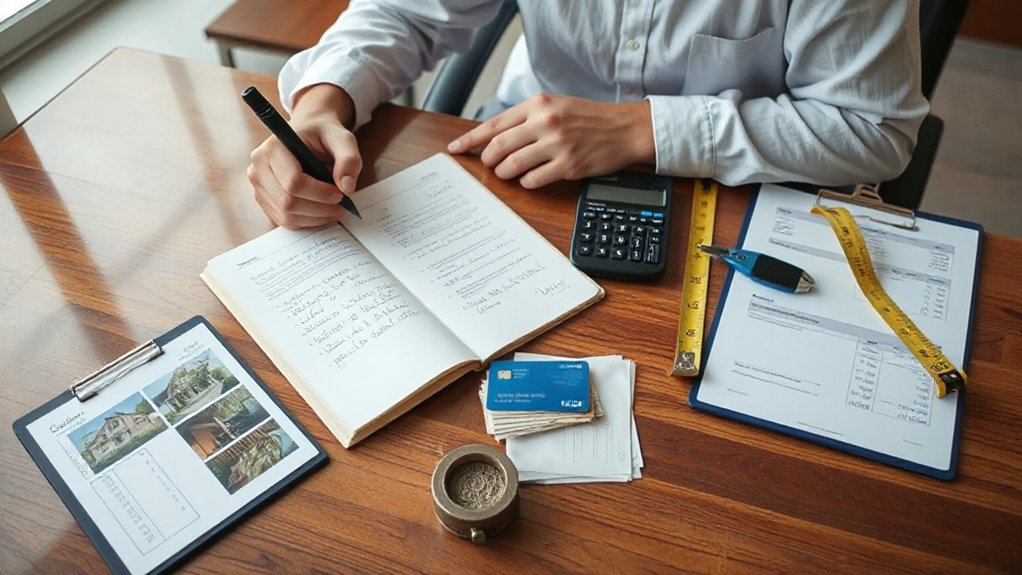
Before you bid, set a hard budget that covers more than the hammer price so you don’t breach auction terms or overcommit. Confirm the required deposit (often 10%) is instantly available, plus any buyer’s premium and the auctioneer’s admin charge. Add SDLT/land transfer tax, legal fees, search indemnities, and lender arrangement costs. Stress-test Financing options early: verify your mortgage offer, bridging facility, or cash funds can complete within the stated deadline, or you risk forfeiture and damages. Base your ceiling on independent Property valuation, not guide price, and factor condition risk. Include survey-led repairs, compliance upgrades, utilities reconnection, insurance from exchange, and contingency (typically 10–15%). Keep funds ring-fenced in cleared accounts for immediate payment on the day.
Bid With a Plan on Auction Day (And When to Walk Away)
Before the bidding starts, you’ll set a hard maximum bid based on your verified budget and documented costs, and you won’t exceed it under any circumstances. You’ll follow a pre-set bidding sequence, confirm each bid against your limit in real time, and stop immediately once you hit it. If the price crosses your maximum, terms change, or required due diligence can’t be confirmed, you’ll walk away without hesitation.
Set Your Max Bid
While the auction atmosphere can pressure you into “just one more bid,” you’ll protect your budget and your compliance obligations by setting a hard maximum bid in writing and committing to it on auction day. Base that ceiling on verified numbers: purchase price plus buyer’s premium, taxes, liens, closing costs, immediate repairs, insurance, and financing fees. Confirm your lender’s limit in writing and account for appraisal gaps or cash-only terms. Your bid strategy should translate these inputs into a single “do-not-exceed” figure, then a planned bid increment schedule so you don’t improvise. Use auction psychology to your advantage: expect rapid-fire calls, competitor posturing, and “anchoring” bids, and stick to your documented limit. Keep your worksheet accessible and have a trusted companion remind you if needed.
Know When To Walk
Even if you’ve done the math and set a firm maximum bid, you still need a walk-away plan because auction-day conditions can change fast and trigger costly, noncompliant decisions. Decide in advance what events end your participation: undisclosed liens, missing disclosures, altered settlement terms, or aggressive vendor bids that exceed your due diligence assumptions.
Use disciplined bidding strategies: bid only in set increments, pause after each counterbid, and don’t chase momentum. Follow auction etiquette by registering properly, bidding clearly, and avoiding collusion, intimidation, or side agreements that can breach auction rules. Walk immediately if the auctioneer changes conditions midstream, you can’t verify the contract, or finance and deposit timelines no longer match your approval. If you’re unsure, stop—silence is a compliant decision.
What to Do After You Win a Property Auction
Once the auctioneer confirms you as the winning bidder, move fast and follow the sale terms exactly: sign the purchase memorandum or contract on-site, pay the required deposit in the approved form (often same-day funds), and collect every receipt and stamped document.
Immediately diarise the completion date and all special conditions. Notify your solicitor or conveyancer the same day and send them the legal pack. Arrange insurance from exchange if required; auctions often make you responsible at once. Lock in post auction financing within the lender’s deadlines and line up valuation and underwriting without delay. Book any compliance checks (ID, AML, source of funds) and prepare cleared balance funds for completion. Plan property management early: secure access, change locks, confirm utilities, and schedule safety certificates before tenants or works. Keep a dated audit trail.
Frequently Asked Questions
Do I Need an Agent or Solicitor to Attend a Property Auction?
You don’t need an agent or solicitor to attend, but you should consult one beforehand. You’ll handle auction financing, contracts, and property inspection deadlines. If you bid, you’re legally bound immediately.
Can I Bid Remotely Online or by Phone if I Can’T Attend?
Yes—you can bid remotely online or by phone, so you don’t need a teleportation license. Complete Online registration early, pass ID/KYC checks, pre-authorise deposits, test connections, and follow Remote bidding terms; auctions record calls, enforce deadlines.
What Identification Documents Do I Need to Register to Bid?
You’ll need government-issued photo ID (passport or driver’s licence) plus proof of address (utility bill/bank statement). For Property registration, meet the auctioneer’s Identification requirements: tax ID/SSN, bidder number form, and deposit/payment card.
Are First-Time Bidders Allowed, and Is There a Minimum Age?
Yes, you’re allowed as a first-time bidder, and you must be at least 18. Like a telegram, confirm local rules. Follow Auction registration requirements, bring valid ID, and heed First time bidder tips: sign disclosures, pay deposits.
How Do I Spot and Avoid Auction Scams or Fake Listings?
Verify the seller and title, and only use official auction channels. Watch for auction red flags: pressure to wire funds, missing inspections, vague terms. Check fake listing signs: copied photos, wrong address, inconsistent records.
Conclusion
You’ve walked the auction like a careful captain steering through fog: you learned the formats, chose your waters, checked charts (comps), inspected the hull, and read the ship’s papers (legal pack). You set a hard spending limit, including deposit, fees, and repairs, and you bid on signal—not impulse. If the sea turns rough, you turn back. If you win, you sign, pay on time, insure immediately, and complete exactly to terms.
About the Author