Start by mapping your day—sleep, study, and chill—then set up zones that match how often you use them. Place your bed where you can control light, keep a charger within reach, and add calm colors. Build a study spot with an ergonomic chair, eye-level screen, and glare-free task light. Create a lounge with floor cushions and hobby storage. Use modular furniture and layered lighting so you can switch modes fast, and you’ll pick up even smarter layout tweaks next.
Key Takeaways
- Audit daily activities and assign clear sleep, study, and chill zones that match routines, frequency, and specific needs.
- Choose a layout that fits room shape, keeping a clear pathway and using corners or bends to separate zones naturally.
- Use flexible, multitasking furniture like loft/daybeds, storage desks, modular seating, and rolling carts to switch modes quickly.
- Define zone boundaries with movable decor like curtains, plants, hooks, and peel-and-stick shelves, and reset storage monthly as needs change.
- Layer ambient, task, and accent lighting on separate controls to support focus, relaxation, and easy mood changes across zones.
Map Teen Bedroom Zones to Daily Routines
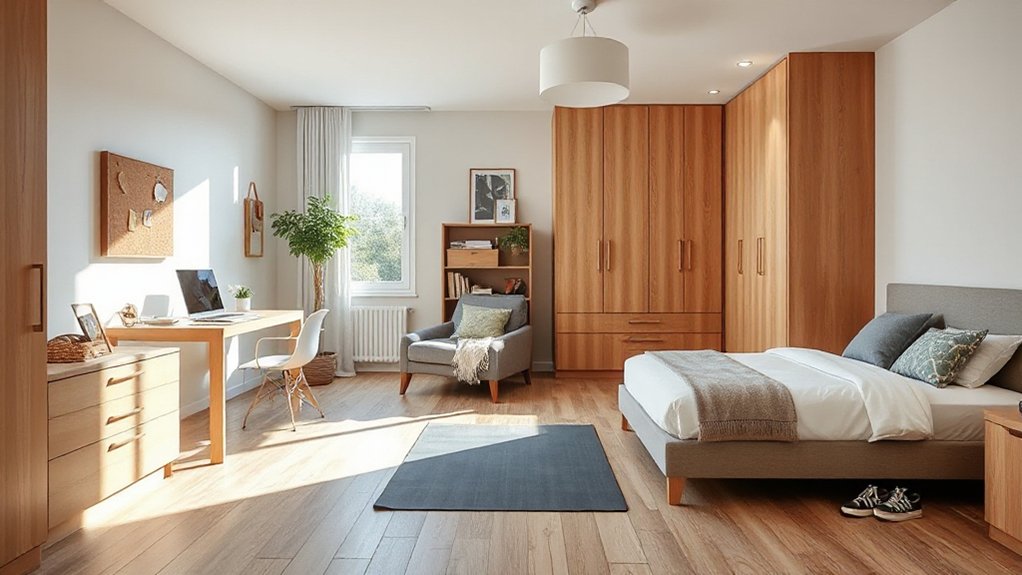
Even if your teen bedroom isn’t huge, you can make it work harder by mapping clear zones to what you actually do every day. Start with your top three routines: sleep, study, and chill. Give each one a “home” so you’re not constantly resetting the whole room.
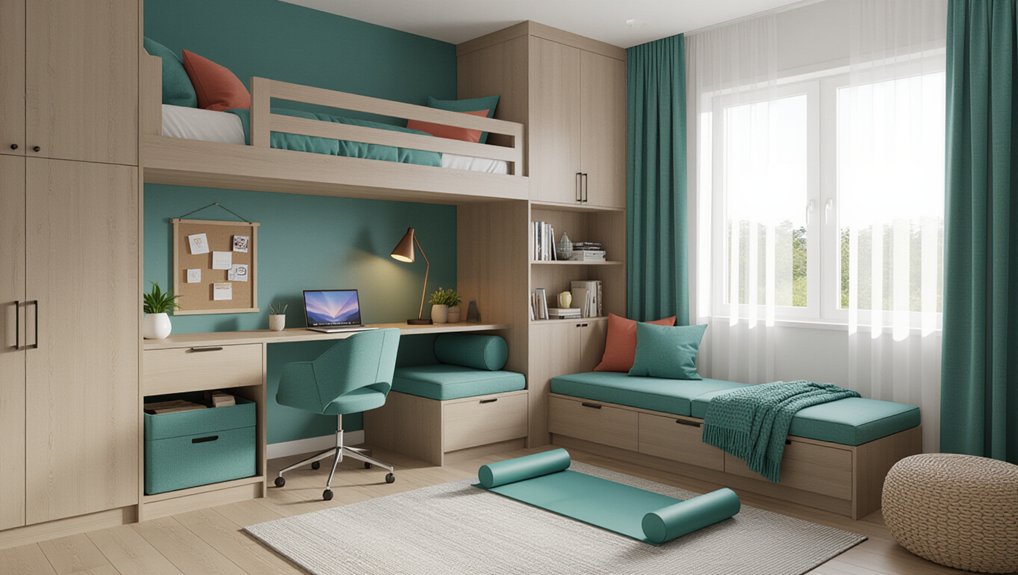
Set a sleep zone with blackout control and a charger spot within reach. Build a study zone around teen bedroom ergonomics: chair height that fits, screen at eye level, and a task light that doesn’t glare. Create a chill zone that flexes—floor cushions, a small shelf for hobbies, and headphones storage. Use color scheme coordination to cue zones fast: calm tones for sleep, crisp contrast for focus, and accent colors for play. Keep pathways open so switching modes feels instant.
Choose a Teen Bedroom Layout by Room Shape
Once you’ve nailed down your sleep, study, and chill zones, the next move is placing them where your room shape actually supports them. In a long, narrow room, run zones in a straight line: bed at the quiet end, desk near the window, chill spot by the door for quick hangouts. In a square room, build a “triangle” layout so you can pivot fast between tasks without crossing clutter lanes.
If you’ve got an L-shape, treat the bend like a natural divider: study in the tucked-in nook, sleep in the longer leg, chill in the open corner. Awkward angles? Use them for visual breaks, then keep a clear center path for Layout flexibility and better flow.
Pick Multitasking Teen Bedroom Furniture First
Start with multitasking furniture so your room can switch modes fast—sleep, study, chill—without feeling cramped. Choose a convertible bed system and a storage-smart desk to keep gear organized and your floor clear. Finish with modular seating you can rearrange for friends, gaming, or solo downtime.
Prioritize Convertible Bed Systems
Because your bed takes up the most floor space, choosing a convertible bed system is the fastest way to make a teen bedroom feel bigger and work harder. Start with convertible beds that switch modes fast: a wall bed that folds up for daytime hangouts, a daybed that flips from lounge to sleep, or a trundle that pops out only when friends crash.
You’ll free up a clear zone for studying, gaming, workouts, or content creation without rearranging the whole room. Look for smooth, one-hand mechanisms, sturdy frames, and comfortable mattresses so you’ll actually use the features daily. If your room’s tiny, go vertical with lofted options that open space beneath. Treat the bed as multi purpose furniture, not just a place to sleep.
Choose Storage-Smart Desks
Where do your laptop, notebooks, chargers, and random life-stuff go when your desk’s also your study zone, gaming station, and content hub? You need a desk that hides chaos fast, so your room can switch modes without a reset.
Choose Smart storage built in: a shallow top drawer for cords, a deeper file drawer for class binders, and a shelf or cubby for your console, router, or sketchbooks. Go vertical with a pegboard or hutch to free up legroom and keep essentials in reach. Prioritize ergonomic desks with adjustable height or a keyboard tray so your wrists and shoulders don’t pay the price during long sessions. Pick clean cable routing, rounded edges, and a slim footprint to keep your zone flexible.
Add Modular Seating Options
Even if your room’s not huge, modular seating lets you switch from solo study to friends-hangout mode in seconds without rearranging everything. Start with a compact ottoman cube that doubles as a footrest, side table, or hidden storage. Add a two-piece floor sofa or sectional that you can split into chairs for gaming, then push together for movie night. Choose lightweight pieces with grippy bases so they don’t slide, but you can still move them fast. Look for stackable poufs that tuck under your desk zone when you need clear floor space. This kind of versatile seating supports flexible arrangements, so your room adapts to your mood, your schedule, and whoever’s over tonight. Keep colors neutral, swap covers seasonally.
Create a Teen Bedroom Homework Zone That Sticks
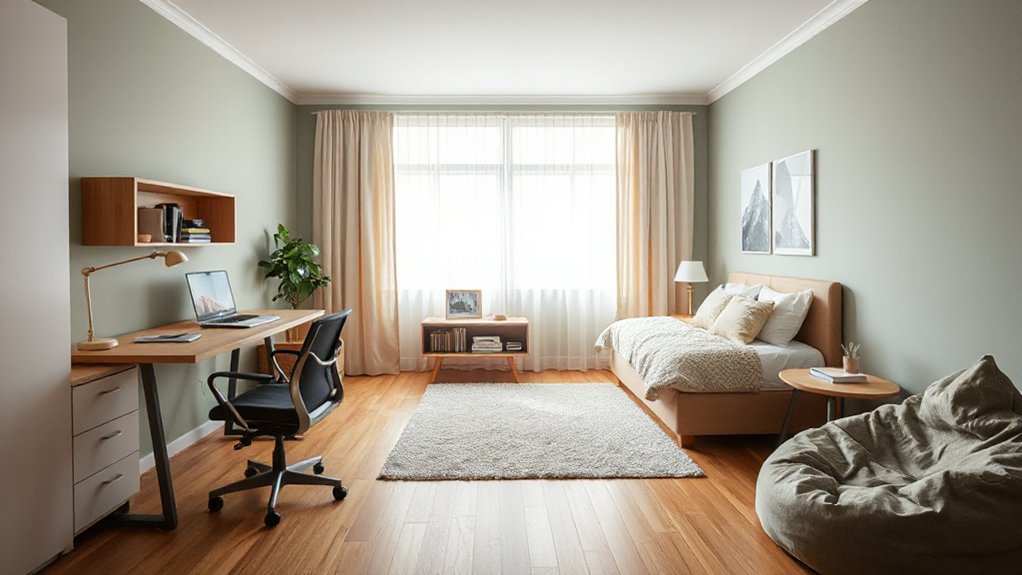
If you want homework to actually happen at home, you need a zone that feels intentional, not like a laptop dumped on the bed. Claim one corner with a compact desk or wall-mounted surface, then anchor it with a task lamp and a comfortable chair that tucks in fast.
Keep supplies within arm’s reach: a rolling caddy, slim drawer unit, and a pinboard for deadlines. Manage wires with clips so your charger isn’t always missing. Add Creative wall art above the desk to set the vibe without stealing focus, and layer in Personal decor like a photo strip or mini plant to make it yours. Choose a neutral backdrop, then use one bold accent color for folders and organizers. You’ll sit down quicker and stay on track.
Build a Lounge Zone for Friends and Downtime
Because your room can’t be all grind and no chill, carve out a lounge zone that makes hanging out and recharging feel effortless without taking over your whole floor plan. Anchor it with a compact futon, floor cushions, or a beanbag that slides under your bed when you need space back. Add a small rolling table for snacks, controllers, and notebooks, then stash extras in lidded bins so cleanup takes two minutes.
Keep it friend-ready but still yours: use Personal decor like a pinboard, album covers, or a framed poster wall that feels curated, not cluttered. Define privacy zones with a curtain, tall plant, or open shelf so guests know where to sit and where not to roam. Set clear boundaries, stay comfortable, and reset fast.
Layer Teen Bedroom Lighting for Each Activity
You can make one teen bedroom work for studying, gaming, and chilling by stacking lighting layers that switch fast. Start with ambient light to set the baseline, then add task lighting where you read, write, or do makeup so you’re not stuck in shadows. Finish with accent lights—LED strips, a small lamp, or wall washes—to flip the mood when the zone changes.
Ambient And Task Layers
While one overhead light can technically brighten the room, it can’t keep up with homework, gaming, getting ready, and winding down. Build an ambient base with a dimmable ceiling fixture or wall-mounted wash that spreads light evenly across your zones, so the room feels bigger and you can switch modes fast.
Then stack task lighting where you actually do stuff: an adjustable desk lamp aimed at your notebook, a monitor light bar to cut screen glare, and a mirror-side light that shows true skin tones. Use color psychology to pick neutral-to-cool white for focus and accurate color. Add acoustic treatment panels near your desk or gaming corner; they reduce echo, so you can keep lighting lower without feeling overstimulated. Put everything on separate switches.
Accent Lighting For Mood
With your ambient and task layers on separate switches, accent lighting becomes the mood engine that flips your room from “get it done” to “hang out” in seconds. Run LED strips behind your headboard, under a floating shelf, or along closet tracks to carve out zones without adding furniture. Put them on a dimmer or smart plug, then save presets for study, gaming, or sleep.
Match brightness and hue to your Color schemes: warm amber for chill, cool white for focus, saturated color for playlists and friends. Aim mini spotlights at Wall art to make your gallery wall feel curated, not cluttered. Use clip-on puck lights inside cubbies to highlight gear, and keep glare off your screen by bouncing light off the wall.
Refresh Teen Bedroom Zones as Needs Change
As your schedule, hobbies, and vibe shift, your bedroom zones should shift too. Audit what you actually do: late-night studying, gaming, content creating, or just crashing. Then resize each zone so it earns its footprint—pull your desk closer to outlets, swap a chair for floor cushions, or clear a corner for stretching.
Lean on flexible furniture: a rolling cart for supplies, a fold-down desk, nesting tables, or an ottoman that hides clutter. Keep adaptable decor in rotation—removable hooks, peel-and-stick shelves, clip-on art rails, and pillow covers that change the mood fast. Reset monthly: donate what you’ve outgrown, relabel bins, and re-route cords. Your room stays ready for the next phase, not stuck in last semester.
Frequently Asked Questions
How Can I Soundproof Zones for Music Practice or Gaming?
Use soundproofing materials like door sweeps, weatherstripping, thick rugs, and heavy curtains, then add acoustic paneling on shared walls. You’ll tighten gaps, absorb noise, and keep your practice or gaming zone low-key.
What Are the Best Teen-Safe Storage Options for Valuables and Electronics?
You’ll want lockable Storage solutions like a small anchorable safe, lockbox drawer insert, and cable-managed charging drawer. Add Security safeguards: hidden AirTag, surge-protected power strip, and a decoy box. Keep it modular, moveable.
How Do I Incorporate Smart Home Devices Without Cluttering the Room?
Keep it lean: mount hubs, hide cables, and go wireless so you don’t reinvent the wheel. Use Smart lighting with one wall switch, and park Voice assistants on a shelf; automate routines, minimize extras.
Which Paint Finishes Withstand Frequent Redecorating and Wall Decals?
Choose eggshell or satin for paint finish durability—they shrug off scrapes and let you swap Wall decal designs with less peeling. Skip flat. Use scrubbable, stain-resistant formulas and prime well, so updates stay quick and clean.
How Can I Personalize Zones While Keeping the Room Rental-Friendly?
You can personalize zones and stay rental-friendly by using removable Decorating themes—tapestries, peel-and-stick art, and rugs—and modular furniture. Add plug-in Lighting solutions like LED strips, floor lamps, and clip lights; avoid holes.
Conclusion
You’ve just turned your teen bedroom into a shape-shifting stage: study spotlight, chill cave, hangout hub. When you map zones to your routines, your space stops fighting you and starts flowing. Keep furniture multitasking like a Swiss Army knife, and let lighting act like mood music you can control. As you change, your zones can, too—swap, slide, remix. Your room isn’t fixed; it’s a playlist you keep updating.
About the Author