Start by mapping your pet’s real risk zones—shedding spots, scratch points, and accident areas—then build easy-clean stations with an “oops kit” and washable runners near entries. Choose tight-weave performance fabrics (Crypton-style, microfiber, solution-dyed blends) in mid-to-dark tones, plus removable slipcovers. Use porcelain tile or slip-resistant LVP in mudrooms, and cushioned low-pile options in living spaces. Finish trim with scrub-resistant enamel, add doorstops, and hide supplies in pull-outs. Keep going for room-by-room upgrades.
Key Takeaways
- Walk through each room to identify pet risk zones, then prioritize easy-clean setups near entryways, bowls, litter boxes, and favorite perches.
- Choose durable, easy-clean textiles like tight-weave performance fabrics, mid-to-dark patterns, and removable washable slipcovers to hide fur and stains.
- Use scrub-resistant low-sheen wall paints, cabinet-grade enamels, and satin/brushed metal hardware with doorstops and soft-close hinges to prevent wear.
- Install water-resistant, slip-resistant flooring in entries, and pair resilient hard floors with washable rugs or low-pile carpet tiles for comfort and cleanup.
- Create stylish pet zones with tailored beds, concealed feeding stations, and pull-out storage for leashes and toys to keep clutter hidden and décor cohesive.
Set Your Pet-Proofing Priorities (Fur, Claws, Accidents)
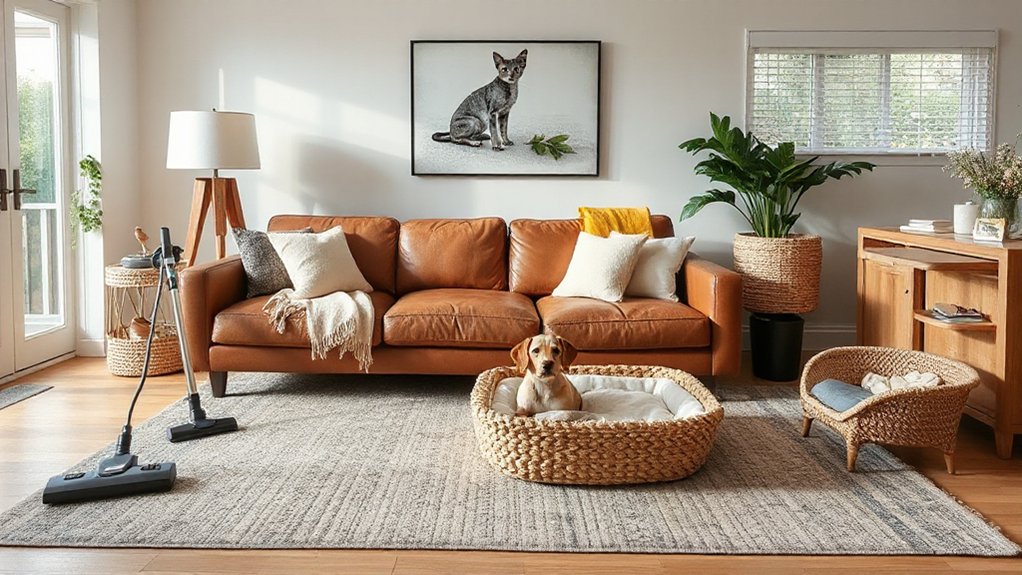
Before you buy new upholstery or swap out flooring, decide what you’re actually designing against: fur that clings and drifts, claws that scratch and snag, or accidents that stain and linger. Walk your rooms like your pet does—where they launch, nap, dig, and sprint—and rank the real risks. If Fur shedding is your daily battle, prioritize easy-clean zones near entryways and favorite perches, and plan storage for rollers, throws, and a vacuum that’s always plugged in. If claws are the issue, build in Claw protection with scratch posts by sofas, trim-friendly rugs, and door mats that take the abuse. If accidents happen, map quick-access cleaning kits and choose layouts that keep water bowls and litter away from traffic.
Pet-Friendly Fabrics That Look High-End
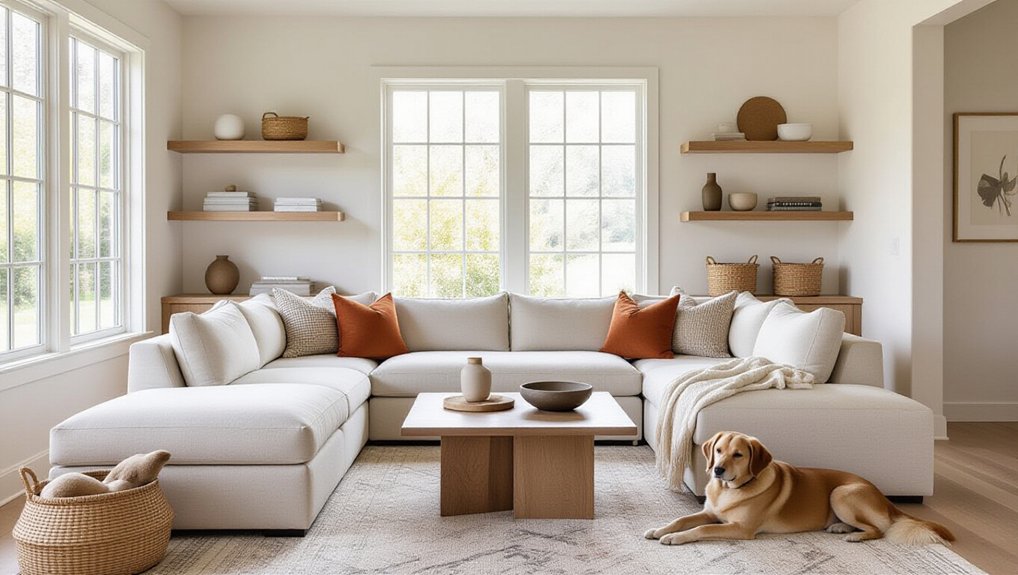
Once you’ve named your biggest threats—fur, claws, or accidents—you can choose fabrics that don’t just survive pets, they still read polished and expensive. Start with tight weaves and performance blends: solution-dyed acrylic, high-rub polyester, or Crypton-style upholstery that resists stains and cleans fast with water-based sprays. For Luxury textures without the stress, pick velvet-look performance microfiber, bouclé in heathered tones, or chenille with a low loop that won’t snag. Favor Durable textiles in mid-to-dark solids, small-scale patterns, or tweeds that camouflage shedding and paw prints. Add removable, tailored slipcovers so you can wash and reset the room in minutes. Finish with leather or faux leather accents for wipe-clean elegance, but avoid distressed hides that show scratches.
Pet-Friendly Flooring by Room (Mudroom to Bedroom)
Start at the mudroom and entry, where you’ll want tough, water-resistant floors that shrug off muddy paws and scratching claws while still looking polished. You can choose textured, easy-clean surfaces with slip resistance so your pet gets traction and you spend less time mopping. Then shift to the bedroom, where you’ll prioritize quiet, cushioned comfort underfoot that feels cozy for you and gentle for their joints.
Mudroom And Entry Floors
Where do muddy paws and dripping leashes land first? Your mudroom and entry need floors that handle Outdoor access without looking like a utility zone. Choose porcelain tile or luxury vinyl plank with a textured, matte finish so scratches and water spots don’t show, and traction stays high for Pet safety. Seal grout, skip high-gloss, and use stain-resistant, low-pile runners with non-slip pads for quick washing. Add a recessed coir mat outside and an absorbent mat inside to trap grit before it spreads. For style, run the same flooring into the hall and use a contrasting border tile to define the drop zone. Keep thresholds flush to prevent trips and snagged nails.
Bedroom Flooring Comfort
After you’ve handled the grit and splash zone at the entry, the bedroom should feel quieter and softer underfoot—without turning into a fur magnet. Choose bedroom flooring options that buffer sound and stay easy to clean: low‑pile carpet tiles, cork, or quality luxury vinyl with an attached pad. Skip shag and loose weaves; they trap dander and snag claws.
Balance comfort vs. durability by pairing a resilient hard surface with a washable rug. Cork feels warm and absorbs impact for aging pets, while vinyl resists accidents and won’t stain. If you want carpet, go for solution‑dyed fibers and a moisture‑resistant pad, then keep a handheld vacuum nearby. Add a runner by the bed so paws land softly, not slippery.
Scratch-Resistant Paints, Trim, and Hardware
Even if you’ve trained your pets well, claws and teeth will still test your surfaces, so it pays to specify finishes that can take a hit and still look polished. Choose Scrub-resistant, low-sheen enamels for walls and opt for Scratch resistant coatings on door frames, baseboards, and window sills where dogs brush by and cats launch. On trim, a waterborne alkyd or cabinet-grade enamel cures harder than standard latex and cleans up without dulling.
Upgrade touchpoints, too. Pick durable hardware with solid metal pulls and levers, not hollow knobs that loosen under paw bumps. Use satin or brushed finishes to hide micro-scratches, and add doorstops to prevent gouges. For cabinets, install soft-close hinges to reduce slam marks and chipped paint.
Stylish Pet Zones: Beds, Crates, and Litter Boxes
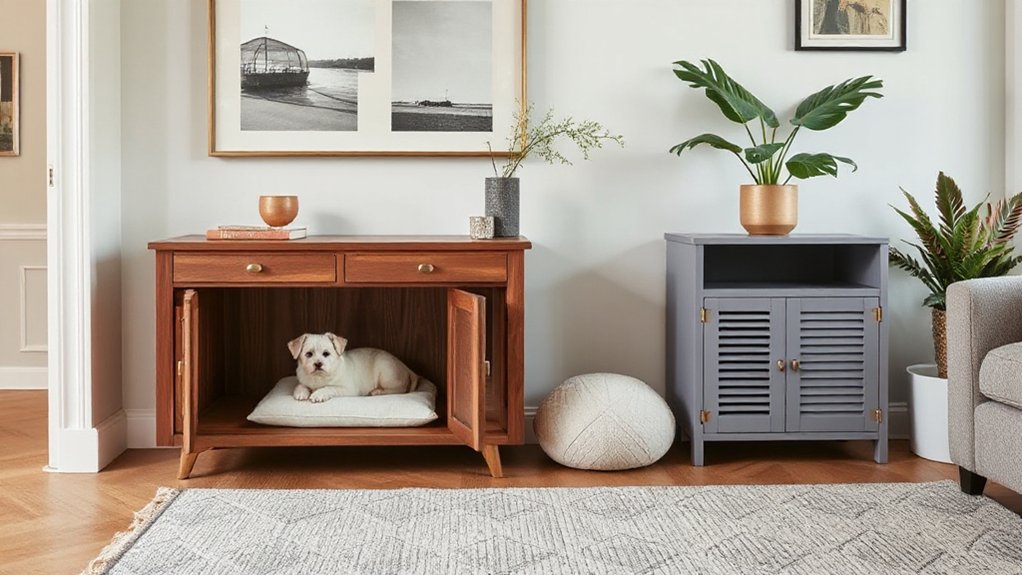
Durable finishes keep scratches from stealing the spotlight, but your space still needs dedicated pet zones that look intentional, not improvised. Anchor them where your pet naturally settles—near your sofa, by a sunny window, or beside your desk—so you’re not fighting their habits. Choose Stylish pet beds with tailored upholstery, removable covers, and colors pulled from your rug or curtains.
For crates, treat them like furniture: pick a clean-lined wood or metal frame, add a washable pad, and place it where traffic won’t stress your pet. Use a slim mat underneath to catch crumbs and fur. For cats, modern litter boxes with high sides and filtered lids look sharper and reduce scatter; position them in a quiet corner with good ventilation.
Hide Pet Supplies With Built-In-Looking Storage
You can keep your space looking tailored by making pet storage read like built-ins, not clutter. Tuck bowls into a pull-out drawer or flip-up cabinet for a disguised feeding station that’s easy to clean and quick to access. Add a slim console or bench with hidden compartments so leashes, toys, and treat bags stay out of sight but always within reach.
Disguised Feeding Stations
Where do the bowls, kibble bins, and treat jars go when you want a clean, designer look? You tuck them into cabinetry that reads like millwork, not “pet zone.” Install integrated feeding stations inside a base cabinet or island end panel, with a pull-out drawer that holds bowls at the right height and slides away after meals. Add a wipeable liner and a slim toe-kick vent to reduce odor buildup. For dry food, choose disguised food dispensers that mount inside a pantry door or drawer front, so you portion quickly without leaving bags out. Match hardware and paint to surrounding fronts, and use a quartz or stainless inset for splash control. Your pet eats comfortably, and your kitchen stays polished.
Concealed Leash And Toy Storage
How do you keep leashes, harnesses, and the ever-growing toy pile from hijacking your entryway? Build it into what you already have. Add a slim cabinet beside the door with a pull-out peg rail and a small drip tray, so damp leads don’t touch your walls. For hidden leash storage, tuck hooks inside a tilt-out panel or behind a mirror-front door; you’ll grab gear fast, and it’ll disappear just as quickly. Below, install a bench with lift-up seating and divided bins for balls, tug ropes, and treats. Choose wipeable finishes and soft-close hinges to keep noses safe and noise down. Label bins by pet, rotate toys weekly, and keep a lidded “laundry” bin nearby for droolies. These toy organization solutions stay chic.
A Simple Daily Routine for Hair, Odors, and Messes
Although pet hair, lingering odors, and surprise messes come with the territory, a quick daily reset keeps your home looking polished without fighting a losing battle. Start with five minutes of Grooming routines: brush your pet near the entry or a washable runner, then empty the brush straight into a lidded bin. Next, do a fast floor pass—rubber broom on rugs, microfiber mop on hard surfaces, and a lint roller on sofas and pillows. For Odor control techniques, swap water in bowls, wipe feeding mats, and mist fabrics with an enzyme-safe refresher. Open windows for ten minutes, then run a quiet air purifier. Finally, keep a small “oops kit” handy: paper towels, enzyme cleaner, and a stain pen for upholstery. Reset done.
Frequently Asked Questions
What Houseplants Are Toxic to Pets, and What Are Safe Alternatives?
Check this Toxic plant list: lilies, pothos, philodendron, sago palm, aloe, jade, and snake plant can poison pets. Choose Pet safe plants like spider plant, calathea, areca palm, parlor palm, and Boston fern.
How Can I Introduce New Furniture Without Stressing a Rescue Pet?
It’ll feel like a tidal wave at first, so introduce pieces slowly, letting your rescue pet sniff and retreat. Stage Furniture placement to preserve safe paths, and choose Pet friendly fabrics to reduce odors, noise, and anxiety.
What’s the Best Way to Reduce Pet Noise in Apartments?
For Pet noise reduction, you’ll layer rugs, add thick curtains, and use door draft stoppers for Apartment soundproofing. You can place felt pads under crates, add wall art panels, and reinforce calm routines.
How Do I Prevent Dogs From Marking Corners and Baseboards?
Stop marking by cleaning with enzymatic cleaner, blocking access, and reinforcing potty routines. Use Training boundary markers to redirect. Apply Pet proofing fabrics or corner guards on baseboards, and supervise indoors until you’ve built consistency.
Which Pet Cameras Blend Into Decor Without Looking Like Surveillance?
You’ll like pet cameras that disguise as table lamps, picture frames, or minimalist speakers; choose matte neutrals and wood finishes. Pair with smart lighting for night checks, and stash cords in hidden storage to keep paws safe.
Conclusion
You don’t have to choose between runway‑ready rooms and real‑life pets. When you set pet‑proofing priorities, lean into luxe, hard‑wearing fabrics, and pick flooring that laughs at mud, you create a home that feels impossibly polished. Add scratch‑smart paint, tough trim, and hardware that won’t flinch. Define chic pet zones, tuck supplies into built‑in‑looking storage, and follow a quick daily reset—suddenly fur, odors, and accidents feel almost fictional.
About the Author