
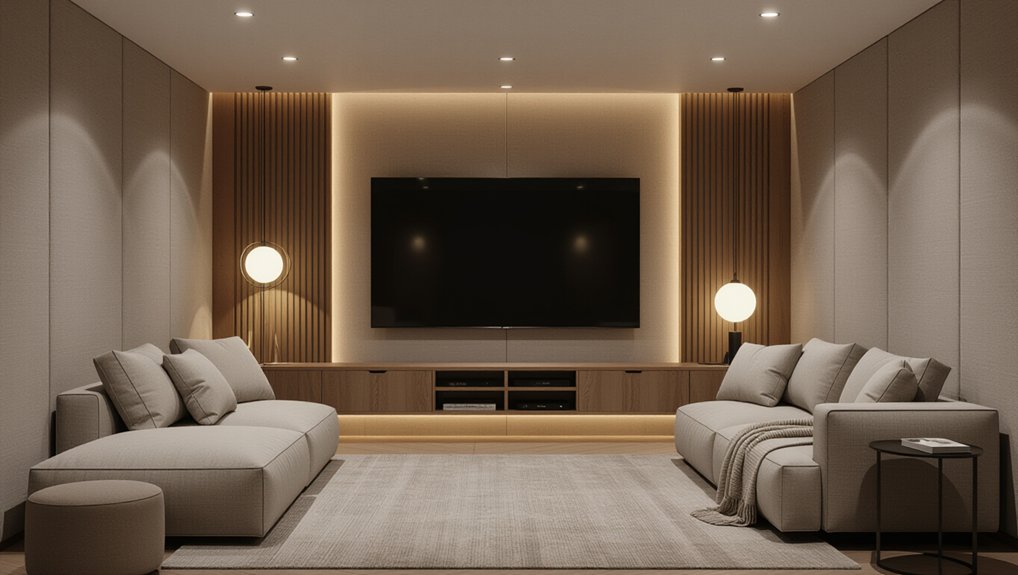
Start by clapping to spot slap echo and playing steady bass to find corner boom, then set goals like clearer dialogue and smoother surround without cranking volume. Lay down a thick plush rug with a dense pad to calm mid/high reflections. Hang lined, heavy curtains high and wide to soften glare and reduce outside noise. Angle seating and add fabric furniture or off-center bookcases to break bounce. Finish with broadband panels at reflection points—and there’s more you can fine-tune next.
Key Takeaways
- Identify slap echo, bass buildup, and early reflections by clapping, playing steady bass, and shifting seating to spot problem areas.
- Set clear goals like clearer dialogue, smoother bass, and reduced outside noise to guide treatment choices and room layout.
- Add a large thick rug with a dense pad to absorb mid/high reflections and make the seating area feel calmer.
- Use lined, heavy curtains hung high and wide to tame reflections, reduce echo, and improve movie comfort without harshness.
- Install broadband panels at reflection points and seal doors/windows with weatherstripping to improve clarity and block distracting noise.
Find the Biggest TV Room Acoustics Problems
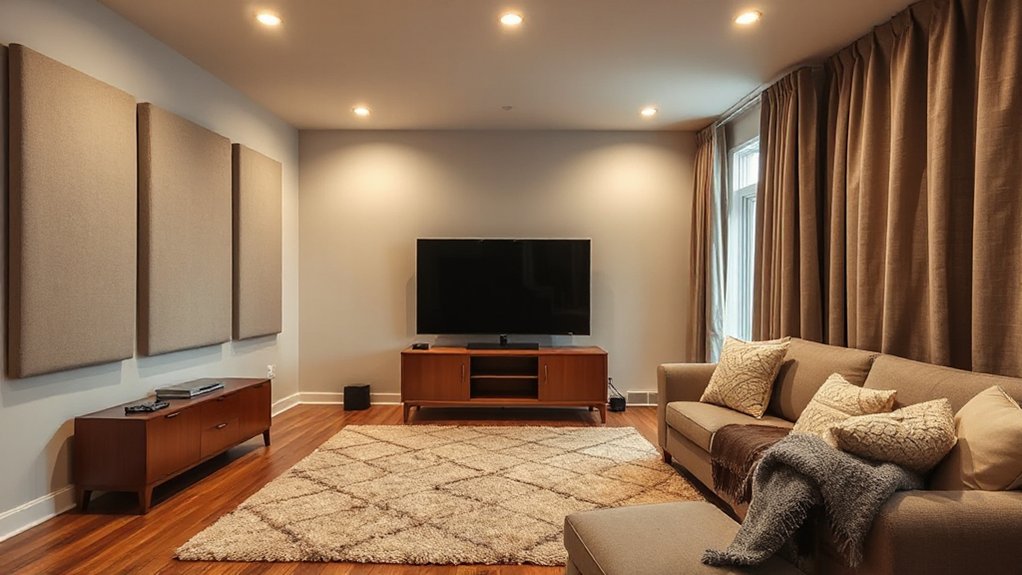
Before you add panels or plush furnishings, pinpoint what’s actually making your TV room sound tense: hard, reflective surfaces that trigger slap echo, bare corners that amplify bass buildup, and parallel walls that cause dialog to feel sharp or smeared. Walk the room and clap once; if you hear a quick “zing,” glass, tile, and painted drywall are dominating. Play steady bass and listen at corners and along the back wall; boomy spots reveal modal buildup. Sit in your main seat and shift a foot left or right; if voices change fast, reflections are arriving early. Check speaker placement too: tweeters firing at bare sidewalls or a low console can smear imaging. Note leaky doors or HVAC paths when considering soundproofing techniques.
Set Clear Goals for Calmer TV Room Sound
Now that you’ve identified where echo, bass boom, and early reflections come from in your room, set goals that describe the sound you want—not just the products you might buy. Decide how quiet “relaxing” should feel: lower outside noise, tighter dialogue, or smoother surround effects. Rank priorities, because each target needs different moves. If you want less neighbor bleed, focus on Soundproofing techniques like sealing air gaps, adding mass, and decoupling surfaces. If you want clearer speech and less glare, choose Acoustic treatment options that control reflections and tame low-frequency buildup. Set measurable aims: reduce ringing on claps, keep bass even at your seat, and hold volume lower without losing detail. Write them down, then match materials accordingly.
Start With Rugs to Reduce TV Room Echo
Start with the floor, because it’s a big, hard reflector that feeds fluttery echo back into your room. Choose a thick, plush rug with a dense pile and solid pad so footsteps and TV sound lose their edge on contact. Then size up to a large area rug that covers most of the seating zone, so you quiet the whole space instead of just a strip of floor.
Choose Thick, Plush Rugs
Because hard floors bounce sound like a drumhead, a thick, plush rug is one of the fastest ways to calm TV-room echo. You’ll hear dialogue tighten up and harsh reflections soften as the pile absorbs mid and high frequencies that usually ricochet between floor and ceiling. Aim for dense, cushy construction—tufted or woven with a substantial pile height—so footsteps and bass thumps feel less sharp.
Make smart Rug material choices: wool stays springy, dampens noise well, and resists crushing; high-pile synthetics can work, but choose heavier weights for better absorption. Add a quality rug pad to stop slippage and add another sound-damping layer. If you want style, pick Decorative rug patterns with textured weaves; they break up reflections without sacrificing a calm, grounded look overall.
Add Large Area Rugs
While you could chase echo with gadgets, a large area rug delivers the most immediate, room-wide change by covering the biggest reflective surface in your TV zone. Stretch it beyond the sofa’s front legs and under the coffee table so footsteps, bass bloom, and dialogue reflections get trapped in fibers instead of bouncing off bare flooring.
Pick a dense pile with a quality pad; the pad matters because it adds decoupling and air volume for better midrange absorption. Aim for wool or tightly woven synthetics that won’t shed into vents. If you’ve got hard edges elsewhere, balance the rug with Decorative wall art that uses canvas or felt backing, and cluster Indoor plants in heavy pots to break up flutter echoes. You’ll hear tighter dialogue and a calmer, less “live” room.
Use Curtains to Soften Reflections and Noise
Even if you don’t change a single speaker setting, the right curtains can noticeably calm a TV room by absorbing and diffusing the hard reflections that bounce off glass and bare walls. Prioritize Curtain thickness: lined drapery, velvet, or densely woven cotton performs better than sheer panels, especially over large windows. Hang them high and wide so the folds stay deep when drawn, increasing surface area for absorption and taming slap echo. Add a ceiling-to-floor drop to reduce edge gaps where sound leaks and bounces. Choose Fabric color with intention: darker, heavier dyes often indicate tighter weaves, while pale, open weaves tend to reflect more. If you need daylight, layer sheers behind thicker curtains and close the heavy layer for movies.
Arrange Furniture to Break Up Sound Bounce
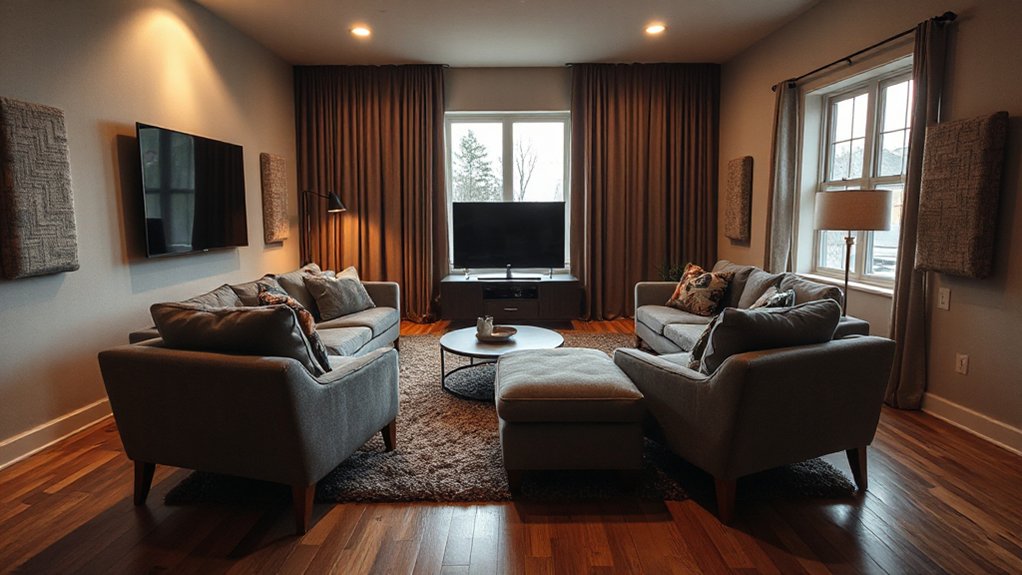
Curtains handle a lot of the glass-and-wall splash, but your furniture can do just as much to stop sound from ricocheting around the room. Start with furniture placement that breaks parallel paths: angle the sofa slightly, or float it off the back wall to reduce slap-back. Use a deep, fabric-upholstered couch and a plush chair to absorb mid and high frequencies, then add a dense rug under the main seating to tame floor bounce. Put a bookcase or media console on a side wall, not centered, so irregular edges create sound diffusion instead of a clean reflection. Keep hard, flat surfaces from facing each other; stagger tables and lamps so reflections scatter, and the room stays calm.
Add Acoustic Panels That Match Your Decor
Once you’ve softened the room with fabrics and smart placement, add acoustic panels to catch the reflections furniture can’t. Choose broadband panels with mineral wool or PET felt cores for smooth midrange control and cleaner dialogue. For Decor matching, wrap them in upholstery fabric that echoes your sofa, curtains, or rug, or pick wood-slat fronts that blend with shelving and warm the look while taming flutter echo. Place panels at first reflection points beside and above the screen, plus one or two on the rear wall to calm slapback. During Panel installation, mount with Z-clips or French cleats so they sit tight and level, leaving a small air gap for extra low-mid absorption. Keep spacing symmetrical for a settled, quiet feel.
Seal Doors and Windows to Keep Noise Out
Acoustic panels tame reflections inside the room, but outside noise can still leak in through tiny gaps around doors and windows and pull you out of the movie. Start with the door: add perimeter weatherstripping and a dense door sweep that brushes the threshold without dragging. If your door feels hollow, upgrade to a solid-core slab for steadier mass and less rattle.
For windows, use compressible foam tape on sash gaps, then hang heavy, tightly woven curtains or lined drapes that seal against the wall. If street noise is stubborn, add an interior acrylic storm panel with a magnetic or gasketed frame to create an air gap. These soundproofing techniques and noise isolation methods quiet the hiss and thump so the room stays calm and focused.
Re-Test TV Room Audio After Acoustic Changes
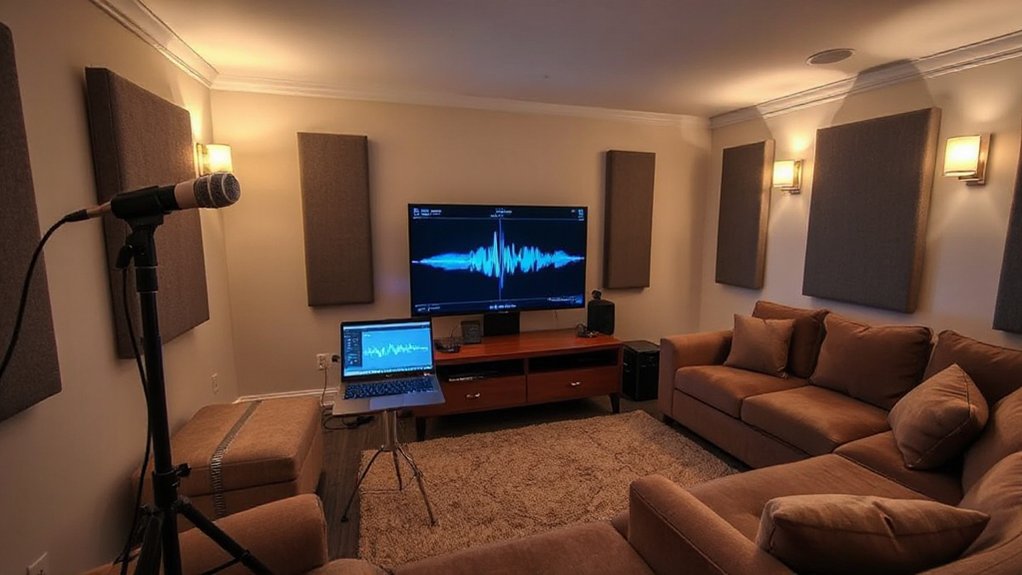
After you’ve sealed gaps and added soft surfaces, re-test the room’s sound so you can hear what changed and what still needs work. Play a familiar dialogue scene, then a bass-heavy track, at your normal volume. Listen for flutter echo, boomy corners, or harsh sibilance; those clues tell you where fabric, foam, or wood diffusion still belongs.
Next, revisit speaker placement. Move the fronts a few inches at a time, keeping them equal from side walls, and recheck imaging from your main seat. If the center channel sounds boxy, tilt it toward ear height or add a thin felt pad under the cabinet. Measure with a simple SPL app to confirm balanced levels and calmer sound quality.
Frequently Asked Questions
How Do Acoustic Upgrades Affect Surround Sound Calibration and Speaker Placement?
Acoustic upgrades reduce reflections, so you’ll revisit Speaker positioning and make calibration adjustments for timing, levels, and EQ. Absorbers tighten imaging; diffusers smooth ambience. You’ll often toe-in less, shift surrounds, and remeasure.
Can I Soundproof the TV Room Without Permanent Changes for Renters?
Yes, you can—soft layers, not hard construction. Hang Decorative wall panels with removable strips, add thick rugs and curtains, use door sweeps, and place Acoustic art installations. These absorb chatter, tame bass, and keep calm.
What Acoustic Materials Are Safest for Allergies, Pets, and Indoor Air Quality?
Choose low-VOC mineral wool or recycled PET panels wrapped in Eco friendly fabrics, and seal or mount them with Non toxic adhesives. You’ll reduce dust, dander, and off-gassing. Avoid foam that sheds or smells.
How Can I Reduce Bass Boom Without Adding Bulky Panels or Bass Traps?
You’ll cut bass boom by shifting speakers and seating off room-center, adding thick rugs and heavy curtains, and using Wall art on standoffs. Decorative furnishings like plush sofas and bookcases break up resonances, too.
Will Acoustic Treatments Change My TV Room’s Lighting, Heat Retention, or Airflow?
Acoustic treatments won’t drastically change lighting, heat retention, or airflow, but they can subtly affect each. Decorative wall panels may dim reflections; Acoustic ceiling tiles can insulate slightly. Keep vents clear, and choose light fabrics.
Conclusion
You’ve tackled the biggest acoustic offenders, but test the theory that “soft equals quiet.” It’s only partly true: plush rugs and curtains tame flutter echo, yet low bass still slips through unless you add mass, sealing, and tuned panels. Now you’ll hear dialogue sit forward, not fight the room. Walk the space, clap, and replay a familiar scene. If the sound feels anchored and easy, you’ve built calm into the materials.
About the Author