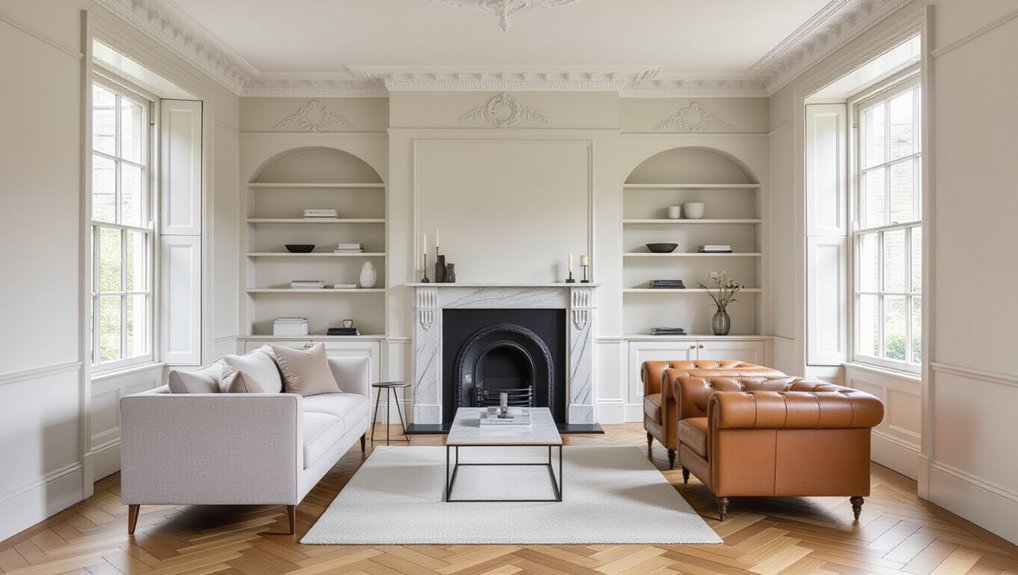
Reform your Victorian terrace by letting the original fabric lead—cornices, skirtings, sash proportions, fireplaces, and shadow lines—then sharpen it with disciplined contemporary joinery and warm, dimmable lighting. Plan the procession and thresholds before you touch finishes, and keep rooms calm with service zones for storage. Choose breathable lime plaster, reclaimed timber, honed stone, and a soft putty palette with one deep accent repeated. Continue on for exact joinery, lighting, kitchen, and bathroom moves.
Key Takeaways
- Preserve original Victorian fabric first, then add subtle contemporary elements that respect proportions, shadow lines, and craftsmanship.
- Plan layout and sightlines before finishes, keeping formal room thresholds and ensuring furniture, doors, and stairs align cleanly.
- Restore key features—cornices, fireplaces, tiles, floorboards, and sash details—repairing missing pieces to match original profiles and proportions.
- Use a restrained palette and breathable materials: lime plaster, matte walls, eggshell joinery, and honed stone or reclaimed timber accents.
- Layer warm, dimmable lighting with heritage fixtures and discreet modern sconces, plus simple, period-honest kitchen and bathroom detailing.
Define Modern Heritage Style for Victorian Terraces
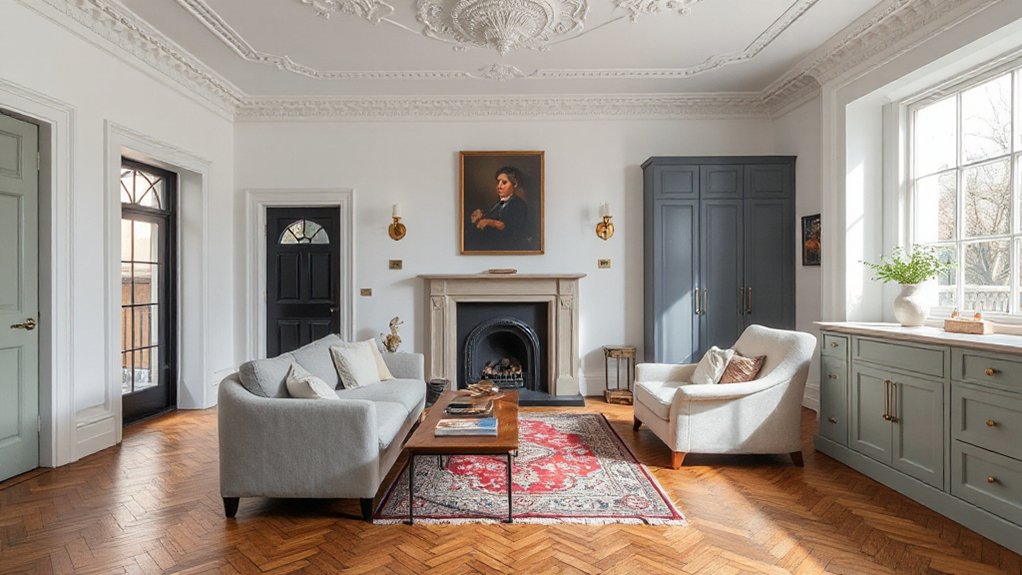
Although a Victorian terrace comes with its own strict grammar—chimney breasts, tall sash windows, and pared-back plasterwork—modern heritage style lets you update the house without rewriting its character. You treat original fabric as the leading voice, then add contemporary pieces that read as quiet footnotes rather than corrections.
You keep proportions, shadow lines, and joinery crisp, so Victorian craftsmanship still registers in skirtings, architraves, and panelled doors. You choose finishes that feel historically plausible—chalky paints, muted pigments, honed stone—yet you pair them with restrained modern lighting, slim hardware, and tailored furniture. You use heritage symbolism deliberately: a reintroduced cornice, a framed tile motif, or a revived fireplace surround. You modernise through tone, texture, and contrast, not pastiche.
Plan the Victorian Terrace Layout Before Finishes
Before you pick paint shades or tile patterns, set the terrace’s layout in order, because Victorian rooms rely on procession and proportion as much as ornament. Walk the route from street door to rear, and decide where you’ll keep formal separation and where you’ll borrow space. Preserve clear sightlines through the hall, but size any opening so it reads as a deliberate threshold, not a modern void. Place storage in service zones, and keep primary rooms square and calm.
Next, plan light and movement: align door positions, confirm stair clearance, and map furniture before you shift walls. At the back, link kitchen to the Victorian garden with a modest, well-framed connection that respects Terrace landscaping. Set routes, then specify finishes.
Restore the Victorian Features That Matter Most
You’ll get the most faithful result by putting the original architectural details first—cornices, ceiling roses, skirtings, and fireplaces set the terrace’s character more than any new finish. Repair what’s there before you replace it, and reinstate missing pieces to the same profile and proportion so the rooms read as one coherent period interior. When you restore and tighten the joinery—architraves, sash boxes, panelled doors, and stair parts—you keep the Victorian bones while making space for modern heritage styling.
Prioritise Original Architectural Details
If you’re going to modernise a Victorian terrace, start by rescuing the features that give it its authority: original cornices and ceiling roses, joinery and skirting profiles, sash proportions, fireplaces, and any surviving encaustic tiles or floorboards. Treat these as your datum lines; everything new should defer to them.
Survey each room in raking light and mark what’s intact, what’s later, and what’s missing. Clean and consolidate before you replace: strip paint carefully from marble, re-point fire surrounds, and revive timber floors with gentle abrasion, not heavy sanding. Where Ceiling cornices run, keep junctions crisp and shadows deep; don’t flatten them with downlights or bulkheads. Retain period Door hardware, or source matching patterns, so touchpoints still feel correct.
Repair And Reinstate Joinery
Where plasterwork and fireplaces set the tone, the joinery does the daily work of making a Victorian terrace feel correct—so repair it with the same discipline you’d give the façade. Start with skirtings, architraves, and picture rails: splice in matching timber, keep original profiles, and pin repairs with cut nails where they’ll be seen. Strip paint only where it’s choking detail; otherwise, clean, fill, and repaint in historically quiet sheen levels. Rehang sash shutters, ease sticking doors, and renew beading rather than replacing whole frames. If you’ve lost a mantel surround or stair newel, take moulds from surviving sections and have them run to order. Then let Vintage patterns and contemporary textiles sit against crisp, reinstated woodwork. It’ll read as honest, lived-in.
Choose a Modern Heritage Colour Palette That Lasts
How do you choose colours that feel true to a Victorian terrace yet won’t date the moment trends shift? Start by reading the house: north light cools, south light warms, so test swatches morning and dusk. Build Color harmony from a disciplined base—soft stone, warm putty, or smoked ivory—then layer historically plausible accents: deep bottle green, oxblood, inky navy, or soot black. Keep strong colour to dados, door panels, and chimney breasts, letting ceilings sit a shade lighter to lift cornices. Use paint finishes to honour function and sheen: matt on plastered walls, eggshell on joinery, and a restrained satin only where you need wipeability. Finally, repeat one accent through rooms so the terrace feels composed.
Specify Victorian-Friendly Modern Heritage Materials
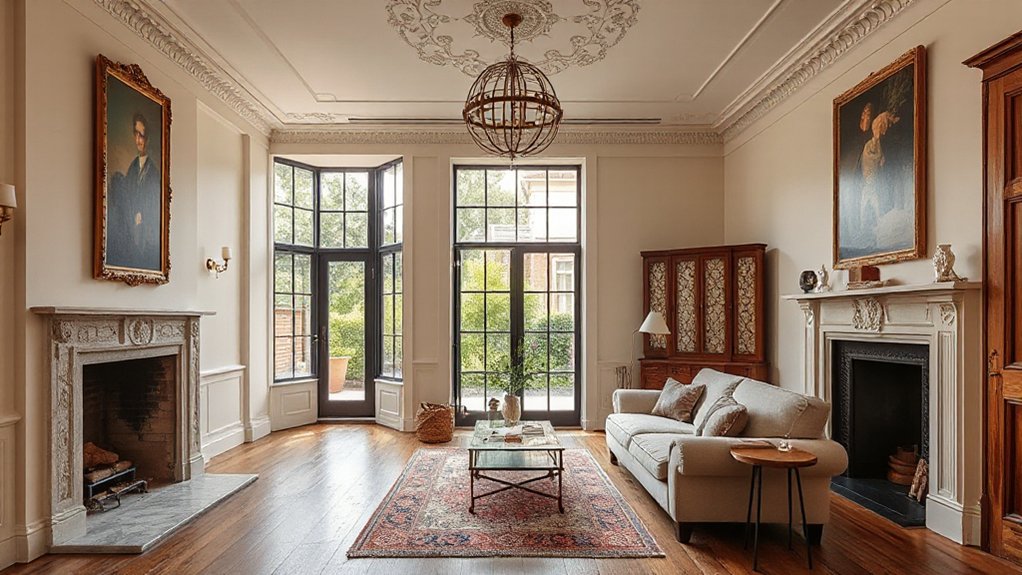
To keep your terrace honest to its age, you’ll specify materials that breathe, weather well, and sit quietly beside new work. Choose lime plaster and render for softly rounded reveals and sound walls, then pair it with reclaimed timber and properly detailed joinery that matches Victorian proportions. Finish with natural stone and brick—well-matched in tone and tooling—so repairs read as sympathetic rather than stark.
Lime Plaster And Render
Although Victorian builders often hid their best work beneath paper and paint, lime plaster and lime render still offer the most faithful—and practical—base for a terrace reform. You’ll let the walls breathe, so trapped damp can migrate out rather than blistering modern gypsum or cement. Patch with like-for-like: coarse lime plaster in the backing coats, then a fine putty skim that takes distemper, clay paint, or a thin wallpaper without telegraphing flaws. On external elevations, choose lime render with sharp sand and a modest aggregate, finished with a float for that soft, chalky Victorian texture. You can add hair reinforcement where lath remains, keep corners crisp with minimal beads, and accept gentle undulation as authenticity, not defect.
Reclaimed Timber And Joinery
Once you’ve put breathable lime back on the walls, the next layer that makes a terrace feel properly Victorian is timber—skirting, architraves, doors, and stair parts that carry the house’s proportions in a way MDF never can. Choose reclaimed pine or seasoned oak, then run it through a local joiner for crisp lamb’s-tongue moulds and tight mitres. You’ll get shadow lines that suit tall sash windows and narrow halls, and you won’t fight modern swelling.
For sustainable flooring, look for salvaged boards with long grain and modest knots; secret-nail them and finish with hardwax oil so the patina stays honest. Fit rim locks and brass knobs as vintage hardware, and pair them with proper mortice latches, not tubular catches, so every click feels right.
Natural Stone And Brick
Because the Victorians built in honest, mineral materials, your best modern-heritage move is to keep stone and brick equally “true” in both look and behaviour: choose soft, porous London stocks or handmade clamp-fired reds for repairs, bed them in lime putty mortar (or NHL 2/3.5 where exposure demands it), and you’ll match the slightly irregular arrises and pale buff joints that make terrace elevations read correctly.
Inside, you can introduce honed Yorkstone, Purbeck, or limestone flags for sculleries and halls; keep edges eased, not laser-sharp. Pair brick slips only where structure won’t take full bricks, and insist on water-struck, not wire-cut, faces for Rustic charm. For hearths, set a rubbed brick cheek or slate slab, then finish with limewash for Urban sophistication. Avoid cementitious sealers; let walls breathe.
Use Joinery to Connect Period Detail and Modern Lines
Where ornate skirtings, ceiling roses, and tall sash proportions meet the crisp geometry of contemporary living, you can let joinery do the negotiating. Specify bespoke cabinetry that respects period craftsmanship in its profiles—beaded frames, lamb’s-tongue details, and mitred architraves—while keeping faces flush and handles discreet for contemporary minimalism.
Run a continuous datum line: align cabinet tops with dado height, or pick up the window reveal to set shelf depths. Use painted timber to echo original joinery, but introduce oak or ebonised accents sparingly to signal new work. Build alcove units that stop short of cornices, leaving a shadow gap so old plaster reads as primary. At thresholds, repeat skirting heights and door-panel proportions to stitch rooms together seamlessly.
Layer Modern Heritage Lighting to Brighten the Terrace
Bespoke joinery may set the rhythm of a Victorian terrace, but lighting decides whether those profiles read as rich and intentional or fall flat by afternoon. Start at the ceiling: hang Vintage chandeliers where the original rose and cornice can frame them, then choose warm, dimmable lamps so plasterwork holds its honeyed depth at dusk.
Next, build a gentle perimeter glow. Fit contemporary sconces along the hall and beside fireplaces, keeping their projection shallow so they don’t fight skirtings or architraves. Add picture lights to lift oil portraits and prints, and tuck discreet LEDs into shelves to graze panelled backs. Finally, layer portable lamps on sideboards and writing tables; you’ll soften shadows, sharpen mouldings, and make the terrace feel longer, calmer, and quietly grand.
Design a Victorian Terrace Kitchen With Restraint
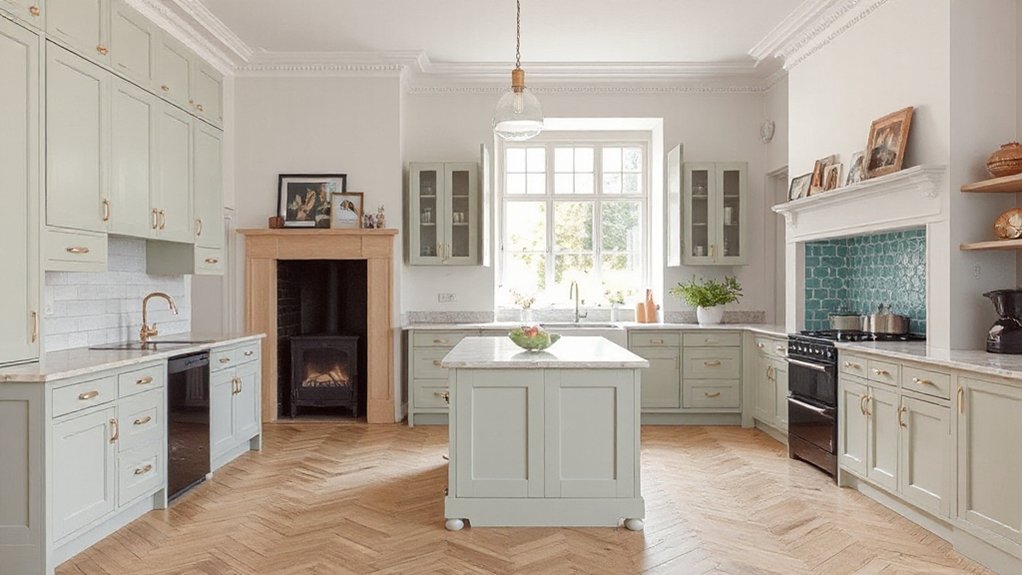
Although the Victorian terrace kitchen has to work harder than any other room, you’ll keep it feeling authentic by designing with restraint and letting the house lead. Start with joinery that sits quietly: Shaker fronts, narrow rails, and a muted paint colour that echoes the passage and skirting. Keep worktops honest—oiled timber or pale stone—and run them tight to chimney breasts without boxing in awkwardly. Use a simple tiled splashback, laid straight or in a modest brick bond, with dark grout for practicality. Choose taps and pulls in aged brass or nickel, not statement black. Bring warmth through Vintage textiles: a striped runner, linen tea towels, a café curtain. Finish with Eclectic accessories—copper pans, a coal-scuttle bin, framed receipts—kept curated, never cluttered.
Modernise Victorian Terrace Bathrooms (Without Pastiche)
Because most Victorian terraces hide their smallest rooms at the back or under the eaves, you’ve got to modernise the bathroom in a way that respects the house’s proportions rather than fighting them. Keep the layout disciplined: a wall-hung WC, a slim vanity, and a walk-in shower behind a single fixed pane preserve sightlines and floor space.
Choose materials that feel honest to the era, then sharpen them with Contemporary contrasts. Think small-format porcelain in a muted clay tone, laid as simple brick bond with dark grout, and a skirting-like tile trim that nods to joinery. Add Vintage accents sparingly: a porcelain lever, unlacquered brass, or a reeded glass sconce. Paint in softened off-white, and let one framed mirror do the ornament.
Frequently Asked Questions
How Do I Get Heritage Approvals for Internal Changes in My Terrace?
Check your council’s heritage restrictions first, then lodge a concise application detailing internal modifications, drawings, and materials. Consult a heritage architect, retain original joinery, and document reversibility; you’ll smooth assessment and gain written consent.
What’s a Realistic Budget Range for a Modern Heritage Terrace Renovation?
You’re looking at £80,000–£250,000, as a rule of thumb, depending on scope, structure, and services. Keep Victorian decor, add Modern fixtures, and you’ll pay more for bespoke joinery, plasterwork, and discreet wiring.
How Long Does a Typical Victorian Terrace Interior Renovation Usually Take?
You’ll typically spend 12–24 weeks renovating a Victorian terrace interior, depending on Victorian architecture quirks and Interior decoration scope. You’ll wait longer if you uncover damp, rotten joists, or need bespoke joinery, approvals.
Which Trades or Specialists Are Essential for Heritage-Sensitive Interior Work?
You’ll need a heritage architect or surveyor, Heritage conservation specialist, skilled carpenter/joiner for Interior craftsmanship, plasterer for mouldings, sash-window specialist, electrician and plumber versed in old fabric, and a sympathetic decorator-restorer.
How Can I Improve Soundproofing Between Rooms and Party Walls?
You’ll reduce noise by sealing gaps, adding dense insulation materials between studs/joists, and layering acoustic plasterboard with resilient channels. Use soundproofing techniques like floating floors, door sweeps, and chimney-balloon dampers, whilst preserving cornices.
Conclusion
When you reform your Victorian terrace with modern heritage styling, you’re not chasing museum perfection; you’re restoring order, light, and comfort. Keep the cornices crisp, the skirtings deep, and the joinery honest, then let contemporary lines sit quietly beside them. You’ll gain more than charm: studies of heritage property consistently show values can rise about 10% over comparable homes. In the end, your rooms feel properly Victorian—yet effortlessly liveable.
About the Author