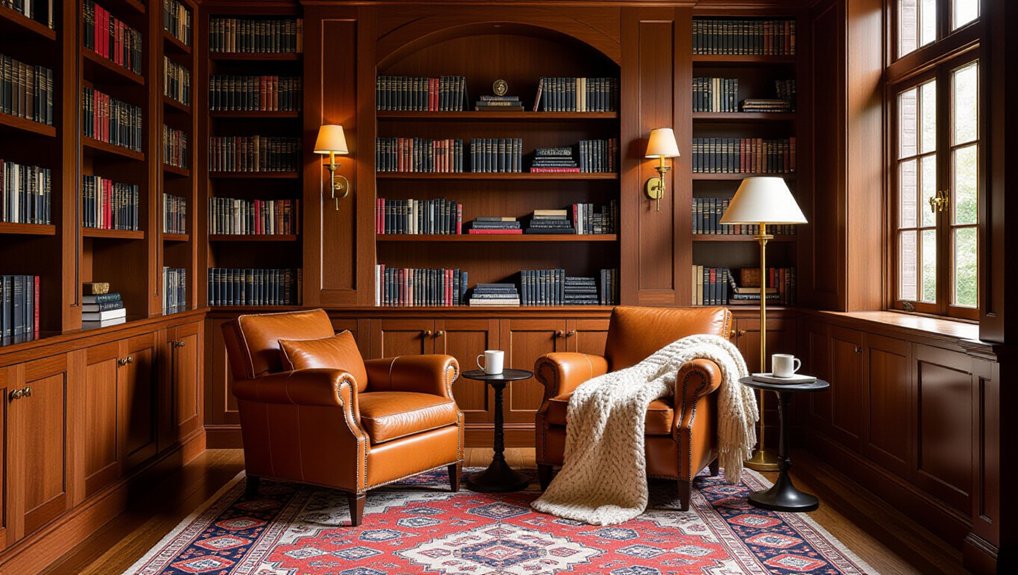
Start by mapping traffic flow so you’ve got a clear spine from the door to your chair, with at least 36 inches to pass. Place heavy, floor-to-ceiling cases on the longest wall and use low units under windows to keep sightlines open. Choose warm, light-matched paint—camel, terracotta, or warm greige—then layer wool rugs, linen drapes, and leather for hush and comfort. Add dimmable ambient light, a focused task lamp, and soft shelf glow. Keep going for layout, styling, and acoustic upgrades.
Key Takeaways
- Plan a clear traffic spine and place the reading chair with sightlines to the door, leaving at least 36 inches for passing.
- Use floor-to-ceiling shelving on the longest wall and low units under windows to preserve daylight and open sightlines.
- Choose a warm palette suited to light direction: richer tones in bright rooms, softer warm greiges and creams in dim or north-facing rooms.
- Layer lighting with dimmable ambient, glare-free task lamps, and accent sconces to create depth and cozy evening reading zones.
- Add texture and quiet with wool rugs, lined linen or velvet curtains, and warm woods plus brass or bronze accents for a grounded feel.
Plan Your Home Library Layout (and Traffic Flow)
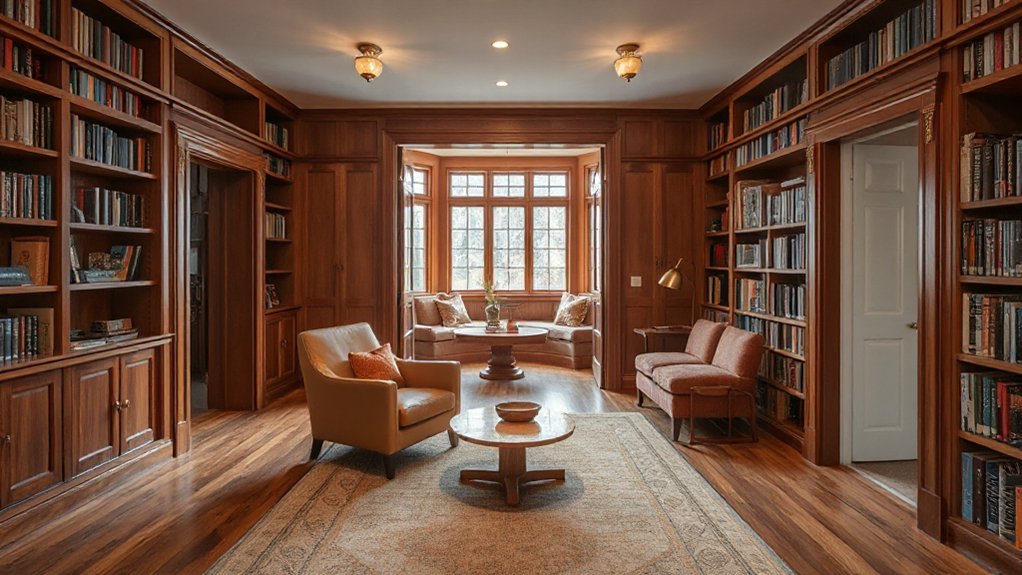
Before you buy another shelf, map how you’ll move through the room and where you’ll actually stop to read. Keep a clear spine path from door to seat, then let shelves and tables branch off it. Place your favorite chair where you can see the entry, and leave at least 36 inches for passing. Anchor heavy cases on the longest wall, and use lower units under windows to protect sightlines and keep the space open. Plan Shelf organization by frequency: daily reads at arm height, reference runs higher, display objects low and stable. Layer Library lighting to match each pause point—task light at the chair, soft wash along spines, and glare-free angles that don’t bounce off glossy jackets.
Choose a Warm Color Palette That Suits Your Light
Start by reading your room’s natural light—its direction, intensity, and how it shifts from morning to night—because warm paint and stain will either glow or muddy under it. If you’ve got bright southern light, you can lean into richer terracottas, tobacco browns, and honeyed woods; in dimmer or north-facing rooms, choose softer camel, buttercream, and warm greige to keep the space lifted. Then tie it together with cozy complementary notes in leather, brass, and woven textiles so the library feels calm, grounded, and inviting.
Evaluate Natural Light Levels
Because natural light shifts your library’s mood more than any lamp ever will, take a hard look at where daylight lands and how it changes from morning to dusk. Stand in the room at three points—early, midafternoon, and evening—and note glare, shadow bands, and where spines fade fastest. Track light levels on the reading chair, desk surface, and along the lowest shelves.
If your windows face south or west, you’ll get bright peaks that can wash pages and heat wood; plan for controlled reflections with matte paint, low-sheen plaster, and textured textiles. North light stays cooler and steadier, so grain and paper feel calmer. East light is brief but sharp; position seating to avoid direct beams and preserve comfortable contrast.
Select Cozy Complementary Tones
Once you’ve mapped how daylight moves across the room, let that light dictate your warm palette so the library feels inviting at every hour. In north-facing rooms, lean into honeyed creams, camel, and muted terracotta to counter cool cast. In bright south light, soften with buttery whites, warm greige, and cinnamon accents that won’t glare.
Build depth through Color pairing: warm oak shelves with clay walls, brass hardware with tobacco leather, or walnut with ochre textiles. Keep tone harmony by repeating one undertone—golden, rosy, or earthy—across paint, rugs, and drapery. Use matte finishes to absorb light and reduce hotspots; reserve satin for trim or built-ins to quietly frame the books. Add a deep umber or oxblood nook for evening reading.
Choose Shelves That Look Built-In (Even on a Budget)
You can make shelves read like built-ins by painting them to match the wall, so the edges visually disappear and the room feels calmer. Add simple trim—base, crown, or face-frame strips—to give flat panels a custom, architectural shadow line. If you’re watching costs, hack modular bookcases with a tight, floor-to-ceiling layout and finish seams cleanly for a seamless, tailored look.
Paint Shelves Wall-Matched
When shelves share the same paint color as the wall, they visually recede, and the room reads as architecture—not furniture. You get a calmer perimeter, fewer visual breaks, and that quiet “built-in” feeling even with basic units. To paint shelves cleanly, fill seams, sand edges, and use a bonding primer so wood, MDF, or laminate won’t telegraph. Then roll on the same finish you used for the wall matched field—often an eggshell or matte that softens glare and lets book spines glow. Keep the back panel the same color, too, so negative space stays velvety. In darker hues, your library turns cocoon-like; in pale tones, it feels airy and expansive at dusk.
Add Trim For Custom
Matching shelf paint to the wall sets the quiet, built-in mood; trim is what sells the illusion up close. Add a face frame to the front edges and you’ll instantly sharpen the lines, hide plywood layers, and make the shelf read like millwork. Choose poplar for crisp paint, or oak if you want a warmer, grained edge under a satin finish.
Run a simple base and crown to connect shelving to floor and ceiling, then cap each shelf with slim nosing for shadow and depth. Use custom trim to align with nearby door casings so everything feels intentional. Finish with decorative moldings—small corner blocks, a bead detail, or a thin stop—where your eye naturally pauses. Caulk seams, fill nail holes, and you’ll get that tailored, built-in calm on a budget.
Use Modular Bookcase Hacks
Although true built-ins cost real money, modular bookcases can land the same calm, architectural look with a few smart choices. Start by sizing units wall-to-wall and ceiling-high; gaps read temporary, while tight margins feel intentional. Add a continuous top board and simple base plinth in oak veneer or painted MDF so the system reads like one volume. Use closed cabinets on the bottom to hide clutter and give the room visual weight, then keep open shelves above for rhythm and air. Lean into Modular flexibility by mixing widths, stacking heights, and bridging corners. Your Customization options expand with back panels in linen-texture wallpaper, integrated puck lights, and matching hardware. Finish with one paint color across units and trim for a soft, enveloping library glow.
Add Comfortable Reading Seating (Chair + Ottoman)
Because a home library asks you to linger, anchor the room with a truly comfortable reading chair and ottoman. Place it where circulation stays clear and your shelves feel within easy reach, creating a dedicated Reading nook that doesn’t steal floor space. Prioritize Seat comfort: a deep seat, supportive back angle, and plush-but-resilient cushioning that won’t bottom out after long chapters. Choose tactile materials that warm the mood—aniline leather for patina, wool bouclé for softness, or a linen blend for relaxed texture. Add a curved ottoman to invite kicked-up feet and to soften sharp furniture lines. Keep a small side table close, so your book and mug land gently, not precariously. Let the chair’s silhouette echo your library’s architecture.
Layer Lighting: Ambient, Task, and Accent Glow
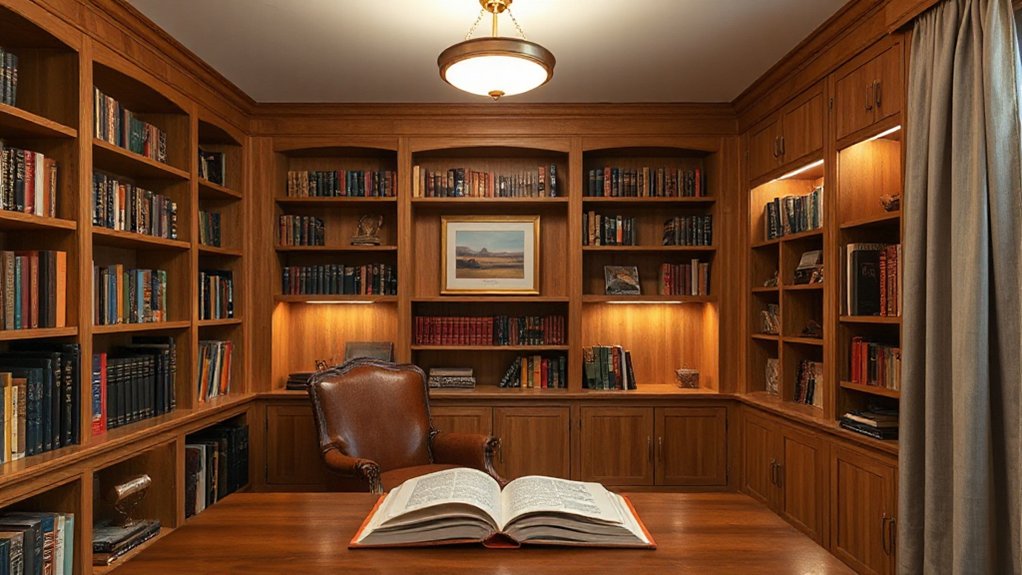
When the sun drops and the pages stay open, layered lighting turns your home library from a pretty room into a usable retreat. Start with ambient light that fills the volume evenly: dimmable ceiling fixtures with warm LEDs (2700K) keep spines legible without glare. If you’ve got beams or built-ins, tuck light where it can bounce off matte paint or stained wood for a softer wash.
Add task lighting right where you read. Aim an adjustable floor or table lamp so the beam lands on the book, not your eyes, and keep the shade opaque to control spill. Finish with accent glow: decorative sconces or slim picture lights graze shelves and artwork, adding depth and a calm, evening-ready mood. Use separate switches for control.
Soften the Room With Rugs, Curtains, and Upholstery
After you’ve set the glow, anchor it with textiles that quiet the room and warm the floor. Layer rugs—think a durable flatweave under a plush pile—to soften footsteps and define the reading zone. Finish with cozy curtains and upholstery in touchable, matte fabrics like linen, velvet, or wool blends, so the space feels hushed, held, and inviting.
Layer Rugs For Warmth
If your home library feels a little echoey or visually stark, layered rugs fix it fast. Start with a large, low-pile wool base to anchor seating and define the reading zone. Then Layer rugs: add a smaller vintage kilim or textured flatweave on top, offset slightly so edges show and the layout feels intentional.
Choose fibers that work hard. Wool traps air, giving quiet underfoot comfort and real thermal insulation, while jute adds dry, earthy grit without glare. Keep piles mixed but not bulky; you want chair legs to glide and book carts to roll. Use a dense rug pad to prevent drift and deepen the hush. In tight rooms, run runners between stacks to guide the eye and warm your steps.
Choose Cozy Curtains Upholstery
Two well-chosen layers—curtains and upholstery—can quiet a home library as effectively as rugs while making it feel instantly more lived-in. Hang cozy curtains high and wide to soften hard window edges and tame glare on pages. Choose heavier linen, velvet, or wool blends for a hushed, cocooned mood; add a simple blackout liner if streetlight spills in.
Then tune your seating. Pick inviting upholstery that supports long chapters: textured bouclé for warmth, brushed cotton for breathability, leather for a tailored edge that patinas over time. If your room runs cool, lean into deep tones; if it’s small, keep fabrics light but nubby for depth. Finish with a few washable cushions so comfort stays effortless day after day.
Reduce Echo With Simple Soundproofing Upgrades
While a home library thrives on quiet, hard surfaces like plaster walls, wood floors, and tall shelving can throw sound back at you, turning pages and voices into a distracting shimmer of echo. Start with targeted soundproofing techniques that don’t change your layout: seal door gaps with sweeps, add weatherstripping, and caulk trim lines where air leaks carry noise. If you share a wall, mount a bookcase with a thin rubber isolation layer to reduce vibration transfer.
Then add acoustic treatment options that soften reflections inside the room. Hang dense curtains, lay a thick rug with a felt pad, and place upholstered seating where sound bounces most—between shelves and the reading chair. Even a fabric-wrapped panel behind your desk can calm the room instantly.
Mix Warm Woods, Metals, and Natural Textures
Once the room sounds calmer, you can focus on how it feels, and nothing sets a library’s mood faster than a layered mix of materials. Start with warm Wood accents: walnut shelves, oak trim, or a maple desktop that catches afternoon light and softens hard corners. Add metal finishes in measured doses—aged brass picture lights, blackened steel brackets, or a bronze floor-lamp stem—to give the space a crisp outline. Balance that sheen with natural textures: linen drapery, a wool rug, leather chair arms, and a jute basket for throws. Keep undertones aligned so the palette reads intentional: choose one dominant wood, one supporting metal, then repeat each twice. The result feels grounded, tactile, and quietly luxurious.
Style Your Library Shelves: Cozy, Not Cluttered
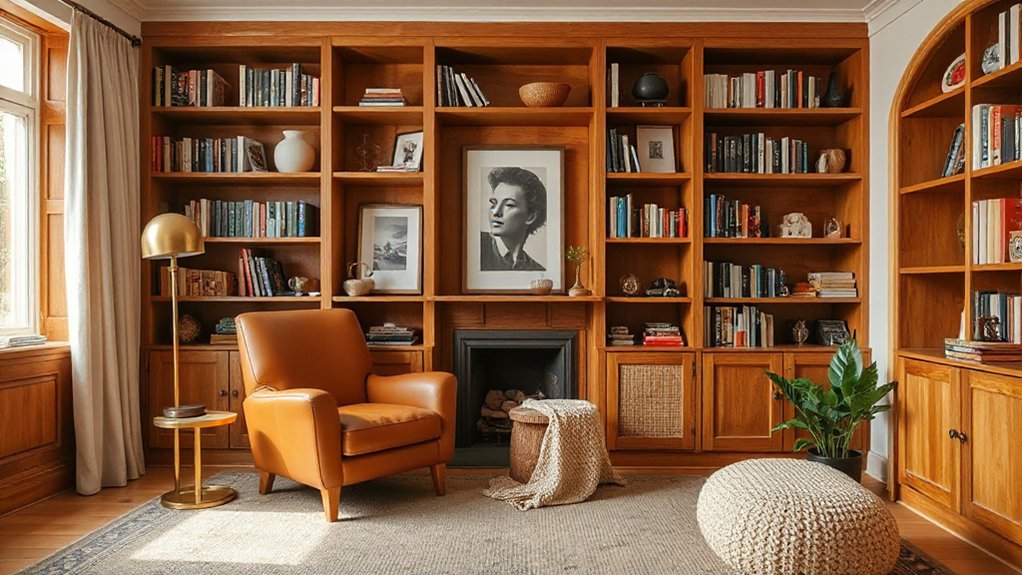
If your shelves feel more like storage than sanctuary, edit them the way you’d style a room: with breathing space, repeat materials, and a clear visual rhythm. Start with Bookshelf organization: group books by height or tone, then break long runs with open bays that let the wall color and wood grain show through. Keep spines aligned for calm; tuck oversized volumes flat to lower visual noise. Limit decorative accessories to a few pieces in grounded materials—ceramic, brass, matte black—so they echo your lighting and hardware. Use trays or shallow boxes to corral small items and protect the surface. Aim for an easy cadence: full, open, full. You’ll get cozy density without cluttered static.
Add Personal Touches: Art, Objects, and Memories
Because a home library lives on feeling as much as function, you should weave in personal pieces that carry quiet weight—framed sketches, a small sculpture, a travel bowl for matches and bookmarks, a photo you actually love.
Let your art collection converse with the spines: hang one medium-scale work low enough to read from a chair, or lean it on a picture ledge for an easy, layered look. Use materials that deepen the room—brass, oiled walnut, matte ceramic—so light falls softly instead of glaring. Group sentimental objects in small vignettes: three items per shelf, varied heights, plenty of breathing space. Slip a handwritten note or bookplate into a shadow box, and you’ll anchor the library to your own story.
Make Your Home Library Comfortable Year-Round
When the seasons swing from dry heat to damp cold, your library should stay steady and inviting with a few smart, tactile layers. Start by managing light and temperature: hang lined linen drapery to block glare in summer, then close it at dusk to hold warmth. Add a wool rug over bare floors to soften footfall and insulate.
Keep air comfortable without sacrificing style. A slim humidifier near your book storage protects paper in winter; a quiet fan keeps pages from feeling sticky in July. Choose leather or performance-velvet seating that won’t cling, and keep a cashmere throw within reach. In your reading nook, swap pillow covers seasonally—cotton percale for heat, brushed flannel for chill—and you’ll stay focused.
Frequently Asked Questions
How Many Books Can Standard Floor Joists Safely Support in One Room?
You can’t pin an exact book count; standard joists usually handle ~40 psf live load. Check Structural load and plan Floor reinforcement if you’re stacking shelves dense—hardwood, steel brackets, and calm spacing.
Do I Need Special Homeowners Insurance Coverage for a High-Value Book Collection?
Yes—you’ll likely need extra coverage. Standard Insurance policies cap valuables, so schedule rare volumes or add a rider. Coverage considerations include appraisals, humidity and fire safeguards, theft limits, and offsite storage.
What Humidity Level Best Prevents Mold and Paper Deterioration in a Home Library?
Like a steady, quiet tide, keep your library at 45–55% relative humidity. You’ll balance humidity control with mold prevention, protecting paper and bindings. Use a humidistat, dehumidifier, and gentle airflow over wood shelves.
How Can I Protect Rare Books From Sunlight Without Darkening the Entire Room?
You can protect rare books from sunlight by adding UV protection films and layered window treatments—sheers plus lined shades—so you’ll soften glare, keep brightness, and shield spines. Place shelves perpendicular to windows, not directly opposite.
What’s the Best Way to Catalog and Track Books for Easy Retrieval?
Use a simple spreadsheet or app with tags, then label shelves by room, wall, and bay so you’ll grab titles fast. Build Book organization via consistent Cataloging systems, archival labels, and a clean, tactile map.
Conclusion
When you design your home library, you’re really shaping how you move, pause, and breathe in the space. Aim for warm layers—wood grain, soft upholstery, brushed metal, and lighting that pools instead of glares. One telling stat: the National Sleep Foundation reports adults who read before bed sleep better than those who don’t. So you’re not just adding shelves—you’re building a calmer nightly ritual, season after season, in your own corner.
About the Author