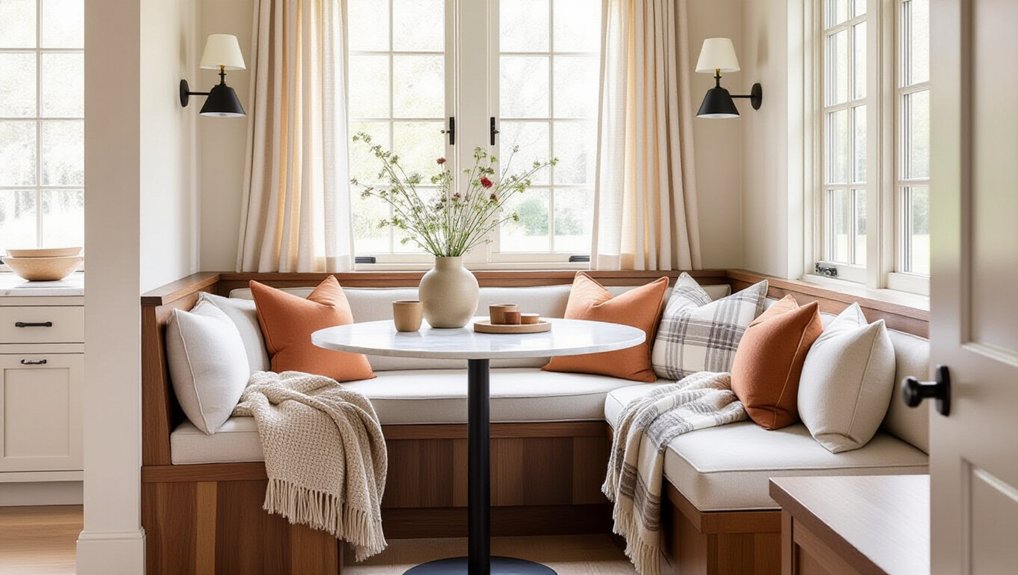
Start by measuring wall to wall and mapping door swings, drawer pulls, and the fridge-sink-stove path, then tape out your sit zone and slide-out space. Choose a corner, wall, or bay layout that matches your windows and keeps aisles clear. Go cosy with a slim banquette or bench plus medium-firm cushions and one lumbar pillow each. Pair a 24–30″ round pedestal table with wipe-clean fabrics, warm wood, dimmable lighting, and hidden storage. There’s more ahead on layouts, sizing, and finishes.
Key Takeaways
- Measure the nook footprint and traffic flow; keep 30–36 inches behind seating for comfortable pass-through and door or drawer swings.
- Choose a corner, wall, or bay layout that fits your kitchen shape and window/radiator placement, creating a cozy “room-within-a-room.”
- Pick seating for comfort: built-in banquettes for back support, benches for space-saving, or slim chairs for flexibility in tight aisles.
- Size the table to the space: 24–30-inch round works for 2–3 seats; use a pedestal base for better knee room.
- Add coziness with medium-firm cushions, wipeable upholstery, warm wood tones, and dimmable lighting; consider under-seat storage for clutter-free comfort.
Measure Your Breakfast Nook and Map Traffic Flow
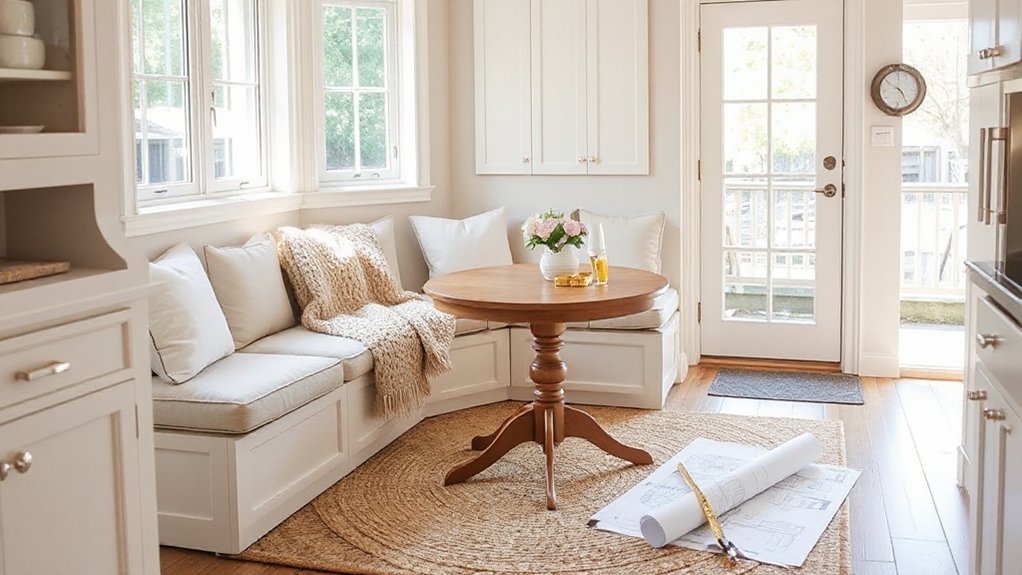
Before you fall for a built-in bench or bistro set, measure the nook’s full footprint—wall to wall, corner to corner, and from floor to sill—then sketch it to scale. Mark window trim, baseboards, outlets, and radiator or vent clearances so nothing steals precious inches. Next, map traffic flow: trace the path from fridge, sink, and stove, and note where doors swing or drawers pull out. Leave comfortable pass-through space so you won’t bump knees or snag sleeves on chair backs. Use painter’s tape on the floor to test sit zones and slide-out distances. Once circulation feels effortless, align Decorating themes and Color schemes with what the light does at breakfast time.
Choose a Breakfast Nook Layout: Corner, Wall, or Bay
Because your layout dictates how the nook feels and functions, choose the footprint that matches your room’s architecture. A corner layout tucks into underused square footage and creates a natural “room within a room,” especially when you align the table edge parallel to adjacent counters. A wall layout suits narrow kitchens: keep it linear, center it under a light, and leave a clear aisle so doors and drawers swing freely. A bay layout leverages window depth; you’ll get balanced daylight and a built-in focal point, but check sill height and radiator placement first. Tie the shape to your Decor style—crisp lines for modern, softened angles for traditional—and let your color palette echo nearby cabinetry, tile, and trim for cohesion.
Pick Cosy Breakfast Nook Seating: Bench, Banquette, or Chairs
Once you’ve set your nook’s layout, your seating choice locks in both comfort and visual balance. You’ll get a clean, compact look with a simple bench, while a banquette adds deeper, lounge-like support and a built-in feel. Add chairs when you want flexible seating you can pull in, tuck away, or swap to shift the mood fast.
Bench Vs. Banquette Comfort
While both options can look equally charming, a bench and a banquette feel very different in daily use. A bench stays visually light and space-conscious, but your Comfort comparison will notice the backless posture: you’ll perch, shift, and rely on a wall or cushions for ergonomic support. Add a slim seat pad and tuckable throw pillows, and it reads airy yet intentional.
A banquette wraps you in structure. With a built-in back and often a corner return, you get consistent lumbar contact and a warmer, “room-within-a-room” vibe. You can fine-tune comfort by specifying seat depth (about 18–20 inches), a slight back rake, and dense foam that won’t sag. The trade-off is permanence: it claims footprint, but it rewards you with all-day coziness.
Chairs For Flexible Seating
Banquettes and benches bring that built-in, tucked-in coziness, but chairs keep your breakfast nook agile. You can pull one in for coffee, swing two out for homework, or clear the corner fast when you need floor space. That flexibility matters in tight layouts where every inch has a job.
Choose slim-profile frames, armless silhouettes, and tapered legs to maintain sightlines and light. Consider multifunctional seating like dining chairs that double as desk chairs, or a pair that can live in the living room when guests arrive. If your table height shifts or you mix surfaces, opt for adjustable chairs to fine-tune comfort without bulky cushions. Finish with wipeable upholstery, a warm wood tone, and one accent color for cohesion.
Choose a Breakfast Nook Table Size and Clearances
To keep your breakfast nook feeling airy rather than cramped, pick a table size that matches both your seating depth and your walk-through space. For two to three seats, a 24–30-inch round or a 24-inch-deep square keeps corners from snagging circulation. If you’re benching one side, cap depth at 24 inches so plates don’t drift out of reach.
Build clearances around seating ergonomics: allow 18 inches per diner, 12–15 inches from table edge to the seat’s front, and 36 inches behind chairs for pass-through (30 inches if it’s low-traffic). Choose a pedestal base to free knee room. Dining table materials affect bulk—thin-profile wood, stone-look laminate, or glass read lighter than thick slabs. Keep edges softly chamfered.
Layer Breakfast Nook Cushions, Fabrics, and Textures
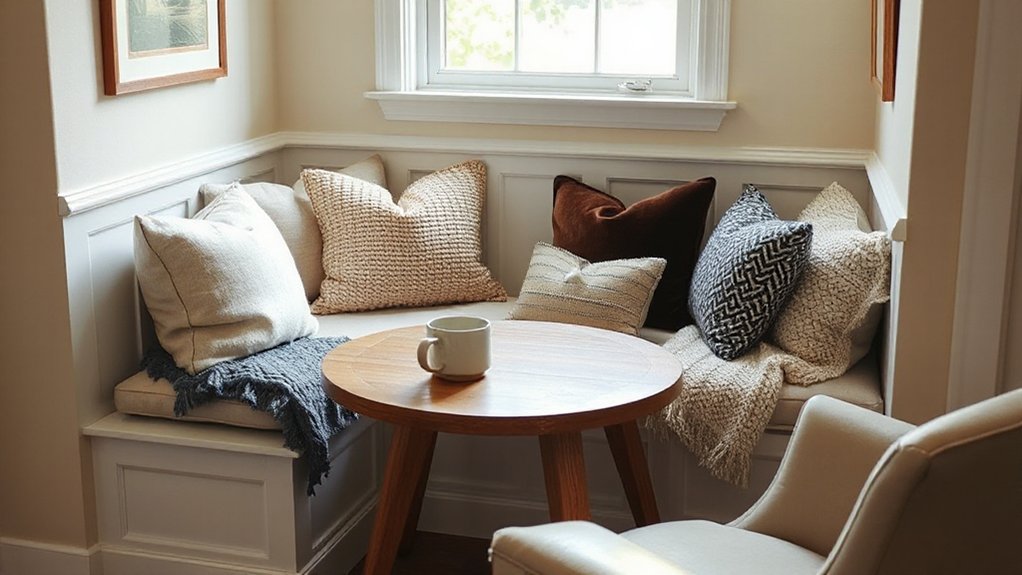
Once your table size and clearances feel right, comfort comes down to what touches you—cushions, fabrics, and a mix of textures that add warmth without visual clutter. Start with a slim seat pad that matches the bench depth, then add cushion layering with one lumbar pillow per place to support upright breakfasts. Keep fills medium-firm so cushions don’t spill into the aisle. Choose fabric textures that read soft but tailored: cotton-linen for the base, a nubby bouclé or small-scale weave for contrast. Limit the palette to two solids plus one subtle pattern to keep a tight footprint visually calm. Use piping or welt seams to sharpen edges and echo nearby cabinetry lines. Finish with a light throw only if the nook feels spare.
Add Breakfast Nook Lighting, Storage, and Wipe-Clean Finishes
While the cushions set the comfort, lighting and built-ins make your breakfast nook feel finished and easy to live with. Hang a slim pendant or wall sconce to free tabletop space, then add dimmers for ambient lighting that suits early coffee and late homework. Tuck outlets under the bench for chargers, and run an LED strip beneath shelves to brighten corners without clutter. Build storage into every inch: lift-up seats for linens, drawers for placemats, and a shallow ledge for cookbooks and decorative accents. Choose wipe-clean finishes that still look refined—sealed oak, matte laminate, or painted beadboard with a satin enamel. Use a washable rug and performance upholstery so spills wipe off fast. Keep a small tray for daily essentials.
Frequently Asked Questions
How Can I Childproof a Breakfast Nook Without Ruining the Cosy Look?
Choose childproof furniture with rounded edges, anchor benches, and hide cords. Add soft cushioning with washable slipcovers, corner guards, and non-slip pads. Store sharp items up high, use lidded baskets, and pick stain-resistant fabrics.
What Are Budget-Friendly Ways to Create a Built-In Nook Feel?
Fake built-ins by adding a narrow bench, wall cleats, and a floating shelf to frame the corner. Use Custom cushion ideas for tailoring, and Stylish lighting options like plug-in sconces to elevate intimacy.
How Do I Reduce Echo and Noise in an Open-Plan Breakfast Nook?
Tired of every clink bouncing around? You’ll cut echo by adding Acoustic panels on a nearby wall, layering Soft furnishings like a rug and cushions, and hanging lined curtains; choose slim profiles, calm textures, cohesive colors.
Can I Create a Breakfast Nook in a Rental Without Permanent Changes?
Yes—you can create a breakfast nook in a rental without permanent changes. Use peel-and-stick accents, a slim table, and flexible furniture arrangements. Choose cohesive color schemes, add a rug, cushions, and removable lighting for polish.
What Plants Thrive Near a Breakfast Nook With Limited Natural Light?
You’ll find pothos, ZZ plant, and snake plant thrive there—coincidentally, they look sculptural beside morning mugs. Add low light ferns for softness; skip indoor succulents unless you’ve got a small grow light.
Conclusion
Measure your nook, trace the traffic flow, and let the layout—corner, wall, or bay—decide the mood. Choose seating that hugs: a bench, banquette, or slim chairs, then match the table to proper clearances so everything breathes. Layer cushions and tactile fabrics for quiet comfort. Add warm lighting, smart storage, and wipe-clean finishes. And just when it feels finished, pause—your final texture choice is what makes it irresistibly cosy.
About the Author