
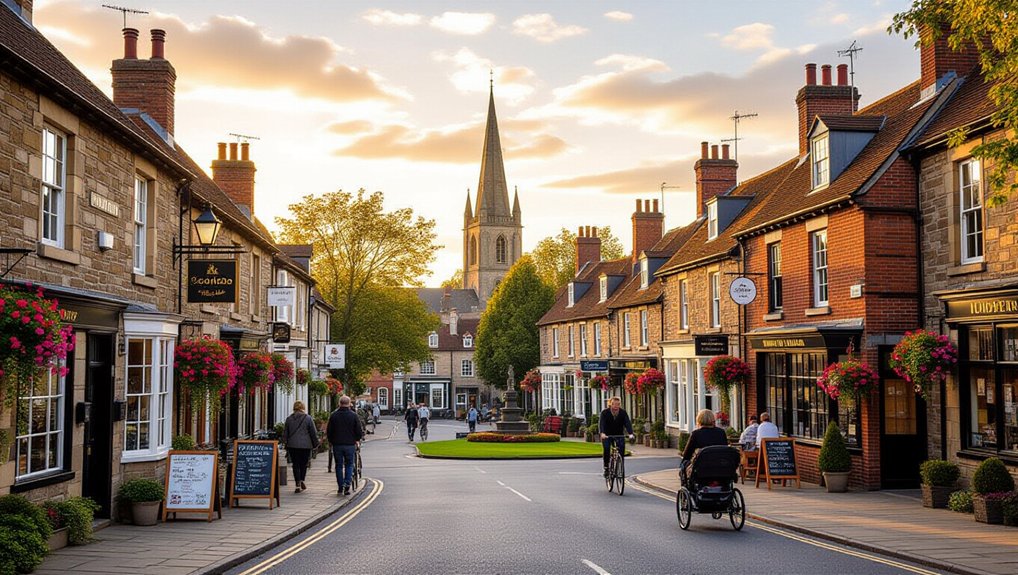
You’ll get the strongest community feel (and safer resale demand) in small UK towns with walkable high streets, busy “third places” like pubs and libraries, visible local services, and low antisocial behaviour. Prioritise places with stable footfall, strong volunteer and club participation, recurring local events, and solid school profiles. Rail or road links that keep commutes under 60 minutes, plus reliable broadband, also track price growth and lower voids. Next, see which towns best match your budget and commute.
Key Takeaways
- Choose walkable market towns with busy high streets and “third places” (pubs, libraries, leisure centres) that create regular, friendly interactions.
- Prioritise towns with stable, visible local services: responsive policing, accessible GP/pharmacy, active parish councils, and well-rated schools.
- Use community metrics over time: low antisocial behaviour, steady footfall, high volunteering/charity activity, strong turnout, and net in-migration trends.
- Favour rail-linked towns within 60 minutes of major job hubs, plus reliable buses, broadband, and mobile signal to support year-round resident demand.
- Look for recurring local traditions—markets, festivals, sports clubs—plus thriving local associations and noticeboards that show predictable, welcoming community life.
What Makes a Small UK Town Feel Friendly?
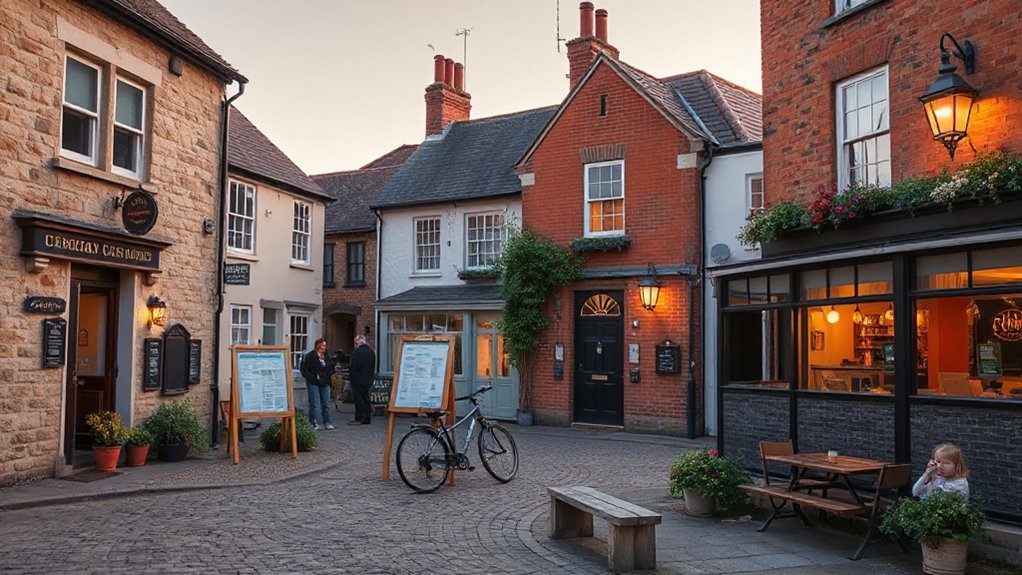
While “friendly” can sound subjective, small UK towns tend to earn that reputation when everyday interactions are frequent, low-friction, and reinforced by local habits. You notice it in walkable high streets where you can run errands without driving, and in third places—libraries, pubs, leisure centres—where repeat visits build recognition. You also feel it when local services stay visible: active parish councils, responsive neighbourhood policing, and GP and pharmacy access within short travel times. Trends show towns with strong volunteer groups and higher participation rates in clubs sustain more cross-age mixing, reducing social siloing. Local traditions matter because they create predictable touchpoints, from markets to fêtes. Community events amplify that effect by recurring weekly or seasonally, giving you regular, low-pressure ways to meet neighbours.
How We Picked These Friendly Towns (Data + Local Feel)?
You’ll see we picked these friendly small UK towns by combining community metrics (like safety trends, volunteer density, and local engagement signals) with price and demand data. You’ll also compare local amenities and access—schools, GP coverage, rail links, and walkable high streets—so the shortlist reflects how people actually live. You’ll then sanity-check the numbers against on-the-ground town feel, focusing on street-level upkeep, social buzz, and everyday welcome.
Community Metrics Used
Because “friendly” can’t be captured by vibes alone, we ranked each small UK town using a blend of hard community indicators and on-the-ground signals—pulling in crime rates and antisocial behaviour trends, voter turnout and civic participation proxies, school Ofsted profiles, local volunteering and charity density, access to GP and community services, and walkable amenities like libraries, parks, and high-street occupancy—then cross-checking those scores against local sentiment from resident surveys and consistent qualitative reporting to make sure the data matched the lived reality. You’ll see towns rise when repeat indicators align: falling ASB, stable turnout, above-average Ofsted outcomes, and dense Local volunteer opportunities per capita. We also track frequency and variety of neighborhood social events via council listings and community groups, treating consistency over one-off festivals as the stronger signal. Finally, you get a clearer picture by weighting multi-year trends, not single-year spikes.
Local Amenities And Access
Community scores only tell part of the story, so we also tested whether daily life feels easy once you’ve moved in. You’ll see towns here because they hit measurable access benchmarks: walking-time coverage to groceries, GP surgeries, pharmacies, schools, and parks, plus broadband speeds and mobile signal reliability.
We then checked how well you can get around without a car. You’ll notice higher rankings where public transportation runs frequently at peak times, connects to nearby employment hubs, and offers reliable evening and weekend service. We also weighted proximity to rail stations and average commute times. Finally, we looked at the density and diversity of local businesses—independents, cafés, trades, and services—because stronger amenity mix typically tracks with better retention, footfall, and resale demand over time.
On-The-Ground Town Feel
While metrics can flag where demand is rising, “town feel” determines whether you’ll actually want to stay, so we combined hard indicators with on-the-ground checks to shortlist places that consistently read as friendly. You start with quant signals: net in-migration, proportion of long-term residents, voter turnout, volunteering rates, footfall stability, and small-business density. You then test the numbers in person. You visit high street cafés at peak and off-peak, check how easily newcomers join conversations, and watch how staff treat regulars versus first-timers. You scan noticeboards and local Facebook groups for Community events frequency, turnout, and variety. You also look for Local traditions that recur year-on-year—markets, parades, sports days—because consistency predicts cohesion. If the vibe matches the data, the town makes the list.
How to Choose the Right Town for You (Budget, Commute, Schools)?
As house-price growth diverges sharply across smaller UK markets, you’ll get a better outcome by filtering towns through three measurable inputs: budget headroom, commute time/cost, and school performance. Start with budget: cap total housing costs at a realistic multiple of household income, then stress-test mortgage rates plus running costs. Next, model commuting: compare peak rail season tickets, parking, and door-to-door minutes; a 15–20% longer journey often cancels cheaper prices. For schools, use Ofsted outcomes, Progress 8, and cohort stability, not just reputation. Then sanity-check culture: towns with strong Local traditions and high neighborhood diversity often sustain year-round footfall and volunteer networks. Finally, scan transaction volumes and time-on-market; liquidity lowers resale risk.
Best Small Towns to Buy in the South West
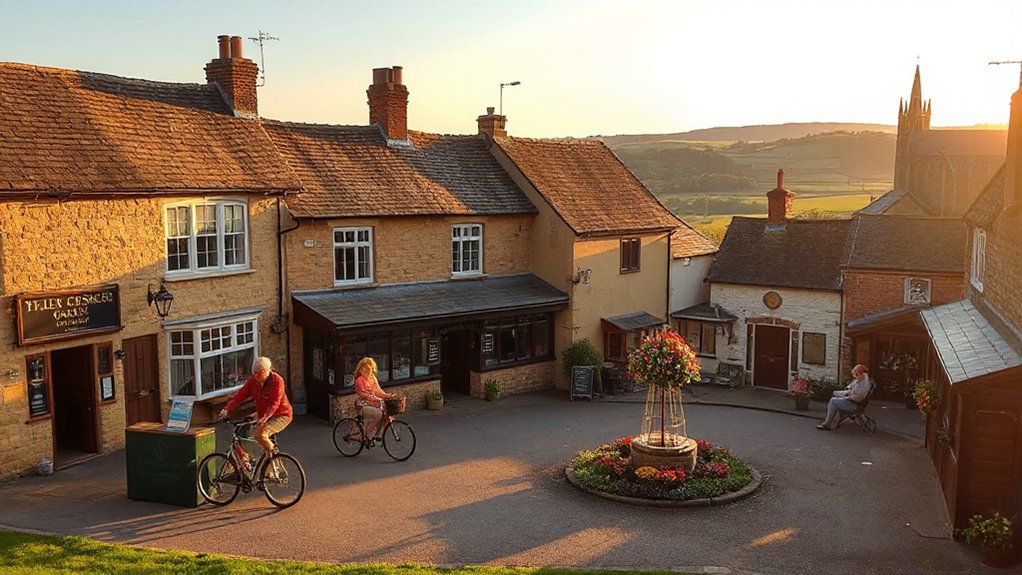
If you’re buying in the South West, focus on small towns where demand stays resilient across second-home cycles and local employment trends, not just postcard appeal. In Somerset, Frome benefits from creative industries, strong rail links to Bath/Bristol, and tight rental demand that supports yields. In Devon, Totnes stays buoyant because independents, festivals, and remote-working inflows keep footfall steady; Local traditions anchor repeat spending. In Cornwall, Wadebridge and Falmouth typically outperform weaker coastal spots thanks to year-round universities, healthcare, and marine jobs that reduce winter vacancy risk. You’ll also find higher transaction liquidity around market-town hubs such as Tavistock, where school catchments and commuting options broaden the buyer pool. Use resident testimonials to validate safety, volunteering, and club density before you bid.
Best Small Towns to Buy in the South East
Small towns in the South East play by different rules than the South West: commuter economics, constrained supply, and persistent London-linked demand often matter more than tourism cycles. If you’re buying for community plus resilience, look for rail-linked hubs with walkable centres and tight conservation limits that support prices.
In Kent, Sevenoaks and Tenterden pair good schools and active high streets with frequent neighborhood events, which helps newcomers integrate. In East Sussex, Lewes offers strong independent retail and year-round local traditions that keep footfall steady beyond weekends. In Surrey, Farnham and Dorking benefit from steady commuter flows and diverse housing stock, reducing single-sector risk. In Buckinghamshire, Marlow and Wendover combine quick links and civic groups, sustaining participation even as turnover rises.
Best Small Towns to Buy in the Midlands
While the South East leans on London spillover, the Midlands rewards you for tracking infrastructure upgrades, university-led employment, and relative value versus southern price points. You’ll typically find higher yields in commuter rings around Birmingham, Nottingham, and Leicester, where rail frequency, HS2-related works, and city-centre regeneration keep demand resilient.
Consider Stratford-upon-Avon for tourism-backed lettings and strong resale liquidity, Lichfield for fast links and high owner-occupier stability, and Market Harborough for rail-led commuting plus tight supply. If you want student and hospital demand, target Warwick/Leamington and Beeston. Screen for walkable centres, low vacancy, and planned retail reuse. You’ll also buy into Local traditions and Community events, which strengthen neighbour ties and reduce turnover for landlords.
Best Small Towns to Buy in Northern England
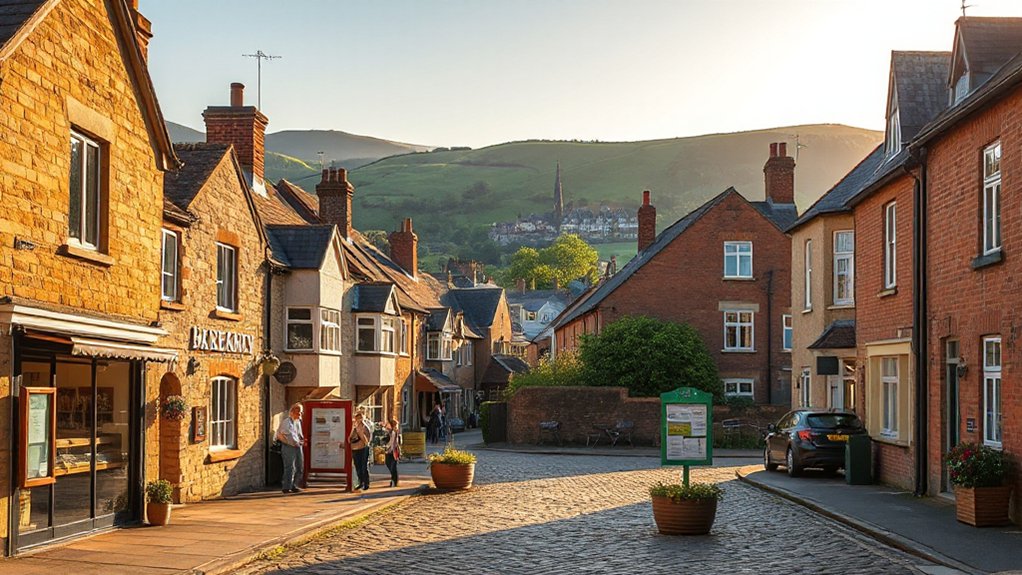
Northern England shifts the value case from Midlands infrastructure plays to a mix of stronger cashflow potential and rising lifestyle-led demand, with pricing that often sits well below southern benchmarks. If you’re targeting resilient demand, look at market towns with rail links into Leeds, Manchester, and Newcastle, where commuter renters support higher occupancy and tighter voids.
You’ll often see stronger gross yields in places like Hebden Bridge, Ilkley, Morpeth, and Kendal, driven by constrained stock, tourism spend, and remote-worker migration. Prioritise walkable centres, independent retail density, and school catchments to protect downside. Check turnover rates and days-on-market as leading indicators of liquidity. You’ll also gain social “stickiness” from local traditions and year-round community events, which correlates with longer tenancies and lower churn.
Best Small Towns to Buy in Wales and Scotland
In Wales, you’ll see demand clustering around community hubs where schools, healthcare, and local employment support steadier year-round occupancy. In Scotland, you’re likely to track stronger interest in coastal villages, where lifestyle migration and short-let performance have lifted buyer competition. Across both markets, you can shortlist towns where relative affordability aligns with connectivity—fast rail links, reliable road access, and solid broadband keep price growth tied to commuting and remote-work trends.
Community Hubs In Wales
As buyers chase stronger community ties and everyday convenience, Wales’ small-town “community hubs” have started to outperform quieter villages on demand signals such as faster sale times and tighter price discounts. You’ll see this most in rail-linked market towns where schools, GP surgeries, supermarkets, and coworking spaces sit within a short walk of housing stock.
When you target hubs such as Abergavenny, Narberth, and Mold, you’re buying into higher year-round footfall, steadier rental demand, and more frequent listings, which supports price transparency. Look for high street vacancy rates that are falling, not rising, and check local planning pipelines for refurbishments over greenfield sprawl. Strong local traditions—food markets, eisteddfod events, sports clubs—translate into measurable community engagement, helping newcomers integrate and reducing churn.
Coastal Villages In Scotland
Community hubs in Wales show how walkable amenities tighten demand, but Scotland’s coastal villages prove you can get similar liquidity with a sea-view premium when access and year-round services line up. You’ll see tighter listing volumes in places like Fife’s East Neuk and Moray Coast, where family homes and cottages turnover steadily and days-on-market can shorten in peak seasons. Buyers pay for Seaside charm, but you can protect resale by prioritising villages with primary schools, GP access, and active local associations that run events beyond summer. Coastal heritage also supports demand: harbours, protected streetscapes, and food-led tourism create repeat visitation that converts to second-home and retirement purchases. If you target modernised stock with flood-resilience upgrades, you’ll reduce insurance friction and keep offers competitive year-round.
Affordability And Connectivity
While coastal hotspots often command a lifestyle premium, many small towns across Wales and Scotland still let you buy in at lower price points without sacrificing links to jobs, healthcare, or rail corridors. You’ll often find better value in rail-adjacent markets like Abergavenny, Llandudno Junction, and Perthshire commuter towns, where demand tracks station proximity and sub-60-minute access to larger employment hubs.
You can also hedge cost volatility by targeting diversified local economies: public-sector anchors, tourism, and light industry tend to stabilise rental demand. Look for broadband upgrades and active transport plans, which correlate with faster price growth and shorter void periods. Importantly, you don’t trade away belonging—strong local traditions and dense social networks increase resident retention, improving neighbourhood stability and resale liquidity over time.
How to Test the Community Before You Buy?
Even if the price per square foot and rental yields look strong on paper, you’ll still want evidence that the town’s day-to-day life matches your priorities before you buy. Start with hard signals: turnout at neighborhood events, membership growth in sports clubs, and frequency of local volunteerism drives. Check parish and council minutes for participation rates, planning disputes, and resident-led initiatives.
Run a two-week test: visit at commute time, school run, and weekend evenings, then track footfall on the high street and park usage. Compare crime and antisocial behaviour rates to the county average, and scan Ofsted outcomes and GP capacity. Finally, talk to letting agents and shop owners about tenant churn, new-business openings, and how quickly word spreads—high cohesion shows up in low churn and active noticeboards.
Frequently Asked Questions
Do Friendly Towns Have Higher Council Tax or Service Charges?
Friendly towns don’t consistently have higher council tax or service charges; you’ll see variation. Strong community cohesion often aligns with better local amenities, but charges depend on property banding, housing type, and service scope.
How Easy Is It to Rent Out the Property if Plans Change?
You’ll usually rent it out fairly easily—coincidentally, the same month you list often signals local rental demand. Track listing days and void rates; low tenant turnover boosts stability, while spikes suggest tighter screening.
Are There Restrictions on Holiday Lets or Airbnb in These Towns?
Yes—many towns apply Holiday let regulations and Airbnb restrictions via planning rules, licensing, and lease covenants. You’ll need to check Article 4 directions, council registration schemes, and local enforcement trends before buying.
What Home Insurance Costs Should I Expect in Smaller UK Towns?
Expect £200–£600/year, but here’s the twist: flood risk can double it overnight. Premiums track Property valuation, rebuild cost, and claims trends. You’ll save by comparing Insurance providers, upping excess, improving security, and alarms.
How Competitive Are Bidding Wars for Homes in These Communities?
You’ll find bidding wars moderately competitive: in-demand listings often attract 3–8 offers, selling 5–15% over asking. Track local market trends weekly, and use property valuation strategies—comparable sales, condition adjustments, and bid ceilings.
Conclusion
You’ve seen the stats behind sociable, small-town living: steady sale demand, shorter selling times, safer streets, and stronger school scores often track with tighter ties. Now match numbers to needs—budget bands, commute corridors, and childcare choices. Then validate the vibe: visit village venues, chat in cafés, and scan community calendars for clubs, causes, and council updates. When the data and day-to-day both deliver, you’ll buy with confidence.
About the Author