Start by spotting what’s stealing light—small daylight entry points, low-lumen bulbs, narrow beams, or matte, textured walls that absorb glow. You’ll brighten fast with high-LRV paint in soft whites or pale greige, an eggshell wall finish, and lighter ceilings and semi-gloss trim to boost bounce. Add mirrors opposite windows, plus metal and glass accents for highlights. Layer lighting with downlights and sconces, use 2700–3000K 90+ CRI bulbs, and consider glass doors or transoms. Keep going for smart spacing, beam control, and mistake-proof upgrades.
Key Takeaways
- Audit bulbs and fixtures: use 2700–3000K, CRI 90+ lamps with wide beams to avoid hotspots and dark walls.
- Paint walls and ceilings high-LRV shades; choose eggshell/satin walls and semi-gloss trim to boost light bounce.
- Add mirrors on long walls or opposite glazing to borrow daylight and reduce the hallway tunnel effect.
- Increase light transfer with glass doors, sidelights, or transoms; use tempered low-iron glass for brighter, safer openings.
- Layer lighting with downlights, wall sconces, and night lights; space fixtures to minimize shadows from trim, artwork, and door swings.
Figure Out What’s Darkening Your Hallway
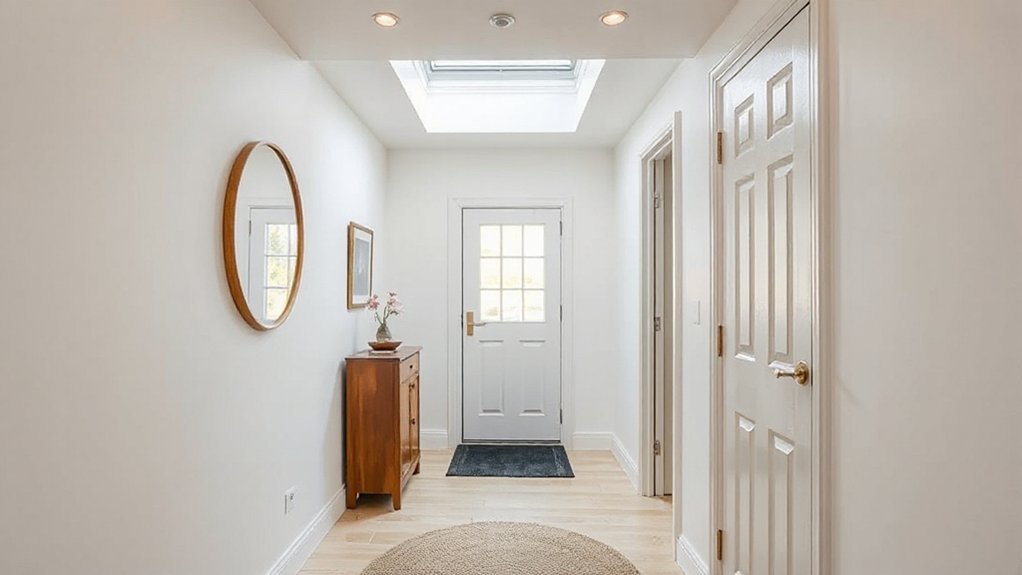
Before you add a single fixture, pinpoint what’s actually stealing light from your hallway: limited daylight, poor bulb output, or surfaces that absorb more than they reflect. Track how Natural light enters—borrowed from adjacent rooms, sidelights, or transoms—and note where it dies: deep door recesses, sharp turns, or oversized ceiling drops.
Next, audit your lamps. Check lumen ratings, color temperature, and beam spread; narrow beams create hot spots while leaving walls dull. Measure shadows at night to see if sconces, cans, or pendants are blocked by trim or artwork. Finally, study materials. Dark runners, matte ceilings, and heavy wall textures scatter and swallow illumination. Even glossy frames can cause glare that makes the corridor feel dimmer overall.
Choose Hallway Paint Colors That Reflect Light
Because paint acts like a continuous light modifier, the color you put on hallway walls and ceilings can brighten the entire run more than another small fixture. Choose high-LRV shades—soft warm whites, pale greige, light sand, or airy blush—to push available light farther without turning the corridor sterile. Use Color psychology: warm neutrals feel welcoming, while cool off-whites read crisp and open; muted pastels can calm tight passages without dimming them. Match undertones to your bulbs so the finish doesn’t go sallow or icy. Pick eggshell or satin for a subtle sheen that helps reflect light yet hides wall texture. Prioritize paint durability in high-traffic zones: scrub-resistant, low-VOC formulas keep scuffs from turning into shadowy streaks over time.
Paint Hallway Trim and Ceilings for Bounce
Even with bright wall color, you’ll lose light if the ceiling and trim soak it up instead of throwing it back into the space. Paint the ceiling a clean, light tone to lift the plane overhead and reduce shadow banding where walls meet. If your hallway feels low, match the ceiling to your wall color but go one step lighter to soften the edge and stretch height.
Use Color contrast strategically on trim: lighter trim sharpens doorways and baseboards, helping your eye read clear boundaries in tight circulation zones. Choose durable paint on casings and baseboards so scuffs don’t darken the perimeter. Add trim accents by carrying the trim color onto crown or stair stringers, creating continuous, brighter lines that guide light deeper through the corridor.
Use Gloss, Metal, and Glass to Reflect Light
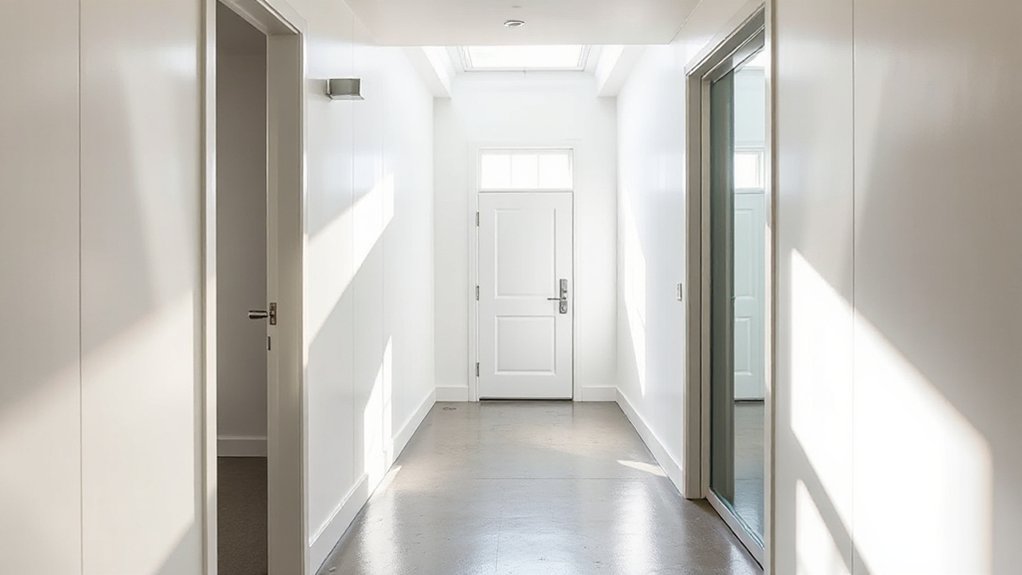
Switch to high-gloss paint on key surfaces, and you’ll bounce light deeper down the corridor while sharpening edges and sightlines. Add metallic accents and hardware to throw small, bright highlights where your eye needs them most. Bring in glass doors or panels to borrow light from adjacent rooms and keep the hallway feeling open, not boxed in.
High-Gloss Paint Finishes
How do you make a narrow, dark hallway feel brighter without adding a single fixture? Swap absorptive wall color for high-gloss paint. Its smooth film turns stray daylight and lamp spill into a soft, continuous bounce, pushing illumination deeper down the corridor and sharpening edges. Use it on the ceiling to lift height, or on one long wall to create a subtle “light panel” that widens the run.
Keep adjoining areas calmer with matte finishes so the gloss reads intentional, not chaotic. Avoid heavily textured surfaces on the glossy plane; they scatter highlights into glare and emphasize bumps. Prep matters: skim-coat, sand, and prime so the finish behaves like glassy reflection. Choose a light, warm-neutral tint to prevent a cold, clinical shine.
Metallic Accents And Hardware
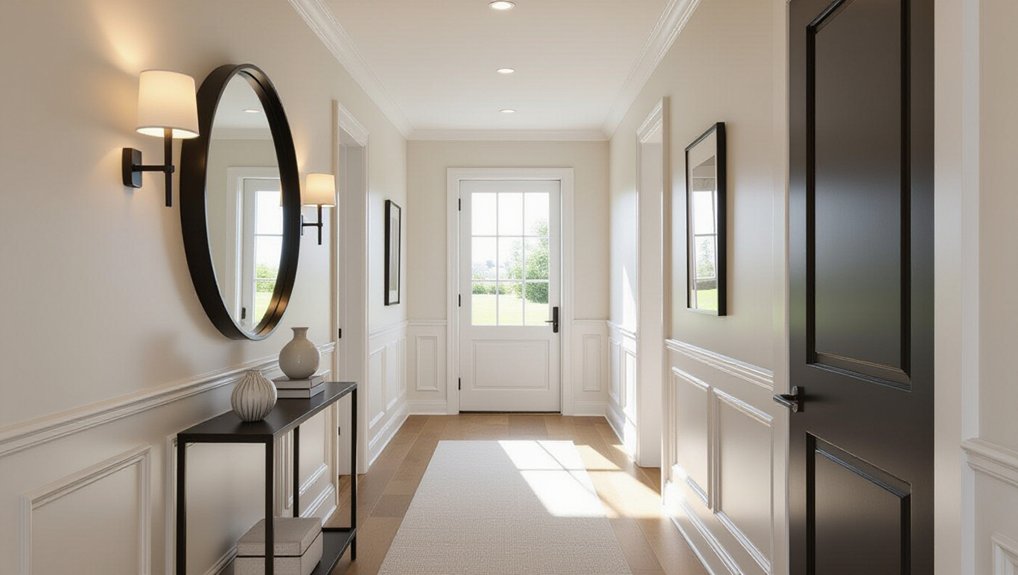
Once you’ve turned walls into a light-bouncing surface, refine the hallway’s brightness with small, high-impact reflectors: metallic accents, glossy hardware, and glass. Swap matte knobs for polished brass, chrome, or nickel so they catch ceiling light and throw it back down the run. Choose hardware finishes with a clear, mirror-like topcoat rather than brushed textures that absorb glow. Add metallic accents where sightlines naturally land: a slim picture rail, a warm-toned sconce backplate, or a narrow console with a reflective edge. Keep metals consistent to avoid visual noise, but vary sheen—high polish on touch points, softer satin on larger pieces. Even a glossy tray or framed mirror-like art can lift shadows.
Glass Doors And Panels
Because hallways steal daylight the moment it turns a corner, glass doors and interior panels act like light conduits, pulling brightness through without sacrificing separation. Swap solid slabs for clear or low‑iron panes to keep sightlines open and bounce window light deeper. If you need privacy, choose Frosted glass with a smooth, satin etch; it diffuses glare while still feeding ambient luminance. Add Glass partitions beside doorways to widen the “light aperture” and make narrow runs feel broader. Specify polished metal pulls, slim blackened steel frames, or warm brass to add crisp highlights that read like extra light. Finish nearby trim in semi‑gloss so reflections stay clean, controlled, and easy to maintain day to day.
Place Mirrors to Brighten a Dark Hallway
If your hallway feels dim even with the lights on, mirrors can redirect every available lumen and make the space read wider and taller. Start with intentional mirror placement: hang a large piece opposite a windowed room or glass door to borrow daylight and push it deeper into the corridor. If you can’t face a bright opening, place mirrors on the long wall to extend sightlines and reduce tunnel effect. Choose reflective surfaces with clean, low-iron glass for truer color and higher clarity; heavily tinted or antiqued finishes absorb light. Keep frames slim and pale so they don’t visually block bounce. Align top edges with door heads for a crisp datum, and avoid seams that chop reflections.
Choose Hallway Lighting: Size, Spacing, Spread
You can’t fix a dark hallway with brighter bulbs alone—you need fixtures sized to the corridor’s scale so light lands on walls, floors, and trim instead of disappearing into the ceiling. You’ll space lights for even coverage, keeping pools of illumination from leaving shadowy gaps along paint, plaster, or wood paneling. You’ll also choose beam spread and direction—wide for wash, narrow for punch, aimed down the run and onto vertical surfaces—to make the passage feel longer, cleaner, and more open.
Fixture Size And Scale
While the fixture’s finish sets the mood, its size and scale determine whether a hallway feels evenly lit or patchy and cramped. Start by matching fixture size to ceiling height and corridor width: a tight passage needs slimmer profiles, while broader halls can take deeper drums or larger globes without glare. Aim for scale balance with doors, trim, and art so the light reads intentional, not undersized.
Consider materials and optics. Frosted glass and diffusers let a larger shade feel soft, while clear glass demands a smaller form to control brightness. Semi-flush mounts suit low ceilings; pendants need headroom and a compact drop. If you’re using sconces, choose a height and projection that won’t snag shoulders yet still washes the walls to widen the space visually.
Spacing For Even Coverage
Once the fixture’s size feels right, spacing becomes the tool that keeps the hallway from breaking into bright pools and dim gaps. Aim for a steady rhythm: place ceiling fixtures so their light overlaps slightly at floor level, then adjust based on ceiling height and corridor width. In tighter runs, closer intervals prevent the walls from swallowing light; in wider halls, you’ll space a bit farther while keeping the centerline consistent. Use your materials as cues—matte paint and textured plaster absorb more, so shorten distances; glossy trim, pale tile, and light oak reflect more, so you can open spacing. Account for natural light at ends or sidelights by stretching intervals nearest the brighter zone. Thoughtful spacing supports space optimization without extra fixtures.
Beam Spread And Direction
Because spacing only sets the rhythm, beam spread and direction decide whether the hallway reads as a continuous volume or a series of hotspots. You’ll get calmer light with wider optics that wash both walls, letting paint, plaster, or oak grain carry brightness. In narrow corridors, aim for a 60–90° spread to keep glare off glossy doors and framed glass. In wider runs, add wall-wash or asymmetric beams to pull light down vertical planes, not just the floor. Tight beam focus works when you want artwork pops or textured brick to rake with shadow. Use directional lighting to steer attention away from low ceilings, aiming fixtures along the length so reflections stretch, edges soften, and the space feels longer and cleaner.
Pick the Right Bulb Color (Kelvin) for Hallways
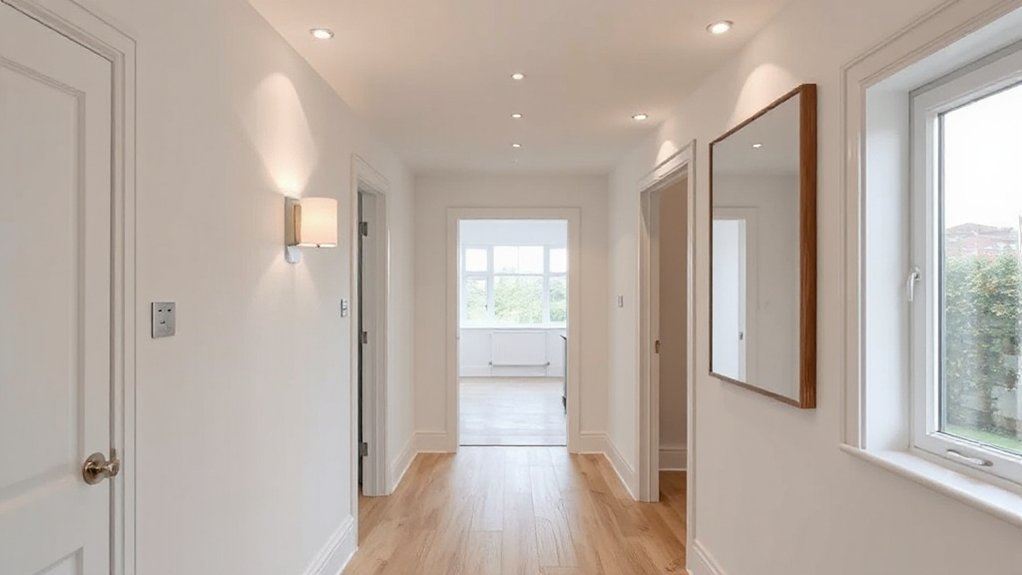
If your hallway feels cramped or gloomy, the bulb’s color temperature (measured in Kelvin) can change the space as much as the fixture itself. Aim for 2700–3000K if you want warmth that flatters wood trim, brass hardware, and creamy paint without turning corners amber. Choose 3000–3500K when you need a cleaner lift on white walls, light oak, and stone floors, keeping the passageway crisp but not clinical. Reserve 4000K for modern corridors with concrete, slate, or high-gloss finishes where you want sharp contrast and edge definition. Keep bulbs consistent along the run so your lighting mood doesn’t shift from cozy to sterile between doors. Look for high CRI (90+) to keep art and textiles true.
Steal Light With Glass Doors and Openings
When your hallway can’t borrow daylight from exterior walls, you can still pull brightness through the interior by swapping solid barriers for glass. Replace opaque doors with clear, frosted, or reeded glazing to transmit light while managing Privacy concerns. Consider a full‑lite door for maximum spread, or a half‑lite panel to keep visual clutter down.
Cut in transom windows above door heads to “share” daylight from adjacent rooms without sacrificing floor space. Add interior sidelights to widen the light aperture and make the corridor feel less tunnel‑like. If you’re opening walls, confirm structural considerations: identify load‑bearing studs, size headers correctly, and coordinate with electrical runs. Choose low‑iron glass for truer color, and specify tempered or laminated panes for durability and safety.
Avoid These Dark Hallway Lighting Mistakes
Glass doors, transoms, and sidelights can flood a corridor with borrowed daylight, but the wrong lighting choices will still leave the space feeling flat or patchy. Don’t rely on a single ceiling fixture; it creates glare and deep wall shadows. Instead, layer light: slim ceiling downlights for flow, wall sconces to wash vertical surfaces, and a low‑level night light for safety. Skip cool 5000K lamps that turn paint gray; choose 2700–3000K and high CRI to keep wood trim and stone warm. Place fixtures to avoid mirror hotspots and glossy door sheen. During Lighting installation, align spacing with door swings and artwork. Finally, don’t block hallway ventilation with bulky pendants or deep shades.
Frequently Asked Questions
How Can I Brighten a Hallway if I’M Renting and Can’T Paint?
You can brighten your rental hallway by swapping in brighter lighting fixtures, adding plug‑in sconces, and hanging wall mirrors to bounce light. Use peel‑and‑stick light tones, glossy frames, and reflective runners for lift.
What Are Budget-Friendly Upgrades That Make the Biggest Difference?
Swap in brighter lighting fixtures with higher-lumen LED bulbs, then add a large mirror to bounce light. Use peel-and-stick wall decor in light tones, plus a slim runner to warm up floors.
How Do I Childproof or Pet-Proof Mirrors and Glass in Narrow Halls?
After your toddler bumped the hall mirror, you’ll childproof by anchoring frames into studs, using safety-backed acrylic or tempered glass, and applying shatter film. Add corner guards and low-profile rails for Mirror safety, Glass protection.
Will Brightening My Hallway Affect My Home’s Resale Value?
Yes, brightening your hallway can boost resale value because you’ll improve first impressions and flow. You’ll help buyers notice finishes with better Lighting fixtures and cohesive Color schemes, making tight spaces feel larger.
Do Smart Switches or Motion Sensors Help Make Hallways Feel Brighter?
Yes, smart switches and motion sensors can make hallways feel brighter by keeping light available when you need it. You’ll reduce shadows, boost perceived openness, and prevent dingy corners with timed dimming. Choose warm LEDs, matte walls.
Conclusion
Congrats—you’ve solved your hallway’s favorite hobby: pretending it’s a cave. Now you’ll bounce light with smart paint, brighter trim, and a ceiling that isn’t auditioning for gloom. You’ll add gloss, metal, and glass like they’re reflectivity upgrades, not “decor.” You’ll hang mirrors that actually aim light, space fixtures for even spread, and choose sane Kelvin. Steal daylight through glass doors, and stop worshipping one sad sconce.
About the Author