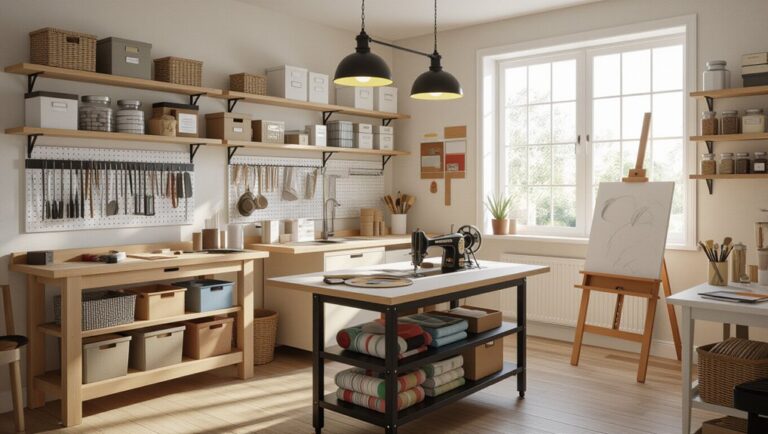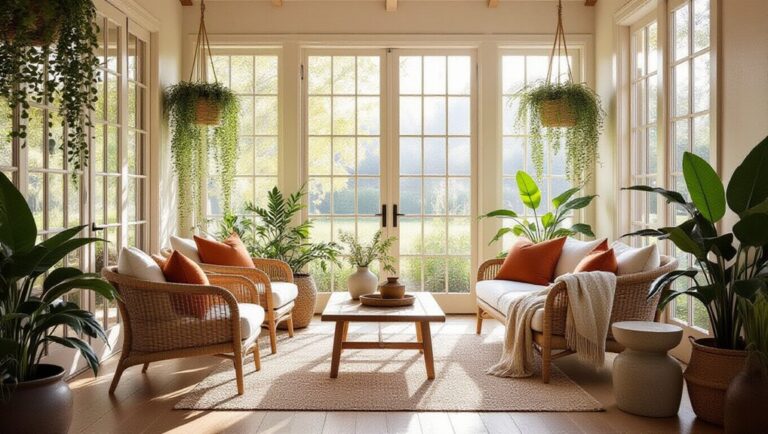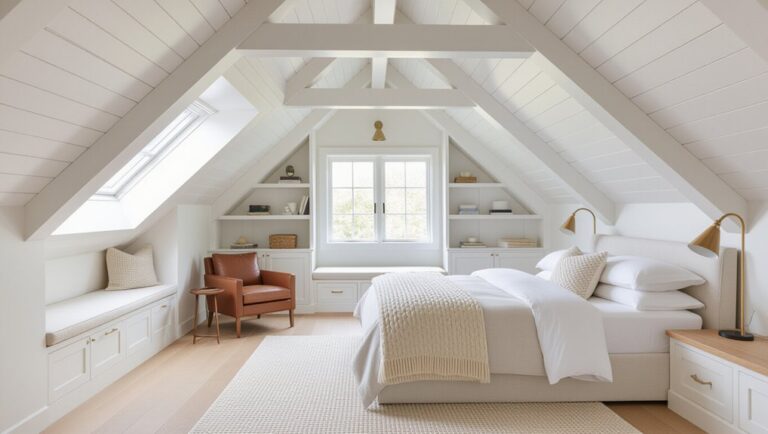
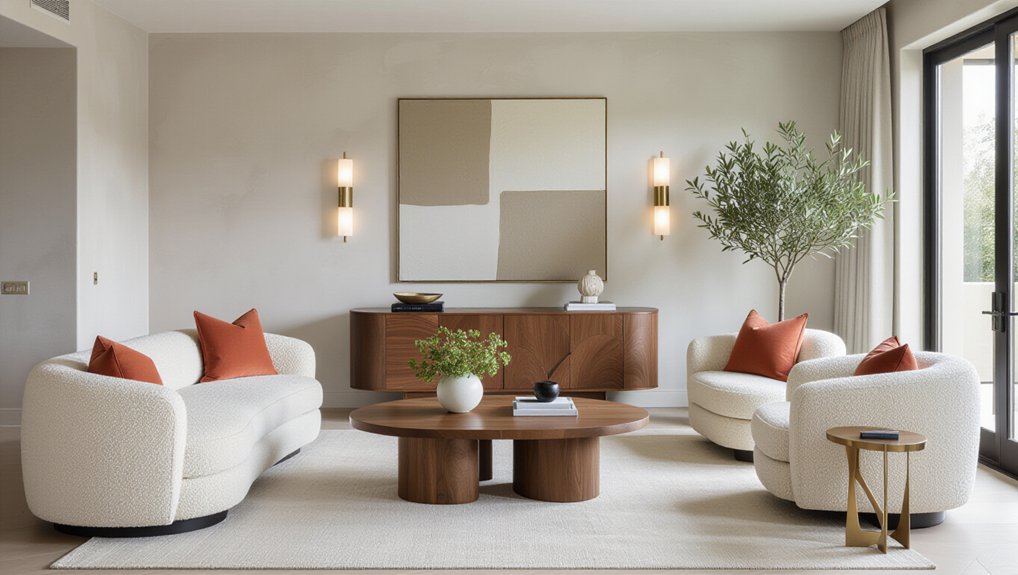
You’ll keep your home looking current by swapping cool gray for warm neutrals like sand, oat, and camel, choosing real wood and stone over faux finishes, and bringing in soft curves instead of harsh angles. Layer ambient, task, and accent lighting on dimmers, and mix metals rather than buying matching sets. Go for statement stone and warm minimalism over busy granite and sterile white. Add vintage accents, and try color-drenching instead of accent walls. More ideas are just ahead.
Key Takeaways
- Warm neutrals like sand, oat, camel, and taupe are replacing cool gray backdrops for calmer, more lived-in rooms.
- Color drenching in bold hues (inky teal, oxblood, butter yellow) is still chic, especially when layered with varied sheens and textures.
- Natural, honest materials—oak, walnut, travertine, clay tile, linen—are in; faux finishes and plastic-looking surfaces are on the way out.
- Curved furniture and soft architectural details (arches, rounded tables, swooped sofas) remain popular, replacing sharp, boxy silhouettes.
- Layered lighting, mixed metals, and tactile textures are in; perfectly matched metal sets and disposable micro-trend decor are fading.
Interior Design Trends: Warm Neutrals, Not Cool Gray
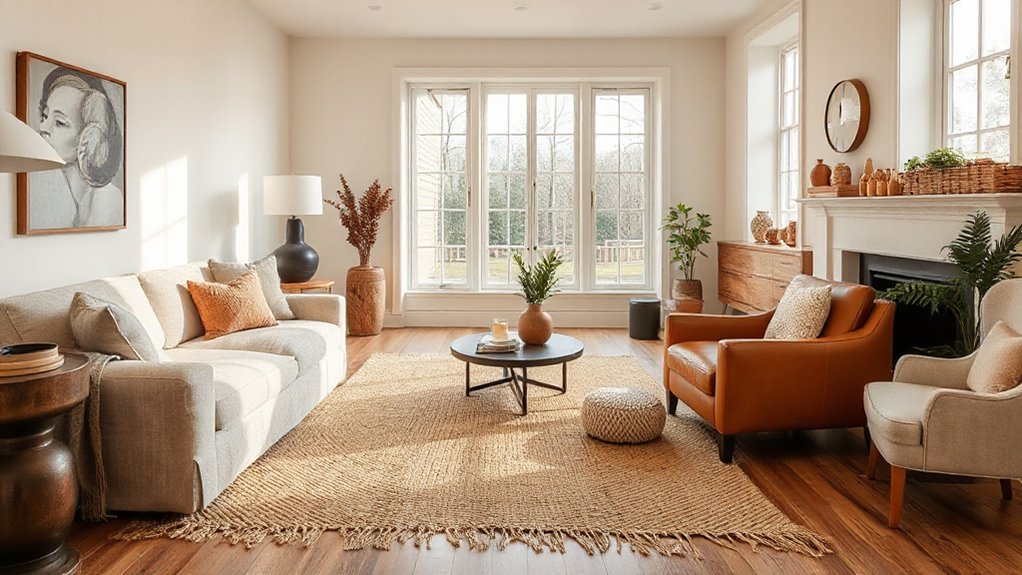
While cool gray once dominated everything from walls to sofas, warm neutrals are now the go-to backdrop for interiors that feel current and inviting. You’ll get more dimension with sand, oat, camel, and soft taupe, especially when you layer them across paint, upholstery, and textured rugs. Color psychology backs it up: warmer undertones read as calmer, friendlier, and more lived-in than steely grays. To keep it modern, you’ll balance beige with crisp black accents, aged brass, or walnut, not more gray. Pay attention to lighting ambiance, too—2700K to 3000K bulbs make these shades glow, while cooler LEDs can flatten them. Finish with tonal artwork and matte finishes for a cohesive, elevated look.
Interior Design Trends: Natural Materials Over Faux Finishes
As homeowners chase spaces that feel grounded and authentic, natural materials are edging out faux finishes that read flat up close. You’ll see more real oak, rift-sawn walnut, travertine, clay tile, and linen—surfaces with grain, pores, and patina that age beautifully instead of peeling or printing.
Swap printed “marble” laminates and plastic-y wood looks for honest slabs, veneers, and stone offcuts that feel elevated and intentional. You can still stay budget-smart by mixing hero pieces—like a solid-wood vanity or soapstone counter—with simpler surrounds. Prioritize Eco friendly finishes: low-VOC sealers, natural oils, limewash, and mineral paints that let materials breathe. Finish the look with handcrafted details—troweled plaster, woven shades, and artisan hardware—so your space feels curated, not copied.
Interior Design Trends: Curves In, Harsh Angles Out
You’re seeing soft arches and rounded lines replace boxy geometry, instantly making a space feel calmer and more current. You can lean into the look with curved furniture silhouettes—think swooped sofas, round tables, and boucle chairs that soften the room’s rhythm. You’ll also want to reduce sharp corners with rounded-edge casegoods, curved rugs, and arched mirrors that smooth the flow.
Soft Arches And Rounded Lines
If your space feels a little too sharp and boxy, soft arches and rounded lines bring instant ease and polish. You can swap hard corners for arched doorways, cased openings, or a shallow niche that reads elevated, not fussy. Keep proportions clean so the curve feels intentional, not thematic.
To make it look current, you’ll want Architectural symmetry: repeat an arch across a hall, mirror a rounded opening with a matching wall detail, or align curves with lighting and sightlines. Add subtle structural ornamentation—plaster reveals, fluted casing, or a curved ceiling transition—so the architecture does the styling. Stick to one or two curved moments per room, and let straight lines support them. The result feels calmer, softer, and quietly luxe.
Curved Furniture Silhouettes
Softened architecture sets the tone—now carry that same ease into the pieces you live on. Curved sofas, barrel chairs, and crescent sectionals read instantly current, making a room feel tailored yet relaxed. You’ll notice how the silhouette softens sightlines and creates a smoother visual rhythm from entry to seating zone.
Choose pieces that prioritize Furniture ergonomics: a supportive wraparound back, a gently sloped arm, and seat depth that fits your lounging style. Curves also help with space optimization, especially in open plans where a rounded sectional can guide circulation and define a conversation area without extra partitions. Pair one sculptural curve with straighter casegoods for balance, and keep upholstery tactile—bouclé, velvet, or performance linen—so the form feels as good as it looks.
Reducing Sharp Corners
As curved silhouettes take over seating, the rest of the room looks better when sharp corners step back. You’ll notice the shift immediately: circulation feels smoother, and your eye glides instead of stopping at hard edges. Swap boxy coffee tables for oval or waterfall styles, and choose rounded console edges in high-traffic zones.
You don’t have to erase structure—just edit it. Keep angular accents in small doses: a faceted mirror, a geometric sconce, a crisp picture frame. Then balance them with soft trims, arched doorways, bullnose countertops, or a radius on built-ins. Even textiles help; layer a plush rug to cushion corners and visually blur lines. The vibe stays modern, but it reads calmer, safer, and more intentional throughout.
Interior Design Trends: Layered Lighting Beats One Fixture
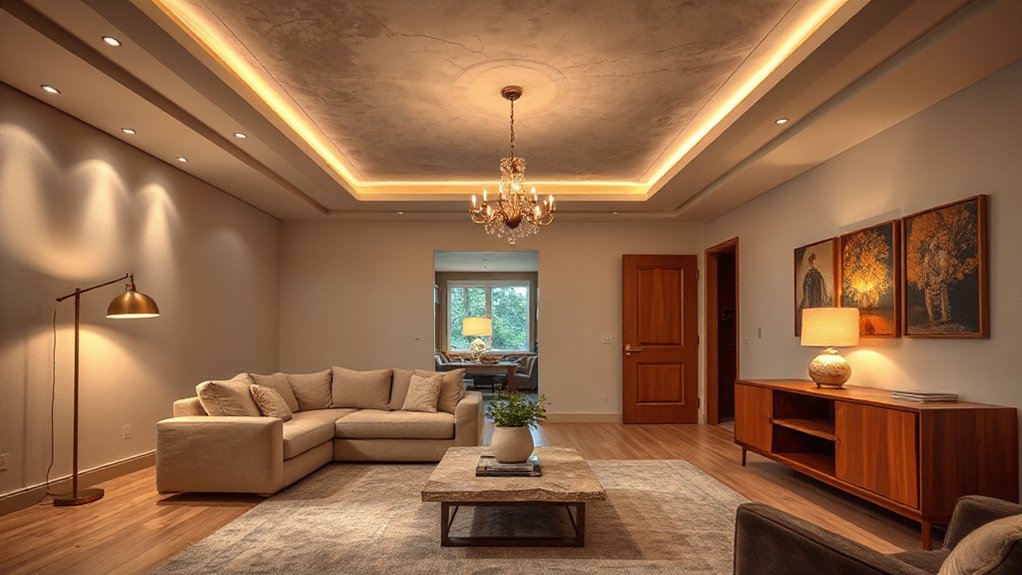
While a single overhead fixture might cover the basics, it won’t give your space the depth today’s interiors demand. You’ll get a more elevated look by building Layered lighting: start with ceiling or recessed light for ambient illumination, then add task lighting where you work—pendants over the island, a reading lamp by the sofa, a sconce near the vanity.
Finish with accent light to create mood and highlight what you love: art, shelves, textured walls, plants. Put each layer on its own dimmer or smart switch so you can shift from bright mornings to low-glow evenings without swapping bulbs. This approach makes small rooms feel larger, open plans feel zoned, and every surface look intentional.
Interior Design Trends: Mix Metals, Skip Matching Sets
Layered lighting sets the mood; mixed metals give it edge. You don’t need a perfectly matched suite of hardware, faucets, and fixtures anymore. In fact, those showroom sets can read flat and dated. Instead, mix metals with intention: anchor the room with one dominant finish, then add a secondary and a small accent for punch. Think warm brass with matte black, or polished nickel with aged bronze—just repeat each finish at least twice so it feels designed, not random. Pair metals with contrasting textures to keep the look elevated: ribbed glass, nubby linen, lacquer, or raw wood. You’ll get depth, character, and a collected vibe that still feels cohesive. Keep silhouettes consistent for calm.
Interior Design Trends: Statement Stone Over Busy Granite
If you want your kitchen or bath to feel current, trade busy, speckled granite for statement stone with cleaner movement. Think bold veining, calmer fields, and slabs that read like artwork instead of confetti. You’ll get a more tailored look that photographs beautifully and won’t fight your cabinetry or hardware choices.
Choose Luxury countertops in quartzite, marble-look porcelain, or honed marble if you’re willing to patina. Keep the edge simple, then let scale do the talking: full-height backsplashes, waterfall ends, or a thick miter that feels substantial. Add tactile appeal with textured stone—leathered finishes, brushed surfaces, or chiseled details on an island. The result feels elevated, intentional, and decidedly now, without looking fussy or dated.
Interior Design Trends: Warm Minimalism, Not Sterile White
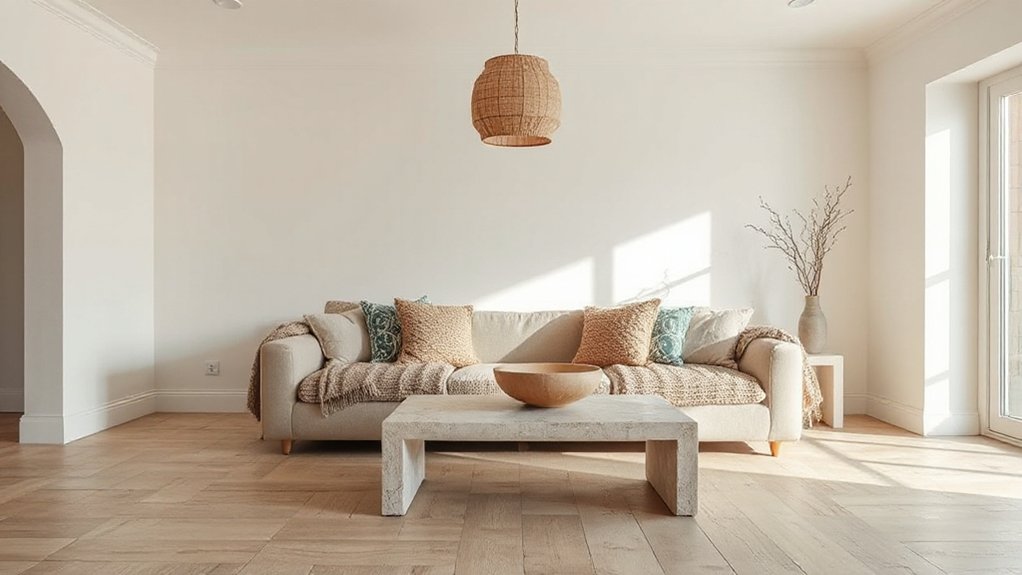
You’re trading sterile all-white rooms for warm minimalism that still feels crisp and edited. You’ll lean into cozy neutrals—think oat, sand, greige—and layer in soft textures like bouclé, linen, and brushed wood. You keep the clutter out, but you don’t strip the comfort away.
Cozy Neutrals, Soft Textures
While stark white once read as “clean,” today’s warm minimalism leans into cozy neutrals and soft textures that make a space feel lived-in, not showroom-cold. You’ll see creamy ivories, oat, sand, and greige replacing icy paint, then layered with tactile finishes that catch the light.
Skip flat, slick surfaces and bring in textured fabrics—bouclé, linen, brushed cotton, chunky knits—so every seat feels inviting. Add plush cushions in tonal mixes to soften sharp silhouettes and make even streamlined sofas feel relaxed. Ground the look with natural fibers like jute or wool, and keep patterns subtle: tone-on-tone stripes, nubby weaves, quiet checks. The result reads elevated, calming, and current—without trying too hard.
Minimalism With Warmth
Because the stark, gallery-white look can feel more clinical than calming, warm minimalism shifts the focus to restraint with comfort—think clean lines softened by creamy paint, pale woods, and matte finishes that absorb light instead of bouncing it harshly. You still edit hard, but you layer in tactility: boucle, linen, suede, and Eclectic textures that make a simple room feel lived-in.Keep the palette quiet—oat, clay, sand—then add one grounded contrast, like smoked oak or aged bronze. Instead of filling shelves, you curate a few sculptural pieces and let negative space do the work. When you want energy, you don’t clutter; you punctuate with bold patterns on a single pillow, runner, or art print. The result feels calm, not cold, and the vibe stays timeless.
Interior Design Trends: Vintage Accents Over Micro-Trend Decor
As fast décor cycles burn out, vintage accents are taking the lead over micro-trend pieces that feel dated in a season. You get more character—and better ROI—when you anchor a room with items that already proved their staying power: a patinated brass lamp, a midcentury credenza, a framed textile, or a sculptural ceramic.
Instead of chasing micro trend decor, you can curate: mix one inherited piece with cleaner-lined staples, then repeat its finish or shape elsewhere for cohesion. You’ll also dodge the landfill mindset of novelty buys by choosing solid materials and repairable construction. Shop antique malls, estate sales, and resale apps, and don’t fear a little wear—it reads collected, not cluttered. The result feels personal, elevated, and far less timestamped.
Interior Design Trends: Color-Drenching Over Accent Walls
Once you see color-drenching done right, accent walls start to feel like a half-measure. Instead of one painted rectangle, you wrap the room—walls, trim, even the ceiling—in a single hue or tightly related tones. The result looks intentional, editorial, and instantly modern, especially when you commit to Bold color palettes like inky teal, oxblood, or butter yellow.
To keep it chic, you balance saturation with texture: matte paint on walls, semi-gloss on molding, lacquer on a door. You can layer geometric patterns through rugs, tile, or pillows so the room still has movement without breaking the color story. If you’re nervous, start in a powder room or hallway. You’ll get impact, cohesion, and a space that photographs like a magazine.
Frequently Asked Questions
How Do I Update My Home on a Tight Decorating Budget?
Start with Budget friendly upgrades: paint a wall, swap hardware, and restyle shelves. Use DIY decoration tips like thrifted frames, peel-and-stick accents, and updated lighting. Shop your home, rotate textiles, and declutter for instant polish.
Which Design Trends Increase Home Resale Value the Most?
You’ll boost resale most by “boring” timeless updates: neutral paint, refreshed kitchens/baths, consistent flooring, great lighting, and curb appeal. Add smart luxury upgrades and subtle vintage accents—they’ll look personal, yet buyers see move-in-ready value.
How Can I Make a Small Room Feel Larger Without Remodeling?
You can make a small room feel larger by using space enhancing furniture, keeping lines airy, and choosing light reflecting decor. You’ll boost brightness with layered lighting, hang mirrors strategically, and stick to tonal palettes.
What Are the Best Interior Design Apps for Planning Layouts?
You’ll love Planner 5D, Room Planner, and Homestyler for layouts—80% of homeowners regret a design choice, so plan smart. You’ll get virtual staging, crisp 3D visualization, and drag-and-drop furniture that keeps your vibe on-trend.
How Do I Choose Durable, Pet-Friendly Fabrics and Finishes?
Choose tightly woven pet resistant fabrics like performance velvet or microfiber, and prioritize leather alternatives that wipe clean. Specify stain proof finishes on walls and floors, test swatches for snagging, and stick to mid-tone colors.
Conclusion
You’re watching the pendulum swing: cool gray fades like a rainy day, and warm neutrals move in like golden hour. You’ll feel the difference in real wood, softly veined stone, and curves that smooth the room’s edges. Layer your lighting like jewelry, mix metals with confidence, and keep décor personal—vintage beats viral every time. Instead of stark white or timid accent walls, go all-in with warm minimalism and color-drenching that wraps your space like a tailored coat.
About the Author