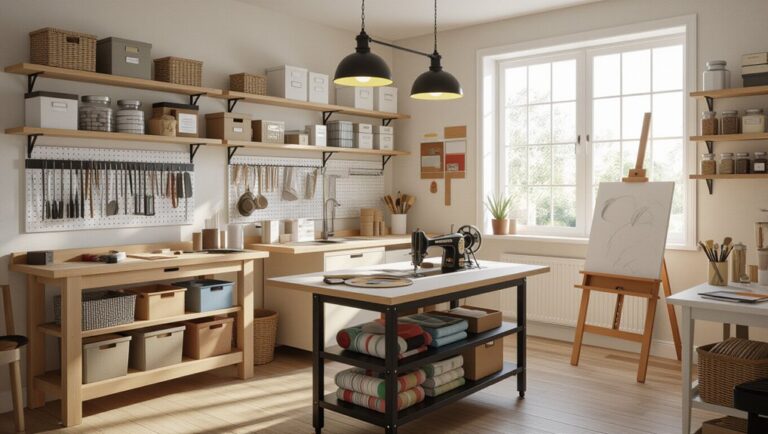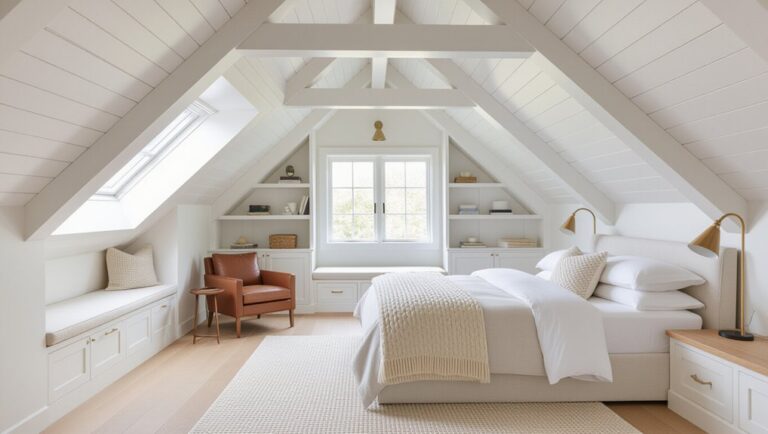
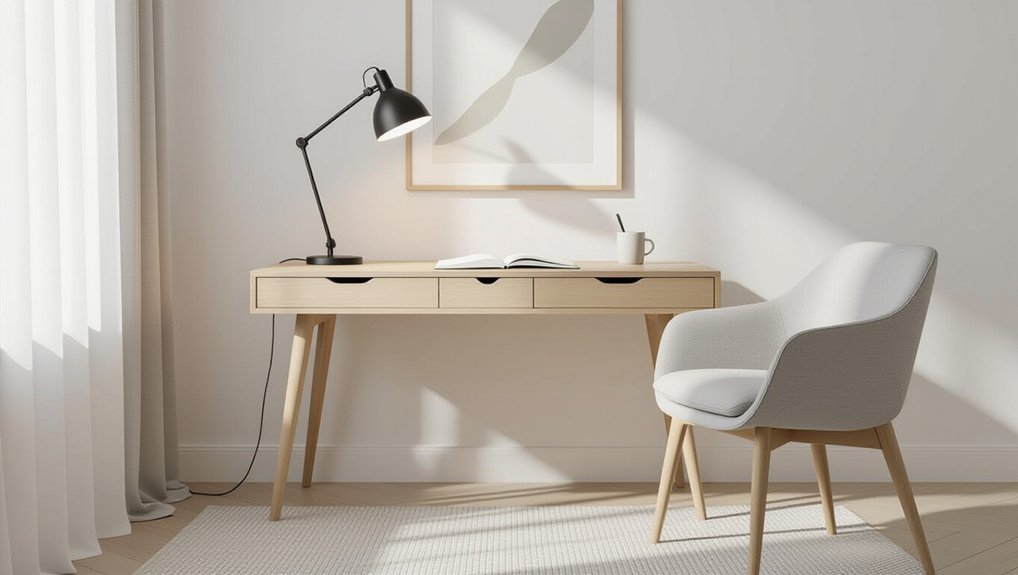
Start by clearing your desk in three quick passes: wipe the surface, sort what’s left, then contain and label. Keep only today’s essentials—laptop, notebook, pen, water—and route everything else into trays or closed drawers. Place your desk for easy movement and keep pathways clear of cords. Use a three-tone palette (warm neutral, muted blue-green, tiny warm accent) with matte finishes and warm 2700–3000K lighting. Next, you’ll refine storage, cables, textures, and a 10-minute weekly reset.
Key Takeaways
- Declutter in three quick passes: clear surfaces, sort items, then contain and label what remains.
- Keep only today’s essentials on the desk—laptop, notebook, pen, and water—so the surface stays 70% clear.
- Plan layout with 24–30 inch walkways, storage zoned by frequency, and cables routed along baseboards to avoid visual and physical clutter.
- Choose a minimalist desk and ergonomic chair, then set posture with feet flat, knees at 90°, and elbows level for comfort.
- Use a muted three-tone palette with matte finishes, layered warm lighting (2700–3000K), and one or two subtle textures for calm cohesion.
Declutter Your Study Space in Three Passes
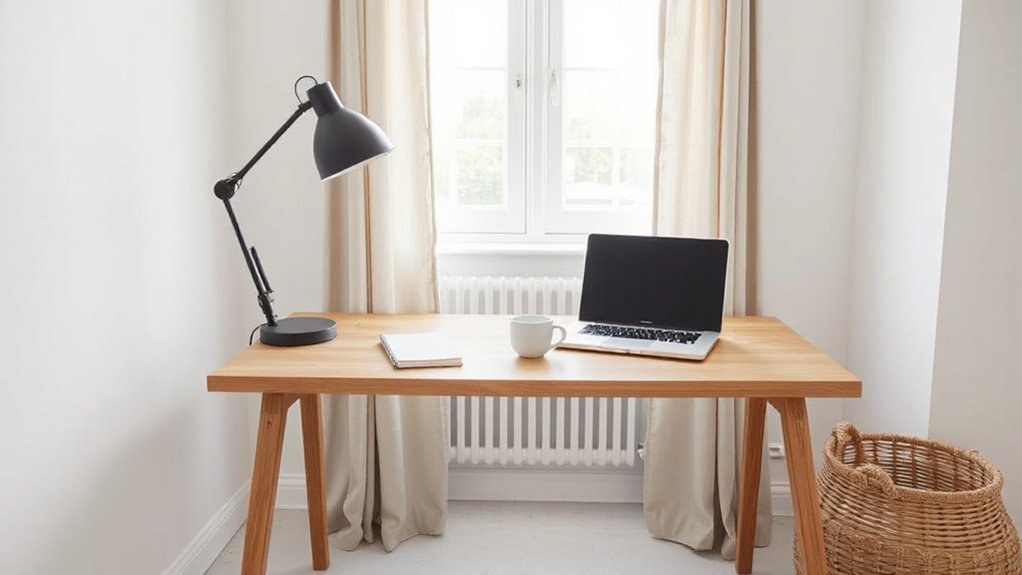
Although a tidy desk won’t magically do the studying for you, it will remove the low-grade friction that makes focus feel harder than it needs to be. Do three quick passes. Pass one: clear the surface completely, then return only today’s essentials—laptop, notebook, pen, water. Everything else goes into a temporary “staging” box. Pass two: sort that box by function. Create tight zones for writing tools, paper, tech, and reference; discard duplicates, dried pens, and outdated handouts. Pass three: contain and label. Use one tray for in-progress items, one file for archival papers, and one pouch for cables. Keep colors muted and textures simple—minimalist decor tips that support study space organization without visual noise.
Plan a Minimalist Study Space Layout That Flows
Now you’ll map a minimalist layout that feels effortless to use: keep movement paths clear from doorway to desk, chair, and storage. Place your desk where you can sit, stand, and pull out drawers without squeezing past obstacles. Then zone storage by frequency—daily tools within arm’s reach, backups tucked away—so the room stays visually quiet and easy to navigate.
Prioritize Clear Movement Paths
Before you choose storage bins or wall art, map how you’ll move through the space so nothing interrupts your focus. Stand at the doorway and trace your daily route: in, sit, reach for light, exit. Keep that line open for clear movement, with no chair legs snagging rugs or cords crossing your steps. Aim for a spacious layout by giving the chair a full slide-back zone and leaving at least 24–30 inches for walkways. Place the desk so you don’t have to pivot around corners, and align it with natural sightlines to reduce visual friction. Tuck cables along baseboards, keep floors bare, and use one low-profile mat if you need acoustic softness. Your body stays calm when paths stay predictable.
Zone Desk And Storage
Clear walkways set the baseline; zoning your desk and storage keeps the rest of the room equally frictionless. Anchor your desk to a wall or window line so cables, light, and sightlines stay controlled. Keep your primary reach zone clean: laptop, task lamp, one tray. Everything else moves to a secondary zone within one step—low cabinet, slim drawer unit, or closed shelf—to protect visual calm. Assign storage by frequency: daily tools in top drawers, reference items mid-level, archives up high. Use matching boxes and labeled folders to remove decision fatigue. Add personalized decor sparingly: one framed print or a single plant. Finally, set ambient sound near the perimeter—speaker or white-noise machine—so focus stays centered.
Choose a Minimalist Desk and Ergonomic Chair
Choose a minimalist desk with a clean surface, slim profile, and just enough storage to keep your essentials—laptop, notebook, lamp—neatly contained. Pair it with an ergonomic chair that supports your lower back, lets your feet rest flat, and keeps your elbows at desk height so you don’t strain. You’ll create a streamlined setup that looks calm and keeps your body steady through long sessions.
Streamlined Desk Essentials
When your desk and chair work quietly in the background, your focus stays on the page instead of on constant adjustments. Keep the surface nearly empty: laptop or book, a single pen, and one notepad. Choose streamlined desk accessories that disappear visually—matte pen cup, low-profile tray, and a cable clip that routes cords straight down the rear leg. Use minimalist workspace organization to assign every item a home: drawers for supplies, a vertical file for current papers, and a small catchall for keys to prevent desktop scatter. Add one task light with a clean stem and warm bulb, positioned to avoid screen glare. Leave negative space along your writing edge so your hands move freely.
Ergonomic Chair Support
A pared-back desktop works best if your seating keeps you steady and relaxed for long stretches. Choose a chair with clean lines, matte finishes, and a slim profile that doesn’t visually crowd the room. Prioritize adjustable seat height, lumbar support, and a firm, breathable back so you can align hips, spine, and shoulders without strain.
Dial in your setup: set feet flat, knees near 90 degrees, and elbows level with the desktop. Add a neutral cushion only if it improves posture, not softness. The ergonomic chair benefits show up as fewer fidgets, steadier focus, and less end-of-day tension. If you can’t buy new, look for supportive seating options like a simple task chair with add-on lumbar support or a minimalist kneeling chair you can tuck away.
Pick a 3-Color Palette for Calm Focus
Even if your desk stays tidy, a scattered color scheme can keep your mind on alert instead of on task. Use Color psychology to pick three tones that cue calm focus: a soft neutral base, a muted cool, and one warm accent. Start with warm white, light greige, or pale sand for walls and large surfaces to reduce glare. Add a desaturated blue-green on a chair cushion, lamp shade, or desk mat to slow visual tempo and support mood enhancement. Finish with a controlled accent—terracotta, brass, or walnut—kept to small items like a pencil cup or frame. Repeat each color at least twice so the room feels intentional, not busy. Keep finishes matte for a quieter look.
Hide Visual Clutter With Minimalist Storage
Your three-color palette works best when your eye lands on color blocks—not on piles of paper and loose supplies. Give every item a home with closed storage: a slim drawer unit, a lidded box, or a cabinet with flat fronts that match your palette. Sort by use, not by category: daily tools in the top drawer, backup supplies below, and cables in a labeled pouch. Keep your desktop at 70% clear; limit what stays out to one pen cup and one notebook stand. Use vertical files for active projects, then archive the rest in identical folders. Add Decorative accessories sparingly—a single tray or bookend. Finish with Personal touches that double as storage, like a keepsake box or framed corkboard.
Set Up Calm Lighting (Task + Ambient)
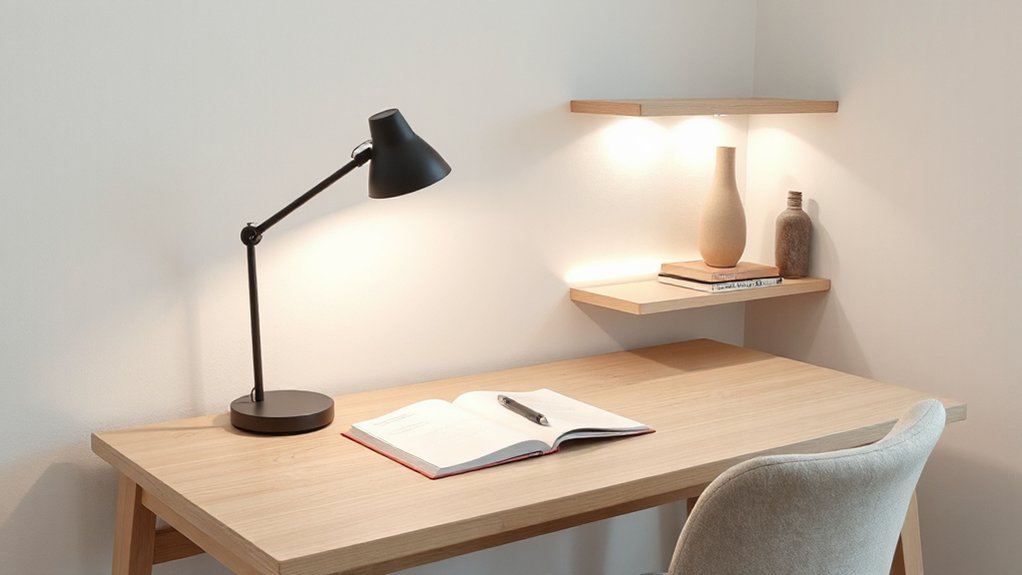
Because harsh overhead glare keeps your brain on alert, set your study space up with two layers of light: focused task lighting and soft ambient glow. Place an adjustable desk lamp slightly in front of your non-writing hand, angled down to brighten pages without casting shadows. Choose task lighting around 4000K for clean clarity, and keep the beam narrow so the rest of the room stays visually quiet. Then add ambient glow with a dimmable floor lamp or shaded table lamp behind you, set low enough to soften contrast on your screen. Aim for warm 2700–3000K, and bounce light off a wall for an even wash. Skip exposed bulbs; use linen, paper, or frosted glass for a calm, minimalist finish.
Tame Cables and Tech in Your Desk Setup
When cables sprawl across your desk, visual noise builds fast, so corral tech into a clean, repeatable layout. Start by choosing one charging zone: place a wireless charging pad on the same corner every day, and park your phone and earbuds there. Mount a slim power strip under the desktop, then route all cords down one leg with adhesive clips for consistent cable management.
Keep only essential devices on the surface: laptop, monitor, and one input method. Dock everything else in a drawer or a vertical stand. Shorten runs with the right-length cables, bundle slack with reusable ties, and label ends so you don’t hunt. Finally, align screens and accessories to one gridline, leaving a clear writing lane.
Add 2–3 Calming Textures (Without Clutter)
Although a streamlined desk keeps your mind clear, a few intentional textures can soften the setup without adding visual noise. Choose two or three tactile elements and repeat them subtly so the scene stays cohesive.
Start with soft fabric textures: a low-pile wool desk mat or a linen cushion on your chair. Keep colors muted and edges clean to avoid a busy outline. Next, introduce smooth stone surfaces with a small marble coaster, a soapstone paperweight, or a travertine tray that corrals pens. Finish with one warm accent, like a light oak bookend or cork mouse pad, to balance the cool stone. Limit each texture to a single, well-sized piece, and you’ll get calm, grounded focus without clutter.
Maintain Your Minimalist Study Space in 10 Minutes Weekly
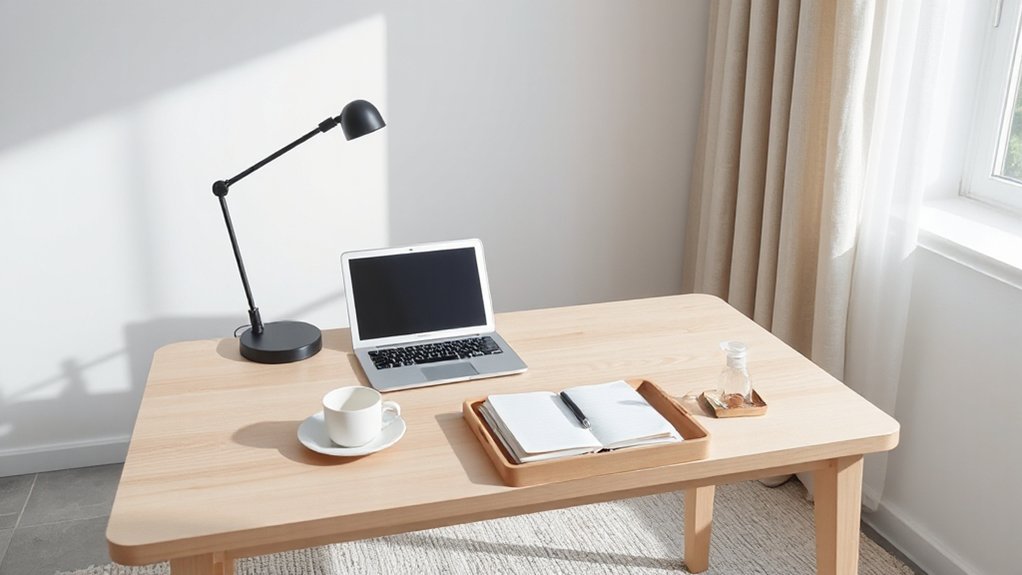
Even if your desk looks serene today, it won’t stay that way unless you reset it with a quick weekly ritual. Set a 10-minute timer. First minute: clear the surface, then return only your essentials—lamp, notebook, pen cup. Next, wipe the desktop and screen with a microfiber cloth, and coil cables into one tidy loop. Minute five: empty paper scraps into recycling and file the rest in a single folder. Minute seven: refresh your palette using Color psychology—keep one calming hue visible (soft green, warm white), and remove loud, mismatched items. Final minutes: realign chair, straighten books, and add a small cue for Daily mindfulness, like a simple breathing card or stone. You’ll start Monday focused.
Frequently Asked Questions
What Minimalist Decor Works in Rental Spaces Without Drilling or Painting?
Use peel-and-stick hooks for framed prints, tension rods for curtains, and removable wall decals. Add decorative storage baskets and trays, plus ambient lighting like plug-in sconces or LED strips. Choose neutral textiles and a slim rug.
How Can I Create a Calm Study Space in a Shared Bedroom?
Like a telegram, you’ll carve calm in a shared bedroom by claiming a desk corner, adding personalized decor sparingly, using noise-canceling headphones, and making smart lighting choices—warm task lamp plus dim ambient—then storing clutter in bins.
What Are Budget-Friendly Minimalist Upgrades for a Study Space?
Choose secondhand ergonomic furniture, like a supportive chair and simple desk. Add ambient lighting with an LED strip or warm desk lamp. Hide cables, use matching storage boxes, hang one clean print, declutter daily.
How Do I Reduce Noise Distractions in a Minimalist Study Setup?
Use soundproofing techniques: add a dense rug, fabric curtains, and door seals, then reposition your desk away from walls. Pair noise canceling accessories—ANC headphones or a white-noise machine—with tidy cable routing.
Which Plants Are Best for Focus and Low-Maintenance Minimalist Rooms?
Choose snake plant, ZZ plant, pothos, and peace lily; they’re air purifying plants that stay tidy. The “plants boost focus” theory holds modestly—better air and calm visuals help. Add indoor succulents sparingly.
Conclusion
You’ve shaped a study space that works because you’ve removed what doesn’t. Keep the layout clear, your desk and chair purposeful, and your three-color palette steady. Store supplies out of sight, layer task and ambient lighting, and route cables so tech disappears into the background. Add just two or three calming textures for warmth. Remember: less is more. Spend 10 minutes each week resetting surfaces, and your focus stays effortless.
About the Author