Walk through your bungalow like an old friend and decide what you’ll keep, fix, and quietly modernize. Save sturdy doors, trim, and built-ins, then tackle squeaky floors, sticky windows, and tired plaster. Update wiring, add outlets, improve ventilation, and seal drafts without erasing character. Choose muted creams, putty, sage, or dusty blue beside warm woodwork, and add one deep anchor hue. Finish with vintage lighting, layered textiles, plants, and personal art—there’s more to build on.
Key Takeaways
- Preserve original built-ins, trim, and solid doors, repairing squeaks, plaster, and windows to keep authentic bungalow character.
- Modernize essentials discreetly: update wiring, add outlets, improve ventilation, and seal drafts without erasing period details.
- Open layouts by removing nonstructural barriers while protecting key sightlines and adding creative storage that feels original.
- Choose cottage-core paints that flatter woodwork: muted creams, putty, sage, dusty blues, and one deeper anchor tone.
- Use period-friendly finishes and layers: satin hardware, vintage lighting, real-grain floors, natural textiles, plants, and personal art for cozy warmth.
Plan Your Bungalow Renovation: Keep, Fix, Modernize
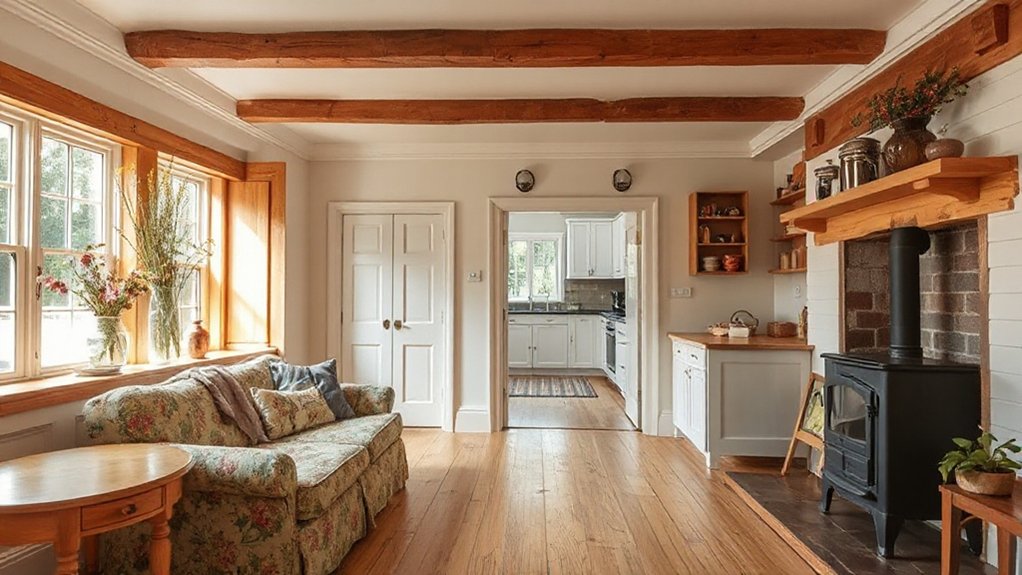
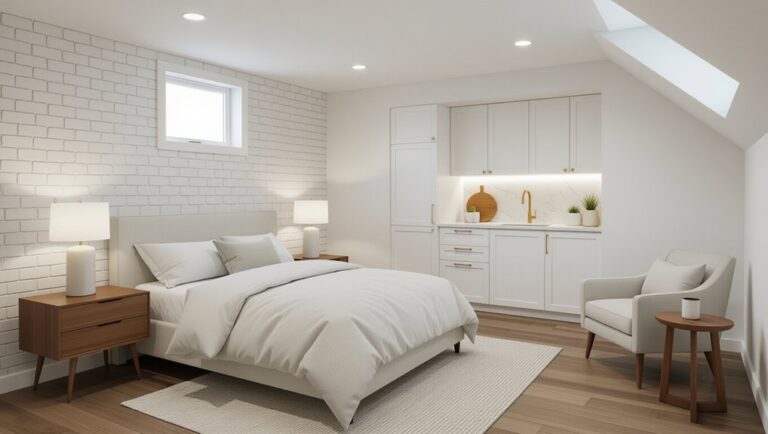
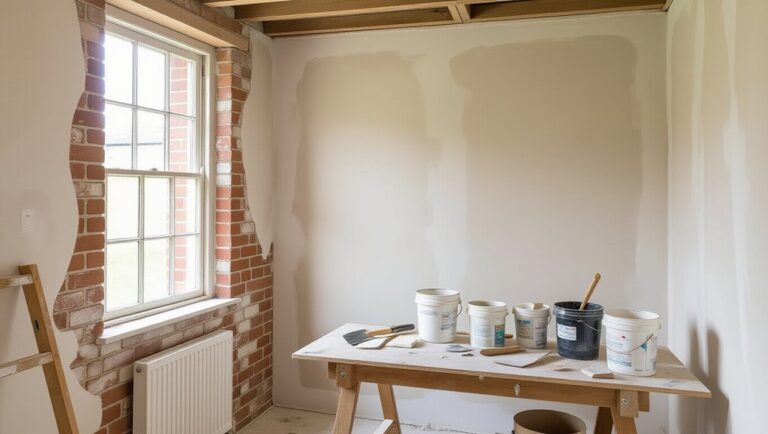
Before you pick up a paintbrush or fall for a cottage-core wallpaper, walk through your bungalow like you’re touring an old friend and decide what you’ll keep, what you’ll fix, and what you’ll modernize. Keep the built-ins, trim, and any sturdy doors that still shut with a satisfying click. Fix the squeaky floors, sticky windows, and tired plaster so everything feels solid again, not merely “charming.” Modernize where daily life demands it: update wiring, add outlets, improve ventilation, and tighten drafts. If you want an Open concept layout, remove only nonstructural barriers and preserve sightlines to original details. Plan Creative storage solutions—bench drawers, pantry pullouts, and coat hooks by the back door—so clutter doesn’t crowd your cozy rooms. Budget for surprises, and document each choice.
Choose Cottage-Core Colors That Suit Bungalow Woodwork
Once you’ve decided what original woodwork stays and what gets repaired, let that honeyed trim and those built-in shelves set the tone for your cottage-core palette. Start your Color palette selection by sampling paints right on the wall beside casings and picture rails; daylight shifts the wood from amber to rose. If your oak reads warm, choose muted creams, putty, and faded sage so the grain feels sunlit, not yellowed. If it leans red, soften it with dusty blue, mushroom, or lavender-gray. Keep one deeper anchor—ink green or brick—to ground cozy nooks without fighting the trim. Use Woodwork highlighting by keeping adjacent wall colors a step lighter, so profiles stay crisp and nostalgic. Test swatches for a week, then commit.
Use Period-Friendly Finishes, Floors, and Vintage Lighting
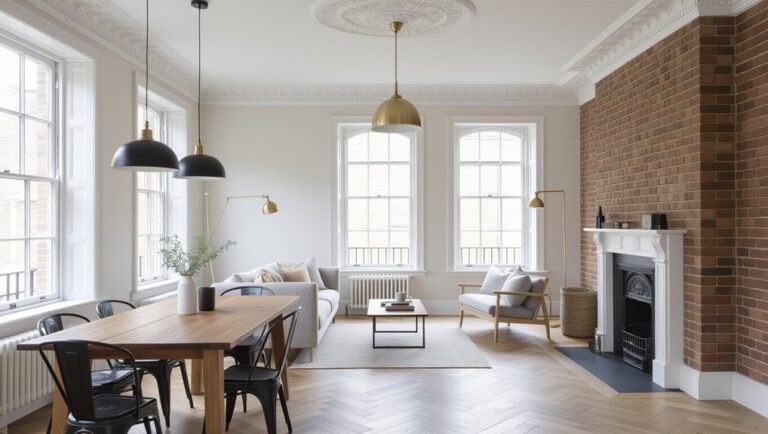
Although your bungalow can handle a bit of cottage-core whimsy, it looks—and feels—most authentic when you match finishes to what the house would’ve worn in the first place: satin or oil-rubbed hardware, plaster-friendly matte paint, and floors that show real grain under a warm, low-sheen seal. Choose antique hardware with weighty backplates and simple knobs; it’ll read honest against stained trim. If your floors are gone or patched, lay reclaimed wood in narrow strips, then tint the finish amber to echo age, not orange. Keep baseboards and casings crisp with a durable enamel in a soft sheen. For lighting, hunt vintage schoolhouse globes or opaline pendants, and use warm LEDs so evenings feel like lamplight, not a showroom.
Layer Textiles, Plants, and Art for Cottage-Core Warmth
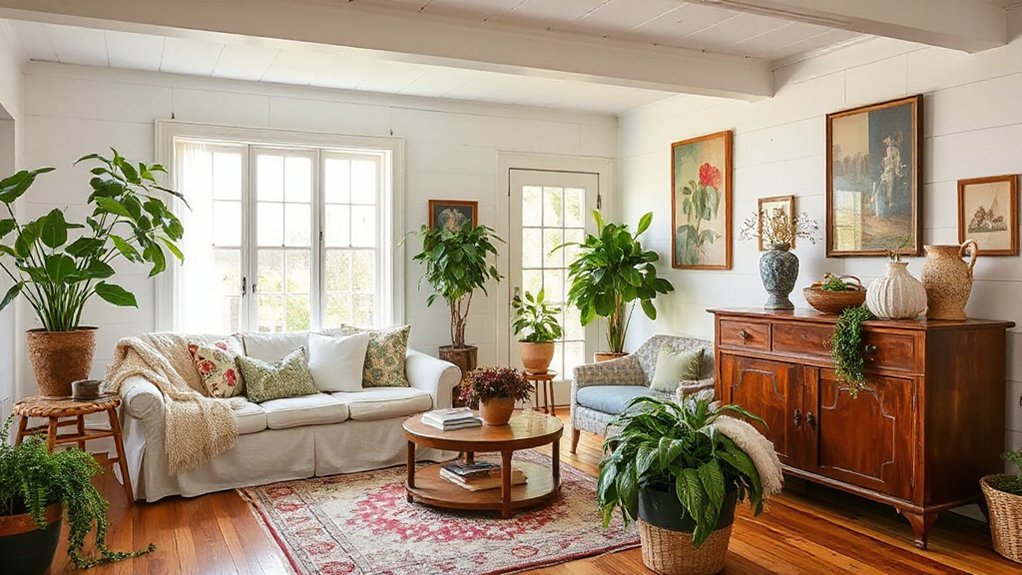
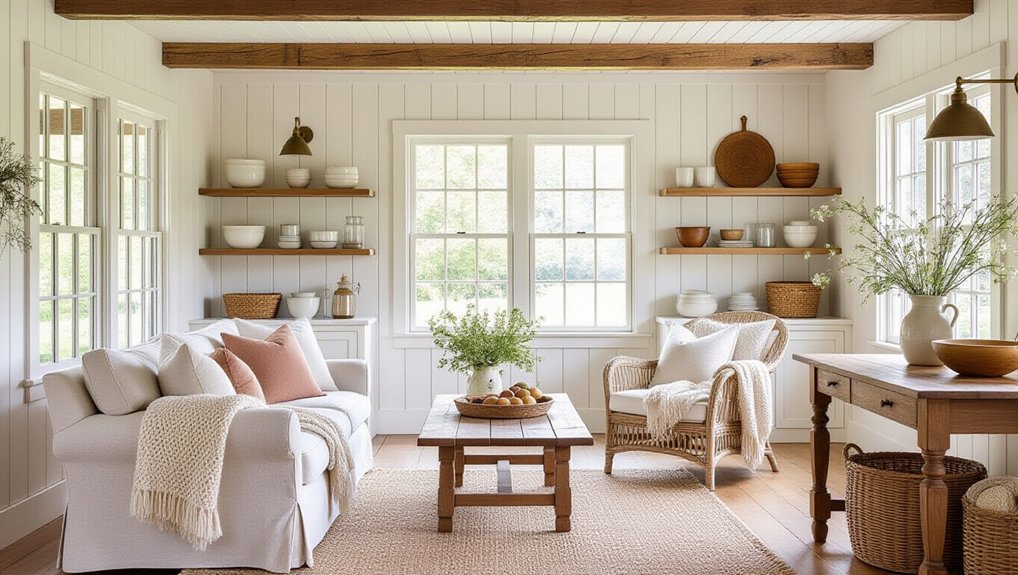
With your floors glowing softly and vintage fixtures casting warm light, you can start adding the lived-in layers that make cottage-core feel right in a bungalow: textiles, plants, and art that look collected over time. Start Textile layering with a woven runner in the hall, then add a faded quilt over the sofa and a ticking-stripe pillow mix. Choose natural fibers—linen, cotton, wool—so everything breathes and wears beautifully.
Bring in botanical accents that suit your light: a pothos on a high shelf, herbs in the kitchen window, and a fern in the bath. Use terracotta, enamel, and thrifted crocks as planters. Finish with art that feels personal—pressed flowers, small landscapes, and family photos in mismatched frames. Hang pieces low and group them tightly for cozy, bungalow scale.
Frequently Asked Questions
How Do I Budget for Hidden Structural Issues During Bungalow Renovations?
You budget for hidden structural issues by adding a 10–20% contingency, commissioning early structural assessments, and prioritizing repairs. Track hidden costs in a simple ledger, get three bids, and pause cosmetic upgrades until you’re confident.
Do I Need Permits to Change Interior Walls or Add Skylights?
Like a telegram, yes—you’ll often need permits. Interior wall modifications usually require approval if load-bearing or electrical changes occur. Follow Skylight installation guidelines, especially for structural cuts, flashing, and egress. Call your local building office.
How Can I Improve Insulation Without Damaging Original Plaster Walls?
You can boost thermal insulation without harming plaster by air-sealing gaps, adding attic/basement insulation, and using interior storm windows. You’ll cut drafts and echoes with soundproofing techniques like rugs, heavy curtains, and door sweeps.
What’s the Best Way to Address Knob-And-Tube Wiring Safely?
Hire a licensed electrician to map circuits, de-energize, and replace knob-and-tube entirely; don’t splice it. Prioritize Electrical safety with a new panel, grounded outlets, and GFCIs. Plan Wiring upgrades before insulating, preserving old woodwork.
How Do I Integrate Smart-Home Tech Without Disrupting Cottage-Core Style?
You’ll weave smart-home tech in like a telegraph in your parlor: hide hubs in cupboards, choose warm smart lighting with linen shades, use discreet voice control, and run cables behind trim so your cozy vignettes stay intact.
Conclusion
As you finish, let your bungalow feel like a well-loved quilt: patched with care, still strong at the seams. You’ll keep the honest woodwork, fix what’s tired, and modernize what must—quietly, like new stitches beneath old fabric. Cottage-core colors will soften the grain, while period-friendly floors and vintage lights glow like lanterns at dusk. Then you’ll layer linens, plants, and art until every room reads warm, useful, and remembered.
About the Author