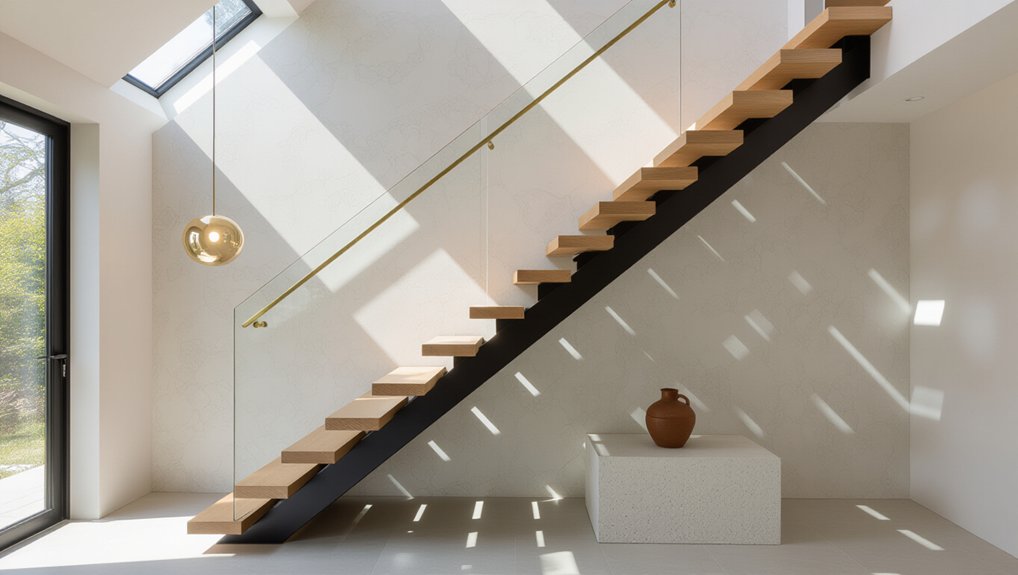
Turn your stairwell into a vertical gallery by mapping sightlines from entry points and choosing a bold hero element, like oversized art, a sculptural newel, or a textured wall. Pull the eye upward with a slim multi-drop pendant, then layer recessed lights, sconces, and step LEDs on dimmers. Use tonal paint, graphic wallpaper at landings, and slim trim to frame height. Finish with durable treads, a tailored runner, and open balustrades—next you’ll see how to refine each detail.
Key Takeaways
- Plan focal points and sightlines so a hero artwork, textured wall, or sculptural newel draws attention from key approach angles.
- Use layered lighting—multi-drop pendant, recessed downlights, sconces, and step lights—with high-CRI LEDs and dimmers for safety and drama.
- Choose wall finishes that emphasize height: continuous paint up the incline, bold wallpaper at landings, and slim trim to frame geometry cleanly.
- Upgrade stair materials with durable treads, modern stain-and-seal, and a slim-border runner to improve acoustics while visually widening the flight.
- Create a cohesive gallery run with consistent frames and aligned centers along the pitch, adding a landing mirror to reflect light and expand space.
Pick Your Stairwell Focal Points and Sightlines
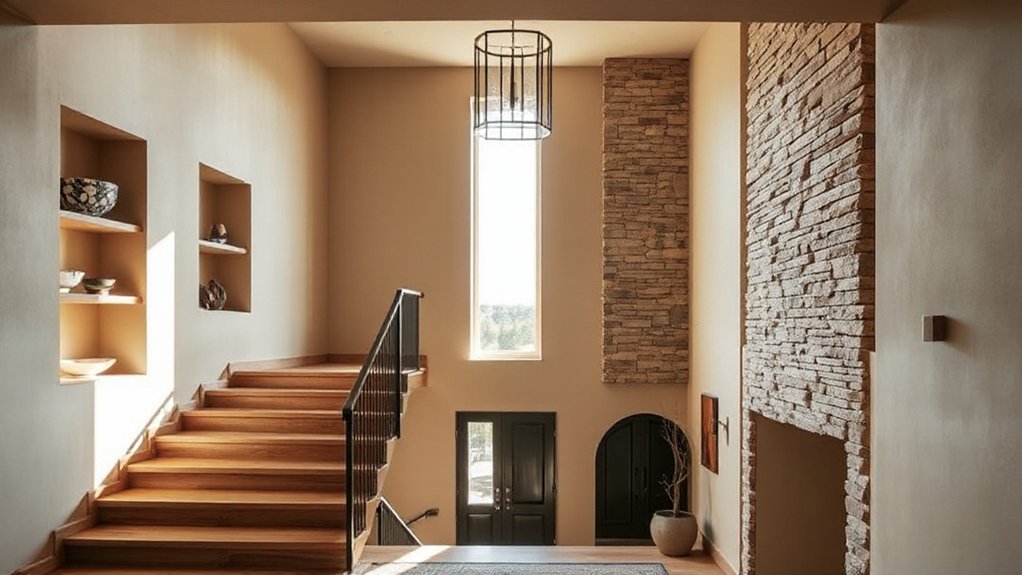
Because a stairwell reads like a vertical gallery, you’ll get the most impact by deciding what people should notice first from each landing, doorway, and the bottom step. Stand at key approach points and map your sightlines: what’s framed, what’s cropped, and where the eye naturally pauses. Use a single hero element—an oversized artwork, sculptural newel, or textured wall finish—so every rise feels intentional.
Then reinforce that story with Unique railing designs that track the ascent like a ribbon, keeping views open while adding graphic rhythm. Let Architectural stair shapes do spatial work: a switchback can spotlight a landing vignette, while a curved run can pull attention upward and soften corners. Edit nearby decor so the focal point stays dominant throughout.
Choose Stairwell Lighting for Height and Impact
When you light a stairwell well, you’re not just adding brightness—you’re stretching the space vertically and directing every step. Hang a slim multi-drop pendant or a modern chandelier through the void to pull the eye upward, and size it so it reads from both landings without crowding headroom. Layer it with recessed downlights or wall sconces to eliminate harsh shadows on treads and balusters. Choose LED options with high CRI so wood tones and finishes look crisp, not flat. Add step lights along the stringer for a subtle runway effect. Install dimming controls to shift from bright, safe circulation at night to a softer glow for entertaining. Keep glare off sightlines by aiming beams across, not straight down.
Frame the Stairwell With Paint, Wallpaper, and Trim
After you’ve set the stairwell’s mood with lighting, lock in the architecture with color and pattern. Treat the run of walls as one vertical room: choose Color schemes that either stretch height (tonal whites, warm greiges) or add drama (inky blue with crisp white). Use paint to emphasize geometry—carry a single hue up the incline, then cap it with a clean ceiling line to prevent visual chop.
Wallpaper turns landings into moments. Keep the scale tight in narrow stairwells, and go bolder where you’ve got breathing room. Add trim to frame it all: slim picture-frame molding, a sharp chair-rail, or a paneled wainscot. Finish with Decorative borders along the rail or at the top edge for tailored definition.
Select Stair Materials: Treads, Runners, and Balustrades
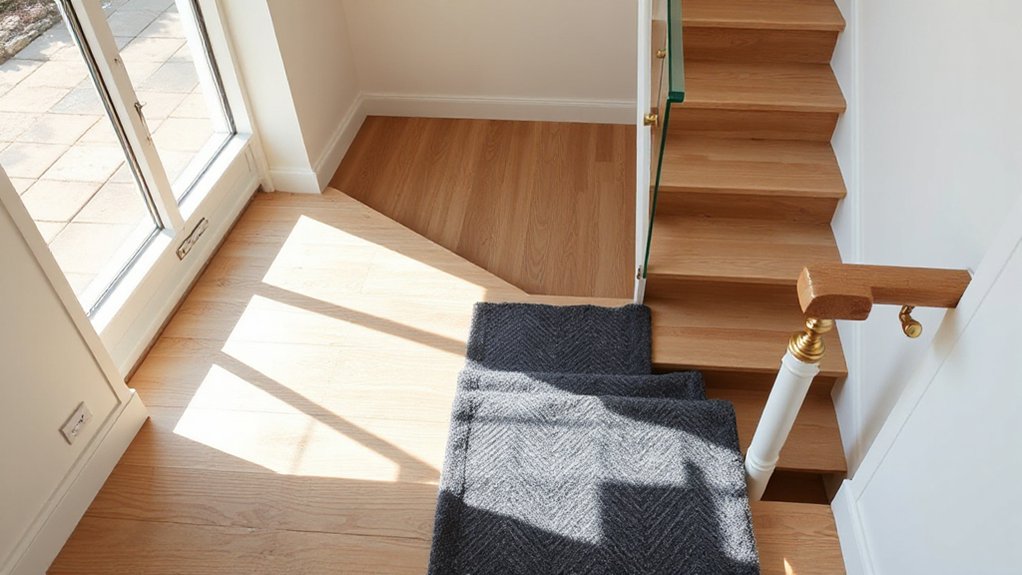
Once you’ve set the stairwell’s backdrop with color and trim, choose materials that can take daily wear while sharpening the style. Prioritize Material durability: solid oak, engineered wood, or quality LVP treads resist dents and keep edges crisp on tight turns. If you’re refreshing existing steps, cap treads or stain-and-seal to modernize fast without adding bulk.
Add a runner to control acoustics and visually elongate narrow flights. Flatweave wool reads tailored and grips well; solution-dyed nylon delivers Cost effective options with strong stain resistance. Keep the border slim to show more tread and make the stair feel wider.
For balustrades, pair a warm wood handrail with matte-black iron spindles for a current, airy profile, or choose clear glass to maximize light.
Style Stairwell Walls With Art, Mirrors, and a Gallery Run
Although stairwells can feel like leftover space, you can turn the walls into a deliberate focal point with a tight edit of art, mirrors, and a clean gallery run that guides the eye upward. Start by setting a consistent frame finish—black, brass, or pale oak—and keep mat sizes uniform to calm the vertical drop. Hang pieces along the stair’s pitch, maintaining equal gaps and aligning centers to your sightline as you climb. Mix photography with statement wall art, but cap the palette at three tones so it reads curated, not chaotic. Add a mirror at the landing to bounce light and visually widen the run. If your walls need structure, pair slim Decorative wall panels with a narrow picture ledge for easy seasonal swaps.
Frequently Asked Questions
Do I Need a Permit to Change Stair Railings or Add Wall Paneling?
You’ll often need a permit for railing changes if you alter height, structure, or attachment; wall paneling usually doesn’t. Check local codes. Prioritize DIY safety, plan an aesthetic upgrade, and keep your stairwell’s clear width unobstructed.
What Stair Dimensions Meet Building Codes for Rise, Run, and Headroom?
Most Building codes cap risers at 7¾ inches and require 10-inch treads, with 6’8″ headroom—over 80% of falls happen on stairs, so prioritize stair safety. You’ll also need consistent rise/run for space-smart flow.
How Can I Reduce Stair Noise and Creaks Without Rebuilding?
Tighten loose treads with screws, add shims and construction adhesive, and lubricate joints for quick creak reduction techniques. Install under-tread acoustic mats, carpet runners, and edge gaskets as soundproofing solutions that save space, stay sleek.
What Are the Best Child- and Pet-Safe Options for Open Staircases?
Like a seatbelt for your stairs, you’ll choose glass balustrades, tight-slat railings, or clear acrylic infill. Add Child safety gates, non-slip treads, and Pet proofing mesh panels. Keep profiles slim, light, spacious.
How Do I Plan a Stairwell Makeover on a Tight Budget?
Start by measuring, setting priorities, and reusing what you’ve got. Choose budget friendly upgrades like paint, stick-on runners, and LED strips. Add creative decor ideas: gallery wall, slim console, mirrors, hooks, plants.
Conclusion
Step back and let your stairwell work like a runway for your home’s best style. You’ve set the focal points, boosted height with statement lighting, and framed every angle with paint, wallpaper, and crisp trim. Your treads, runner, and balustrade now feel intentional underfoot and on display. Finish strong with art, mirrors, or a gallery run that guides the eye upward. Keep edits tight so the space stays airy.
About the Author